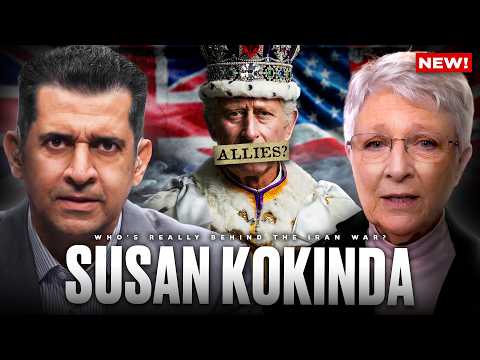
Category: Politics. Format: Interview. YouTube video analyzed by skim.
skim AI Analysis
Credibility assessment: Highly Speculative. The video presents a fringe theory attributing global conflicts and assassinations to a 200-year-old British imperial system. It relies heavily on unsubstantiated claims, historical revisionism, and conspiracy narratives without providing verifiable evidence. The reasoning lacks factual grounding and relies on connecting disparate events through a predetermined, unproven thesis.
Bias assessment: Anti-British Establishment. The video exhibits a strong bias against the British establishment, portraying it as a malevolent, manipulative force orchestrating global events, wars, and assassinations for centuries. This narrative consistently frames Britain as the primary antagonist, overshadowing other geopolitical factors and presenting a one-sided, conspiratorial view.
Originality: 80% — Unique Conspiracy. The video offers a highly unconventional and unique perspective by positing a continuous, centuries-old British imperial system as the root cause of modern global conflicts, political events, and even assassinations. This narrative is distinct from mainstream geopolitical analyses.
Depth: 40% — Superficial Analysis. While the video attempts to connect historical events, its analysis is superficial and lacks depth. It oversimplifies complex geopolitical situations, reduces causality to a single, unproven thesis (British imperial control), and fails to engage with counter-arguments or nuanced historical context. The 'analysis' primarily serves to reinforce the central conspiracy theory.
Key Points (20)
1. Patrick Bet-David: The Enemy is Not China or Russia
Patrick Bet-David contrasts the common perception of China or Russia as the primary enemies with Susan Kokinda's assertion that Britain is the true force behind global machinations. He highlights that while independent content creators might focus on Israel or Qatar, Kokinda's analysis points to a deeper, historical British influence. The discussion concludes by questioning the methods through which this alleged British influence operates.
Impact: Medium. This framing challenges conventional geopolitical narratives by redirecting focus towards a less commonly discussed entity, Britain, as the central antagonist. It sets the stage for Kokinda's detailed explanation of this alternative perspective.
Sources in support: Patrick Bet-David (Host)
2. Kokinda: The 'Great Game' and Modern Propaganda
Kokinda explains that the British imperial system employs psychological warfare and propaganda, likening it to the historical 'Great Game.' She argues that by controlling narratives through media and entertainment, they create 'shadows on the wall' that distract populations from the real power structures. This method, she concludes, keeps nations pitted against each other, serving the imperial agenda.
Impact: Medium. This point illuminates the alleged mechanism by which the British system maintains control, framing mainstream media and cultural narratives as tools of manipulation. It suggests that understanding these tactics is key to recognizing the true nature of global power dynamics.
Sources in support: Susan Kokinda (Guest, Prometheian Action)
3. Susan Kokinda: The British Empire's Shadow War
The core argument is that a hidden British imperial system, not traditional geopolitical binaries like East vs. West or Left vs. Right, is the true architect of global conflict. This system, driven by a desire to maintain control and exploit nations, has historically manipulated events, from the overthrow of Iranian leaders like Mosedc to shaping modern wars. The goal is to keep nations dependent and prevent them from developing for their own betterment, instead serving global finance and elites. This historic fight between imperialism and national sovereignty is the underlying dynamic.
Impact: High. This framing reframes global conflicts as a singular, long-standing battle against a hidden imperial power, offering a conspiratorial lens to understand complex international relations.
Sources in support: Susan Kokinda (Guest, Prometheian Action)
4. Susan Kokinda: The British Rewriting of History
The narrative asserts that the British Empire actively rewrote history to obscure the success and influence of the 'American system' in the 19th century. Nations like Japan and Russia were students of this American model, which prioritized national development and creativity. However, this historical narrative has been suppressed, leading to a situation where most people have never heard of it. The implication is that this historical revisionism serves to maintain the current imperial order by erasing alternative models of success.
Impact: High. This claim suggests a deliberate, long-term effort by the British to control the global narrative and suppress alternative economic and political philosophies, thereby maintaining their influence.
Sources in support: Susan Kokinda (Guest, Prometheian Action)
5. Patrick Bet-David: King Charles, Qatar, and Influence
The conversation shifts to contemporary figures, questioning the influence dynamics between King Charles, Qatar, and other global players. Concerns are raised about King Charles's financial dealings, his perceived affection for Islam over Christian holidays, and the significant financial contributions from Qatar to US universities. The core question is who is influencing whom, and whether Britain still wields the same level of control it once did, suggesting a potential shift in global power.
Impact: High. This segment probes current geopolitical relationships and potential hidden influences, questioning the established power structures and the roles of key international figures and nations.
Sources in support: Patrick Bet-David (Host)
6. Susan Kokinda: British Intelligence and Political Islam
Kokinda argues that British intelligence has historically supported and utilized political radical Islam, such as Wahhabism, as a tool to divide the world. This strategy, she claims, became particularly evident after the fall of the Soviet Union, with figures like Samuel P. Huntington promoting the 'clash of civilizations' narrative to pit the West against Islam. This manufactured division, she contends, serves the British imperial agenda by preventing unified global opposition.
Impact: High. This accusation directly links British intelligence to the creation and promotion of radical Islamic movements, framing them as a geopolitical tool rather than an organic phenomenon.
Sources in support: Susan Kokinda (Guest, Prometheian Action)
7. Patrick Bet-David: Trump's Strategic Shift in the Middle East
Bet-David highlights Donald Trump's first foreign visit to Saudi Arabia as a pivotal moment where he directly challenged the status quo. Trump allegedly demanded that Saudi Arabia cease supporting Islamic fundamentalism and offered a new paradigm of nation-to-nation economic deals, laying the groundwork for the Abraham Accords. This approach, focused on sovereign development rather than imperial pawns, is presented as a direct counter to the long-standing British imperial strategy in the region.
Impact: High. This frames Trump's foreign policy as a deliberate and effective disruption of established imperial control, particularly in the Middle East, leading to a potential realignment of regional powers.
Sources in support: Patrick Bet-David (Host)
8. Susan Kokinda: The 'Dumb Giant' and British Imperial Strategy
Kokinda argues that Britain's global influence has waned significantly, and they no longer possess the strength to enforce their will directly. Instead, they relied on the US, referred to as the 'dumb giant,' to enforce their imperial system for much of the 20th century. A recent House of Lords report is cited, admitting that British influence was only possible because the US enforced it. The implication is that with Trump's potential second term, the US will no longer 'go along' with this arrangement, undermining British power.
Impact: High. This perspective suggests a fundamental shift in the US-UK power dynamic, where the US is awakening from a state of manipulated compliance to reclaim its sovereignty, thereby dismantling British global leverage.
Sources in support: Susan Kokinda (Guest, Prometheian Action)
9. Patrick Bet-David: Trump's Second Term Adjustments
Bet-David speculates on the strategic adjustments Trump may have made between his first and second potential terms, suggesting a deeper understanding of the 'evil and deep institutional forces' he faces. The 'sequencing' of actions in a second term—focusing on Venezuela, Panama, and Iran—indicates a more refined strategy. This implies Trump has identified the true 'enemy' and is implementing a plan to revive the 'American system,' characterized by competence, coherence, and a singular purpose, contrasting with the perceived chaos of previous administrations.
Impact: High. This analysis posits that Trump's approach has evolved from reactive to strategic, indicating a more profound grasp of the forces opposing his agenda and a clearer path toward implementing his vision.
Sources in support: Patrick Bet-David (Host)
10. Susan Kokinda: The American System Revival
The revival of the 'American system' is not accidental but a deliberate strategy, evidenced by speeches like Jameson Greer's at Davos on 'the American system that nobody knows about.' This system, rooted in Alexander Hamilton's ideas, emphasizes maximizing creativity and productive power, contrasting with the British focus on money and control. People like Scott Besson, with experience in financial markets and even crashing the British pound, are now applying their skills to support this American revival, indicating a deep, knowledgeable team is driving these changes.
Impact: High. This highlights a conscious effort to re-establish a specific economic and political philosophy, suggesting a return to foundational American principles as a counter to globalist or imperialist forces.
Sources in support: Susan Kokinda (Guest, Prometheian Action)
11. Patrick Bet-David: Economic Sovereignty and Energy Independence
The 'dumb giant' is becoming less dumb by rediscovering economic sovereignty through policies like energy independence. This reduces reliance on global choke points and external market manipulations. The administration's use of the Defense Production Act to bolster the energy sector, including generation and transmission, signifies a move away from market reliance when it fails national defense. Government financing agencies are stepping in to direct credit toward domestic production, ensuring the US can meet its basic needs as a sovereign nation.
Impact: High. This emphasizes the critical link between economic independence, particularly in energy, and national sovereignty, positioning it as a key strategy to counter external imperial influence.
Sources in support: Patrick Bet-David (Host)
12. Susan Kokinda: The British Free Trade System's Hidden Costs
The traditional British free trade system, often lauded for its invisible hand, has historically served to enrich the City of London at the expense of other nations. This system, blindly followed for centuries, has led to economic exploitation, as evidenced by China's ability to undercut domestic industries. Donald Trump's administration has begun to reject this exploitative model, signaling a shift away from blindly adhering to these historical trade paradigms. The conclusion is that this shift is necessary to protect national economies from predatory practices.
Impact: High. This point challenges the foundational principles of global trade, suggesting a deliberate mechanism for exploitation rather than organic market forces. It reframes historical economic policies as tools of imperial control, impacting how one views international commerce.
Sources in support: Susan Kokinda (Guest, Prometheian Action)
13. Bet-David: The 'Fairy Tale' of Anglo-American Alliance
The notion of Britain being America's 'oldest and dearest ally' is a historical fairy tale, ignoring past conflicts like the American Revolution and the War of 1812. The current administration's actions, particularly Trump's refusal to play by established rules, are forcing Britain to reveal its true, less-than-allied stance. This experience is 'outing' the British, exposing their self-serving interests rather than genuine partnership. The conclusion is that the historical narrative of alliance is a myth that is now being dismantled.
Impact: High. This point directly challenges a cornerstone of historical foreign policy narratives, suggesting a fundamental re-evaluation of the US-UK relationship is necessary. It reframes historical interactions through a lens of suspicion and self-interest.
Sources in support: Patrick Bet-David (Host)
14. Kokinda: Trump's Strategy of Strategic Withdrawal
Donald Trump's withdrawal from numerous international organizations, including the WHO and the Paris Agreement, was a strategic move to force these institutions and allies to reveal their true value and intentions. By questioning their utility and threatening withdrawal, he compelled them to demonstrate their importance or face abandonment. This approach, rooted in his 'Art of the Deal' philosophy, forces opponents to expose their weaknesses rather than engaging in direct confrontation. The result is that these institutions have proven their problematic nature through their reactions.
Impact: High. This frames Trump's controversial foreign policy decisions not as isolationism, but as a calculated strategy to renegotiate global power dynamics. It suggests a deliberate tactic to expose the flaws in existing international structures.
Sources in support: Susan Kokinda (Guest, Prometheian Action)
15. Kokinda: The Economic Strangulation of Iran
The blockade and sanctions imposed on Iran are designed to cripple its economy by preventing oil exports, leading to massive daily financial losses. This economic pressure is a key component of Trump's strategy, operating in the 'real world of physical economy' rather than just diplomatic maneuvering. Iran's inability to pump oil once storage is full will force them into a corner, potentially leading to negotiation or collapse. This strategy aims to put Iran 'by the throat' economically, forcing a resolution to the conflict.
Impact: High. This analysis highlights the severe economic consequences of geopolitical actions, suggesting that financial warfare is a primary tool in international relations. It underscores the tangible impact of sanctions on a nation's stability and its leaders' decision-making.
Sources in support: Susan Kokinda (Guest, Prometheian Action)
16. Kokinda: Russia and China's Shifting Global Stance
Neither Russia nor China are particularly enamored with the current Iranian regime, and their strategic interests are evolving under a new U.S. foreign policy paradigm. Documents like the U.S. National Security Strategy indicate a less adversarial stance towards Russia and a view of China as a competitor, not an immutable enemy. This shift creates a new global chessboard where traditional alliances and dependencies, like the IRGC's reliance on external support, may become less viable. The conclusion is that both nations are re-evaluating their positions in a world where the U.S. is acting differently.
Impact: High. This point suggests a significant recalibration of global power dynamics, where traditional adversaries are being re-evaluated and new strategic relationships are forming. It implies that the geopolitical landscape is more fluid than commonly perceived.
Sources in support: Susan Kokinda (Guest, Prometheian Action)
17. Kokinda: China's Internal Vulnerabilities
China faces significant internal challenges, notably a declining population and a stratified society enforced by systems like social credit. This 'mind policing' stifles creativity and independent thought, hindering long-term societal development and population replacement, which is crucial for future prosperity. This situation is compared to the Soviet Union's collapse, where a closed-off elite sector contrasted with a failing civilian economy. The ultimate consequence of such a system is societal vulnerability and potential collapse.
Impact: High. This challenges the prevailing narrative of China's unstoppable rise, highlighting internal weaknesses that could significantly impact its future global standing. It suggests that authoritarian control mechanisms may ultimately prove detrimental to long-term societal health.
Sources in support: Susan Kokinda (Guest, Prometheian Action)
18. Kokinda: The Future is Sovereign Nations, Not Empires
The future of global order hinges on the success of the 'Trump revolution' and its continuation by successors like J.D. Vance or Marco Rubio, leading to a world of sovereign nations rather than empires. This vision, rooted in principles of national sovereignty and independent prosperity, is what the British have historically feared. If the U.S. champions this model, and other nations replicate it, empires will cease to exist, replaced by a system of independent states, potentially even extending to colonies on the moon and Mars. This is a stark contrast to the current 'post-war rules-based order' which is seen as a tool of existing empires.
Impact: High. This presents an idealistic, yet radical, vision for the future of global governance, advocating for a complete dismantling of imperial structures in favor of absolute national sovereignty. It reframes the U.S. role from a global power broker to a champion of independent nations.
Sources in support: Susan Kokinda (Guest, Prometheian Action)
19. Bet-David: LaRouche's Unique Political Trajectory
Lyndon LaRouche's political journey, from far-left Trotskyism to the far-right, coupled with his unique organizational methods and controversial legal history, makes him a fascinating and complex figure. His shift in ideology and his persistent, albeit unsuccessful, presidential campaigns highlight a unique trajectory in American political history. The interest in his movement stems from its ability to offer a different perspective during times of national disillusionment, particularly after significant events like the Bobby Kennedy assassination. The core appeal lies in his consistent, albeit radical, vision for national renewal.
Impact: Medium. This point introduces a historical figure whose ideological shifts and unconventional political career serve as a case study in political evolution and radicalism. It prompts reflection on how individuals can navigate and influence political landscapes from extreme ideological positions.
Sources in support: Patrick Bet-David (Host)
20. The Hidden Hand of the British Empire
Susan Kokinda asserts that the true power behind global events, including wars and economic systems, is not nation-states but a hidden British imperial system, particularly centered in the City of London. This system, she claims, has been manipulating global finance and orchestrating conflicts for centuries, a narrative rooted in the theories of Lyndon LaRouche. The audience is encouraged to look beyond superficial explanations and recognize this pervasive, underlying influence. The ultimate resolution of this narrative suggests that understanding this hidden structure is key to comprehending modern geopolitical struggles.
Impact: High. This claim reframes global history and current events through a conspiratorial lens, suggesting a singular, malevolent force is responsible for widespread instability and manipulation.
Sources in support: Susan Kokinda (Guest, Prometheian Action)
Potential Conflicts of Interest (8)
Anti-British Establishment Narrative (High severity)
Type: Editorial
The guest's entire premise is built on a deeply ingrained, conspiratorial narrative that the British establishment, including the monarchy and intelligence services, has been the hidden hand behind global conflicts, assassinations, and economic manipulation for centuries.
Significance: This narrative framework fundamentally colors all information presented, framing any event through the lens of British malfeasance. It raises serious questions about the objectivity of the analysis, as the conclusion (British imperial control) appears predetermined, potentially distorting the interpretation of historical facts and current events to fit the theory.
Promotion of Prometheian Action (Low severity)
Type: Commercial
The guest is promoting her organization, Prometheian Action, and its associated content (ebooks, shows) throughout the interview.
Significance: While standard for content creators, this promotion indicates a potential financial or reputational incentive to present information in a way that drives engagement with her platform, possibly prioritizing sensationalism over strict factual accuracy.
Anti-British Imperial Narrative (High severity)
Type: Editorial
The guest's central thesis is that a hidden British imperial system is the root of global conflict and manipulation, framing the US (especially under Trump) as its adversary. This narrative is presented as fact without substantial, verifiable evidence.
Significance: This pervasive anti-British imperial narrative colors the entire discussion, potentially distorting the analysis of geopolitical events and leading the audience to accept a highly speculative and biased worldview as objective truth.
Promotion of 'American System' (Medium severity)
Type: Commercial
The video strongly advocates for a revival of the 'American system' of political economy, aligning with the guest's and host's broader platforms which often promote specific economic and political ideologies.
Significance: This promotion of a particular ideology, framed as a solution to global problems, may serve to bolster the guest's and host's public profiles and associated ventures, potentially influencing audience perception beyond objective analysis.
Anti-Establishment Narrative (High severity)
Type: Editorial
The guest's entire thesis relies on the existence of a hidden, malevolent British imperial system manipulating global events. This narrative framework inherently biases the interpretation of all information presented, framing any opposition to this 'empire' (like Trump's actions) as inherently positive and any support for established international systems as negative.
Significance: This deep-seated anti-establishment bias could lead the audience to dismiss legitimate geopolitical concerns or established international cooperation as mere machinations of a shadowy cabal, potentially hindering critical thinking about complex global issues.
Promotion of Specific Political Figures (High severity)
Type: Political Activist
The interview strongly promotes Donald Trump's actions and policies as beneficial and strategically sound, directly contrasting them with perceived failures of the 'establishment.' This aligns with a clear political agenda that favors one political figure and ideology over others.
Significance: The overt political advocacy risks alienating viewers with differing political views and may lead listeners to accept the presented narrative uncritically, potentially overlooking valid criticisms or alternative perspectives on the figures and policies discussed.
Promotion of Fringe Theories (High severity)
Type: Professional
Susan Kokinda, representing Prometheian Action, promotes highly speculative and unsubstantiated conspiracy theories, particularly those of Lyndon LaRouche, as factual historical accounts. This professional stance inherently conflicts with objective analysis and evidence-based reasoning.
Significance: The audience is led to believe that fringe conspiracy theories are credible historical fact, potentially distorting their understanding of global events and institutions. This professional advocacy for unproven narratives raises serious questions about the reliability of the information presented.
Framing of Donald Trump (High severity)
Type: Political Activist
Susan Kokinda frames Donald Trump as a heroic figure fighting against a malevolent 'British imperial system,' drawing direct parallels to Lyndon LaRouche. This partisan framing appears to serve a political agenda rather than an objective analysis of Trump's actions or policies.
Significance: By positioning Trump as a singular savior against a shadowy, centuries-old conspiracy, the narrative risks oversimplifying complex political dynamics and potentially encouraging uncritical support based on ideological alignment rather than policy evaluation.
This analysis was generated by skim (skim.plus), an AI-powered content analysis platform by Credible AI. Scores and classifications represent the platform's AI-generated assessment and should be considered alongside other sources.