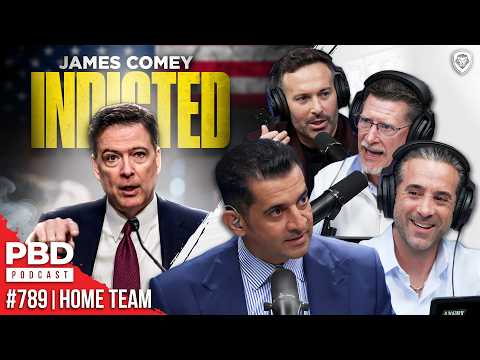
Category: Politics. Format: Panel Discussion. YouTube video analyzed by skim.
Key Points (31)
1. Comey Indictment and Legal Scrutiny
The indictment and surrender of former FBI Director James Comey are discussed as a significant event, emphasizing that it originated from a grand jury, not solely the DOJ. The panel notes the seriousness of the charges (8647) and the implications for a high-ranking former official, suggesting it's a legitimate legal process.
Impact: Medium. This event underscores the potential for accountability for even the highest levels of law enforcement, raising questions about past actions and the integrity of investigations.
Sources in support: Patrick Bet-David (Host), Adam Sosnick (Panelist), Vincent Oshana (Panelist)
2. War Powers Act Debate
The War Powers Act of 1973 requires presidential authorization for military engagements beyond 60 days. However, interpretations vary on whether a ceasefire pauses this clock, creating legal ambiguity for potential actions against Iran. Republicans are scrutinizing the administration's stance, while Democrats are accused of hypocrisy for supporting the Ukraine war but criticizing potential actions against Iran.
Impact: High. This legal debate highlights the checks and balances between the executive and legislative branches regarding military action, with significant geopolitical implications for international relations and domestic political strategy.
Sources in support: Patrick Bet-David (Host), Tom Ellsworth (Panelist), Adam Sosnick (Panelist), Pete Hegseth (Guest/Commentator), Todd Young (Senator)
Sources against: Elizabeth Warren (Senator)
3. Supreme Court Redistricting Ruling
A Supreme Court decision on redistricting is poised to significantly alter the political landscape, potentially allowing for gerrymandering that dilutes minority voting power under the guise of partisanship. This ruling is seen as a major blow to voting rights and could lead to substantial gains for Republicans in upcoming elections, impacting the balance of power in Congress.
Impact: High. The ruling's implications for electoral fairness and minority representation are profound, potentially reshaping American democracy and intensifying political polarization as parties vie for advantage through district manipulation.
Sources in support: Patrick Bet-David (Host), Tom Ellsworth (Panelist), Adam Sosnick (Panelist), Vincent Oshana (Panelist), Barack Obama (Former President)
4. The Role of Political Rhetoric and Enabling Violence
The discussion links James Comey's social media post ('8647') and the actions of individuals like Cole Thomas Allen to a broader concern about political rhetoric enabling violence. Hosts argue that leaders' actions and statements, even subtle ones, can be interpreted as encouragement for radicalization. They criticize figures who claim ignorance about such motivations while leaders engage in provocative communication, suggesting a disconnect between public statements and the potential real-world consequences.
Impact: High. This point underscores the dangerous interplay between political messaging and public perception, suggesting that inflammatory rhetoric, regardless of intent, can contribute to a climate where violence is perceived as justified or encouraged.
Sources in support: Patrick Bet-David (Host), Tom Ellsworth (Panelist), Vincent Oshana (Panelist)
Sources against: Adam Sosnick (Panelist)
5. Security Lapses and Phone Distractions
The discussion touches upon security vulnerabilities, particularly the distraction caused by personal phones among law enforcement and security personnel. Hosts share anecdotes about security guards being engrossed in their phones, questioning their effectiveness and suggesting this is a significant modern-day security risk.
Impact: Medium. This point raises concerns about the practical application of security protocols in real-world scenarios and the pervasive influence of personal technology on professional duties.
Sources in support: Vincent Oshana (Panelist), Patrick Bet-David (Host), Tom Ellsworth (Panelist), Adam Sosnick (Panelist)
6. Comey's Indictment and Accountability
James Comey has been indicted, and the timing of this legal action is being scrutinized. The hosts question the impact of this indictment and whether it signifies genuine accountability for past actions, noting that his book sales were surprisingly low despite his notoriety.
Impact: Medium. This point highlights the ongoing scrutiny of high-profile figures and the public's desire for accountability, even years after events have transpired.
Sources in support: Patrick Bet-David (Host), Tom Ellsworth (Panelist)
7. Fauci's Alleged Pressure for Vaccine Mandates
A leaked audio clip reveals Dr. Fauci discussing the potential for institutions to make life difficult for unvaccinated individuals, thereby pressuring them to get vaccinated. Hosts interpret this as evidence of a deliberate strategy to enforce mandates and express strong disapproval, linking it to potential harm from rushed vaccines.
Impact: High. This segment highlights the contentious debate around vaccine mandates and public health policies, fueling distrust and accusations of overreach by health authorities.
Sources in support: Patrick Bet-David (Host), Tom Ellsworth (Panelist), Adam Sosnick (Panelist), Vincent Oshana (Panelist)
8. Comey and Fauci Under Scrutiny
The discussion posits that James Comey and Anthony Fauci are facing potential legal repercussions, with a focus on their past actions and alleged abuses of power. The conversation references Bobby Kennedy's book on Fauci and questions the validity of pardons, suggesting that legal avenues may still exist to hold them accountable, even at the state level. This segment highlights a strong public desire for accountability from these figures.
Impact: High. This point frames key figures as potentially facing justice, fueling public interest in accountability and legal proceedings.
Sources in support: Patrick Bet-David (Host), Tom Ellsworth (Panelist), Adam Sosnick (Panelist), Vincent Oshana (Panelist)
9. The Pardon Puzzle
The legal implications of pardons for figures like Anthony Fauci are debated, with questions raised about whether a pardon can be revoked if obtained improperly, such as through the use of an autopen by someone without authority. The discussion explores the complex legal steps required to challenge a pardon and the potential for state-level prosecution if federal charges are protected. This segment underscores the intricate nature of legal protections and challenges.
Impact: Medium. This point delves into the legal complexities surrounding pardons, suggesting potential loopholes and challenges to established legal protections.
Sources in support: Tom Ellsworth (Panelist), Adam Sosnick (Panelist)
10. Spencer Pratt's LA Mayoral Bid
The discussion highlights Spencer Pratt's unconventional campaign for Mayor of Los Angeles, featuring his impactful campaign ad that contrasts his living situation with that of politicians. The segment notes his rising momentum and suggests he represents a conservative alternative to the current Democratic leadership, which is perceived as failing the city. Pratt's ad and perceived authenticity are presented as key factors in his growing support.
Impact: High. This point introduces a surprising political challenger and frames him as a potential disruptor against the established political order in Los Angeles.
Sources in support: Patrick Bet-David (Host), Adam Sosnick (Panelist), Vincent Oshana (Panelist)
11. Karen Bass's Campaign Struggles
Incumbent Los Angeles Mayor Karen Bass's campaign is depicted as struggling significantly, with her poll numbers dropping sharply after Spencer Pratt's ad gained traction. The segment includes clips of residents expressing dissatisfaction with her leadership and service cuts. The narrative suggests that even Democrats are not supporting her, painting her campaign as 'dead' and in 'deep trouble.'
Impact: High. This point paints a grim picture of a major political figure's campaign, suggesting a potential shift in the political landscape of a major US city.
Sources in support: Patrick Bet-David (Host), Adam Sosnick (Panelist)
12. Karen Bass's Response to Wildfires
The discussion criticizes Karen Bass's response to the Palisades fire, suggesting she was aware of the danger but prioritized a 'publicity stunt' over immediate action. A recorded conversation implies she had information about the impending danger but chose to leave the city. This is contrasted with the urgency of the situation and the needs of residents, portraying her as out of touch and ineffective.
Impact: High. This point highlights perceived leadership failures during a crisis, questioning the mayor's judgment and commitment to her constituents.
Sources in support: Patrick Bet-David (Host), Adam Sosnick (Panelist)
13. California's Housing Affordability Crisis
A study from UC Policy Lab reveals that Californians who leave the state are 48% more likely to own a home within seven years compared to those who stay. Renters also see a 30% decrease in rent. The findings underscore the severe housing affordability crisis in California, driven by bad policies, leading to an exodus of residents seeking more stable and affordable living conditions elsewhere.
Impact: High. This point quantifies the devastating impact of California's policies on its residents' ability to achieve homeownership and financial stability.
Sources in support: Patrick Bet-David (Host), Tom Ellsworth (Panelist), Adam Sosnick (Panelist), Vincent Oshana (Panelist), Pete Hegseth (Guest/Commentator)
14. Nevada as a California Exodus Destination
Nevada is emerging as a primary destination for Californians fleeing the Golden State due to its extreme cost of living. The state is attracting former residents at a higher per capita rate than other popular destinations like Texas or Florida. This migration is driven by the search for affordability, with Nevada offering a more accessible path to homeownership and a lower cost of living compared to California.
Impact: High. This point highlights a significant demographic shift, illustrating the direct consequences of California's policies on neighboring states.
Sources in support: Patrick Bet-David (Host), Tom Ellsworth (Panelist), Adam Sosnick (Panelist), Vincent Oshana (Panelist), Pete Hegseth (Guest/Commentator)
15. San Francisco's Decline
The video presents a disturbing depiction of San Francisco, showcasing individuals appearing to be on drugs in public spaces, highlighting the city's severe social and public safety issues. This visual evidence is used to argue that the city, like other major Californian metropolises, is in decline due to failed policies, leading to a breakdown in public order and quality of life.
Impact: High. This point provides a stark visual and narrative of urban decay, serving as a potent symbol of the broader issues discussed regarding California's decline.
Sources in support: Patrick Bet-David (Host), Tom Ellsworth (Panelist), Adam Sosnick (Panelist), Vincent Oshana (Panelist), Pete Hegseth (Guest/Commentator)
16. LA Olympic Security Funding Concerns
The LAPD chief has requested significant funding for the Olympics and World Cup, citing needs for vehicles, technology, and overtime pay. However, the LA28 organizing committee reportedly has no public safety budget, with their security budget not covering law enforcement. This raises concerns about the adequacy of security preparations for major upcoming international events in Los Angeles.
Impact: Medium. This point raises critical questions about the preparedness and funding for major international sporting events, potentially impacting public safety and the city's reputation.
Sources in support: Patrick Bet-David (Host), Tom Ellsworth (Panelist), Adam Sosnick (Panelist), Vincent Oshana (Panelist), Pete Hegseth (Guest/Commentator)
17. LA's Readiness for Global Events
Concerns are mounting over Los Angeles's preparedness for major international events like the 2026 World Cup and the upcoming Olympics. Security officials have expressed doubts about readiness, particularly given the scale of events and potential security threats. The discussion highlights a tension between the city's ambition to host and the practical challenges of ensuring safety and smooth operations for millions of attendees.
Impact: Medium. The perceived lack of readiness for major sporting events raises questions about public safety and the logistical capabilities of host cities, potentially impacting future bids and public confidence.
Sources in support: Patrick Bet-David (Host), Tom Ellsworth (Panelist), Adam Sosnick (Panelist), Vincent Oshana (Panelist)
18. JP Morgan Lawsuit Fallout
A high-profile sexual harassment lawsuit filed by 'John Doe' against JP Morgan executive Lorna Hajini has been largely discredited. Internal investigations and media reports suggest the claims were fabricated, with the plaintiff, identified as Shiraay Rana, potentially facing repercussions for filing a false suit. The case, which included allegations of sexual slavery, drugging, and racist remarks, has been called a 'bombshell' but appears to be unraveling.
Impact: High. This case highlights the potential for fabricated claims to cause significant reputational damage and the importance of thorough investigations before public accusations.
Sources in support: Patrick Bet-David (Host), Tom Ellsworth (Panelist), Adam Sosnick (Panelist), Vincent Oshana (Panelist)
19. The 'John Doe' Lawsuit's Reversal
Further details emerge on the 'John Doe' lawsuit against JP Morgan executive Lorna Hajini, revealing that the filing was pulled and the plaintiff's lawyer plans to refile. However, media reports, including a New York Post story, suggest the entire case might be a fabrication by Shiraay Rana, who allegedly refused to cooperate with an internal investigation. The narrative is shifting from a 'bombshell' harassment claim to a potential attempt to discredit the executive.
Impact: High. The discrediting of the lawsuit shifts the focus from the accused executive to the accuser, raising questions about the motivations behind the claims and the potential for malicious litigation.
Sources in support: Tom Ellsworth (Panelist), Adam Sosnick (Panelist), Vincent Oshana (Panelist)
20. The 'Journeyman' Accuser
Further investigation into the 'John Doe' lawsuit reveals the accuser, Shiraay Rana, has a history of job-hopping, having held eight jobs in 12 years. This pattern suggests a potential 'serial job hopper' or 'journeyman' profile, which could impact his credibility and future employment prospects, especially if the lawsuit is indeed found to be fabricated. The narrative is increasingly painting him as the one with questionable motives.
Impact: Medium. The accuser's employment history, if true, could undermine his credibility and suggest a pattern of instability, further complicating the narrative of the sexual harassment lawsuit.
Sources in support: Vincent Oshana (Panelist)
21. Gas Prices and Geopolitical Tensions
Rising gas prices, reaching a four-year high, are directly linked to ongoing geopolitical conflicts, particularly concerning Iran. While some experts predict oil could hit $200 a barrel, leading to recession fears, others argue that current price hikes are a necessary short-term pain for long-term strategic gains against adversaries. The debate centers on whether the current economic strain is a justifiable cost for a stronger geopolitical stance.
Impact: High. The fluctuating gas prices directly impact consumers' daily lives, forcing difficult financial decisions and fueling public debate about energy policy and international relations.
Sources in support: Patrick Bet-David (Host), Tom Ellsworth (Panelist), Adam Sosnick (Panelist), Vincent Oshana (Panelist)
22. Trump's Strategy on Iran and Gas Prices
The current administration's approach to Iran and its impact on gas prices is framed as a strategic move by Donald Trump, prioritizing long-term geopolitical gains over short-term economic pain for consumers. While acknowledging the public's frustration with higher prices, the argument is made that this approach is necessary to counter adversaries, contrasting it with previous administrations' policies. The hope is for prices to stabilize by summer.
Impact: High. This perspective frames current economic hardships as a necessary sacrifice for a stronger national security posture, suggesting a strategic trade-off that benefits the country in the long run.
Sources in support: Patrick Bet-David (Host), Vincent Oshana (Panelist)
Sources against: Adam Sosnick (Panelist)
23. Vinnie's Scathing Critique of Erica Kirk's CEO Role
Vinnie Oshana vehemently argues that Erica Kirk is unfit to be CEO of Turning Point USA, asserting it's a 'man's job' and that she cannot possibly replace her deceased husband, Charlie Kirk. He believes she should step down immediately to focus on her children and grieving, suggesting her continued leadership is a detriment to the organization and its mission. He concludes that her desire to be CEO is driven by a need for the spotlight, not by genuine capability.
Impact: High. This strong condemnation sets a confrontational tone, framing Kirk's leadership as inherently flawed due to her gender and marital status. It creates a stark division within the panel and likely resonates with a segment of the audience that holds similar traditional views.
Sources in support: Vincent Oshana (Panelist)
Sources against: Patrick Bet-David (Host), Tom Ellsworth (Panelist), Adam Sosnick (Panelist)
24. Adam's Defense of Erica Kirk as a Grieving Widow
Adam Sosnick defends Erica Kirk, emphasizing the biblical injunction to protect widows and orphans and arguing that the criticism against her is shameful. He believes people are unfairly attacking her while she is grieving and that conflating her emotional response with her husband's murder is disgusting. He concludes that while her CEO role might be challenging, her primary focus should be on her children and fulfilling Charlie Kirk's legacy, suggesting she is trying her best under immense pressure.
Impact: High. Adam's perspective introduces a moral and emotional dimension, challenging the harshness of Vinnie's critique by appealing to compassion and religious principles. This offers a counter-narrative that humanizes Kirk's situation.
Sources in support: Adam Sosnick (Panelist)
Sources against: Vincent Oshana (Panelist)
25. Tom's Analysis of Board Responsibility and Public Scrutiny
Tom Ellsworth posits that the decision to appoint Erica Kirk as CEO was likely made by the board, not solely by her, given fiduciary responsibilities and succession plans. He acknowledges the immense stress Kirk is under and expresses concern about Turning Point USA losing momentum. He concludes that while the board made the choice, the public scrutiny Kirk faces is inevitable given her position and the circumstances, and that the board should have considered the potential fallout more carefully.
Impact: Medium. Tom shifts the focus to institutional responsibility, suggesting the board bears significant weight in the decision and its consequences. His concern for the organization's momentum adds a strategic layer to the discussion.
Sources in support: Tom Ellsworth (Panelist)
26. Patrick's Questioning of the Board's Decision
Patrick Bet-David questions the board's decision to appoint Erica Kirk as CEO, especially if she chose the role herself. He argues that if she wanted the CEO position, she must be prepared for intense criticism, and that the board should have advised against it given the circumstances of her husband's assassination and her role as a grieving widow with children. He concludes that the board either made a poor decision by recommending her or that Kirk made a questionable choice by accepting the role under such intense pressure.
Impact: High. Patrick directly challenges the board's judgment and Kirk's decision-making, framing the situation as a strategic misstep regardless of who initiated it. His focus on the 'nasty world' of public life and the inevitability of scrutiny adds a pragmatic, albeit cynical, perspective.
Sources in support: Patrick Bet-David (Host)
27. Debate on Erica Kirk's Personal Choices vs. Public Role
The panel engages in a heated debate about whether Erica Kirk's personal choices, such as her jewelry and makeup, are relevant to her CEO role, with Vinnie criticizing them as 'overdoing it.' Adam argues that everyone is different and these personal choices don't negate her position. Tom suggests that the board should have asked Kirk if her priority was mourning, motherhood, or being CEO, implying that choosing CEO might be a mistake. They conclude that regardless of the circumstances, taking on such a high-profile role invites intense scrutiny, and Kirk must be prepared for it.
Impact: Medium. This segment highlights the intense scrutiny faced by public figures, particularly women in leadership, where personal presentation and private life are often weaponized. The differing views reveal a societal tension between empathy for personal tragedy and the demands of public leadership.
Sources in support: Vincent Oshana (Panelist)
Sources against: Adam Sosnick (Panelist)
28. The Board's Role and Fiduciary Duty
Tom Ellsworth and Patrick Bet-David emphasize the board's critical role and fiduciary responsibility in appointing a CEO. Tom highlights that the board members (David Inglehart, Doug Degro, Mike Miller, Tom Sodika) made the decision, and their duty is to the charity's best interest, not necessarily pleasing the new CEO. Patrick directly questions the board's decision, asking if they truly recommended Kirk, and suggests that if she chose the role, she must accept the consequences, but if the board pushed her into it, they failed in their duty. They conclude that understanding the board meeting's advice is key to assessing the situation.
Impact: High. This discussion underscores the importance of corporate governance and the accountability of a board of directors. It shifts blame from Erica Kirk to the institutional decision-makers, suggesting a potential failure in leadership selection and risk assessment.
Sources in support: Tom Ellsworth (Panelist), Patrick Bet-David (Host)
29. Adam: The Board's Blunder
Adam argues that the board is primarily at fault for the current situation, stating that they either made a poor decision in appointing Erika Kirk or that the sequencing of events was incorrect. He believes the board screwed up, and the onus is on them or her for accepting the role under these circumstances. The final sentence is: The board's actions, or lack thereof, created this problematic scenario.
Impact: High. This point frames the leadership transition as a failure of corporate governance, shifting blame away from the CEO's personal capabilities and onto the decision-makers.
Sources in support: Tom Ellsworth (Panelist), Patrick Bet-David (Host), Adam Sosnick (Panelist), Vincent Oshana (Panelist)
30. Vinnie: The Unwinnable Shadow
Vinnie argues that it's an unfair competition for Erika Kirk to step into the CEO role, as she will always be in the massive shadow of her husband, Charlie. He believes she cannot replace him or do what he did, making it an unwinnable situation for her. The final sentence is: The legacy of the former CEO creates an insurmountable challenge for any successor.
Impact: High. This highlights the immense personal and professional burden placed on Kirk, suggesting that the emotional weight of Charlie's legacy makes her position untenable.
Sources in support: Vincent Oshana (Panelist), Patrick Bet-David (Host), Tom Ellsworth (Panelist), Adam Sosnick (Panelist)
31. Adam: The Unfair Accusations
Adam contends that while criticism for leadership decisions is part of the job, accusations of murder or pedophilia are not. He argues that no other CEO faces such extreme and unfounded claims, making the situation for Erika Kirk uniquely unfair. The final sentence is: The nature of the accusations against the CEO transcends typical professional scrutiny.
Impact: Medium. This point differentiates between standard business criticism and deeply personal, potentially fabricated attacks, suggesting a higher level of unfairness in Kirk's situation.
Sources in support: Tom Ellsworth (Panelist), Patrick Bet-David (Host), Adam Sosnick (Panelist), Vincent Oshana (Panelist)
Potential Conflicts of Interest (13)
Political Bias in Commentary (High severity)
Type: Editorial
The panelists and guests, particularly those aligned with conservative viewpoints, frequently express strong criticisms of Democratic policies and figures while praising Republican actions. This consistent framing suggests an editorial bias that may influence the interpretation of events.
Significance: This pervasive bias raises questions about the objectivity of the analysis. Listeners may be swayed by partisan framing rather than a balanced assessment of facts, potentially distorting their understanding of complex political issues and the motivations of different political actors.
Commercial Interests in Product Promotion (Medium severity)
Type: Commercial
The podcast heavily promotes its own merchandise, specifically the 'Future Looks Bright' shoes, including a dedicated advertisement and discussion of their luxury and craftsmanship. This commercial interest could influence the overall tone and focus of the content.
Significance: The integration of product promotion, especially with claims of luxury and exclusivity, could subtly influence the audience's perception of the hosts' overall credibility. It raises the question of whether the primary goal is genuine analysis or driving sales, potentially compromising the integrity of the discussion.
Partisan Commentary on Legal Cases (High severity)
Type: Editorial
The hosts of the podcast, Patrick Bet-David, Tom Ellsworth, Adam Sosnick, and Vincent Oshana, consistently frame legal and political events through a strongly partisan lens, favoring Republican and conservative viewpoints while criticizing Democratic figures and institutions.
Significance: This pervasive bias raises questions about the objectivity of their analysis. Listeners may receive a skewed understanding of events, as the commentary appears designed to reinforce pre-existing political beliefs rather than provide a balanced perspective.
Comey's Alleged Indictment and Book Sales (Medium severity)
Type: Financial
Prosecutors allege that James Comey's social media post, interpreted as a threat, was intended to boost sales of his book. The podcast hosts also discuss this potential financial motive.
Significance: If Comey's actions were indeed motivated by book sales, it suggests a cynical manipulation of public discourse for personal gain, undermining the integrity of his public statements and actions.
Political Bias and Media Framing (High severity)
Type: Editorial
The hosts exhibit a strong anti-establishment and anti-Biden administration bias, consistently framing news events through a lens that supports a particular political agenda, potentially influencing their interpretation of facts.
Significance: This pervasive bias raises serious questions about the objectivity of the analysis. Listeners may be presented with a skewed reality, where events are interpreted to fit a pre-determined narrative rather than being assessed on their own merits, potentially leading to misinformation.
Speculation on COVID-19 Origins and Fauci's Role (High severity)
Type: Reputational
The hosts heavily promote the lab leak theory and suggest Anthony Fauci and his associates deliberately covered up the origins of COVID-19, despite a lack of definitive proof and ongoing scientific debate.
Significance: This persistent focus on unproven conspiracy theories, particularly concerning a global health crisis, risks undermining public trust in scientific institutions and public health officials, potentially hindering future public health efforts.
Political Bias in Commentary (High severity)
Type: Editorial
The hosts and commentators consistently express strong, often critical, opinions that align with a conservative or libertarian viewpoint, particularly regarding figures like Fauci and Bass, and government policies.
Significance: This pervasive bias raises questions about the objectivity of the analysis. Listeners may receive a skewed perspective, potentially overlooking valid arguments or nuances that don't fit the hosts' narrative, impacting their understanding of complex issues.
Speculation on Legal Proceedings (Medium severity)
Type: Reputational
The discussion heavily speculates on potential indictments and legal actions against figures like James Comey and Anthony Fauci, often framing them as deserving of prosecution.
Significance: While discussing potential legal issues is valid, the speculative and accusatory tone, without concrete evidence presented in the transcript, could unfairly damage reputations and influence public perception before any legal findings.
Political Bias in Commentary (High severity)
Type: Editorial
The hosts and panelists consistently frame political and economic issues through a strong partisan lens, heavily criticizing policies and figures associated with the current administration while praising those of the previous one.
Significance: This pervasive bias raises questions about the objectivity of their analysis, potentially leading viewers to accept a skewed perspective on complex events without critical evaluation.
Political Alignment and Criticism (High severity)
Type: Political Activist
The panelists are all involved in or aligned with conservative political commentary, and their discussion centers on the leadership of a prominent conservative organization (Turning Point USA) and its CEO, Erica Kirk. This inherent political alignment could influence their objectivity when criticizing or defending Kirk and the organization.
Significance: The deeply partisan nature of the discussion raises questions about whether the critique of Erica Kirk's leadership is based on objective business and leadership principles or on political motivations and ideological alignment. The audience may wonder if the harsh criticism is amplified by political opposition to Turning Point USA's agenda.
Personal Relationships and Board Influence (Medium severity)
Type: Professional
Tom Ellsworth mentions being part of a Vistage group with Doug Degro, one of the board members of Turning Point USA. This prior professional acquaintance could potentially influence his perspective or his interpretation of the board's actions.
Significance: While Tom's connection is indirect, it highlights the interconnectedness within business and advisory circles. It prompts consideration of whether his assessment of the board's decision-making is purely objective or subtly shaped by past professional interactions, potentially affecting the perceived impartiality of his analysis.
Personal Connection to Deceased CEO (Medium severity)
Type: Personal
The discussion about Erika Kirk's CEO appointment is heavily influenced by her relationship with the deceased former CEO, Charlie. The hosts' personal connections and emotional responses to Charlie's legacy may color their objective assessment of Kirk's suitability and the board's decision.
Significance: This personal entanglement raises questions about whether the commentary is driven by genuine business analysis or by loyalty and grief related to Charlie's memory. The audience is left to wonder if the criticism is fair or a projection of the hosts' feelings about Charlie's passing.
Host's Strong Opinions on CEO Appointment (High severity)
Type: Editorial
The hosts express strong, unified opinions that the board made a mistake and that the new CEO, Erika Kirk, is ill-equipped or should not have taken the job, largely due to her connection to the former CEO. This presents a clear editorial stance that may overshadow a balanced analysis of the situation.
Significance: The hosts' unwavering conviction that the board and CEO are fundamentally wrong could lead to a biased presentation of facts. This raises concerns about whether the audience is receiving a neutral assessment or a pre-determined conclusion designed to fit the hosts' narrative.
This analysis was generated by skim (skim.plus), an AI-powered content analysis platform by Credible AI. Scores and classifications represent the platform's AI-generated assessment and should be considered alongside other sources.