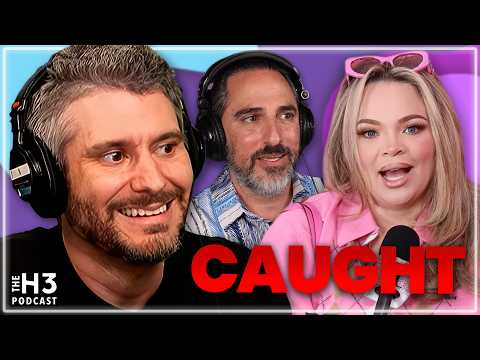
Category: Entertainment. Format: Commentary. YouTube video analyzed by skim.
Key Points (53)
1. Hasan Piker: Brand's PR Crisis Management
Russell Brand's current PR efforts, including carrying a Bible and engaging in interviews, are seen as a desperate attempt to manage his image amidst serious allegations. The hosts suggest his actions are engineered by PR managers rather than genuine spiritual conviction.
Impact: High. This perspective frames Russell Brand's public actions as calculated PR moves, implying a lack of genuine remorse or accountability and suggesting a strategic effort to control the narrative surrounding his legal troubles.
Sources in support: Hasan Piker (Co-host), Ethan Klein (Host)
2. Piers Morgan: The Master Interviewer
Piers Morgan is lauded for his skillful interview technique, particularly his use of silence and persistent questioning, which effectively put Russell Brand on the defensive. The hosts highlight Morgan's ability to expose Brand's inconsistencies and evasiveness, framing it as a masterful performance.
Impact: Medium. This analysis of Piers Morgan's interview strategy provides insight into effective journalistic tactics for challenging public figures, suggesting that strategic silence and direct questioning can expose a subject's vulnerabilities.
Sources in support: Ethan Klein (Host), Hasan Piker (Co-host), Love (Producer), AB (Producer)
3. Love & AB: Brand's Physical Tics and Appearance
The hosts and producers observe Russell Brand's physical mannerisms during the interview, such as touching his arm and his distinctive teeth, interpreting these as signs of discomfort or underlying issues. They also comment on his long cross necklace and wardrobe choices.
Impact: Low. Focusing on physical tics and appearance shifts the analysis from substantive issues to superficial observations, potentially serving to further ridicule Brand and distract from the core allegations against him.
Sources in support: Love (Producer), AB (Producer), Ethan Klein (Host)
4. Ethan Klein: The 'Collage of Language' Defense
Russell Brand's attempt to defend his statements by referring to them as a 'collage of language' is ridiculed by the hosts. They interpret this as a nonsensical and evasive tactic to avoid accountability for his words, further undermining his credibility.
Impact: Medium. This critique of Brand's linguistic defense highlights the hosts' perception of his intellectual dishonesty, suggesting he is using convoluted language to obscure the truth and evade responsibility for his controversial statements.
Sources in support: Ethan Klein (Host), Hasan Piker (Co-host), Love (Producer), AB (Producer)
5. Russell Brand's Faith Journey
Ethan and Hila discuss Russell Brand's recent interview with Piers Morgan, noting his evolving religious beliefs and his claims of being a Christian. They question his sincerity and the consistency of his spiritual exploration, contrasting it with his past statements and actions. The hosts suggest his current stance might be a performance or a way to navigate public scrutiny.
Impact: Medium. This discussion highlights the public's scrutiny of public figures' personal beliefs and the potential for these beliefs to be perceived as performative or opportunistic. It raises questions about authenticity in the digital age.
Sources in support: Ethan Klein (Host), Hasan Piker (Co-host)
6. The 'Muppet' Debate
The hosts analyze Brand's interaction with Piers Morgan, referring to Brand as a 'muppet' and questioning why he would appear on Morgan's show if he viewed him so negatively. They suggest Brand may have underestimated Morgan's interviewing style, which has evolved due to his YouTube presence. This leads to a broader discussion about how online platforms change public figures.
Impact: Medium. This point underscores the dynamic nature of media personalities and how platform shifts can alter their approach and perceived credibility. It suggests that even seasoned figures can misjudge their audience or interviewer.
Sources in support: Ethan Klein (Host), Hasan Piker (Co-host), Love (Producer)
7. Comparison to Jordan Peterson
The hosts draw parallels between Russell Brand's philosophical and religious arguments and those of Jordan Peterson, noting a similar 'flavor' of intellectual discourse, albeit with different underlying tones. They discuss Peterson's established Christian faith versus Brand's more fluid spiritual journey, and how both figures engage with complex ideas in a way that resonates with certain audiences.
Impact: Medium. This comparison highlights how public intellectuals and commentators, even with differing styles, can occupy similar discursive spaces and attract similar followings. It prompts reflection on the appeal of their particular modes of argumentation.
Sources in support: Ethan Klein (Host), Love (Producer)
8. Internet Shorts and Viewer Reactions
The podcast dedicates a significant portion to reacting to a barrage of viewer-submitted short videos and memes. These clips range from humorous to bizarre, including a man walking around claiming everyone wants him, a 'how old do I look' segment, and various other internet oddities. The hosts express amusement, disbelief, and sometimes disgust at the content, often making jokes about the creators and their motivations.
Impact: Medium. This segment highlights the current landscape of short-form video content and the often absurd or attention-seeking nature of online trends. It reflects the audience's engagement with the show through user-generated content.
Sources in support: Ethan Klein (Host), Hasan Piker (Co-host), Love (Producer)
9. The 'Everyone Wants Me' Man
A recurring theme involves a specific viral video of a man walking around, claiming that 'everybody wants to [expletive] me.' The hosts dissect this video, debating whether the attention he receives is genuine attraction or simply people reacting to the absurdity of his behavior and the fact he's being filmed. They find the concept 'douchy' but also amusing, questioning the man's self-perception and the nature of online validation.
Impact: High. This discussion critiques the performative nature of online content and the potential for delusion or narcissism in seeking attention. It questions the validity of self-proclaimed desirability versus actual public perception.
Sources in support: Ethan Klein (Host), Hasan Piker (Co-host)
10. Ethan Klein: Moses' Cooking Channel Branding Under Fire
Ethan Klein criticizes Moses' cooking channel, 'Cooking Videos,' for its uninspired title and the incongruity between its branding and the Middle Eastern food he prepares, comparing it unfavorably to Jeremy's coffee brand. He suggests the channel name is a 'special flavor of deranged.' The final sentence is: This branding choice is seen as a missed opportunity for a more fitting and creative identity.
Impact: Medium. This critique highlights the importance of cohesive branding in content creation, suggesting that a disconnect between a channel's name and its content can detract from its appeal and perceived authenticity.
Sources in support: Ethan Klein (Host), Love (Producer)
11. Love & Dan: The Sloppy Joe Debate
Love and Dan engage in a discussion about Sloppy Joes, with Dan initially dismissing them as a children's dish. Love defends them, even suggesting a 'fancy Joe' variation with peppers. The debate touches on the name's unappetizing nature and the ingredients, with Love revealing a turkey-based recipe. The final sentence is: The conversation reveals differing personal preferences and nostalgic associations with the classic comfort food.
Impact: Low. This segment injects humor and relatability by exploring a common, albeit divisive, comfort food, showcasing how personal tastes and childhood memories shape perceptions of even simple dishes.
Sources in support: Hasan Piker (Co-host), Love (Producer)
Sources against: Ethan Klein (Host)
12. Ethan Klein: Moses' Chicken Soup Recipe - A 'Scream for Help'?
Ethan Klein interprets Moses' weekly chicken soup preparation as a potential 'scream for help,' questioning if the repetitive cooking is a sign of depression. He sarcastically suggests Moses needs 'help, not chicken soup' and mocks the idea of a 'glowing community.' The final sentence is: This commentary frames the act of cooking as a potential indicator of mental well-being, albeit through a lens of humor and skepticism.
Impact: Medium. This highlights how mundane activities can be reinterpreted through a critical or humorous lens, turning a simple cooking demonstration into a commentary on the creator's perceived mental state.
Sources in support: Ethan Klein (Host)
13. Dan & Love: Critiquing Moses' Cooking Technique - The 'Beauty' of Repetition
Dan and Love dissect Moses' cooking video, mocking his repeated use of the word 'beauty' to describe repetitive actions like chopping vegetables and the chicken browning process. Dan points out the lack of proper searing on the chicken and the inconsistent chopping, calling the process 'hell' and questioning the timing. The final sentence is: Their critique focuses on the lack of culinary skill and basic cooking principles demonstrated by Moses.
Impact: High. This segment underscores the gap between presentation and execution in online content, showing how a lack of fundamental skills can undermine a creator's credibility, even in a seemingly simple task.
Sources in support: Love (Producer), Ethan Klein (Host)
14. Ethan Klein: The 'Ivory Colored' Chicken and Uninspired Vegetable Prep
Ethan Klein relentlessly mocks Moses' chicken preparation, describing it as 'ivory colored' and questioning the lack of browning. He criticizes the haphazard chopping of vegetables, noting the inconsistent sizes and the carrot falling off the cutting board. The final sentence is: This detailed critique emphasizes the visual and technical shortcomings in Moses' cooking, suggesting a fundamental lack of care or skill.
Impact: High. This highlights how attention to detail in food preparation, such as proper searing and uniform cuts, significantly impacts the perceived quality and professionalism of the dish.
Sources in support: Ethan Klein (Host), Love (Producer)
15. Dan & Love: Questioning the Safety and Method of Moses' Chicken Soup
Dan and Love question the safety and effectiveness of Moses' cooking method, particularly his decision to use water instead of chicken stock and his belief that the chicken's flavor will suffice. They also point out the lack of seasoning and the undercooked appearance of the chicken. The final sentence is: Their skepticism centers on whether Moses' approach can yield a flavorful and safe dish, given the unconventional and seemingly inadequate steps.
Impact: High. This raises concerns about food safety and culinary best practices, suggesting that shortcuts in flavor building and cooking can lead to subpar or even unsafe results.
Sources in support: Love (Producer), Ethan Klein (Host)
16. Ethan Klein: The 'Coward Soup' and the Carrot Incident
Ethan Klein labels Moses' soup 'Coward Soup' due to the perceived lack of commitment in cooking the chicken and the overall uninspired preparation. He further mocks Moses for letting a carrot fall off the cutting board and not retrieving it. The final sentence is: This final jab encapsulates the hosts' overall assessment of Moses' cooking as lazy, unskillful, and lacking basic attention to detail.
Impact: High. This segment serves as a final, dismissive critique, reinforcing the idea that even simple cooking tasks require a level of care and competence that Moses allegedly lacks.
Sources in support: Ethan Klein (Host), Love (Producer)
17. Moses's Carrot Calamity
Moses's cooking segment begins with a significant mishap where multiple carrot slices fall off his cutting board, leading the hosts to question his carelessness and the overall quality of his preparation. This incident sets a critical tone for the rest of the segment.
Impact: High. This early mistake immediately frames Moses's cooking as flawed, inviting mockery and setting the stage for further criticism of his technique and attention to detail.
Sources in support: Ethan Klein (Host), Hasan Piker (Co-host), AB (Producer)
18. The 'Man Has No Soul' Accusation
Ethan and Trisha repeatedly accuse Moses of lacking 'soul' in his cooking, particularly for not acknowledging or rectifying the dropped carrots and for his seemingly indifferent approach to the process. This critique extends to his overall culinary presentation.
Impact: High. The 'no soul' accusation is a strong, subjective critique that dismisses Moses's efforts entirely, suggesting a fundamental lack of passion or care in his cooking, which the hosts find baffling.
Sources in support: Ethan Klein (Host), Hasan Piker (Co-host), AB (Producer)
19. Celery and Misinformation
The discussion shifts to celery, with Moses explaining its water content and cooking properties. However, the hosts, particularly Ethan, accuse Moses of spreading 'misinformation' about how celery cooks and is used in soup, highlighting his unconventional methods.
Impact: Medium. This point underscores the hosts' perception of Moses's cooking as fundamentally flawed and misinformed, further eroding any credibility he might have in a culinary context.
Sources in support: Ethan Klein (Host), Hasan Piker (Co-host)
20. Ela's Scathing Review
Moses's wife, Ela, calls in to express her strong disapproval of his cooking, calling it a 'disgraceful disaster' and agreeing with the hosts that he's 'doing it all wrong.' She specifically notes his failure to check on her mother and his incorrect cooking order.
Impact: High. Ela's direct criticism from a close family member adds significant weight to the hosts' negative assessment, validating their mockery and painting Moses's cooking as a genuine failure.
Sources in support: Ethan Klein (Host), Hasan Piker (Co-host), AB (Producer)
21. The 'Leftovers' Soup Philosophy
Moses explains that his soup is a 'end of the week' dish made with leftovers, implying it's a practical way to use up produce. The hosts interpret this as a justification for using less-than-fresh ingredients and further evidence of his lack of culinary finesse.
Impact: Medium. This explanation, intended to justify his methods, is twisted by the hosts into another point of criticism, suggesting his soup is inherently subpar due to its origins.
Sources in support: Ethan Klein (Host), Hasan Piker (Co-host)
22. Garlic Placement and Soup Clarity
Moses's decision to add garlic late in the cooking process and his use of water instead of chicken stock are heavily criticized. The hosts argue that garlic should be an early ingredient and that using water results in a 'clear' soup, which they deem incorrect for chicken soup.
Impact: Medium. These specific culinary critiques serve as further evidence for the hosts' argument that Moses fundamentally misunderstands basic cooking principles, making his entire cooking segment seem like a farce.
Sources in support: Ethan Klein (Host), Hasan Piker (Co-host), AB (Producer)
23. Chicken Submersion and Watery Soup
The hosts point out that the chicken is not fully submerged in the soup, violating Moses's own rule that everything should be covered. They also criticize his use of plain water, arguing it results in a soup that is too clear and lacks the richness of chicken stock.
Impact: Medium. This violation of his own stated rule and the criticism of the soup's consistency reinforce the idea that Moses is not only unskilled but also inconsistent and unaware of basic culinary logic.
Sources in support: Ethan Klein (Host), Hasan Piker (Co-host), AB (Producer)
24. Bay Leaf and Parsley Preparation
The hosts question Moses's preparation of parsley and bay leaves, noting that the bay leaf appears dry and unused, and that the parsley was wrapped and removed. They suggest these herbs should be chopped and incorporated for flavor and color.
Impact: Low. These details about herb preparation further fuel the hosts' narrative that Moses is incompetent in the kitchen, missing fundamental steps and techniques that would enhance the dish.
Sources in support: Ethan Klein (Host), Hasan Piker (Co-host)
25. The 'Aquaman' Name Controversy
The most heated debate erupts over the name of Moses and Ela's son, Aquaman. The hosts find the name ridiculous and predict the child will be bullied, suggesting alternative names like Jason or Khal Drogo, while Ela defends it as a family tradition.
Impact: High. This segment highlights the hosts' strong, judgmental opinions on personal choices, using humor to critique a decision that deeply affects the child's future social interactions and identity.
Sources in support: Ethan Klein (Host), Hasan Piker (Co-host)
Sources against: AB (Producer)
26. The 'Aquaman' Name's Origin and Future
The discussion speculates that Trisha named her son Aquaman due to a fondness for Jason Momoa, suggesting 'Khal Drogo' would have been a cooler name. They also debate whether the child will change his name to something common like 'Jeff' upon reaching adulthood.
Impact: Medium. This speculative analysis of the name's origin and future implications adds a layer of humorous, albeit harsh, commentary on the parents' choices and the potential social consequences for the child.
Sources in support: Ethan Klein (Host), Hasan Piker (Co-host)
27. Trump's Security Scare
During the White House Correspondents Dinner, an assassination attempt on Donald Trump was thwarted by Secret Service agents who tackled the assailant before he could cause serious harm. The incident involved shots being fired, and one Secret Service agent was hit in the chest but sustained only minor injuries.
Impact: High. This event highlights the ever-present security risks faced by public figures, even in seemingly controlled environments. The swift action of the Secret Service prevented a potential tragedy, but the incident raises questions about security protocols and vulnerabilities.
Sources in support: Ethan Klein (Host), Hasan Piker (Co-host), Love (Producer)
28. Conspiracy Theories and Staging
The incident immediately fueled conspiracy theories, with some suggesting the event was staged. The hosts dismiss these theories, arguing that if staged, the participants would have acted more convincingly, pointing to Trump's slow exit as evidence against a staged event.
Impact: Medium. The rapid emergence of conspiracy theories surrounding a high-profile event demonstrates the public's distrust and tendency to seek alternative explanations. Dismissing these theories highlights the hosts' perspective but also potentially overlooks genuine public skepticism.
Sources in support: Ethan Klein (Host), Hasan Piker (Co-host)
29. Security Response and Suspect's Actions
The security response to the incident was rapid, with agents quickly apprehending the suspect. The suspect's attempt was ultimately ineffective, as he was tackled before seriously injuring anyone and even failed to inflict significant harm on the Secret Service agent he shot. His 'Naruto run' through security barriers was noted for its speed but ultimate futility.
Impact: Medium. The ineffectiveness of the attack, despite the suspect's speed and the firing of a weapon, raises questions about the execution of the plan and the overall security measures in place. It highlights how even determined individuals can be stopped by trained professionals.
Sources in support: Ethan Klein (Host), Hasan Piker (Co-host), Love (Producer)
30. The Suspect's Background
The assailant, identified as Allan, is described as a 'borderline genius' with a background in engineering, including an internship at NASA and participation in a Nerf club. He also developed video games and worked as a part-time teacher, making his violent actions particularly perplexing given his apparent potential.
Impact: High. The suspect's seemingly contradictory profile—intelligent, educated, yet resorting to violence—underscores the complex nature of radicalization and mental health issues. It challenges simplistic assumptions about perpetrators of such acts and prompts a deeper examination of underlying factors.
Sources in support: Ethan Klein (Host), Hasan Piker (Co-host), Love (Producer)
31. The Suspect's Failed Ambitions
The suspect, Allan, possessed significant potential with a background in engineering, NASA internships, and game development. However, his life culminated in a failed assassination attempt, representing a tragic waste of talent and a stark contrast to his earlier achievements.
Impact: High. This narrative arc highlights the devastating consequences of poor choices and mental health struggles, turning a potentially bright future into a cautionary tale. It underscores the societal loss when talent is squandered on destructive actions.
Sources in support: Ethan Klein (Host), Hasan Piker (Co-host), Love (Producer)
32. RFK Jr.'s Chivalry (or lack thereof)
Video footage shows Robert F. Kennedy Jr. quickly leaving an event while his wife, Cheryl, struggled behind him in high heels. The hosts humorously critique his lack of chivalry, contrasting it with his public image and past actions, suggesting he prioritized his own safety over assisting his wife.
Impact: Low. This observation, while presented humorously, contrasts RFK Jr.'s public persona with his actions in a moment of crisis, potentially impacting perceptions of his character and leadership qualities. It serves as a lighthearted critique of a public figure.
Sources in support: Ethan Klein (Host), Hasan Piker (Co-host), Love (Producer)
33. RFK Jr. & Cheryl Hines' Security Ordeal
During the assassination attempt on Robert F. Kennedy Jr., his wife Cheryl Hines appeared to be left behind or not prioritized by security, leading to speculation about the effectiveness of the security detail and the dynamics between the couple. The hosts debated whether security should have shielded Hines more directly, contrasting it with RFK Jr.'s own security detail.
Impact: Medium. This point highlights potential security lapses and the chaotic nature of the event, raising questions about preparedness and individual treatment during a crisis.
Sources in support: Ethan Klein (Host)
34. The Bizarre 'Harold' and Sounding Segment
The conversation took a deeply disturbing and surreal turn with an extended discussion about a raccoon named Harold, its supposed sentience, and graphic details of 'sounding' practices involving the raccoon's penis and a sounding rod. This segment explored themes of love, symbiosis, and extreme sexual practices in a highly unconventional manner.
Impact: High. This segment, while bizarre, serves to push the boundaries of acceptable discourse and highlights the hosts' willingness to explore taboo subjects, potentially shocking or alienating viewers.
Sources in support: Ethan Klein (Host)
35. The 'Salad Guy' and Survival Instincts
The video highlights a man eating salad during the assassination attempt, who refused to get down, sparking a debate about survival instincts versus 'alpha' behavior. The hosts found his refusal to take cover during a shooting event to be both bizarre and indicative of a lack of self-preservation, contrasting it with typical reactions.
Impact: Low. This anecdote serves as a darkly humorous illustration of unusual reactions to extreme danger, prompting reflection on human behavior under duress and the concept of 'alpha' traits.
Sources in support: Ethan Klein (Host)
36. Trump's Ballroom Project as a Conspiracy Motive
A conspiracy theory emerged suggesting that Donald Trump may have orchestrated or allowed the assassination attempt on RFK Jr. to gain leverage or publicity for his new ballroom project. While acknowledged as far-fetched, the hosts noted the persistence of this theory and Trump's consistent focus on the ballroom.
Impact: Low. This point illustrates the extreme nature of political conspiracy theories and how even serious events can be co-opted to serve unrelated agendas, highlighting a potential distrust in official narratives.
Sources in support: Ethan Klein (Host)
37. Cash Patel's Reaction and Role
Footage of Cash Patel during the incident showed him appearing panicked and not immediately intervening, leading to criticism that he, as an FBI official, failed to act decisively. The discussion also touched upon his relationship with a country singer and his presence at the White House Correspondents' Dinner, painting him as a somewhat inept and slimy figure.
Impact: Medium. This segment scrutinizes the actions of a government official during a critical event, questioning his competence and personal conduct, thereby undermining trust in his role.
Sources in support: Ethan Klein (Host)
38. The Attacker's Anti-Trump Manifesto
Cole Allen's manifesto reveals a deep-seated hatred for Donald Trump, whom he labels a 'pedophile, rapist, and traitor.' He justifies his violent intentions by claiming he is acting against oppression and that those attending Trump's speeches are complicit. The manifesto also outlines his planned targets and rules of engagement, showing a disturbing level of premeditation. The final sentence of the claim text is: This document serves as a chilling testament to his radicalized mindset and violent intent.
Impact: High. This manifesto is central to understanding the attacker's motivations and the perceived threat he posed. It highlights the extreme political polarization and radicalization that can lead to violence.
Sources in support: Love (Producer)
Sources against: Ethan Klein (Host), Hasan Piker (Co-host)
39. Hosts Critique the Manifesto's Quality
Ethan and Hila Klein repeatedly mock Cole Allen's manifesto, criticizing its perceived immaturity, poor organization, and self-serving justifications. They highlight his 'jokes' and the broadness of his apologies, questioning his intelligence and seriousness. The hosts suggest his writing style and the structure of his arguments are indicative of a 'goofball' rather than a calculated individual. The final sentence of the claim text is: Their commentary dismisses the manifesto's content as amateurish and unserious, undermining its potential as a serious indicator of motive.
Impact: Medium. The hosts' dismissive attitude towards the manifesto's quality, while perhaps intended to downplay the attacker's perceived threat, risks trivializing the underlying issues of radicalization and political violence.
Sources in support: Ethan Klein (Host), Hasan Piker (Co-host)
40. Attacker's Rebuttals to Objections
Cole Allen preemptively addresses potential objections to his actions within his manifesto. He refutes the 'turn the other cheek' Christian principle by arguing it applies only when one is oppressed, not when acting against oppressors. He dismisses the idea that it's an 'inconvenient time' for his attack, stating it was the best opportunity. He also counters the 'you didn't get them all' objection by saying one must start somewhere, and dismisses the racial aspect of his identity as a reason not to act. The final sentence of the claim text is: These rebuttals reveal his rationalizations for violence, attempting to frame his actions as justified and even morally imperative.
Impact: High. These self-generated rebuttals offer insight into the attacker's warped logic and his attempts to reconcile his violent intentions with his stated beliefs, highlighting the dangers of extremist interpretations.
Sources in support: Love (Producer)
Sources against: Ethan Klein (Host), Hasan Piker (Co-host)
41. Critique of Security Failures
The attacker, Cole Allen, expresses strong criticism of the Secret Service and hotel security, believing they were incompetent and failed to detect him and his weapons. He questions why he could easily bring firearms into the hotel and event venue, suggesting a lack of thorough security measures. The hosts, however, largely disagree, pointing out that the attacker was apprehended and did not succeed in his mission, implying the security, while perhaps not perfect, ultimately worked. The final sentence of the claim text is: This disagreement highlights differing perspectives on what constitutes security failure versus success, with the attacker focusing on ease of access and the hosts on the outcome.
Impact: Medium. The attacker's critique of security raises valid questions about preparedness for such events, while the hosts' counter-argument emphasizes the effectiveness of the response in preventing harm.
Sources in support: Love (Producer)
Sources against: Ethan Klein (Host), Hasan Piker (Co-host)
42. RFK Jr.'s Alleged Animal Desecration
The hosts discuss anecdotes from a biography about Robert F. Kennedy Jr., detailing alleged instances of him desecrating animal corpses. These include dropping off a dead bear cub, decapitating a whale and strapping it to his van, and allegedly eating a dog. The most recent alleged incident involves cutting off a dead raccoon's penis on the side of the road while his children were in the car. The hosts find these stories bizarre and indicative of the Kennedy family's strangeness. The final sentence of the claim text is: These accounts paint a picture of RFK Jr. as an eccentric figure with a disturbing pattern of behavior involving dead animals.
Impact: Medium. These anecdotes, while sensational, serve to portray RFK Jr. as an unusual and potentially unstable figure, which could influence public perception of his candidacy.
Sources in support: Ethan Klein (Host), Hasan Piker (Co-host)
43. RFK Jr.'s Disturbing Past
Robert F. Kennedy Jr.'s past actions, including allegedly killing baby animals and feeding them to hawks, are highlighted as disturbing and raise concerns about his fitness for public office, as recounted by his cousin Caroline Kennedy.
Impact: Medium. This point casts a shadow over RFK Jr.'s public image, suggesting a pattern of disturbing behavior that could influence voter perception.
Sources in support: Ethan Klein (Host), Hasan Piker (Co-host), Love (Producer)
44. The Mystery of Rasputin's Penis
The hosts delve into the persistent urban legend of Rasputin's preserved penis, initially believing it to be a factual display in a St. Petersburg museum, only to discover through research that it is likely a desiccated sea cucumber or animal tissue, not human.
Impact: Low. This segment debunks a bizarre historical myth, highlighting how easily sensationalized folklore can be mistaken for fact, even among those who consider themselves informed.
Sources in support: Ethan Klein (Host), Hasan Piker (Co-host), Love (Producer)
45. Viewer Support and Personal Milestones
The hosts acknowledge numerous Super Chat donations, reading out birthday wishes, congratulations for academic achievements (master's thesis defense, cancer-free anniversary), and messages of support, creating a communal atmosphere.
Impact: Low. This highlights the strong community connection between the hosts and their audience, celebrating personal victories and fostering a sense of shared experience.
Sources in support: Ethan Klein (Host), Hasan Piker (Co-host), Love (Producer)
46. Debating the 'Deli' Definition
A lengthy and passionate debate erupts over whether 'deli' exclusively refers to Jewish establishments or can also encompass Italian delis, with hosts citing personal experiences and regional differences in an attempt to define the term.
Impact: Low. This seemingly trivial debate reveals underlying cultural assumptions and regional variations in language and culinary traditions, sparking a lively discussion among the hosts and audience.
Sources in support: Ethan Klein (Host), Hasan Piker (Co-host), Love (Producer)
47. The Appalachian Trail and Pronunciation Debate
A viewer's comment about hiking the Appalachian Trail leads to a discussion about the region's perceived dangers and a spirited debate over the correct pronunciation of 'Appalachia,' with hosts and viewers offering different versions.
Impact: Low. This segment showcases the show's ability to pivot from serious topics to lighthearted, almost pedantic, debates, demonstrating the hosts' engagement with viewer comments and their willingness to explore even minor points of contention.
Sources in support: Ethan Klein (Host), Hasan Piker (Co-host), Love (Producer)
48. Viewer's Breakup and New Beginnings
A viewer shares their experience of a difficult breakup and finding solace in the podcast, celebrating newfound independence with the purchase of their own apartment, prompting supportive messages from the hosts.
Impact: Low. This illustrates the podcast's role as a source of comfort and distraction for listeners navigating personal challenges, reinforcing the bond between the show and its audience.
Sources in support: Ethan Klein (Host), Hasan Piker (Co-host), Love (Producer)
49. Cancer-Free Anniversary and Artistic Inspiration
A viewer celebrates one year of being cancer-free after a three-year treatment, crediting the show for providing company and thanking a host for inspiring them to return to art after a 20-year hiatus.
Impact: Medium. This deeply personal testimonial underscores the profound positive impact the podcast can have on viewers' lives, offering hope and encouragement during difficult times.
Sources in support: Ethan Klein (Host), Hasan Piker (Co-host), Love (Producer)
50. Ethan: The Steven Miller Photo Conundrum
Ethan and Dan discuss a photo featuring Steven Miller, with viewers suggesting it depicts him using his wife as a shield. The hosts debate whether the image is significant or if it's a misinterpretation, ultimately deciding to move on.
Impact: Low. This point highlights the hosts' engagement with viewer interpretations of public figures' imagery and their process of filtering content for discussion.
51. Ethan: Fan Loyalty and Podcast Requests
A long-time fan requests a specific soundbite, prompting a humorous, albeit rude, response from Ethan. The hosts also address requests for Ethan to be a guest judge on 'Duski,' acknowledging the possibility but ultimately dismissing it as unlikely.
Impact: Low. This point illustrates the dynamic between the hosts and their dedicated fanbase, including the management of fan requests and the podcast's internal decision-making processes regarding potential collaborations.
52. Dan: The RFK Jr. Owl Mystery
A viewer shares a peculiar anecdote about RFK Jr. bringing wild owls to a family gathering to cheer up a cousin. The hosts express disbelief and curiosity about the story's authenticity and the logistics of obtaining wild owls, questioning its relevance.
Impact: Medium. This segment showcases the podcast's tendency to delve into bizarre and unverified stories shared by the audience, contributing to its entertainment value but questioning its informational depth.
53. Ethan: Wrapping Up and Promoting After Dark
Ethan thanks the audience for their support, donations, and subscriptions. He then promotes the upcoming 'After Dark' show, highlighting topics like Megan Thee Stallion's breakup drama and Taylor Lorenz's White House Correspondents Dinner appearance.
Impact: Low. This segment serves as a standard outro, reinforcing community engagement and cross-promoting other content, which is typical for a podcast of this nature.
This analysis was generated by skim (skim.plus), an AI-powered content analysis platform by Credible AI. Scores and classifications represent the platform's AI-generated assessment and should be considered alongside other sources.