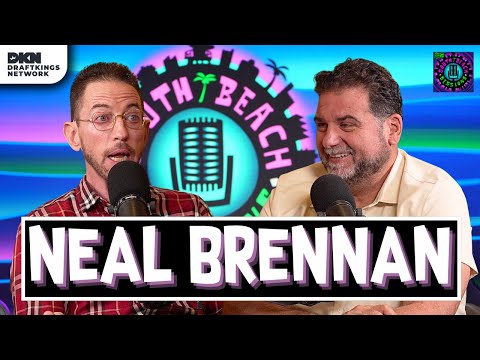
Category: Entertainment. Format: Interview. YouTube video analyzed by skim.
skim AI Analysis
Credibility assessment: Generally Credible. Neal Brennan, a seasoned comedian and writer, discusses his creative process, mental health, and career. While he shares personal insights and opinions, the content is largely subjective and based on his experiences. The discussion touches on well-known figures and concepts in comedy and personal development, lending it some external validation.
Bias assessment: Subjective Perspective. The video is a personal conversation between two friends, heavily featuring Neal Brennan's subjective experiences, opinions, and self-reflections. While not overtly pushing a specific agenda, the discussion is framed through his unique worldview and personal journey, making it inherently biased towards his perspective.
Originality: 80% — Unique Insights. Neal Brennan offers a candid and introspective look at his creative process, mental health struggles, and the evolution of his career. His willingness to discuss vulnerability, ambition, and the 'charisma project' with such raw honesty provides a fresh and original perspective on the life of a comedian.
Depth: 70% — Insightful Analysis. The conversation delves into the nuances of creativity, the challenges of maintaining a high work ethic, and the personal journey of managing mental health. Brennan's self-analysis, particularly regarding his competitive drive and the 'spin the wheel' philosophy, offers thoughtful insights into personal growth and artistic pursuit.
Key Points (18)
1. The Producer's Blueprint vs. The Comedian's Spark
Neal Brennan distinguishes between the meticulous planning of directing and producing, which he likens to architecture, and the spontaneous creative act of making comedy. He explains that while production involves schedules and storyboards, comedy requires extracting humor from reluctant subjects within tight deadlines, a process he finds more challenging and less structured.
Impact: Medium. This distinction highlights the multifaceted nature of creative work, separating the logistical execution from the raw artistic generation.
Sources in support: Neal Brennan (Comedian, Writer, Director, Producer)
2. Brennan: The 'Comic Whisperer' and the Charisma Project
Brennan describes his role as a 'comic whisperer,' helping top comedians refine their material, attributing his success to charisma and a willingness to be vulnerable. He notes that while he can write for Hall of Fame comedians, his own performance often hinges on charisma, leading him to joke about an ongoing 'charisma project.' He also touches on the oversaturation of vulnerability in the current market.
Impact: High. This reveals Brennan's unique position in the comedy world, acting as both a peer and a guide, while also commenting on evolving trends in comedic performance.
Sources in support: Neal Brennan (Comedian, Writer, Director, Producer)
3. The Index Card of Achievements: Battling the Doldrums
To combat feelings of inadequacy or 'drowning,' Brennan used to write down his achievements on index cards. He explains this practice, dating back to around 2006, as a way to remind himself of past successes when self-doubt crept in, acknowledging that even good feelings are temporary and that this is a universal human experience.
Impact: Medium. This practice underscores the psychological tools comedians employ to navigate the inherent insecurity and self-criticism of their profession.
Sources in support: Neal Brennan (Comedian, Writer, Director, Producer)
4. Spinning the Wheel: From Trauma to Acceptance
Brennan shares a philosophy, inspired by a thought he had on drugs, that if unhappy with life, one should 'spin the wheel of 8 billion outcomes.' This concept, shared with him by his partner, reflects a broader acceptance of life's unpredictability and a release from the pressure of constant happiness. He notes significant personal improvement and a reduced impact of past childhood trauma due to various therapeutic interventions.
Impact: High. This 'spin the wheel' metaphor offers a compelling perspective on managing expectations and finding peace amidst life's inherent chaos.
Sources in support: Neal Brennan (Comedian, Writer, Director, Producer)
5. The Competitive Drive for Mental Well-being
Brennan describes his approach to mental health as competitive and ambitious, driven by a desire to not feel 'shitty' and to improve himself. He views his proactive pursuit of treatments, including psychedelics and therapy, as a form of self-love but also as a personal challenge to overcome negative feelings, akin to a 'Karen for my own mental health.'
Impact: High. This framing of mental health as a competitive endeavor reveals a unique motivational strategy for personal growth and resilience.
Sources in support: Neal Brennan (Comedian, Writer, Director, Producer)
6. The Obsessive Craft of Stand-Up Comedy
Brennan emphasizes that his success in stand-up, even in high-pressure situations like the Mark Twain Awards, stems from intense preparation and an obsessive focus on the craft. He contrasts this with natural charisma, stating he's not as inherently gifted as some peers but achieves excellence through relentless work and a deep-seated desire to avoid bombing, viewing it as a matter of survival rather than just gratitude.
Impact: High. This reveals the immense, often unseen, dedication and obsessive drive required to achieve mastery in stand-up comedy.
Sources in support: Neal Brennan (Comedian, Writer, Director, Producer)
7. Kevin Durant: The Ultimate Single-Focus Athlete
Brennan uses Kevin Durant as an example of someone whose singular focus on basketball makes him exceptional. He argues that Durant's lack of interest in other pursuits, like video games or acting, channels all his energy into his sport, making him a unique figure even to other NBA players who discuss him with awe. This contrasts with athletes like Shaq, who had broader interests but perhaps underachieved in basketball as a result.
Impact: Medium. This comparison highlights the trade-offs between broad interests and hyper-focused dedication in achieving peak performance in any field.
Sources in support: Neal Brennan (Comedian, Writer, Director, Producer)
8. The 'I Don't Care' Factor: Fueling Excellence
Brennan posits that a key to excelling, whether in comedy or sports like Kevin Durant's, is a profound lack of interest in anything outside the primary pursuit. He believes this singular focus, exemplified by Durant's dedication solely to basketball, is what drives unparalleled achievement, contrasting it with athletes like Shaq who pursued multiple ventures.
Impact: High. This provocative idea suggests that true mastery might require a form of tunnel vision, sacrificing breadth for depth.
Sources in support: Neal Brennan (Comedian, Writer, Director, Producer)
9. Brennan's Early Days and Roommates
Brennan recounts his early days as a doorman in New York, living with comedian Jay Moore, who harbored ambitions of owning the Lakers. During this period, Brennan was also a film school dropout, realizing early on that directing movies was a slow and complex path, leading him to prefer the immediacy of comedy. He performed stand-up sporadically before committing to it more seriously later. The scene was filled with future comedy stars like Louis CK, Marc Maron, Dave Chappelle, John Stewart, Ray Romano, and Sarah Silverman. Brennan sublet Jay Moore's apartment while Moore was working on a sitcom, highlighting the shared struggles and aspirations of aspiring comedians.
Impact: Medium. This provides context for Brennan's career trajectory and the vibrant, competitive comedy scene he emerged from, showcasing the foundational period of his professional life.
Sources in support: Neal Brennan (Comedian, Writer, Director, Producer)
10. Film vs. Comedy: A Creative Choice
Brennan explains his shift from film aspirations to comedy, noting that while he enjoys directing commercials and appreciates the visual medium, the process of making movies is slow and fraught with mitigating factors beyond material quality. He found the film industry's gatekeeping and perceived condescension frustrating, which pushed him towards stand-up. The direct feedback loop and immediate gratification of a joke landing were more appealing than the protracted development of film projects. He ultimately chose the path that felt more direct and rewarding, even if it involved more personal suffering.
Impact: Medium. This clarifies Brennan's creative priorities and explains his deep commitment to comedy over other artistic avenues, revealing his pragmatic approach to a career in the arts.
Sources in support: Neal Brennan (Comedian, Writer, Director, Producer)
11. NBA Observations and Shifting Interests
The conversation briefly touches on the NBA, with Brennan making observations about player physiques like Charles Barkley's and Trevor Noah's 'high butt tribe' comment, which he humorously notes could lead to cancellation. He admits his passion for the NBA has waned, comparing it to losing interest in 'The Real World,' and he struggles to connect with newer players like 'Shai Gilgeous-Alexander.' He expresses a liking for Victor Wembanyama as a person and potential deep thinker, but his overall engagement with the league has diminished. This shift reflects a broader pattern of his interests evolving or becoming less intense over time.
Impact: Low. This segment reveals Brennan's evolving interests and his candid, sometimes provocative, takes on popular culture, showcasing his willingness to be playfully controversial.
Sources in support: Neal Brennan (Comedian, Writer, Director, Producer)
12. Notes on Interviewing: Brevity and Gossip
Brennan offers notes on improving interviewing, suggesting that his strength lies in being gossipy and willing to ask uncomfortable questions, a trait he hesitated to use with Le Batard due to their friendship. He advises shortening questions, likening Le Batard's longer, more formal style to 'shoe leather' in directing. Brennan believes interviewers should drive the conversation with their own curiosities, rather than passively accepting tangents. He contrasts this with the perceived 'rules' of old media, suggesting new media allows for more directness and less concern for credentials.
Impact: Medium. This provides valuable insights into interviewing techniques and the dynamics of media, revealing Brennan's philosophy on eliciting authentic responses and his critique of certain communication styles.
Sources in support: Neal Brennan (Comedian, Writer, Director, Producer)
13. The Producer's Eye: Attention to Detail
Brennan acknowledges Le Batard's meticulousness as a producer, noting that Le Batard likely considers many ways to improve their content, a detail Brennan admits he overlooks due to his own focus. He contrasts his own approach with Le Batard's producer mindset, recognizing that Le Batard takes pride in the detailed execution of their work. Brennan admits he hasn't thought of the improvements Le Batard might envision, highlighting a difference in their creative roles and attention to detail. This self-awareness shows Brennan's understanding of collaborative dynamics.
Impact: Low. This highlights the complementary skills between the two hosts, showcasing Le Batard's producer acumen and Brennan's acceptance of his own different strengths, contributing to their successful dynamic.
Sources in support: Neal Brennan (Comedian, Writer, Director, Producer)
14. Brennan's 'Kevin Durant' of Comedy
Neal Brennan positions himself as the 'Kevin Durant of comedy,' emphasizing a relentless dedication to quality and craft, akin to Durant's commitment to excellence in basketball. This analogy highlights his belief in chaining himself to high standards, even if it means rigorous work and self-critique.
Impact: High. This framing sets a high bar for his own work and influences his approach to creative output, suggesting that true comedic greatness requires unwavering commitment to quality, a principle he learned from observing peers.
Sources in support: Neal Brennan (Comedian, Writer, Director, Producer)
15. Learning from the Masters: Chappelle, Rock, Seinfeld
Brennan details how he learned most from Dave Chappelle's commitment to quality, Chris Rock's observations on race and gender, and Jerry Seinfeld's meticulous attention to detail in editing and craft. He contrasts Chappelle's innate talent with Rock's and his own need for diligent work, emphasizing that comedic excellence is rarely accidental and often requires immense preparation.
Impact: High. This provides a masterclass in comedic development, showing how different artists achieve greatness through varied approaches—from innate talent to rigorous work ethic—offering valuable lessons for aspiring comedians.
Sources in support: Neal Brennan (Comedian, Writer, Director, Producer)
16. The Illusion of Effortless Brilliance
Brennan, along with Le Batard, discusses how many gifted comedians like John Stewart, Trevor Noah, and Letterman appear effortless due to immense unseen preparation. They highlight that this perceived ease is a result of rigorous work, meticulous editing, and deep understanding of craft, debunking the myth of purely natural talent in comedy.
Impact: High. This insight demystifies comedic success, revealing the hidden labor behind seemingly spontaneous performances and underscoring that mastery in any field requires substantial, often invisible, effort.
Sources in support: Neal Brennan (Comedian, Writer, Director, Producer), Dan Le Batard (Host)
17. Brennan's Interviewing Defense Mechanisms
Neal Brennan reflects on his own interviewing style, acknowledging that his tendency to ask lengthy questions and rapid-fire inquiries can be a defense mechanism to avoid personal vulnerability. He admits to 'drowning' guests in questions to deflect intimacy, a strategy he recognizes as a way to maintain distance.
Impact: Medium. This self-awareness offers a critical look at interview dynamics, revealing how conversational structures can be used to manage personal boundaries and avoid deeper emotional engagement.
Sources in support: Neal Brennan (Comedian, Writer, Director, Producer)
18. The 'I Ain't No [Expletive]' Paragraph
Brennan identifies a common trope in reviews where critics preemptively qualify their criticism by stating 'don't get me wrong' or 'I ain't no [expletive],' often to soften a negative assessment or to appear knowledgeable. He notes this is a subtle way to manage perception and avoid appearing overly harsh or ignorant.
Impact: Medium. This observation highlights a subtle but pervasive aspect of critical discourse, revealing how reviewers use specific linguistic strategies to frame their opinions and manage reader expectations.
Sources in support: Neal Brennan (Comedian, Writer, Director, Producer)
This analysis was generated by skim (skim.plus), an AI-powered content analysis platform by Credible AI. Scores and classifications represent the platform's AI-generated assessment and should be considered alongside other sources.