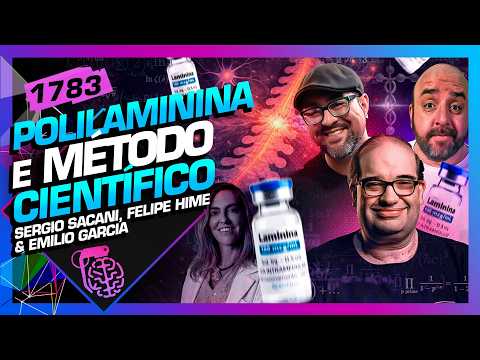
Category: Science. Format: Panel Discussion. YouTube video analyzed by skim.
Key Points (53)
1. The Subjectivity Problem in Science
The scientific method's core objective is to mitigate inherent human subjectivity, which arises from individual perceptions, experiences, and even biological differences in how we process information. Early scientific thought recognized that personal biases could distort observations, leading to the development of rigorous, objective methodologies to ensure findings reflect reality rather than individual interpretation. This is crucial because our brains evolved for survival, not necessarily for perceiving objective truth.
Impact: High. This foundational principle underpins all scientific inquiry, ensuring that discoveries are verifiable and reproducible, moving beyond mere opinion or belief.
Sources in support: Emílio Garcia (Biologist)
2. The Evolution of Scientific Understanding
Scientific understanding has evolved from relying on ancient authorities like Aristotle, unified into scholasticism, to embracing mathematical rigor. Initially, mathematics was seen as instrumental, but figures like Johannes Kepler demonstrated that non-perfect mathematical structures, like ellipses, could represent reality better than imposed perfect circles. This shift culminated in Isaac Newton's 'Mathematical Principles of Natural Philosophy,' marking a transition to explaining the universe through material, mathematical relationships, as further developed by Descartes' mechanical philosophy.
Impact: High. This paradigm shift from deductive reasoning based on authority to empirical observation and mathematical modeling revolutionized our comprehension of the cosmos.
Sources in support: Felipe Hime (Astrophysicist)
3. Discipline-Specific Scientific Methods
While physics and astronomy may yield universal laws, sciences like biology, history, and even forensic science employ methods that are context-dependent and less generalizable. For example, reconstructing a crime scene involves specific evidence that doesn't create a universal theory applicable to all future crimes, unlike Einstein's theory of relativity. This highlights that scientific methodology must adapt to the nature of the subject matter.
Impact: Medium. Recognizing these differences is vital for accurately interpreting findings and avoiding the overgeneralization of scientific principles across disparate fields.
Sources in support: Emílio Garcia (Biologist)
4. Debunking Astrology: The Self-Fulfilling Prophecy
Astrology, despite its ancient roots and widespread belief, fails empirical scientific testing. Experiments show that astrological readings are often generic and that astrologers cannot reliably identify a person's sign based on interviews. Its perceived effectiveness stems from the 'self-fulfilling prophecy' effect, where individuals' beliefs and actions align with astrological predictions, creating an illusion of accuracy rather than an objective causal link.
Impact: High. This analysis clarifies the distinction between psychological phenomena and empirical scientific validity, cautioning against the acceptance of pseudoscience.
Sources in support: Felipe Hime (Astrophysicist)
5. Ptolemy's Astrological Framework
Ptolemy's Almagest, a foundational text in astronomy, divided the celestial sphere into 12 equal parts for astrological purposes, a division that has persisted despite later astronomical discoveries revealing 13 constellations along the ecliptic. This arbitrary division, lacking clear justification, highlights how historical conventions can endure even when scientific understanding evolves.
Impact: Medium. This historical division by Ptolemy, while influential, demonstrates how arbitrary decisions can shape scientific and cultural understanding for centuries, even when not fully justified.
Sources in support: Emílio Garcia (Biologist)
6. The Evolving Meaning of 'Theory'
The common understanding of 'theory' as a mere guess or idea contrasts sharply with its scientific definition as a well-tested framework or set of hypotheses. This semantic divergence, rooted in the historical evolution of language and scientific discourse, often fuels unproductive debates where participants argue semantics rather than substance.
Impact: High. Misunderstanding the scientific definition of 'theory' leads to public skepticism and hinders productive scientific discourse, often reducing complex evidence-based frameworks to mere speculation.
Sources in support: Rogério Vilela (Host)
7. The Rigors of the Scientific Method
The scientific method, exemplified by observing a phenomenon like lightning, involves forming a testable hypothesis (e.g., 'Zeus causes lightning'), designing an experiment to test it, and crucially, submitting the findings for peer review. This peer review process, where experts scrutinize the hypothesis, methodology, and conclusions, is essential for validating scientific claims and ensuring objectivity, preventing premature acceptance of findings.
Impact: High. The peer review process is the bedrock of scientific validation, ensuring that conclusions are robust and that individual biases do not compromise the integrity of scientific knowledge.
Sources in support: Rogério Vilela (Host)
8. The Thalidomide Tragedy: A Cautionary Tale
The Thalidomide tragedy of the mid-20th century, where a drug prescribed for morning sickness caused severe birth defects, underscores the critical importance of rigorous post-publication scientific scrutiny. Despite initial approval and publication, later investigations revealed that one enantiomer of the drug was teratogenic, leading to its withdrawal and highlighting that scientific understanding can evolve and correct earlier oversights.
Impact: High. The Thalidomide case serves as a stark reminder that scientific knowledge is provisional and that ongoing vigilance and re-evaluation are necessary to ensure public safety, even after initial findings are published.
Sources in support: Emílio Garcia (Biologist)
9. Interdisciplinary Application of Scientific Method
The principles of the scientific method, particularly statistics and mathematical modeling, are universally applicable across disciplines. An astrophysicist can analyze biological data by focusing on the underlying numbers and patterns, demonstrating that a strong grasp of methodology transcends specific subject matter expertise.
Impact: Medium. This interdisciplinary approach highlights the power of foundational scientific principles to provide objective analysis, bridging diverse fields and fostering collaboration.
Sources in support: Rogério Vilela (Host)
10. The Challenge of Placebo Effects in Research
The placebo effect, where belief in a treatment can induce physiological changes, complicates medical research. To isolate the true efficacy of a drug, researchers employ methods like giving patients a substance with no active ingredients (a placebo) to control for psychological factors, ensuring that observed improvements are due to the treatment itself and not just the patient's expectation.
Impact: High. Understanding and controlling for the placebo effect is fundamental to establishing the genuine therapeutic value of new medical interventions, preventing false positives in research.
Sources in support: Rogério Vilela (Host)
11. Ethical Constraints in Medical Research
Modern medical research operates under strict ethical guidelines that prohibit harmful experimentation, such as withholding treatment from a control group if it could lead to death or severe harm. While historical research, particularly during wartime, sometimes involved unethical practices, contemporary standards prioritize patient safety and well-being above all else, even if it slows research progress.
Impact: High. Ethical considerations are paramount in medical research, ensuring that the pursuit of knowledge does not come at the unacceptable cost of human suffering or exploitation.
Sources in support: Emílio Garcia (Biologist)
12. The Science Behind Laminin and Spinal Cord Repair
Laminin, a glycoprotein produced by the body, is crucial for forming the basal lamina, a cellular support structure, and plays a key role in neural development. The hypothesis is that administering synthesized laminin ('polilaminina') shortly after spinal cord injury could help prevent the severance of neural connections or promote their reconstruction, thereby restoring function.
Impact: High. This hypothesis offers a potential breakthrough for treating spinal cord injuries by leveraging a naturally occurring molecule to facilitate neural repair, addressing a critical unmet medical need.
Sources in support: Felipe Hime (Astrophysicist)
13. Polilaminina: Synthesizing a Neural Repair Agent
The 'polilaminina' refers to a synthesized form of laminin, developed in a laboratory, which consists of multiple laminin molecules linked together. This synthetic approach aims to provide a therapeutic agent that can be administered to patients, potentially aiding in the repair or preservation of neural pathways following injury.
Impact: High. The development of synthesized polilaminina represents a significant advancement, moving from understanding laminin's biological role to creating a tangible therapeutic agent for clinical application.
Sources in support: Felipe Hime (Astrophysicist)
14. Tatiana's Polilaminina Research
Tatiana's research involves injecting polilaminina, a substance developed in a laboratory, into patients with spinal cord injuries within 72 hours of trauma, alongside standard decompression surgery, aiming to improve recovery outcomes. The initial pilot project involved eight patients, with one showing significant recovery, five minor improvements, and two fatalities.
Impact: High. This preliminary study offers a glimmer of hope for spinal cord injury patients, but its small sample size and lack of a control group make definitive conclusions about polilaminina's efficacy and safety impossible.
Sources in support: Emílio Garcia (Biologist)
15. Ethical Dilemmas in Early-Stage Research
While the scientific method demands control groups, ethical considerations arise when a potentially life-saving treatment is being tested. The dilemma is whether it's ethical to withhold a treatment that might help, especially when patients or their families are desperate, even if the treatment's efficacy and safety are not yet fully proven.
Impact: Medium. This ethical tightrope walk underscores the complexity of medical research, where the drive for scientific certainty must be balanced with compassion and the potential for immediate patient benefit.
Sources in support: Rogério Vilela (Host), Felipe Hime (Astrophysicist)
16. The Scientific Method's Imperative
The scientific method requires rigorous testing, including control groups and safety assessments, to establish causality and ensure treatments are safe and effective. Applying this to polilaminina means comparing outcomes between patients receiving the substance and those receiving a placebo, alongside standard treatment, to determine if polilaminina itself is responsible for improvements or adverse events.
Impact: High. This adherence to scientific rigor is crucial for preventing the widespread adoption of ineffective or harmful treatments, as demonstrated by historical failures like Thalidomide, ensuring patient safety above all else.
Sources in support: Rogério Vilela (Host), Felipe Hime (Astrophysicist)
17. Lessons from Fotonolamina and Thalidomide
Historical cases like Thalidomide and Fotonolamina serve as stark warnings about the dangers of premature conclusions and the potential for severe harm when scientific protocols are bypassed due to public pressure or perceived urgency. These examples underscore why rigorous, controlled testing is non-negotiable, even when facing devastating conditions like cancer or paralysis.
Impact: High. These cautionary tales are vital for tempering public enthusiasm and ensuring that scientific progress is built on a foundation of verifiable evidence, not just hope or anecdotal success.
Sources in support: Rogério Vilela (Host), Felipe Hime (Astrophysicist)
18. Navigating Public Perception and Scientific Communication
The communication of scientific findings, especially in emotionally charged areas like medical breakthroughs, must be handled with extreme care to avoid creating false hope or misrepresenting the stage of research. Tatiana's own statements acknowledge the need for further safety testing, reinforcing that preliminary results, while promising, do not equate to proven efficacy.
Impact: High. Responsible communication is paramount in science to maintain public trust and ensure that hope is grounded in reality, preventing the disillusionment that follows unfulfilled promises.
Sources in support: Rogério Vilela (Host), Felipe Hime (Astrophysicist), Emílio Garcia (Biologist)
19. The Ethics of Animal Testing
The use of animals in scientific testing, particularly for products like cosmetics and pharmaceuticals, has drastically decreased due to ethical concerns and the development of more sophisticated alternatives. Historically, practices were often cruel, but modern ethical committees now rigorously evaluate the necessity and methodology of animal experiments to minimize suffering and animal numbers. Furthermore, the biological differences between species mean that results from animal tests are not always directly transferable to humans, pushing research towards in-vitro methods and artificial tissues.
Impact: High. This shift reflects a growing societal awareness of animal welfare and a scientific commitment to more humane research practices, potentially leading to more reliable and ethically sound product development.
Sources in support: Emílio Garcia (Biologist), Rogério Vilela (Host)
20. Industrial Farming vs. Lab Testing Ethics
While scientific testing on animals faces ethical scrutiny, the practices in industrial farming are arguably far more cruel. Animals raised for consumption are often kept in solitary confinement, leading to psychological distress, and their lives are inherently geared towards slaughter. This raises a provocative question: is the controlled, albeit sometimes uncomfortable, experimentation in labs more ethically justifiable than the systemic suffering inherent in mass-scale meat production?
Impact: High. This comparison challenges conventional ethical frameworks, suggesting that societal focus on laboratory animal welfare might overshadow the immense suffering in food production, prompting a re-evaluation of our relationship with animals.
Sources in support: Felipe Hime (Astrophysicist)
21. The Future of Food: Lab-Grown Meat
The future of food may lie in laboratory-grown meat, which promises to replicate the taste and texture of traditional meat without the ethical and environmental costs of animal agriculture. Early experiments with lab-grown burgers have shown promising results, with taste tests indicating little difference from conventional meat, albeit at a high initial cost. This technological advancement could revolutionize food consumption, aligning dietary preferences with ethical and sustainable practices.
Impact: High. The development of affordable and palatable lab-grown meat could significantly reduce the ethical burden of animal agriculture and its environmental footprint, offering a sustainable solution for future food security.
Sources in support: Emílio Garcia (Biologist)
22. Scientific Method in Daily Life
The scientific method is not confined to laboratories; it's a fundamental approach to problem-solving that individuals use daily. Whether deciding to buy a car or even choosing what to eat, people implicitly or explicitly form hypotheses, gather information, weigh pros and cons, and make decisions. Science formalizes this by adding statistical rigor and controlled experimentation, ensuring that observations are not merely anecdotal or emotional, but based on broader, verifiable data.
Impact: Medium. Recognizing the scientific method in everyday actions empowers individuals to make more informed and rational decisions, moving beyond emotional impulses towards evidence-based choices.
Sources in support: Sacani (Guest (remote)), Rogério Vilela (Host), Felipe Hime (Astrophysicist)
23. The Origins of Blind Testing
The development of rigorous scientific testing methods, such as the blind test, often arose from a need to debunk pseudoscientific claims and charlatans. Historically, practices like mesmerism, which lacked empirical evidence, were challenged by thinkers who devised controlled experiments to expose their ineffectiveness. This process of questioning unsubstantiated claims and developing objective testing protocols has been crucial in advancing genuine scientific understanding and protecting the public from misinformation.
Impact: High. Understanding the historical roots of scientific methodology highlights its role in combating pseudoscience and ensuring that claims are validated through empirical evidence, not just assertion.
Sources in support: Emílio Garcia (Biologist)
24. Planning Scientific Expeditions
Organizing scientific and observational trips, like viewing an eclipse, requires meticulous planning that mirrors the scientific method. Choosing the best location, like A Coruña in Spain for the upcoming eclipse, involves analyzing factors such as weather probability and accessibility. This process of hypothesis (best viewing spot), data collection (weather patterns, eclipse path), and decision-making is essential for maximizing the chances of a successful observation.
Impact: Medium. Applying methodical planning to travel and events ensures optimal outcomes, transforming potential logistical challenges into well-executed experiences, as demonstrated by the detailed itinerary for the Spanish eclipse trip.
Sources in support: Sacani (Guest (remote)), Rogério Vilela (Host)
25. The Marathon of Science
Scientific breakthroughs are not instantaneous; they are the result of decades, sometimes centuries, of dedicated research and incremental progress. The 'polilamina' case exemplifies this, with Dr. Tatiana's work spanning nearly 30 years, highlighting that scientific advancement requires long-term commitment and patience, a stark contrast to the public's expectation of immediate results.
Impact: High. This perspective reframes public understanding of scientific timelines, emphasizing that true innovation is a marathon, not a sprint. It challenges the notion of overnight success and underscores the value of sustained research efforts.
Sources in support: Emílio Garcia (Biologist), Felipe Hime (Astrophysicist)
26. Navigating the Scientific Method: Polilamina vs. Chloroquine
The 'polilamina' case is in its nascent stages, pre-Phase 1 safety trials, while chloroquine's efficacy for COVID-19 was disproven through rigorous scientific testing. The scientific method involves distinct phases: safety (Phase 1), dosage/variation (Phase 2), efficacy (Phase 3), and real-world observation (Phase 4). Comparing an unproven substance to a debunked treatment misunderstands this structured process.
Impact: High. This clarifies the critical distinction between preliminary research and established scientific consensus, cautioning against premature conclusions and highlighting the robust nature of the scientific method in validating or refuting potential treatments.
Sources in support: Felipe Hime (Astrophysicist), Emílio Garcia (Biologist), Rogério Vilela (Host)
27. The Illusion of Patterns: Pareidolia in Science and Religion
The tendency to perceive patterns where none exist, known as pareidolia, can lead to misinterpretations in both science and religion. The 'cross shape' attributed to 'polilamina' is a visual artifact, not an inherent property, akin to seeing faces in clouds. This phenomenon highlights the importance of objective observation and critical thinking, warning against projecting desired meanings onto ambiguous data.
Impact: Medium. This insight serves as a crucial reminder to critically evaluate perceived patterns, whether in scientific data or religious iconography. It underscores the need for evidence-based interpretation over subjective pattern recognition.
Sources in support: Sacani (Guest (remote)), Emílio Garcia (Biologist), Felipe Hime (Astrophysicist)
28. Statistics: The Power of the Collective
Statistical analysis is essential for understanding treatment efficacy because individual outcomes can be misleading. While a single patient might improve spontaneously, statistical significance emerges from large sample sizes, revealing trends that are invisible at the individual level. This principle is fundamental to distinguishing genuine treatment effects from random chance or natural recovery.
Impact: High. This explanation demystifies statistical relevance, clarifying why individual anecdotes are insufficient for scientific validation. It empowers the audience to understand the necessity of large-scale data in drawing reliable conclusions about treatments.
Sources in support: Emílio Garcia (Biologist), Rogério Vilela (Host)
29. Statistical Rigor in Drug Testing
To determine the efficacy of a drug like polilaminina, rigorous statistical methods are essential. This involves comparing a treatment group receiving the drug against a control group receiving a placebo. The observed difference in outcomes, such as a 35% recovery rate in the treatment group versus 20% in the placebo group, allows scientists to statistically attribute the improvement to the drug itself, accounting for other factors like natural recovery or physiotherapy.
Impact: High. This methodology ensures that medical treatments are validated through objective data, preventing the widespread use of ineffective or harmful drugs and safeguarding public health.
Sources in support: Felipe Hime (Astrophysicist), Emílio Garcia (Biologist)
30. The Nuances of Statistical Inference
Beyond simple frequentist approaches, more sophisticated statistical methods like Bayesian inference exist. Bayesian statistics incorporate prior beliefs or probabilities into the analysis, updating them with new data. This contrasts with frequentist methods that focus solely on the frequency of observed events. The choice of statistical framework can significantly influence the interpretation of experimental results, especially in complex scenarios.
Impact: Medium. Understanding different statistical frameworks allows for more nuanced interpretation of data, leading to more robust scientific conclusions and better-informed decision-making.
Sources in support: Emílio Garcia (Biologist)
31. Hypothesis Testing and Scientific Funding
Scientific research proposals are evaluated based on the plausibility and relevance of their hypotheses. Funding agencies like FAPESP would not support research into demonstrably absurd ideas, such as flying elephants, because it lacks a rational basis. Instead, resources are directed towards hypotheses that are grounded in existing knowledge and have a reasonable chance of yielding meaningful insights, ensuring that scientific endeavors are both productive and responsible.
Impact: High. This gatekeeping function of funding bodies ensures that scientific resources are allocated efficiently, prioritizing research with the highest potential for advancing knowledge and societal benefit.
Sources in support: Rogério Vilela (Host), Felipe Hime (Astrophysicist)
32. The Art of Experimental Design: Ratinho's Forest
In a doctoral study, researchers attempted to understand how rats navigate forests by attaching spools of thread to them and observing their turning choices. While they measured numerous environmental factors, a simpler approach, inspired by an Australian study using only three variables, proved more effective. This highlights that scientific effort should focus on the most impactful variables, as extraneous data can obscure significant findings, a principle AI can help optimize.
Impact: High. This illustrates the critical need for parsimony in scientific research, ensuring that resources are focused on the most explanatory factors, thereby accelerating discovery and reducing wasted effort.
Sources in support: Felipe Hime (Astrophysicist), Emílio Garcia (Biologist)
33. AI's Role in Reducing Data Dimensionality
Artificial intelligence, particularly predictive AI, is instrumental in modern science for reducing data dimensionality. Instead of analyzing numerous variables, AI can identify the most crucial ones, as seen in the rat navigation study where three key variables explained 80% of the choices. This efficiency allows researchers to focus their efforts and resources more effectively, accelerating the pace of discovery.
Impact: High. By streamlining data analysis, AI empowers scientists to tackle more complex problems and derive insights faster, pushing the boundaries of scientific understanding.
Sources in support: Emílio Garcia (Biologist), Felipe Hime (Astrophysicist)
34. Science vs. Pseudoscience: The Anecdotal Fallacy
Science must avoid anecdotal evidence, often termed 'anecdotal science,' where personal experiences or isolated incidents are presented as proof. Pseudoscience, like ufology, often relies on such weak evidence (e.g., 'I saw a light in the sky'). True scientific practice involves rigorous hypothesis testing, data collection, and analysis, adhering to established methodologies like Occam's Razor to favor the simplest explanation.
Impact: High. Distinguishing between science and pseudoscience is vital for public trust and informed decision-making, preventing the spread of misinformation and ensuring resources are allocated to evidence-based practices.
Sources in support: Felipe Hime (Astrophysicist), Emílio Garcia (Biologist)
35. Occam's Razor: Prioritizing Simpler Explanations
Occam's Razor dictates that when faced with multiple valid explanations for a phenomenon, the simplest one should be preferred. For instance, when considering the construction of the pyramids, the hypothesis that local people built them is far simpler and more probable than one involving extraterrestrials. This principle guides scientific inquiry by focusing resources on the most likely explanations first.
Impact: High. Applying Occam's Razor efficiently directs scientific investigation, preventing the pursuit of overly complex or improbable theories and accelerating the discovery of fundamental truths.
Sources in support: Felipe Hime (Astrophysicist), Emílio Garcia (Biologist)
36. The 'How' vs. 'Why' in Scientific Inquiry
Modern scientific inquiry, particularly in physics, focuses on the 'how' – the mechanisms and processes – rather than the 'why,' which delves into purpose and philosophy. While human sciences explore purpose, physics aims to describe observable phenomena and their underlying mechanics. This distinction is crucial for defining the scope and methodology of scientific research.
Impact: Medium. Clarifying the 'how' versus 'why' distinction helps delineate the boundaries of scientific inquiry, ensuring that research remains focused on empirical investigation and measurable outcomes.
Sources in support: Felipe Hime (Astrophysicist)
37. The Evolution of Scientific Theory: From Theory to Proof
Scientific theories, like Einstein's work on relativity or string theory, can exist for decades as elegant mathematical constructs before empirical evidence emerges to confirm or refute them. The detection of gravitational waves decades after Einstein's prediction, or the lack of LHC confirmation for string theory, illustrates this lag. This highlights that scientific progress is often a long, iterative process where theoretical frameworks are tested and refined over time.
Impact: High. This temporal gap between theoretical prediction and empirical validation underscores the patience and persistence required in scientific advancement, often spanning generations.
Sources in support: Emílio Garcia (Biologist)
38. Galileo's Struggle for Acceptance
Galileo Galilei's astronomical discoveries in 1609, made with the telescope, were met with skepticism because the concept of manipulating light with lenses was akin to magic for his contemporaries. They viewed his observations of Jupiter's moons and Venus's phases as illusions rather than real phenomena. This historical episode demonstrates how deeply ingrained beliefs and a lack of understanding of new technologies can impede scientific acceptance.
Impact: High. Galileo's story serves as a cautionary tale about the resistance to new scientific ideas and the importance of clear communication and evidence in overcoming societal skepticism.
Sources in support: Felipe Hime (Astrophysicist)
39. The Collective Nature of Scientific Discovery
Great scientific figures like Isaac Newton and Albert Einstein did not achieve their breakthroughs in isolation. Their work was built upon the ideas of predecessors and contemporaries, involving collaboration and intellectual exchange. Newton, for instance, refined his theory of gravity with input from Robert Hook. This collective effort, where ideas are shared, debated, and synthesized, is the true engine of scientific progress.
Impact: High. Recognizing science as a collective endeavor fosters a more collaborative research environment and ensures that credit is appropriately distributed, acknowledging the contributions of many.
Sources in support: Emílio Garcia (Biologist)
40. Anvisa's Role in Drug Approval
Regulatory bodies like Anvisa are crucial for approving new medications. Their decisions are based on established, standardized procedures and rigorous data analysis from clinical trials, not on individual opinions. A researcher must present sufficient evidence to Anvisa, which then evaluates it against global standards to determine if a drug is safe and effective for public use, ensuring a consistent and reliable approval process.
Impact: High. Anvisa's adherence to standardized, evidence-based procedures ensures public safety by preventing the approval of ineffective or harmful treatments, maintaining trust in the healthcare system.
Sources in support: Emílio Garcia (Biologist)
41. Anvisa's Role and Scientific Norms
Anvisa operates based on established, globally recognized technical norms and procedures, which are publicly available and open for discussion with experts and the public. The agency's decisions are not arbitrary but are made by a technical team evaluating compliance with these standards.
Impact: Medium. This clarifies that regulatory bodies like Anvisa follow structured, evidence-based processes, countering notions of arbitrary decision-making and fostering trust in their procedures.
Sources in support: Rogério Vilela (Host)
42. The Imperative to 'Study': Trust Through Knowledge
The only way to build trust in scientific or governmental information is through personal study and critical engagement with data. Relying solely on belief is insufficient; individuals must actively seek knowledge by reading, researching, and understanding the underlying evidence themselves.
Impact: High. This empowers individuals to take ownership of their understanding, shifting the burden from blind trust to informed skepticism and active learning.
Sources in support: Rogério Vilela (Host), Felipe Hime (Astrophysicist), Emílio Garcia (Biologist)
43. Open Data and Scientific Scrutiny
Modern scientific publications require data to be publicly available, allowing anyone to download and analyze it. This transparency, exemplified by cases like the phosphine on Venus discovery, enables independent verification and the identification of errors, which are then corrected through published errata.
Impact: High. This highlights the self-correcting nature of science, where open data acts as a crucial safeguard against error and fraud, reinforcing the reliability of the scientific process.
Sources in support: Felipe Hime (Astrophysicist), Emílio Garcia (Biologist)
44. Poly-laminine: Hope vs. Hype in Spinal Cord Injury
While poly-laminine shows promise for nerve regeneration, especially in acute injuries, its effectiveness for chronic conditions or long-term recovery is uncertain due to 'dirty data' from individual cases. Scientific validation requires controlled experiments with large sample sizes to isolate the treatment's effect from other factors like physiotherapy or natural recovery.
Impact: High. This addresses the critical distinction between anecdotal hope and scientific evidence, cautioning against premature conclusions and emphasizing the need for rigorous clinical trials.
Sources in support: Rogério Vilela (Host), Tatiana (Biologist)
45. The Nuances of Scientific Communication and Public Expectation
Communicating scientific breakthroughs, especially those involving human health, requires extreme care. While hope is vital, it must be balanced with scientific reality to avoid creating false expectations. The public's scientific literacy and the communicator's responsibility are both key to navigating this delicate balance.
Impact: High. This underscores the ethical imperative for scientists and communicators to be precise and responsible, acknowledging the profound impact their words have on vulnerable individuals.
Sources in support: Rogério Vilela (Host), Tatiana (Biologist)
46. The Role of AI and Funding in Accelerating Science
Artificial intelligence and substantial funding can significantly accelerate scientific research, as seen with mRNA vaccines. However, the speed of development must still be balanced with thorough testing to ensure safety and efficacy, preventing a rush to judgment that could overlook critical risks.
Impact: Medium. This highlights the dual nature of rapid scientific advancement: while beneficial, it necessitates even greater vigilance in validation and ethical considerations.
Sources in support: Rogério Vilela (Host), Emílio Garcia (Biologist)
47. Statistical Significance: The Bedrock of Scientific Claims
Scientific claims, whether about vaccines or election results, are validated by statistical significance, not absolute certainty. Understanding concepts like margin of error, standard deviation, and the difference between correlation and causation is essential for interpreting data correctly and avoiding misinterpretations.
Impact: High. This demystifies statistical concepts, equipping the audience with the tools to critically assess scientific claims and understand why 'it works for some' isn't sufficient scientific proof.
Sources in support: Felipe Hime (Astrophysicist), Emílio Garcia (Biologist)
48. Emílio Garcia: The Polilaminina Puzzle
The primary critique of the polilaminina research is its lack of discussion regarding the mechanism of action. Unlike well-understood pain relievers like Neusaldina, which have a clear biochemical pathway, the polilaminina study fails to elucidate how it functions. This absence of a defined process is a significant hurdle for its publication in top scientific journals. The research must be robust and provide clear data before it can be considered for publication. The final sentence is: This gap in explanation leaves the scientific community questioning the validity and completeness of the findings.
Impact: High. This highlights the critical need for detailed mechanistic understanding in scientific research. Without it, even potentially groundbreaking discoveries face significant skepticism and rejection from the scientific community.
Sources in support: Felipe Hime (Astrophysicist), Emílio Garcia (Biologist)
49. Sacani: The Rigors of Nature's Gatekeeping
The journal Nature rejected the polilaminina article, not necessarily due to flawed science, but because it did not meet the journal's stringent requirements for mechanistic explanation. This rejection signifies that the research, while potentially interesting, needs further development to become 'robust' enough for publication. The opportunity to resubmit after addressing these concerns is a standard part of the scientific process, indicating that even top journals engage in a dialogue with researchers. The final sentence is: This interaction underscores the demanding nature of high-impact scientific publishing.
Impact: High. This illustrates the high bar for publication in prestigious journals like Nature, emphasizing that scientific advancement requires not just novel ideas but also rigorous, well-documented evidence.
Sources in support: Emílio Garcia (Biologist)
50. Emílio Garcia: Empowering the Public Through Scientific Literacy
To avoid being manipulated by rhetoric and misinformation, individuals should educate themselves on scientific methodology, history of science, and basic principles of subjects like mathematics, physics, and biology. This foundational knowledge allows for a more critical assessment of information, enabling people to discern what is 'strange' or 'esoteric' in presented narratives. The final sentence is: This self-education is presented as a crucial defense against accepting unsubstantiated claims, regardless of how well-told they are.
Impact: High. This call for widespread scientific literacy is a powerful message, suggesting that critical thinking skills are essential for navigating an increasingly complex information landscape and fostering a more informed populace.
Sources in support: Felipe Hime (Astrophysicist), Emílio Garcia (Biologist)
51. Sacani & Emílio Garcia: The Allure of Celestial Events
Upcoming travel opportunities to witness celestial events, such as a total solar eclipse in Egypt in August 2025 and another in Spain in August 2026, are highlighted. These events are described as unique, awe-inspiring experiences that cannot be fully captured by photos or videos, emphasizing the value of being present. The final sentence is: The shared experience of witnessing such phenomena is presented as a compelling reason to join these organized trips.
Impact: Medium. This promotes travel and shared experiences, linking scientific phenomena with tourism and community building, suggesting that such events offer profound personal enrichment.
Sources in support: Emílio Garcia (Biologist), Felipe Hime (Astrophysicist), Rogério Vilela (Host)
52. Emílio Garcia: Vilela's Artistic and Scientific Legacy
Vilela's past work, specifically creating the cover art for 'Incidente de Varginha,' a significant early computer game in Brazil, is highlighted as a notable contribution. This artistic endeavor is framed within the context of discussing science and proven facts, suggesting a connection between creative expression and scientific themes. The final sentence is: This anecdote serves to showcase Vilela's diverse talents and his early engagement with culturally relevant topics.
Impact: Low. This point adds a layer of personal history and artistic contribution to the discussion, humanizing the guests and demonstrating a broader range of experiences beyond pure scientific discourse.
Sources in support: Felipe Hime (Astrophysicist)
53. Sacani: The 'Teia da Vida' Project
A new project called 'Teia da Vida,' a book on ecology written by Mila Maçuda and Reinaldo José Lopes, with illustrations by Pedro Matalo, is introduced. The book focuses on the interactions between organisms and is available through a crowdfunding campaign on Catarse. The final sentence is: This project is presented as a significant effort in scientific dissemination, emphasizing the importance of ecological understanding.
Impact: Medium. This promotes a specific scientific book and crowdfunding initiative, highlighting the importance of ecological science and the collaborative nature of creating accessible educational content.
Sources in support: Emílio Garcia (Biologist), Rogério Vilela (Host)
This analysis was generated by skim (skim.plus), an AI-powered content analysis platform by Credible AI. Scores and classifications represent the platform's AI-generated assessment and should be considered alongside other sources.