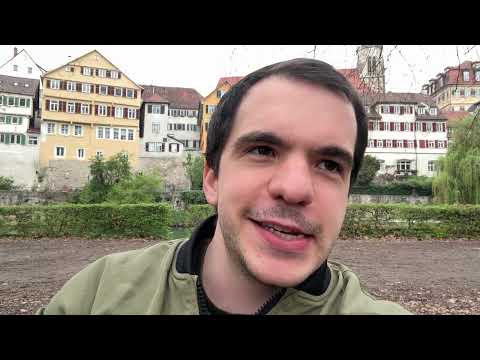
Category: Lifestyle. Format: Monologue. YouTube video analyzed by skim.
Summary
A personal account detailing why Germany is not ideal for those with disposable income or entrepreneurial ambitions, citing high costs, poor infrastructure, and a challenging business environment, despite acknowledging its potential benefits for lower-income individuals or those seeking employment.
skim AI Analysis
Credibility assessment: Subjective Experience. The speaker shares a personal and subjective experience of living in Germany, focusing heavily on negative aspects. While some points about cost and infrastructure may hold merit, the analysis lacks comparative data and objective evidence, relying on personal anecdotes and strong opinions. The speaker acknowledges their unique position of choice, which colors their perspective.
Bias assessment: Strongly Negative. The video exhibits a strong negative bias against Germany. The speaker consistently frames their experiences and observations in the most unfavorable light, using hyperbole and dismissive language. The analysis is one-sided, focusing exclusively on perceived flaws and downplaying or ignoring potential benefits or positive aspects.
Originality: 70% — Personal Perspective. While the criticisms of Germany are common themes in expat discussions, the speaker's direct, unvarnished, and highly opinionated delivery offers a distinct personal perspective. The focus on specific, often overlooked, daily annoyances and the comparison to Italy provides a unique angle, even if the overall sentiment is negative.
Depth: 40% — Surface-Level Critique. The analysis touches on several aspects of life in Germany, such as taxes, housing, transportation, and healthcare. However, it remains largely superficial, relying on personal anecdotes and broad generalizations rather than in-depth research or comparative data. The speaker's strong personal bias prevents a more nuanced and objective examination of the issues.
Key Points (4)
1. Infrastructure and Service Deficiencies
Contrary to popular belief, Germany's infrastructure, including public transportation and internet services, is characterized as mediocre and unreliable. The speaker recounts frequent train delays, high ticket prices, and extremely slow internet speeds, contrasting this with the perceived efficiency of other European countries like Italy. This paints a picture of a country whose infrastructure is not keeping pace with modern demands or its reputation.
Impact: Medium. The perceived decline in infrastructure quality raises concerns about Germany's future economic competitiveness and its ability to support a modern, digital society.
Sources in support: Speaker (Content Creator)
2. The High Cost of Mediocrity
Germany is presented as an excessively expensive country where the quality of services does not justify the high prices. The speaker argues that for individuals earning above the average, the cost of living, particularly for housing and transportation, is disproportionately high, leading to a feeling of being 'robbed' without receiving commensurate value. This makes the country an unattractive option for those seeking a high quality of life commensurate with their earnings.
Impact: High. This perspective suggests that Germany's economic model may be unsustainable or misaligned with consumer expectations, potentially impacting its attractiveness to skilled migrants and investors.
Sources in support: Speaker (Content Creator)
3. The Illusion of German Superiority
The speaker contends that Germany's reputation for efficiency, organization, and superior infrastructure is largely a myth, especially when compared to other European nations. They argue that the perceived advantages are often a result of comparing Germany to the significantly poorer infrastructure of Brazil, rather than to its European peers. The reality, according to the speaker, is a country that is 'falling apart' and failing to keep up.
Impact: High. This challenges the long-held perception of Germany as a model of efficiency, suggesting a potential decline in its global standing and a need for introspection regarding its current state.
Sources in support: Speaker (Content Creator)
4. Health Risks and Neglected Public Health
The speaker highlights a concerning lack of public health awareness and preventative measures in Germany, specifically regarding Lyme disease transmitted by ticks. Despite the prevalence of ticks carrying the disease, there are no widespread public campaigns for detection or prevention, and the healthcare system's response to potential exposure is described as dismissive, leaving individuals to manage serious neurological risks with inadequate support.
Impact: Medium. This oversight in public health management suggests a potential systemic failure in prioritizing citizen well-being, particularly concerning preventable diseases with long-term health consequences.
Sources in support: Speaker (Content Creator)
This analysis was generated by skim (skim.plus), an AI-powered content analysis platform by Credible AI. Scores and classifications represent the platform's AI-generated assessment and should be considered alongside other sources.