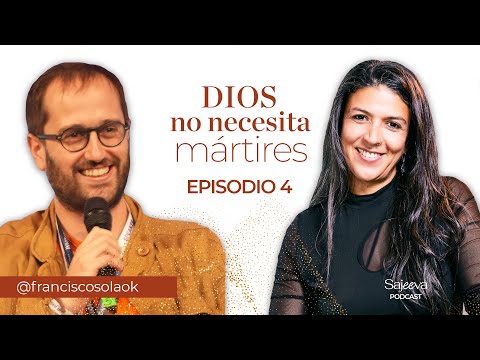
Category: Opinion. Format: Interview. YouTube video analyzed by skim.
Key Points (20)
1. The Illusion of Original Sin
Original sin is not about eating an apple, but the belief in being separate from God. This separation is an illusion, and true healing comes from remembering our inherent oneness with the divine, as taught by 'A Course in Miracles.' The concept of healing is not returning to God, but realizing we never left.
Impact: High. This reframes a core theological concept, shifting focus from guilt to inherent wholeness. It suggests that suffering stems from a perceived separation, offering a path to peace through remembrance.
Sources in support: Francisco Sola (Writer and therapist, 'A Course in Miracles' teacher)
2. The Power of Vulnerable Connection
The initial meeting between the host and Francisco Sola in a Mexican bar was a profound moment of vulnerability and connection, remembered as superior to later interactions due to its raw intimacy. This shared vulnerability allowed them to see each other with 'the eyes of the heart,' fostering a deep friendship.
Impact: Medium. This anecdote illustrates the transformative power of authentic human connection, emphasizing that true friendship can emerge from moments of shared vulnerability and mutual understanding.
Sources in support: Francisco Sola (Writer and therapist, 'A Course in Miracles' teacher)
3. Demystifying 'A Course in Miracles'
'A Course in Miracles' is a channeled text aiming to reprogram the mind through Christian symbolism, teaching non-dualistic metaphysics. It's a healing tool that helps correct the 'wound of separation' by changing perception, leading to stress reduction and positive outcomes in health, relationships, and abundance.
Impact: High. This provides a concise explanation of a complex spiritual text, making its core tenets accessible and highlighting its practical application for personal transformation and well-being.
Sources in support: Francisco Sola (Writer and therapist, 'A Course in Miracles' teacher)
4. The 'Holy Instant' and Nervous System Regulation
The 'holy instant' described in 'A Course in Miracles' is when the mind recognizes the illusion of past trauma, leading to a profound emotional shift. This moment of vulnerability calms the nervous system, activating the parasympathetic response and offering a pathway to healing beyond mere psychological regulation.
Impact: High. This connects the spiritual concept of the 'holy instant' to physiological responses, illustrating how spiritual insight can directly impact the body's stress and relaxation mechanisms.
Sources in support: Host (Host of 'Prohibido Obedecer' podcast)
5. God as Unity, Not Separation
Unlike theistic religions that posit a separate creator, 'A Course in Miracles' suggests God and creation are one, with God extending into everything. This non-dualistic view, akin to Eastern traditions, posits that the perceived separation is a fleeting illusion, a dream from which we awaken to our eternal oneness.
Impact: High. This challenges traditional religious doctrines by proposing a unified divine consciousness, offering a more immanent and all-encompassing view of spirituality that dissolves the perceived distance between humanity and the divine.
Sources in support: Francisco Sola (Writer and therapist, 'A Course in Miracles' teacher)
6. Embracing the Void: The Source of Creation
The concept of 'emptiness' or 'void' in Eastern traditions, applied to 'A Course in Miracles,' signifies a state of no inherent meaning but infinite possibility, not an end. This 'nothingness' is where creation begins, representing the divine feminine and the fertile ground from which all existence arises.
Impact: High. This reframes the fear of emptiness and darkness as a misunderstanding of the creative potential inherent in the unknown, encouraging acceptance of the primordial source of all things.
Sources in support: Host (Host of 'Prohibido Obedecer' podcast)
7. Divine Support and Personal Responsibility
You can prevent God from entering your life, but you cannot prevent God from sustaining you. This means that even if you believe in evil or lack, it's a personal creation, and divine support remains constant. True freedom lies in choosing your 'yes' and 'no' from your core being, not from ego-driven narratives.
Impact: High. This empowers individuals by highlighting their inherent divine support and the freedom to choose their reality, emphasizing that authentic choices, not external rules, lead to well-being.
Sources in support: Francisco Sola (Writer and therapist, 'A Course in Miracles' teacher)
8. Honoring Life Through Disobedience
True honor for parents comes from living authentically and exercising free will, even if it means 'disobeying' inherited egoic mandates. This act of self-sovereignty, choosing one's 'yes' or 'no' from deep within, honors the gift of life and the divine within.
Impact: High. This redefines obedience not as submission, but as alignment with one's inner truth, challenging traditional notions and advocating for personal autonomy as the highest form of devotion.
Sources in support: Host (Host of 'Prohibido Obedecer' podcast)
9. Healing Through Teaching and Letting Go of Defenses
The most profound healing occurs when we teach others, as learning happens through imparting knowledge. The greatest challenge in this process is the 'renunciation of defense,' letting go of the ego's need to be right, which is ultimately futile in the face of a divinely created reality.
Impact: High. This emphasizes the reciprocal nature of healing and learning, highlighting that vulnerability and the release of ego defenses are essential for spiritual growth and authentic connection.
Sources in support: Francisco Sola (Writer and therapist, 'A Course in Miracles' teacher)
10. Jesus' Crucifixion as Ego Death
The crucifixion is presented not as a sacrifice for sin, but as the ultimate act of the ego's attempt to prove Jesus' lack of divinity. Jesus' surrender, saying 'Father, forgive them,' signifies his detachment from the physical world and the death of his ego, asserting that his true identity as the Son of God cannot be threatened.
Impact: High. This interpretation shifts the focus from atonement to spiritual transcendence, viewing Jesus' death as a demonstration of non-attachment and the illusory nature of the ego. It suggests that the real self is eternal and unaffected by physical demise.
Sources in support: Host (Host of 'Prohibido Obedecer' podcast)
11. Mary Magdalene: First Witness to Resurrection
Sola highlights that Mary Magdalene was the first person to see the resurrected Christ, a fact often overlooked. He suggests her story has been distorted, portraying her as a sinner when she was likely a woman full of life who recognized Jesus' continued presence within humanity, teaching the disciples that he had not truly died.
Impact: High. This elevates Mary Magdalene's role, challenging traditional patriarchal interpretations of early Christianity. It reframes the resurrection not as a physical event but as a spiritual realization of eternal presence, accessible through love and acceptance.
Sources in support: Host (Host of 'Prohibido Obedecer' podcast)
12. The Spirit of Christ and Non-Judgment
The Holy Spirit is described as a filter that removes beliefs of separation, fear, and judgment, allowing only acceptance, unconditional love, and non-judgment to pass through. This 'Christic heart' encourages seeing situations from a place of love and non-judgment, fostering inner peace and unity.
Impact: Medium. This offers a practical, internal mechanism for spiritual growth, emphasizing the power of perspective and internal states over external actions or doctrines. It suggests that true divinity lies in embracing love and acceptance, rather than adhering to rigid rules.
Sources in support: Host (Host of 'Prohibido Obedecer' podcast)
13. Atheism vs. Religion: A Personal Journey
Both speakers share personal journeys from religious upbringing to atheism, clarifying that their rejection is of organized religion, not of a divine presence or spiritual connection. Sola asserts his atheism stems from the certainty of his non-existence as a separate self, merging with God, while Krystal found her spiritual connection outside of religious structures.
Impact: Medium. This distinction between atheism and spiritual belief resonates with many who feel alienated by traditional religion but still seek meaning. It validates the idea that one can be deeply spiritual without adhering to religious dogma, challenging the binary of believer vs. non-believer.
Sources in support: Host (Host of 'Prohibido Obedecer' podcast), Francisco Sola (Writer and therapist, 'A Course in Miracles' teacher)
14. Embracing the Shadow Self
Sola explains that the 'shadow' represents hidden aspects of oneself (e.g., sexuality, career desires) suppressed to fit societal norms. He argues that true power and healing come from blessing and integrating this shadow, rather than just focusing on the 'apostolic body' (the presented self), leading to wholeness and divine expression.
Impact: High. This concept encourages radical self-acceptance, suggesting that what is hidden is often not shameful but a vital part of one's authentic, divine self. It challenges the notion that conformity leads to spiritual purity, advocating instead for integration and authenticity.
Sources in support: Host (Host of 'Prohibido Obedecer' podcast)
15. Sacralization Over Sacrifice
Sola distinguishes between 'sacralizing' and 'sacrificing,' explaining that sacralizing an action (like sexuality or career choice) makes it sacred, not a sacrifice. This act of blessing and integrating all aspects of life, including the shadow, reduces separation and the impulse towards harmful actions, which stem from repression and societal judgment.
Impact: High. This reframes life's experiences from obligations or burdens into sacred expressions of divinity. By embracing all parts of oneself and life's choices as sacred, individuals can move towards greater wholeness and reduce destructive impulses born from internal conflict.
Sources in support: Host (Host of 'Prohibido Obedecer' podcast)
16. Divine Guidance and Unexpected Journeys
Following the exorcism encounter, Sola felt guided to go to Italy, believing he was meant to meet his ex-partner. However, upon arrival and subsequent calls, he realized this was not the case. He then received a message from a child to go to Rome, where he met a man who prophesied Sola's immense power and the need to integrate his shadow self.
Impact: Medium. This sequence of events underscores Sola's belief in divine orchestration and synchronicities guiding his life path. It illustrates how perceived setbacks (like the failed reunion) can lead to unexpected spiritual revelations and personal growth.
Sources in support: Host (Host of 'Prohibido Obedecer' podcast)
17. The Exorcism Encounter in Rome
Sola recounts an intense experience in Rome where he encountered a woman claiming to be from Bulgaria, undergoing a failed exorcism, who exhibited a male voice and spider-like movements. He calmed her by affirming her beauty and perfection, leading her to revert to her female voice and weep, an event he interprets as a spiritual intervention.
Impact: Medium. This narrative serves as a dramatic illustration of Sola's spiritual philosophy, suggesting that divine love and acceptance can overcome even extreme states of distress or perceived possession. It highlights the power of affirmation in transforming negative states.
Sources in support: Host (Host of 'Prohibido Obedecer' podcast)
18. Sayiva: Reframing 'Demonic Possession'
Francisco Sola recounts an experience where a young woman's struggle with her sexuality in a hyper-conservative environment led to a 'psychosis with mystical delirium,' which was interpreted as demonic possession. Sola argues that this was a manifestation of her repressed masculine side desiring women, and that acceptance, not judgment, is the path to healing. The final sentence emphasizes that embracing one's true self without judgment is the ultimate act of self-love and liberation.
Impact: High. This perspective challenges traditional religious and psychological views on mental health crises, suggesting that societal repression can create internal conflicts that manifest in extreme ways. It highlights the power of acceptance in healing.
Sources in support: Francisco Sola (Writer and therapist, 'A Course in Miracles' teacher)
19. Francisco Sola: The Power of Acceptance
Sola shares his own experience of being deemed 'possessed' and how his grandmother's acceptance, stating 'I already exorcised her as a child,' was crucial. He contrasts this with the judgment of organizations like Opus Dei, emphasizing that true healing comes from being seen and loved without judgment, allowing one to embrace their authentic self. The final sentence underscores that when one can look at themselves with love, there is no harm that can be done.
Impact: High. This personal anecdote powerfully illustrates the transformative effect of unconditional acceptance, particularly in overcoming societal stigma and internal conflict. It suggests that external validation and self-love are potent antidotes to feelings of being 'possessed' or flawed.
Sources in support: Francisco Sola (Writer and therapist, 'A Course in Miracles' teacher)
20. Sayiva & Francisco Sola: Embracing Authenticity
The conversation shifts to the importance of living authentically, with Sola advocating to 'obey only yourself and your beloved.' He connects this to loving another person as a sacred bond, emphasizing that following one's heart leads to miracles and healing. Sayiva agrees, highlighting Sola's embodiment of his teachings and his role as a master who 'preaches by example,' citing Pope Francis's message to 'do as I have done' (washing disciples' feet). The final sentence reinforces that embodying one's truth is the ultimate form of teaching and living.
Impact: High. This segment synthesizes the video's core message: the paramount importance of self-love, authenticity, and leading by example. It provides a philosophical and spiritual framework for navigating life's challenges by trusting one's inner guidance.
Sources in support: Host (Host of 'Prohibido Obedecer' podcast), Francisco Sola (Writer and therapist, 'A Course in Miracles' teacher)
This analysis was generated by skim (skim.plus), an AI-powered content analysis platform by Credible AI. Scores and classifications represent the platform's AI-generated assessment and should be considered alongside other sources.