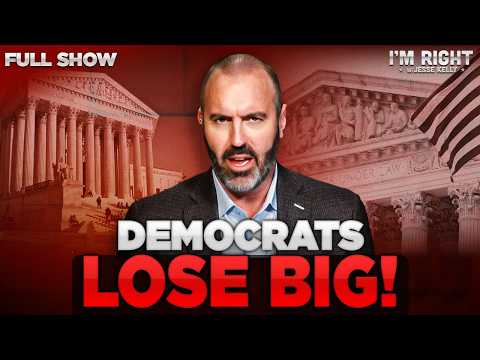
Category: Politics. Format: Commentary. YouTube video analyzed by skim.
skim AI Analysis
Credibility assessment: Highly Biased and Speculative. The video presents extreme, unsubstantiated claims, equating political opponents with child predators and using inflammatory rhetoric. It relies on conspiracy theories and personal anecdotes rather than verifiable facts, significantly undermining its credibility.
Bias assessment: Extreme Partisan. The content exhibits a severe partisan bias, employing dehumanizing language and conspiracy theories to demonize political opponents. It consistently frames one side as inherently evil and dangerous, lacking any semblance of neutrality or objective analysis.
Originality: 40% — Repetitive Tropes. The video heavily relies on well-worn, extreme political tropes and conspiracy theories, particularly the 'communists are child predators' narrative. It lacks novel arguments or fresh perspectives, rehashing familiar, inflammatory talking points.
Depth: 42% — Superficial and Inflammatory. The analysis is superficial, prioritizing emotional appeals and inflammatory accusations over factual evidence or nuanced discussion. Complex issues are reduced to simplistic, Manichean narratives, demonstrating a lack of genuine analytical depth.
Key Points (12)
1. Jesse Kelly: Supreme Court's 'Huge Win'
Jesse Kelly briefly mentions a 'huge win at the Supreme Court' at the beginning of the program, implying it's a significant victory for the GOP. While not elaborated upon in detail within this segment, it sets a tone of political triumph and frames the Supreme Court's actions as favorable to his audience's interests. He concludes that this decision is a major positive development.
Impact: Medium. This serves as an early hook, framing a Supreme Court decision as a major political victory. It aims to energize the audience by highlighting a perceived success against opposing political forces.
Sources in support: Jesse Kelly (Host)
2. Jesse Kelly: Democrats as 'Child Predators'
Jesse Kelly asserts that Democrats, whom he labels 'communists,' are inherently 'child predators' who are always after children. He draws parallels to historical communist regimes and contemporary issues like DEI and Pride Month to support this claim. He concludes that this mentality will never change, regardless of election outcomes.
Impact: High. This extreme rhetoric aims to dehumanize political opponents, framing them as a fundamental threat to children and society. It fosters an 'us vs. them' mentality, potentially inciting fear and hostility.
Sources in support: Jesse Kelly (Host)
3. Abby Johnson: The Barbarity of Abortion Procedures
Abby Johnson describes abortion procedures in graphic detail, emphasizing dismemberment and torture. She argues that the pro-life movement has failed by shifting focus from the 'baby' to the 'woman,' leading to numbness about abortion's true nature. She concludes that the movement must return to highlighting the torturous act of abortion.
Impact: High. Johnson's graphic descriptions aim to evoke strong emotional responses, framing abortion as inherently violent and barbaric. This approach seeks to galvanize the pro-life base and shock those who may be indifferent or unaware of the procedures.
Sources in support: Abby Johnson (Guest, CEO of And Then There Were None Ministries)
4. Abby Johnson: The Rise of Chemical Abortions
Abby Johnson explains that abortion numbers are increasing nationwide, even in 'pro-life' states, due to unregulated chemical abortion pills mailed directly to individuals. She criticizes the Trump administration for facilitating access to these pills and highlights their dangers, including potential death from ectopic pregnancies and lack of medical oversight. She concludes that the abortion industry prioritizes profit over women's safety.
Impact: High. This point aims to undermine the perceived victory of overturning Roe v. Wade by highlighting the continued accessibility of abortion through pills. It casts doubt on the effectiveness of state-level bans and criticizes both current and past administrations for their roles.
Sources in support: Abby Johnson (Guest, CEO of And Then There Were None Ministries)
5. Jesse Kelly & Jim Jordan: James Comey's Indictment
Jesse Kelly and Jim Jordan discuss the indictment of James Comey for allegedly threatening the President. Jordan explains the charges and emphasizes that threatening the president is a crime. Both frame this as a positive development against 'deep state' actors, with Kelly suggesting it's a sign of 'deep state types getting themselves in trouble.' They conclude that this action is a necessary step against those who have undermined the rule of law.
Impact: High. This segment frames a legal indictment as a political victory against perceived enemies within the government. It reinforces the narrative of a 'deep state' and suggests accountability is finally being brought to figures previously seen as untouchable.
Sources in support: Jesse Kelly (Host), Jim Jordan (Guest, Chairman of the House Judiciary Committee)
6. Jordan: Brennan's Dossier Claims Contradicted
Congressman Jim Jordan states that information declassified by John Ratcliffe and Tulsi Gabbard contradicts John Brennan's statements regarding the dossier, leading to a referral to the Justice Department. He also notes a broader conspiracy investigation involving Comey and others related to undermining President Trump.
Impact: High. This point highlights alleged misconduct by intelligence officials and suggests ongoing investigations into political interference, framing it as a serious matter warranting Justice Department attention.
Sources in support: Jesse Kelly (Host)
7. Jordan: Smoke Signals of Foreign Money in Democrat Coffers
Responding to Jesse Kelly's concerns about foreign money influencing Democrat campaigns, Congressman Jordan acknowledges the possibility, citing the 'smoke signals' of Act Blue's internal issues, including resignations and severance packages for key personnel. He emphasizes the ongoing oversight work to determine if laws were broken.
Impact: High. This segment amplifies suspicions of foreign interference in US elections, linking it directly to Act Blue and suggesting a systemic problem within Democratic fundraising that warrants further investigation.
Sources in support: Jesse Kelly (Host)
8. Jacobson: Supreme Court Upholds Constitutionality in Redistricting
Bill Jacobson explains that the Supreme Court ruled against deliberately drawing congressional districts based on race to achieve a specific racial outcome, deeming it unconstitutional. This decision is expected to net Republicans several seats by challenging contorted, race-based maps in states like Louisiana and Mississippi.
Impact: High. This ruling is presented as a significant victory for fair representation, potentially reshaping the electoral map and benefiting Republicans by invalidating race-conscious gerrymandering tactics.
Sources in support: Jim Jordan (Guest, Chairman of the House Judiciary Committee)
9. Jacobson: Redistricting Impact on Midterms and California
Bill Jacobson elaborates that while several states like Mississippi and Alabama will likely adjust maps quickly to comply with the Supreme Court's ruling, California's situation is more complex due to timing and the nature of its map. He suggests the ruling could net Republicans four to six seats in the midterms.
Impact: High. This point provides a strategic outlook on the electoral consequences of the Supreme Court's decision, highlighting the potential for significant Republican gains in the upcoming elections.
Sources in support: Jim Jordan (Guest, Chairman of the House Judiciary Committee)
10. Jacobson: Virginia's Redistricting Case Procedural Issues
Regarding Virginia's redistricting map, Bill Jacobson notes it's a separate issue from the Voting Rights Act, focusing instead on procedural failures. The Virginia Supreme Court's refusal to issue a stay suggests the lower court's ruling against the map, which did not follow established procedures, may stand.
Impact: Medium. This clarifies that Virginia's redistricting dispute is based on procedural violations rather than racial gerrymandering, indicating a different legal battleground than other states affected by the Supreme Court's recent decision.
Sources in support: Jim Jordan (Guest, Chairman of the House Judiciary Committee)
11. Jacobson: Comey's Social Media Post - Thin Case?
Bill Jacobson discusses the potential indictment of James Comey for a social media post, suggesting the case is 'thin' unless additional evidence exists. The core issue is whether the post, interpreted by some as a threat to the President, constitutes a clear criminal threat under the law.
Impact: Medium. This analysis casts doubt on the viability of criminal charges against Comey, framing the situation as legally precarious and dependent on unrevealed evidence, potentially leading to public skepticism about the prosecution.
Sources in support: Jim Jordan (Guest, Chairman of the House Judiciary Committee)
12. Kelly vs. DeLauro: EPA Authority and Climate Change
Jesse Kelly confronts Congresswoman Rosa DeLauro about the EPA's authority on climate change, referencing Supreme Court cases like West Virginia v. EPA. DeLauro struggles to articulate the legal basis for EPA climate actions, leading Kelly to accuse her of defending polluters and being uninformed about landmark environmental law.
Impact: High. This exchange frames the current administration's climate policies as legally dubious and politically motivated, highlighting a perceived lack of understanding or defense from a Democratic congresswoman.
Sources in support: Abby Johnson (Guest, CEO of And Then There Were None Ministries)
Sources against: John Brennan (Former Director of the CIA)
Potential Conflicts of Interest (5)
Host's Extreme Political Stance (High severity)
Type: Editorial
The host, Jesse Kelly, consistently promotes extreme, unsubstantiated claims and conspiracy theories, framing political opponents as inherently evil. This editorial stance compromises objective analysis.
Significance: The host's unwavering commitment to a highly partisan and conspiratorial narrative means the audience is unlikely to receive balanced information, potentially leading to radicalization and distrust of established institutions.
Guest's Pro-Life Advocacy Framing (Medium severity)
Type: Commercial
Abby Johnson's role as a prominent pro-life advocate and CEO of a related ministry influences her perspective on abortion, leading to a focus on graphic details and emotional appeals that align with her organization's mission.
Significance: While providing a passionate viewpoint, Johnson's advocacy may overshadow a more nuanced discussion of reproductive healthcare policy, potentially polarizing the audience and limiting understanding of differing perspectives.
Guest's Political Affiliation (Medium severity)
Type: Political Activist
Jim Jordan's position as Chairman of the House Judiciary Committee and his alignment with the host's political views suggest a bias in his discussion of legal matters, particularly concerning figures like James Comey.
Significance: Jordan's commentary on legal cases is likely influenced by his political agenda, potentially shaping public perception of justice and law enforcement through a partisan lens rather than objective legal analysis.
Partisan Commentary on Legal and Political Matters (High severity)
Type: Political Activist
The speakers, particularly Jesse Kelly and Jim Jordan, present information and analysis through a heavily partisan lens, celebrating perceived victories for Republicans and criticizing Democrats and related institutions. Bill Jacobson, while offering legal analysis, also operates from a platform known for its conservative viewpoint.
Significance: This pervasive partisanship raises questions about the objectivity of the information presented. The audience is left to wonder if the analysis is driven by a desire to inform or to persuade, potentially distorting the facts to fit a pre-determined political narrative and undermining the credibility of the commentary.
Investigation into Act Blue's Fundraising Practices (Medium severity)
Type: Commercial
Congressman Jim Jordan is leading an investigation into Act Blue, a major fundraising platform for Democrats. This investigation is conducted within a highly politicized environment, with potential implications for the upcoming midterm elections.
Significance: The timing and nature of this investigation, spearheaded by a political opponent of the platform's users, suggest a potential conflict. The audience must consider whether the inquiry is a genuine pursuit of transparency or a politically motivated tactic to damage Democratic campaigns, potentially influencing public perception and electoral outcomes.
This analysis was generated by skim (skim.plus), an AI-powered content analysis platform by Credible AI. Scores and classifications represent the platform's AI-generated assessment and should be considered alongside other sources.