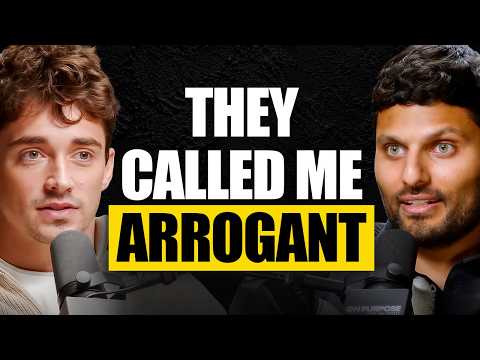
Leclerc's Fear for His Brother
Charles Leclerc admits that he experiences significant fear when watching his younger brother race, a stark contrast to his own lack of fear while driving. He acknowledges the extreme danger of Formula 1, despite safety improvements, and prioritizes his brother's safety above performance when he's on track. This makes watching his brother race a stressful and unenjoyable experience for him. The fastest speeds in F1, around 370 kph (230 mph), are less concerning to him than the unpredictable nature of racing when a loved one is involved. He still watches, but it's a difficult task, especially when balancing it with his own race preparations. The fear is constant, making every race a form of torture for him. He still watches because he wants to help his brother out, but it's difficult because they are on the same race weekends and he has meetings at the same time as his brother's race. He needs to look at the race but at the same time be focused on his meeting. This is the hardest task ever. But fastest speeds probably 370 kph which is around 230 mph I think something like this. I don't think that is the impressive part of Formula 1. The straight line speed is fast but you don't really feel it in a car like like a Formula 1 car. It's mostly the braking, the speed in the corners is something crazy and and very difficult to um to put into words and to make it understand in a way. No, I know. I I only know how hard it is just from playing the video game. Like that's that's already you try play F1 video games. Like it is one of the hardest things when you're training. I'm sure there's accidents. I'm sure you see things that are that are painful to watch either with yourself or with others you love. Like how is that like when you're training? Cuz obviously in F1 they made it safer and everything, but training is like training, right? It's not the same standards. Well, first of all, it's a very different sport to others. Uh football or whatever other sports in the world. You can train as much as you want. In Formula 1, you can't. I only have three days in the Formula 1 car over the year and then it's the first race. That is the only practice I get is three days in the new car. You need to understand what's the behavior of the car. That's not long at all. That is nothing. That is nothing. And then all the rest is done virtually. So you race, you practice on simulators without the controller with the wheel this time. But uh but you practice on simulators in order to get ready for the real thing. And then you've got three days in order to get to get up to speed um to understand a tons of informations from the car that is mostly uh on the engineers to do that. And then you need to be ready at the first qualifying session a week later. This is very very difficult. Then as you were saying, we all know it's a dangerous sport. Um I've unfortunately lost my sporting godfather in 2014, Jbiani, who was an incredible driver and he had a fatal crash in in Japan and lost his life there. And also another friend, Antoan, in 2019 in in Belgium. And these are very very difficult moments because then you are racing on this exact same track. You are going through the exact same corner where a person that you were close with lost his life. And this is the two moments in my entire career where you have a bit of negative thoughts going into that corner and you need to battle a bit through them in order to think about something else and and get on with it. As much as it's it's difficult because a part of me was like I cannot get on with it like nothing happened. But at the same time, you've got to do that at least as soon as you get inside the car until you get out of the car. You need to do that. You need to focus fully on driving otherwise you are never able to extract the maximum out of the car. And I remember I mean I remember one of my favorite movies is Rush with Nikki Lauder and James Hunt. Like that's probably one of my favorite movies and it's you see so much of the world of like the ego, the the fame, the success, the the focus, the amount of effort, the competition. Like you you see the dangerous side of it. Like there's it's it's so well done the movie. I've always been a fan. I wonder whether you're a fan of that movie or whether you're like, "Ah, it's not like that at all." No, I I love it. I love it. I mean, I think it's um a really good representation of what the sport was back then. Yes. Yes. Yes. not now. Yeah. And it was amazing to see how it was back then and how it is now and how much everything has changed. And I also think that as much as today when I say that I'm getting into the car and there's not one part of me that think about the danger, I really believe that 30 40 years ago that was completely different for the drivers back then. And they probably I think it was the driver that was willing to get the closest to death that was the fastest because they were so brave. The cars I've driven all cars now and there was no safety like the where they had the legs is just something like this of metal and if you take if you take if you take a wall that's that's it. And obviously, I'm sure they had that in mind somewhere, which now everything is so much safer that you don't you don't think about it anymore. So, I think the the sport has evolved like crazy since then, but it's a great movie. Yeah. Yeah. No, and I love hearing that. Like, it's so interesting. Obviously, we know it's changed, but to hear about how much the cars have changed, how much safer they are, like the the level of risk that a driver was taking back then is is insane. It's unfathomable to even recognize like you're saying. It's interesting for someone from the outside to even look at that. What was your favorite car that you've gone back and driven? Is there like a favorite era or like a a favorite year that you've you've seen or exposed to and why why is it special? I've actually driven the Nikila car um that was very very special. Unfortunately, I had a problem on the car while driving on the brakes uh which was pretty scary, but um I really enjoyed driving that car, but it was completely different. I think also in terms of driving it was super different. You had the the gearbox, you you had the shifter, so you had to press the the clutch every time you will pass the gears like in a normal car today, but now in a Formula 1 car, everything is electronic. So you pass the gears, you only press a button, you don't have to press the clutch, you don't have to press anything, and you your brain can focus on many, many other things. We've got hundred thousands of things going on the steering wheel that we need to touch while driving, but you haven't got to think about the gears anymore. Back then, I think the gears was a super important part of of of driving. But I really enjoyed driving this uh these louder cars. This was very special. Yeah, it's amazing. I can imagine the amount of attention this takes. Like you, like we said, you're on the road for a long time. You're doing so many races a year. You've got so many things happening in front of you while you're on the race. It's natural to experience burnout like it's natural to become exhausted. Do you find that your what do you do as recovery? Like you were saying like and you just came from the Brazil race like just now like what a couple of days. Two years ago. Yeah. Two days ago. Two days. Two days ago. Yeah. Two days ago. Like what did you have to do in those two days to just feel normal again? If normal is even a reality. I love music. I play piano and I've seen videos of it. You're pretty good. Yeah, kind of. But good enough to uh um to enjoy it and to disconnect from everything. And uh for me, piano and and music in general is an an amazing way of disconnecting myself from the pressure of of Formula 1, from For For Formula 1 as a whole. You don't sing though? I don't. No, no. Better better. I don't think just just playing the piano. But uh yeah, playing the piano is definitely one of uh the thing I love most. Disconnect and and recharge my batteries. And has that been a part of your life for a long long time through the whole journey? Actually not at all. I uh I started during uh co lots of time at home. I had a simulator so I was driving a lot virtually every day. But uh yeah with Twitch actually but after two weeks two weeks and a half doing that all day was getting quite tiring. So I I bought a piano. I started um then and and I I loved it. Wow. Yeah. And what what is it that like how do you how have you taught have you simply taught yourself to play? Like is that how it's worked or? Yes. I always um when we were younger um my uh younger brother used to have a piano so I sometimes was playing on it but not I never took like courses or whatsoever and uh I thought COVID was a great time to try and learn it a bit more pushing a bit more and trying to understand a bit more how everything works. So I took some lessons like five or six but very quickly I realized that I wasn't done for lessons. I just uh taught myself the the piano and try to came up with melodies and music that I enjoyed. Yeah. Sometimes I thought I will be on the piano since an hour and I will look the time and it will be four or five hours past. I I just really really liked it. How much time do you get a year where you actually got time for your family, your friends and yourself? I will say maybe 40 days. 40 days a year. Yeah. Like 30 40 days a year. We've got two weeks, two weeks and a half in August and then two weeks, two weeks and a half in um in December. So for Christmas and and everything. But then also with Formula 1, the good thing is that we travel all over the world. But years after years, you also go to always the same places. Um which then you meet new people in this city and then you've got group of friends a little bit everywhere around the world, which is also super nice. So whenever I go to Brazil, uh here in Los Angeles, um Miami, I've I've got my group of friends there. So it's um always great to come back to a race. Obviously, you want to drive as much as possible and be in the car again as soon as possible, but at the same time, you've got your friends there. So it's not like my private life is suffering a lot from it. My mom also now can follow me on on races. I think it's more when I was a kid. There it was a bit more difficult in a way that you are uh sometimes you are leaving school for two or three weeks for different races and there you don't spend as much time with uh your home friends. I used to not speak Italian and English when I was a kid. So you get to the carting tracks and you cannot really speak with anybody. So that is a bit more the difficult part. But at the same time I was so incredibly happy to go to the racetrack to drive carting. that was making it all all up for it. You studied people that you find fascinating or that kind of become your guidance and mentors even if you don't know them personally or or has it or is it very much a personal love and a personal inspiration thing? I I really try to be the best version of myself. Uh having said that, there was one driver that for me was the best of all time was an Sennena. I've never had the chance because I'm too young to have witnessed him in in real life, but obviously through movies, some books, I could learn more about his person and and what he's done in Formula 1. And he's always been a person that I've admired and he was also the idol of my father. So, I think that played a part into it as well. What was it specifically about the way he raced that from what you've seen in footage and books? What was it about him? Just the precision that he had uh at that time. It was also in the time where we were mentioning before in a much more dangerous time of of Formula 1. Sadly, he lost his life on the track. But he was so precise and he was extremely special in Monaco. He was special everywhere, but in Monaco even more so. And being in Monaco, watching the videos of his onboard camera uh of his qualifying laps around Monaco was it's just crazy. Our simulator is crazy. Yeah, it's in a room that is maybe five or six times bigger than this one and it's like a huge simulator moving everywhere to try and reproduce the G-forces. So now they are really pushed but you're only racing on your own. So you cannot reproduce a a race or whatsoever. You're just doing laps on your own. That simulator, where is that station? Like where do you go? In Marinelo. Okay. Yeah. And you that's that simulator you're in all year round. The three days are in the real car. Yes. So you do three days in a real car and then everything else is on the simulator. Walk us through what that simulator feels like. Like what you described it briefly there, but like walk us through like how what does it give you and what does it not give you? So what it gives you extremely well is that the engineers have managed to reproduce extremely close to the real car. The feeling that you get in the real car. The thing that it doesn't give you and will, I think, never ever give you is obviously the adrenaline first because, you know, you're on a simulator, you crash, you press the restart button, then you go again, which in reality is a bit more difficult. And also the G-forces because we've got a huge platform which reproduces the the G-forces, but you're only going from right to left and then it stops. In a Formula 1 car, when you turn right, then the G-forces are always there until you stop turning right, which um yeah, makes a big difference because to be precise on a platform that is quite stable is one thing. To be precise in a Formula 1 car with all the vibrations, with all the G-forces um that your body go through is a complete other. So, um it makes things a bit more complicated. I wanted to ask you, I was thinking about this before and I'm I'm bringing it back because I wanted to ask you if if your father was here now and he was getting to watch you now, like what do you think he'd say to you? Like how do you think he'd respond to the journey that you're on? I think he would be extremely proud because he passed away a year before I got into Formula 1. It was very difficult because I unfortunately did not I I hadn't signed my Formula 1 contract which was the ultimate goal for our family. I mean Formula 1 is really where you want to get once you start a racing career. That's that's where you want to be one day. But I had lied to him uh two days before he passed away. And I told him, listen, I I I signed my Formula 1 contract. The year was going well. I was quite confident that this will happen. But I also knew it was a matter of days before he will pass away. And I remember that that night that I said it to my mom and my mom was pretty angry with me telling me, "You shouldn't lie to your father." And that stayed in me for months. And luckily, I signed my contract a month later. He wasn't he wasn't here anymore. And then I found much more peace within myself because I told myself, "Okay, I didn't lie to my father." And I and I told him the truth. I anticipated things but everything is is is okay and that was a really good moment because as I said Formula 1 is really the goal for every driver and it was difficult to yeah accept that he will go away without knowing what was the rest but I think he will be really proud as much as on track at the moment this year not going too much into the specific but it's not the best year ever we are struggling a little bit with our car performance but yeah I'm still driving for Ferrari and in formula 1 so he will be happy. Me too. I think I will have I will have lived uh so badly with a with a lie like this for the rest of my life. So I'm I'm happy. I did everything for it to happen. It happened. And and he also sacrificed a lot for me. I never like to say that I sacrificed anything in my life because I didn't. I I just did everything that I wanted to do which was racing. as much as yes, I wasn't a lot of time at home when I was a kid, but I was spending my time on track, which was what what I love doing the most. He on the other hand sacrificed a lot because motorsport is unfortunately a very expensive sport. Um, he had to do saving for me to uh be able to do what I love most, which was driving. And I was aware of that. And also the fact that obviously my mom, he couldn't see my mom that much because he was always with me on races. So, I think he made many more sacrifices than than I did because for me it was always pure pleasure. Is is driving a lonely sport? I imagine that everyone's quite competitive. Like I I can't imagine drivers being friends and hanging out afterwards because I don't know. You tell me. You tell me. Actually, I've got a a really good friend on the grid, uh, Pierre Gastley. We grew up together. We started in carting. We did our first race together in 2005. So we were um yeah like seven 8 years old. We did the French championship together and we became super good friends. Our family are super close as well. So we used to get going on holidays together. And then we found oursel in formal one now. So but trust me as soon as I close the visor and I'm with a helmet he's nobody anymore. And that's the same for him and we know that. But whenever we are outside the car we have a really really strong friendship. So, uh, you can have friends, but it's very difficult to create friendships if you didn't know that person before getting into Formula 1 because it's such a competitive world. Everybody wants to have the upper hand. Everybody wants to do everything in his own benefit because at the end, we want to win. We want to be the best on track. So, there's a lot of respect, but we are not giving anything away to uh to the others. And as much as I'm with friend with Pier Pierre, I'm not giving him any advices or whatsoever. I just want to beat him as much as I want to beat everybody else on track. But um lonely sport, I don't think it is because at the end it's a it's a team sport. The only thing is that the team is a bit in the is working a bit in the shadow because when you watch Formula 1, you see mostly the driver the car, but behind that the mechanics are making sure that they mount everything perfectly. The engineers are working in trying to optimize the car in the best possible way. Then there's a lot of strategy during the race. So there are there are many many many people in the background speaking and connected to me through the radio. So, I need to speak with the guys on um in the pits while I'm driving. Uh and it's a big part of of racing. What are your dreams and visions of, you know, wanting to be one of the best and winning a world championship? What would that mean to you? Just the feeling of the victory obviously. I mean, I won few races in Formula 1 and the feeling that you get once you get that win is incredible because you know you've done the best on track, but it depends on so many other people doing the right thing is that whenever you do it, it's such an incredible joy, not only for you, but for more than 1,500 people that are back at the factory in Marinelo working for the Formula 1 program. So, it's uh it's it's crazy. uh there are so many people involved and whenever you achieve that as a team it's such an incredible feeling. Yeah. Victory the the taste of victory is what motivates me. Every morning I wake up and I think about that every day that is a bit more difficult to wake up and go and training. I think about winning a world championship one day and the feeling that it gives me and so yeah this is what motivates me. What would you say to that self from here? What would you say to your future self? Well done. First, that is a pretty easy easy one. Um to remember the all your career and all. Yeah. Yeah. Your journey. Uh and to remember every single difficult moments where you thought you wouldn't make it. These difficult moments that I went through my career. Sometimes you tend to think I'm not going to make it to Formula 1. I'm not going to make it to become a world champion. So yeah, if I become world champion, I will tell that to my to myself to think about every single moments where I thought this wouldn't be possible. And this is also something that I tell myself today to the younger person I was sometimes thinking I will never make it to form one. There are only 20 drivers in the world. Why me? And yeah to remember those moments and tell yourself that it's possible with hard work, with motivation. It's possible to do anything. How often do you get to work with younger drivers and people are up and coming and like do you enjoy that? Do you I love it. I love it. I had actually an incredible experience. I went to a to a carting race. I think it was few months ago like 3 4 months ago. It had been a long time. I didn't go into a carting race watching kids. I have my younger cousin actually that is starting cing that I went to I went to see him and I got there and I mean I I didn't have any expectations. I arrived to the track and all the kids were around me and looking with the eyes full of of joy and admiration and that made me uh come back a little bit when I was a kid and and a Formula 1 driver will get to the track and you will see him like god uh and uh and to see that in kids' eyes was something super super special because at the end I live my my own life but sometime I don't really realize that I I I'm now a Formula 1 Ferrari driver, which is something very special and something as I've always dreamed of, as I've been saying many, many times, but I for me, I'm still me. For my mom, I'm still her son. So, I'm I'm staying with people that it's normal to be around me, but then once I get to the kids and to the carting races that don't see Formula 1 drivers every day, you can understand how special it is. And the smallest gesture, and this I remember from being a kid, the smallest gesture that the Formula 1 driver will have towards me, it will change my life for months. I'll think about about that. I met Michael.