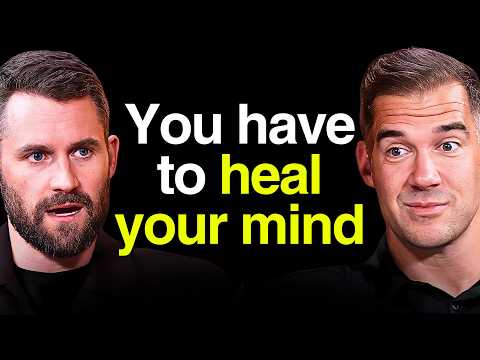
Category: Lifestyle. Format: Interview. YouTube video analyzed by skim.
skim AI Analysis
Credibility assessment: Generally Credible. Kevin Love, an NBA champion and mental health advocate, shares personal experiences and insights. The discussion is grounded in his lived reality and supported by references to public figures and documented events. While personal, the narrative aligns with broader discussions on mental health and athletic careers.
Bias assessment: Personal Narrative. The video heavily features Kevin Love's personal experiences and emotional journey, which naturally shapes the narrative. While Lewis Howes aims for balance, the focus remains on Love's perspective and feelings, making it a subjective account.
Originality: 72% — Insightful Perspective. The video offers a unique perspective on achievement and happiness, challenging the common notion that more success automatically leads to greater well-being. Love's candid discussion of his own struggles, even at the peak of his career, provides a fresh take on mental health.
Depth: 71% — Moderate Depth. The conversation delves into the psychological impact of athletic careers, identity shifts, and the complexities of family trauma. It explores concepts like athletic mortality and the limitations of achievement in solving deep-seated emotional issues, offering a thoughtful, though not exhaustive, analysis.
Key Points (19)
1. The Illusion of Achievement
Kevin Love explains that the pursuit of more achievements, like winning championships or accolades, doesn't inherently solve deep-seated feelings of anxiety or depression. The dopamine hit from success is temporary, and without addressing the root emotional issues through internal work, individuals are left with the same baseline struggles. This cycle can lead to a 'sucking place' where one feels worse despite accomplishments due to unmet expectations of happiness. The final sentence is: This highlights the critical need for internal emotional work beyond external validation.
Impact: High. This point challenges the conventional wisdom that success equates to happiness, suggesting that external validation is insufficient for true emotional well-being. It underscores the importance of self-awareness and internal processing.
Sources in support: Kevin Love (NBA Champion, Mental Health Advocate)
2. Success Is Not Immune to Depression
Kevin Love references public figures like Kate Spade and Anthony Bourdain to illustrate that success, fame, and apparent happiness do not provide immunity from depression or mental health crises. He argues that people who 'seem to have it all' can still suffer immensely, highlighting that mental health struggles are universal and can affect anyone regardless of their external achievements or wealth. This underscores the idea that outward appearances can be deceiving and that compassion is vital for everyone. The final sentence is: This perspective dismantles the myth that wealth and fame are antidotes to psychological suffering.
Impact: High. This point directly confronts the societal misconception that success guarantees happiness, using high-profile examples to demonstrate the pervasive nature of mental health challenges. It serves as a crucial reminder that internal struggles can exist beneath a veneer of external perfection.
Sources in support: Kevin Love (NBA Champion, Mental Health Advocate)
3. Managing Daily Anxiety and Trauma
Love describes his daily experience of anxiety, rating it a 'five or six' on a scale of one to ten, but considers it a 'healthy' level of appropriate fear. He notes significant improvement in managing public anxiety and the fear of judgment since starting his mental health work in 2017, feeling more comfortable in his own skin and less vulnerable to external criticism. He also touches upon his family history of trauma and rage, stemming from his father's own unaddressed emotional issues, which manifested as rage fits in his youth. The final sentence is: This demonstrates that while challenges persist, consistent self-work can lead to greater emotional regulation and resilience.
Impact: Medium. This segment offers a practical look at managing ongoing anxiety and the impact of generational trauma, showing that progress is possible even if complete peace isn't always achieved. Love's candidness about his daily struggles makes the journey relatable and inspiring.
Sources in support: Kevin Love (NBA Champion, Mental Health Advocate)
4. Kevin Love: Navigating Family Trauma and Reconciliation
Kevin Love reflects on his complex relationship with his father, acknowledging both the positive influences and the pain caused by his father's absence and struggles. He shares that despite the difficulties, he found a path to reconciliation and forgiveness before his father's passing, highlighting the possibility of healing even in deeply fractured family dynamics. This process allowed him to become a better father himself, learning from both his father's successes and failures. The final sentence concludes that embracing both the good and the bad in his father's legacy was crucial for his own growth and understanding.
Impact: High. This point reveals the profound impact of familial relationships on personal development and the potential for healing through forgiveness. It underscores that complex family histories can be navigated to foster personal growth and improved relationships with one's own children.
Sources in support: Lewis Howes (Host)
5. The Weight of Early Acclaim: Pressure and Identity
Kevin Love discusses the immense pressure and psychological impact of being recognized as a top player from a young age. He describes how being labeled 'special' and the number one player in his age group at 14 led to an inflated ego and, at times, behavior that offloaded hurt onto others. This early acclaim created expectations that he spent decades unpacking, contributing to his ongoing struggles with emotional well-being. The final sentence reflects that this early pressure and the subsequent need to unpack those expectations have been a significant part of his journey.
Impact: High. This point illustrates the double-edged sword of early success, showing how external validation can shape identity and lead to internal conflict. It emphasizes the long-term psychological work required to process such pressures.
Sources in support: Lewis Howes (Host)
6. Anger as a Driving Force: The Gift and Curse of Athletic Rage
Kevin Love reflects on how his anger and anxiety, stemming from his past experiences, served as a powerful driving force in his athletic career. He acknowledges this 'gift and curse' allowed him to push through difficult times and maintain a high level of performance, even when struggling with emotional availability. He questions whether his healing process might have diminished this edge, but ultimately believes the adversity was necessary for his achievements, suggesting that channeling such intense emotions, rather than suppressing them, was key to his success. The final sentence concludes that while the adversity was crucial for his athletic achievements, the question of whether healing has impacted his 'edge' remains.
Impact: High. This insight into the psychological fuel of elite athletes challenges conventional notions of mental health, suggesting that intense emotions, even negative ones, can be harnessed for peak performance. It raises questions about the true cost of 'healing' for high-achievers.
Sources in support: Lewis Howes (Host)
7. The Ideal of Controlled Adversity and Balanced Success
As a father, Kevin Love aims to provide his daughters with 'controlled adversity'—challenges that foster resilience without fracturing their psychology. He contrasts this with his own upbringing, emphasizing the importance of balancing drive with love and support. He also identifies Steph Curry as an example of an elite athlete who appears to have achieved a rare balance of on-court success, inner peace, and a healthy personal life, suggesting that true greatness encompasses emotional and spiritual well-being alongside physical prowess. The final sentence posits that Steph Curry's apparent harmony between elite performance and personal well-being represents an ideal for success.
Impact: High. This point offers a forward-looking perspective on parenting and success, advocating for a more holistic approach that prioritizes emotional health alongside achievement. It provides a benchmark for what balanced, sustainable success might look like.
Sources in support: Lewis Howes (Host)
8. Faith and Peace
Kevin Love discusses his personal belief system, noting his wife's Jewish faith and his own broader belief in a higher power and good energy. He wonders if faith, like that of Steph Curry, contributes to a deeper sense of peace and healing, acknowledging that individuals find faith in different ways and at different life stages.
Impact: Medium. Explores the intersection of faith and mental well-being, suggesting that spiritual beliefs can be a source of peace and resilience, particularly for high-achieving individuals.
Sources in support: Lewis Howes (Host)
9. Protecting Peace
To protect his peace moving forward, Kevin Love plans to focus on his therapy, maintain physical health, and be highly intentional about spending time with his daughters. He recognizes how quickly children grow and wants to cherish these moments, balancing this with personal interests like writing, photography, and travel to nurture his body, mind, and spirit.
Impact: High. Highlights proactive strategies for maintaining mental and emotional well-being, emphasizing the importance of self-care, family time, and personal pursuits amidst life's demands.
Sources in support: Lewis Howes (Host)
10. Evolving Mental Routine
Kevin Love's mental preparation for games has shifted from intense, emotional music to calming sounds or instrumental tracks that regulate his nervous system. He emphasizes the importance of routine, punctuality, and a balanced diet, noting how much more advanced his approach is now compared to the beginning of his career when he relied on less informed choices.
Impact: Medium. Illustrates the evolution of mental conditioning in professional sports, showing a move towards more nuanced and self-aware strategies for performance enhancement and stress management.
Sources in support: Lewis Howes (Host)
11. Battling Father Time
Kevin Love discusses the challenge of 'father time' in extending his athletic career, focusing on managing inflammation and cortisol levels, eating right, sleeping well, and maintaining balance to prevent burnout. He acknowledges that he can't regain lost speed or explosiveness but aims to stabilize and improve, using the offseason for learning and body maintenance.
Impact: High. Provides insight into the physical and mental strategies elite athletes employ to prolong their careers, emphasizing the shift from raw athleticism to strategic self-care and injury prevention.
Sources in support: Lewis Howes (Host)
12. Maintaining Confidence
To maintain confidence as his athleticism changes, Kevin Love focuses on his core strengths: rebounding, shooting, and passing at an elite level. He admits where he is in his career but emphasizes understanding his value and fine-tuning those skills, highlighting the importance of communication and a positive mindset, drawing parallels to successful teams that prioritize these elements.
Impact: High. Offers a psychological framework for athletes adapting to physical changes, stressing the importance of focusing on transferable skills, self-awareness, and team cohesion over raw physical prowess.
Sources in support: Lewis Howes (Host)
13. Infectious Leadership
Kevin Love discusses the power of 'talk and touch' in leadership, emphasizing infectious positivity and communication. He highlights how cheering for teammates, offering encouragement, and maintaining a growth mindset, even when not playing, builds trust and fosters a healthy team culture, which is crucial for collective success and individual opportunity.
Impact: High. Underscores the significance of emotional intelligence and positive reinforcement in team dynamics, demonstrating how supportive leadership can elevate performance and camaraderie.
Sources in support: Lewis Howes (Host)
14. Defining NBA Career
Kevin Love identifies three defining aspects of his 18-season NBA career: his outspokenness on mental health and the community/fund he created, the importance of his relationships and friendships, and the profound impact of fatherhood. He reflects on learning the value of being a great teammate and leaving players in a better place, both professionally and personally.
Impact: High. Provides a reflective summary of a long NBA career, highlighting the evolution from individual ambition to a focus on mental health advocacy, meaningful relationships, and impactful mentorship.
Sources in support: Lewis Howes (Host)
15. Legacy of Impact
Looking ahead, Kevin Love wants his legacy to be defined by the positive impact he has on those around him, shifting from an early career focus on 'me, me, me' to a desire to be a great teammate and leader. He credits teammates like Channing Frye and Richard Jefferson for teaching him the importance of sacrifice and support, lessons learned particularly during his time with the Cleveland Cavaliers.
Impact: High. Illustrates a profound personal growth arc, where the definition of success evolves from individual achievement to contributing positively to the development and well-being of others.
Sources in support: Lewis Howes (Host)
16. Championship Brotherhood
Kevin Love emphasizes that winning a championship creates a unique bond, citing the close-knit group chat of the 2016 Cavaliers who support each other through major life events. He contrasts this with his early career, where he lacked veteran guidance, and highlights how shared struggles and triumphs forge deep, lasting relationships built on trust and mutual support.
Impact: High. Explains the profound and lasting impact of shared high-stakes experiences, like winning a championship, in forging deep interpersonal connections and a sense of brotherhood.
Sources in support: Lewis Howes (Host)
17. The Kevin Love Fund's Mission
The Kevin Love Fund aims to provide emotional language and social-emotional learning education to help young people express themselves healthily, stemming from his own struggles with vulnerability. The fund's curriculum is implemented in classrooms, teaching teachers and peers how to foster emotional expression and well-being.
Impact: High. Demonstrates a commitment to addressing the critical need for emotional literacy in youth, translating personal experience into a structured educational initiative with broad societal benefits.
Sources in support: Lewis Howes (Host)
18. Kevin Love: The Limits of Achievement
External achievements like winning championships, while significant, do not inherently solve deep-seated emotional or mental health issues. The pursuit of success can even mask underlying problems, leading to a dopamine hit that distracts from the real work of emotional healing. True resilience requires confronting and processing emotions, not just accumulating accolades. The final sentence is: This highlights that external validation is a poor substitute for internal emotional well-being.
Impact: High. This point challenges the common narrative that success equates to happiness, urging a deeper look at emotional health.
Sources in support: Lewis Howes (Host)
19. Kevin Love Fund: Fostering Connection
The Kevin Love Fund actively combats the negative effects of emotional suppression by creating accessible mental health resources, such as 'The Friend Effect' curriculum. This initiative provides educators and coaches with tools to help young people express themselves safely, build community, and foster positive relationships. By focusing on friendship and peer support, the fund aims to equip individuals with the emotional intelligence needed to navigate life's challenges. The final sentence is: This proactive approach offers a vital pathway for developing emotional resilience from an early age.
Impact: Medium. This highlights a tangible solution and resource for addressing the systemic issue of emotional suppression in youth.
Sources in support: Lewis Howes (Host)
This analysis was generated by skim (skim.plus), an AI-powered content analysis platform by Credible AI. Scores and classifications represent the platform's AI-generated assessment and should be considered alongside other sources.