Dr. Tina Seelig defines luck not as random chance, but as success or failure that *appears* to be caused by chance. She emphasizes that by 'pulling back the curtain,' one can see the deliberate actions and preparations that set the stage for fortunate outcomes. This distinction is crucial for understanding that individuals have agency in creating their own luck, differentiating it from uncontrollable 'fortune.'
Seelig: Core Values as a Compass for Luck
Clarity on core values is essential for navigating opportunities and avoiding ethical pitfalls. Dr. Seelig recounts a personal experience of being asked to misrepresent herself, highlighting how a strong value system acts as a 'compass' to guide decisions. She stresses that knowing what you won't compromise prevents getting on a 'slippery slope' and ensures that opportunities align with integrity.
Howes: The Long Game of Relationships
Lewis Howes reflects on his own experience, noting that relationships built early in his career, even without immediate returns, have become invaluable over time. He contrasts this with a pushy, transactional approach, emphasizing that patience and consistent connection are key to cultivating long-term professional and personal luck.
Our subconscious mind and nervous system are intrinsically linked, dictating our perceived limitations and safety zones. When approaching unfamiliar growth, like increased wealth, the nervous system acts as a brake, manifesting as procrastination, overthinking, or fear, even when consciously desiring more. This internal communication from the subconscious, built into our identity, directly impacts our ability to achieve financial goals.
Jamie Sea: Earning More with Less Stress
To earn more with less stress and scarcity, one must anchor into a deeper purpose beyond external validation like money or praise. Creating internal safety and 'enoughness' is paramount. This involves acknowledging existing abundance, practicing self-compassion, and finding moments of gratitude, which allows the body to relax and take more powerful, aligned action, rather than operating from a place of survival or fear.
The Wealth Container: Five Layers of Blockage
The 'Wealth Container' is a framework of five layers—Visibility, Loyalty, Responsibility, Ease, and Identity—that determines one's capacity to hold and expand abundance. Common blocks for clients, particularly women, are Responsibility (hyper-independence, inability to outsource) and Loyalty (fear of outgrowing family/community, fear of being 'othered'). These layers manifest as self-sabotage and resistance to growth.
David Bayer posits that the formula for achieving desired results is 'desire plus non-resistance equals desired result.' He clarifies that this doesn't mean passive wishing, but rather taking consistent action while actively managing internal resistance. The key is to recognize that resistance, often felt as stress or frustration, arises from our thoughts and the meaning we assign to experiences, not the experiences themselves. By shifting from primal states (fear, anxiety) to powerful states (joy, peace), we align with our goals. The practice involves observing negative thoughts and beliefs that trigger primal states and consciously moving back into powerful states, which is the consistent effort required to manifest desires.
The Hustle Culture Myth vs. Non-Resistance
Bayer critiques the prevalent 'hustle and grind' mentality, arguing that it's a detrimental equation for success (desire + hustle = result). He contrasts this with the principle of non-resistance, suggesting that true prosperity and abundance are available without sacrificing health and relationships. The constant pressure to 'do more' creates time scarcity and stress, reinforcing primal states. He advocates for a shift towards less resistance, emphasizing that the energy and focus should be on aligning with desires rather than relentlessly pushing against perceived limitations.
Childhood Wounds and the 'Not Enough' Belief
The pervasive belief of 'I am not enough' or 'I am not good enough' originates from childhood experiences of conditional love from parents. When a child expects unconditional love but experiences parental absence or conditional acceptance, they subconsciously internalize this as a personal failing. This core wound leads to the development of a compensatory personality—a strategy to prove worth or please others. While effective initially, this personality becomes a 'core program' that can lead to suffering and limitations later in life, particularly in midlife.
Fear is a corrosive force that impedes performance. It's the anticipation of an uncomfortable future feeling. While too little fear can lead to recklessness, excessive fear paralyzes. The key is to manage fear, not eliminate it, to elevate performance.
Dismantling Fear Through Love and Purpose
When faced with personal crisis (like his father's illness) before a critical surgery, Dr. McLaughlin chose to focus on love for his father, his patient, and his craft. This shift in focus, rather than courage alone, allowed him to dismantle fear and perform at his best, demonstrating that purpose can override panic.
Dr. McLaughlin: The Outcome Doesn't Define You
After a challenging surgery with a poor outcome for a young boy, Dr. McLaughlin learned a profound lesson: outcomes do not define one's worth. He realized that showing up, doing one's best, and maintaining integrity are what matter, regardless of the result. This realization took 16 years to fully internalize.
The biggest hurdle for aspiring entrepreneurs is 'playing business' instead of 'doing business.' This means focusing on formalities like LLCs and business plans before securing a single customer. Koerner stresses the importance of finding a customer first, even if it's for free, to validate the idea and generate initial traction. He advocates for selling before you have the product or service, a strategy he calls the 'bootcamp method.'
Chris Koerner: The iPhone Repair Hustle
Koerner recounts his experience starting an iPhone repair business. He initially made the mistake of leasing a retail space before learning the skill, a classic example of 'playing business.' However, he learned repairs by watching YouTube tutorials on customers' phones, turning immediate customer needs into on-the-job training. This experience highlights the risks of premature scaling but also the power of learning by doing and leveraging readily available resources.
The Real Fear: Perception, Not Failure
Koerner posits that the fear of failure is not the true impediment; rather, it's the fear of how others will perceive that failure. He uses the analogy of being stranded on a desert island to illustrate that survival instincts override fear of failure when stakes are high. However, the presence of an audience, even a small one, amplifies the fear of embarrassment, which is the actual barrier to action.
Your deeply ingrained beliefs and relationship with money, often formed in childhood, are the primary obstacles to financial success. If you believe money is hard to make or that wealthy people are greedy, you will subconsciously sabotage your own abundance. Changing these limiting beliefs is the essential first step before any financial strategy can be effective. Lewis shares his own experience of growing up with financial stress, which shaped his early beliefs about scarcity.
Lewis Howes: The Power of Multiple Income Streams
Building multiple income streams is crucial for financial security, moving beyond a single job. Wealthy individuals diversify through investments, royalties, and rental income, and it's advised to focus on maximizing one's primary income source first before developing secondary ones. This diversification strategy is key to long-term financial freedom.
Generosity as a Wealth Strategy
Contrary to the belief that hoarding money leads to wealth, practicing generosity can actually be a strategic tool for financial growth. By giving freely, you signal abundance and open yourself up to receiving more, both financially and in other forms. This principle suggests that a mindset of abundance, demonstrated through giving, can create a positive feedback loop that attracts further prosperity.
Sadhguru argues that a limited identity, often based on memory, nationality, or family, transforms human intelligence and competence into curses. This narrow focus leads to suffering, conflict, and destructive actions because individuals fail to recognize their interconnectedness with everything around them. He posits that this limited perspective is the root cause of societal ills, including war and hatred, as people prioritize their small identities over universal well-being. The solution lies in expanding this identity to encompass all of existence, thereby making one's capabilities a boon rather than a curse. This shift allows for appropriate action based on the situation rather than rigid, absolute beliefs.
Sadhguru: Karma as a Platform, Not Punishment
Sadhguru reframes karma not as a system of reward or punishment, but as an accumulated 'karmic background' that serves as a platform for life's actions. He explains that memory forms the basis of our identities and our experiences, and when we are 'sinking' into this memory like quicksand, we become victims of it. However, if we can create a 'surface tension' or a conscious distance from our body and mind, this karmic platform becomes a space to 'dance' upon. This conscious detachment is the key to transcending suffering, which he defines as either physical or mental, and ultimately leads to the end of one's karmic influence, allowing for a richer, more vibrant existence.
Sadhguru: Identity as Clothing, Not Self
Sadhguru uses the analogy of clothing to explain the nature of identity. He states that while identity is necessary for functioning in the world (e.g., distinguishing 'me' from 'you'), it should be treated like clothing – something worn, not something that constitutes the self. He contrasts loose clothing, which allows awareness of its separateness from the body, with skin-tight clothing that blurs the distinction. Similarly, if one is 'stuck' to their identity, they become rigid and prone to 'crazy things.' The key is to maintain a conscious space between oneself and one's created identities, recognizing that these are temporary constructs, not absolute truths. This detachment prevents one from being consumed by their identities and allows for greater freedom and less suffering.
The shadow self is born from moments of trauma or distress in childhood that are not resolved, causing the psyche to fragment. A part of the self that is hurt or criticized gets pushed into the 'shadow,' while a 'protector' aspect emerges to shield it from further pain, often manifesting as traits like perfectionism or people-pleasing.
Lewis Howes on Childhood Perceptions
Children often internalize perceived flaws in their caregivers as personal shortcomings, believing 'there must be something wrong with me' rather than acknowledging issues with their parents. This is a survival mechanism that gives a child a sense of control, believing they can fix the situation by being 'good enough,' which paradoxically creates core beliefs of inadequacy.
Katie Clark: The Pain and Process of Shadow Work
Shadow work is painful because it involves confronting stored pain and societal judgments about 'unacceptable' emotions like insecurity or anger. The process requires admitting these feelings, stopping resistance, accepting them without judgment, observing and naming them, and then allowing the associated part of oneself to vent and release emotions. This is followed by reassuring that part and giving it a new, positive role.
Parents often fall into a trap by thinking they can 'think' their way into good parenting, driven by a desire to be better than their own parents. However, true conscious parenting requires healing one's own past traumas and emotional wounds, as children act as mirrors reflecting these unhealed parts. This healing is a continuous process, not a prerequisite.
The Core Skill: Presence
The paramount skill in conscious parenting is the ability to be truly present with one's child. This requires cultivating a simple, unchaotic existence, being comfortable in moments of solitude, and healing past traumas to avoid projecting them onto the child. It's not just about being physically present, but about the quality of that presence—showing up without dogma or judgment.
Embracing Imperfection and Baggage
Parents should accept that they will inevitably 'screw up' their children and that their own 'baggage' from past traumas will surface. Instead of shame, parents should own their imperfections, lean into their vulnerabilities, and view these moments as opportunities for growth and deeper connection, even inviting children to participate in therapy or work through issues together.
Smart individuals often struggle with manifestation because they overthink, overanalyze, and over-try, which blocks opportunities for abundance and the natural flow of synchronicities. This mental clutter prevents them from being in a state of freedom and flow, hindering the manifestation process. The key is to shift from excessive thinking to embodying the desired state and taking inspired action.
The Foundation of Self-Trust
Underlying overthinking is a lack of self-trust. Smart people often use thinking to avoid risk, but true manifestation requires trusting oneself to navigate uncertainty. The speaker shares his personal journey of moving to New York City with no clear plan but a strong dream, demonstrating that acting on faith and trusting the unfolding process leads to unexpected opportunities and results.
Lewis Howes: Releasing Control Over 'How' Manifestation Occurs
A major mistake in manifestation is trying to control every detail of how it happens. Instead, get clear on your vision but allow for flexibility in execution. This involves trusting the flow of life, synchronicities, and opportunities, rather than forcing a specific outcome. Letting go of rigid plans opens the door for unexpected, potentially greater results.
Lewis Howes: The Internal Experience of People-Pleasing
Lewis Howes shares his personal journey of being a people-pleaser, driven by a childhood fear of upsetting others and a desire to make everyone happy. He describes a shift in his personality to ensure he was liked, often lying to avoid conflict. This led to deep wounds and trauma responses that he only began to address in his thirties. He highlights the internal experience of overthinking and ruminating, feeling a loss of self due to constantly morphing to fit others' expectations, which is often less discussed than overt people-pleasing behaviors like over-apologizing.
Josephson: Unconscious Patterns and Conscious Awareness
People-pleasing patterns often operate unconsciously, stemming from a 'frozen' part of oneself that learned to seek safety through external approval. To break free, these patterns must be brought into conscious awareness. This involves pausing, slowing down, and noticing the behavior without immediate judgment. While one might still default to old patterns in the moment, the act of becoming aware is the first step toward healing. Forgiveness and self-compassion are crucial, as healing is a daily practice, not a pursuit of perfection.
Josephson: The Power of Repair in Parenthood
In parenting, the most crucial skill is 'repair' – the ability to acknowledge mistakes, apologize sincerely, and reconnect with a child after conflict. Parents don't need to be perfect, but having the courage to say, 'I made a mistake, and I'm sorry,' is profoundly healing for a child. This contrasts with environments where conflict is swept under the rug, leading to complex trauma where children internalize blame ('I did something bad' evolving to 'I am bad'). Repairing ruptures builds trust and emotional intelligence, preventing children from becoming people-pleasers out of fear.
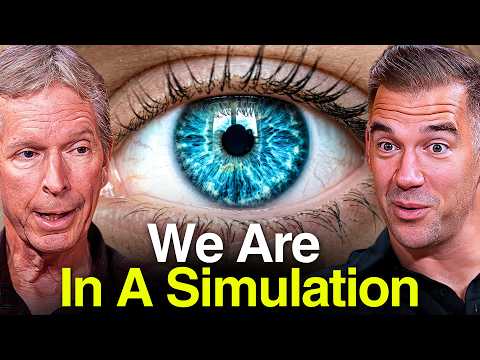
Evolutionary theory, when analyzed mathematically, suggests that organisms are not shaped to perceive reality as it is. Instead, our senses have evolved to provide a 'user interface'—akin to a VR headset—that hides the true nature of reality and prioritizes survival and reproduction by presenting a simplified, functional model of the world.
Spacetime's Fragile Foundation
Physics, particularly the combination of general relativity and quantum theory, indicates that spacetime is not fundamental. At the Planck scale (extremely small distances and times), spacetime collapses and loses operational meaning, suggesting that our perceived reality of space and time is an emergent property, not the bedrock of existence.
The VR Headset Analogy
Our evolved sensory systems function like a VR headset, providing a simplified interface for navigating life rather than revealing objective reality. This interface is designed for fitness and survival, meaning that understanding the 'truth' of the underlying reality might actually hinder our ability to 'play the game' of life effectively.
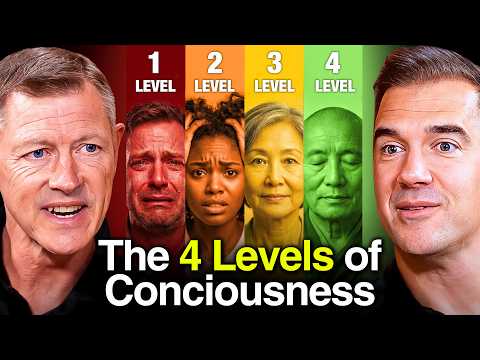
The lowest level of consciousness, 'To Me,' is characterized by a victim mentality where individuals believe everything happens to them. This state, fueled by blame and a lack of personal responsibility, leads to suffering because it creates friction between one's inner expectations and outer reality. The outer world is a reflection of the inner world, and trying to fix the outer without addressing the inner is a futile loop.
The 'By Me' Achiever's Hustle
The 'By Me' level, or achiever mentality, is where most personal growth efforts focus. It involves actively wrestling with reality, setting goals, and hustling to achieve them. However, this state is inherently stressful and can lead to burnout, as the constant effort to control the outer world without inner alignment is exhausting. This cycle often results in dropping back to 'To Me' when overwhelmed.
The Power of Asking Better Questions
The mind is a loop-closing mechanism that finds answers to the questions posed. Asking poor questions like 'Why am I not good enough?' leads to negative rationalizations. Conversely, asking empowering questions such as 'What can I learn from this?' or 'What's great about this I've not noticed yet?' directs focus towards solutions and growth, acting as the steering wheel of the mind to navigate towards the 'Through Me' state.
Dr. Lisa Miller asserts that every human is born with a brain hardwired for spiritual awareness and a relationship with a higher power, which she defines as a loving, guiding, and ever-present creator. This innate capacity is supported by MRI studies revealing specific brain circuits designed for perceiving this connection.
The Higher Council Table Practice
Dr. Miller introduces a powerful visualization practice where individuals invite loved ones, ancestors, their higher self, and higher power to a 'table' for guidance. This exercise fosters a sense of being loved, held, and guided, reinforcing the connection to a supportive spiritual council and promoting peace and forgiveness.
Suffering as an Accelerant for Awakening
Contrary to avoiding pain, Dr. Miller suggests that suffering can be a powerful catalyst for spiritual awakening. The brain, in times of hardship, is primed to widen its lens, potentially leading to a deeper connection with the creator and a more profound spiritual experience.
Insecure individuals often prioritize spending money to appear wealthy rather than focusing on genuine wealth building. True financial security, not external validation, is the key to long-term prosperity. This behavior is driven by a need for external approval, which is ultimately unsustainable.
Lifestyle Creep: The High-Income Trap
Even individuals earning over $500,000 annually can live paycheck to paycheck due to lifestyle creep. This phenomenon occurs when increased income leads to proportionally higher spending on housing, cars, and other expenses, negating the benefits of higher earnings and leaving no financial cushion.
Kamel on 'Get Rich Quick' Schemes
Opportunities promising rapid wealth accumulation, often fueled by fear or greed, are inherently risky and usually lead to loss. The proverb 'Wealth gained hastily will dwindle' highlights that slow, steady growth is more sustainable than chasing quick fortunes. If an opportunity sounds too good to be true, it likely is, and often comes with hidden costs or deceptive sales tactics.
Aligning your nervous system with your thoughts and beliefs is paramount for manifestation. When your actions contradict your words, it creates dysregulation, making it difficult to manifest desired outcomes. Your brain operates on a model of who you are, influencing your choices subconsciously.
The Power of Identity Shifting
To achieve future goals, one must become the version of themselves who already possesses those achievements. This involves defining a 'to-be list' that outlines the habits, energy, mindset, and beliefs of that future self, making the transition from current reality to desired reality more achievable.
The Kitten Study and Brain Wiring
The 'kitten study,' where kittens were raised seeing only horizontal or vertical stripes, illustrates how our brains are wired by early experiences and programming. This conditioning can limit our perception, preventing us from seeing opportunities that don't fit our established neural pathways.
Joel Kinnaman describes a period of intense struggle with panic attacks, eating disorders, and self-loathing, which he felt was leading him to give up on life entirely. This dark phase was exacerbated by a public breakdown during a storytelling exercise in acting school, which he initially perceived as the end of his aspirations.
Kinnaman's Preparation as Armor Against Fear
Joel Kinnaman has developed a profound reliance on preparation as his primary defense against performance anxiety and fear. He emphasizes that meticulous preparation is his 'armor,' allowing him to control what he can and face any challenge, whether it's a difficult scene or an unpredictable co-star. This strategy was honed through past experiences where overcoming adversity boosted his confidence and taught him to confront his fears head-on, preventing them from paralyzing him.
The 'Crime and Punishment' Breakthrough
Kinnaman's role as Raskolnikov in a new rendition of 'Crime and Punishment' was a pivotal moment that eradicated his stage-fright-induced vomiting. The demanding three-hour, forty-five-minute performance, where he was on stage for the entirety, was manageable due to his extensive preparation and the unique circumstances of being a replacement actor with no initial expectations. This experience solidified his belief in preparation as salvation and allowed him to enjoy his work, breaking through a long-standing barrier of fear and anxiety.
Unlimited options, far from liberating us, actually lead to increased boredom and decision paralysis. The constant awareness of potentially better alternatives spoils present satisfaction, a phenomenon known as 'maximizing.' This makes us less happy with our choices and more prone to regret.
Satisficing: The Art of 'Good Enough'
Instead of maximizing, adopting 'satisficing' rules—setting clear criteria for 'good enough' and stopping once met—is a more effective strategy. This approach, championed by Nobel laureate Herbert Simon, helps avoid choice overload and the agony of agonizing over minor decisions, leading to greater satisfaction.
Constraints as Creativity Catalysts
Constraints and limitations, often perceived as hindrances, are actually powerful catalysts for creativity and innovation. By blocking the 'path of least resistance,' they force us to think differently, repurpose resources, and discover novel solutions, as seen in the development of eBay, the Palm Pilot, and even groundbreaking NASA missions.
The human brain is the most powerful 'drug' in the world, capable of overriding even pharmaceutical sleep aids like Ambien. Dr. Breus illustrates this by stating that delivering life-altering news, such as a cancer diagnosis, would instantly prevent sleep, demonstrating how psychological states profoundly impact physiological functions like sleep.
Navigating Nighttime Awakenings
Waking between 1-3 AM is a natural biological event due to a drop in core body temperature. Instead of panicking or checking the clock, Dr. Breus advises against getting up unnecessarily (unless truly needing to pee), avoiding bright lights, and using techniques like the 4-7-8 breathing method to lower heart rate and return to sleep. If unable to fall back asleep, engaging in non-sleep deep rest or a relaxing activity outside the bedroom is recommended.
Sleep Apnea: More Common Than You Think
Undiagnosed sleep apnea is a serious medical issue that affects a significant portion of the population, including individuals who do not fit the stereotype of being overweight. It can lead to severe health problems like diabetes, heart failure, and cognitive decline. While CPAP machines are a common treatment, other options like mouthguards and surgical interventions exist, but many people avoid getting tested due to fear or stigma.
Lewis Howes: The Illusion of Effort vs. Conditioning
The primary reason for not achieving desired results may not be a lack of effort, but rather the ingrained mental patterns and conditioning that dictate our thoughts and actions. Most people operate on an 'old operating system' of thoughts they didn't consciously choose, leading to stagnant life outcomes. This was true for Lewis Howes himself, who achieved external success but felt internally unfulfilled due to unhealed wounds driving his actions rather than a positive vision. He realized that the high-achievers he interviewed shared a common trait: they trained their minds differently. Awareness of this default programming is the crucial first step to reprogramming.
Lewis Howes: Building a New Identity Beyond External Validation
Lasting change requires creating a new identity that is not tied to external achievements, job titles, or past struggles. Lewis Howes recounts losing his identity as an athlete after an injury, leading to profound self-doubt and insecurity. He realized that behaviors cannot change if the underlying identity remains the same, as identity ultimately dictates behavior. True transformation involves discovering who you are at your core, independent of external validation. This means shifting from an identity based on 'what I do' to 'who I am,' which allows for authentic growth and resilience, as exemplified by the story of a former alcoholic who redefined himself as a non-drinker.
Rewiring the Subconscious: Repetition and Emotion
Lasting change in the subconscious mind is achieved not through a single breakthrough, but through daily repetition combined with strong emotion. Feeling joy, gratitude, and excitement locks in new patterns and reinforces the desired identity, making the changes electric and authentic.
Haley Sacks emphasizes that the first rule to becoming a 'future rich person' is to address your money mindset. She argues that financial advice won't stick and changes won't occur if the root of one's relationship with money isn't understood and systems aren't set up for different actions. Leaning into your biggest financial wound is where magic happens, shifting your entire life when you stop avoiding finances and take control. This foundational step is crucial for any financial progress.
Sacks: The Illusion of 'Looking Rich'
Haley Sacks distinguishes between 'looking rich' and 'being rich,' criticizing the former as a facade driven by societal pressure and advertising. She argues that focusing on designer logos and projecting wealth, often through influencer-driven trends, is a form of learned financial helplessness. True wealth, she contends, is characterized by casualness, prioritizing time and health, and investing in assets rather than status symbols. The $3,000 Louis Vuitton bag incident serves as a personal example of this mistake.
Learned Financial Nihilism vs. Investing
Haley Sacks identifies 'financial nihilism' as a dangerous mindset where individuals count themselves out of financial success, often due to perceived systemic barriers like inflation. This leads to prioritizing immediate gratification, like using 'buy now, pay later' for experiences, over long-term investing. She contrasts this with the example of Ronald, a janitor who died with $8 million through consistent, frugal living and investing in index funds, demonstrating that high salaries aren't necessary for wealth accumulation if one consistently invests their surplus.
Brendon Burchard: Preferences as Performance Ceilings
Our ingrained preferences for comfort and ease act as a ceiling on our potential. High performers, unlike those who seek only easy habits, understand that embracing complexity and struggle is essential for achieving significant goals. This means prioritizing an aspirational vision over natural inclinations.
Burchard on Complexity and People Preferences
Success is often limited by preferences for problem complexity and the depth/frequency of social interaction. Those who avoid complex problems or deep relationships will not achieve greatness. High performers, conversely, embrace dealing with more people and more complex challenges to make a larger impact.
Brendon Burchard: Success Beyond Belief and Fulfillment
Achieving success beyond one's internal belief system can lead to imposter syndrome or a profound lack of fulfillment. Fulfillment arises from believing in, working towards, and then achieving a goal. Unearned success, like a lottery win, may bring happiness but not the deep satisfaction of fulfilled belief.
Anita Moorjani's early life was shaped by a deep-seated fear of not fitting in, stemming from her Indian heritage in a British-dominated Hong Kong, and the cultural pressure for women to be subservient and marry within arranged unions. This constant anxiety and people-pleasing behavior created an internal environment ripe for illness.
Kevin Love explains that the pursuit of more achievements, like winning championships or accolades, doesn't inherently solve deep-seated feelings of anxiety or depression. The dopamine hit from success is temporary, and without addressing the root emotional issues through internal work, individuals are left with the same baseline struggles. This cycle can lead to a 'sucking place' where one feels worse despite accomplishments due to unmet expectations of happiness. The final sentence is: This highlights the critical need for internal emotional work beyond external validation.

Success Is Not Immune to Depression
Kevin Love references public figures like Kate Spade and Anthony Bourdain to illustrate that success, fame, and apparent happiness do not provide immunity from depression or mental health crises. He argues that people who 'seem to have it all' can still suffer immensely, highlighting that mental health struggles are universal and can affect anyone regardless of their external achievements or wealth. This underscores the idea that outward appearances can be deceiving and that compassion is vital for everyone. The final sentence is: This perspective dismantles the myth that wealth and fame are antidotes to psychological suffering.


Managing Daily Anxiety and Trauma
Love describes his daily experience of anxiety, rating it a 'five or six' on a scale of one to ten, but considers it a 'healthy' level of appropriate fear. He notes significant improvement in managing public anxiety and the fear of judgment since starting his mental health work in 2017, feeling more comfortable in his own skin and less vulnerable to external criticism. He also touches upon his family history of trauma and rage, stemming from his father's own unaddressed emotional issues, which manifested as rage fits in his youth. The final sentence is: This demonstrates that while challenges persist, consistent self-work can lead to greater emotional regulation and resilience.