Fernando Mendoza's second preseason game performance, marked by an interception, a pick-six, and a sack, suggests he may struggle in the NFL. Parker is skeptical of his potential as the number one overall pick.
Kelvin Washington: Play Now, Learn Later
Kelvin Washington argues that if a young quarterback like Mendoza has the potential to play and make an impact, they should be put on the field immediately to learn, citing Peyton Manning's rookie year as an example. He believes sitting a promising player is not the best approach.
Rob Parker: The Case Against Mendoza's Readiness
Parker reiterates his skepticism, suggesting that the Raiders' reluctance to start Mendoza might stem from a lack of confidence in him being a bust. He contrasts this with the situation of Joe Burrow, who was drafted by a team with a history of postseason struggles but still led them to the Super Bowl.
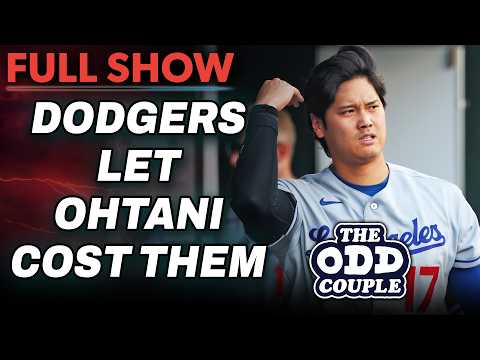
Rob Parker argues that players voting for major awards, like the MVP, are susceptible to jealousy, leading to skewed results. He points to the 14-5 vote split favoring Pete Crow-Armstrong over Shohei Ohtani as evidence, suggesting that players are tired of Ohtani's dominance and vote for anyone but him, despite Ohtani's strong pitching and hitting numbers.
Jeff Rimer: Cal Ripken Jr. Streak Controversy
Jeff Rimer recounts the controversy surrounding Cal Ripken Jr.'s consecutive games streak, where some fans and media members felt it was self-serving for him to continue playing despite struggling. Rimer shares an anecdote about an irate fan calling him an 'apologist' for the Ripken family, highlighting the divided opinions on the streak's continuation.
Jeff Rimer: Facilitating Pete Rose's Move to Montreal
Jeff Rimer details his instrumental role in convincing the Montreal Expos to sign Pete Rose in 1984. Rimer called Rose, then a free agent, with the idea, and subsequently pitched it to the Expos' owner. This led to Rose signing with Montreal, with Rimer even appearing on the book cover with Rose in his Expos jersey, marking the beginning of a significant friendship.
Rob Parker argues that Joe Burrow's "now or never" statement for the Bengals is unrealistic, stating it's "never" for them to win a Super Bowl. He points to the team's consistently poor defense, citing statistics from the previous season where they ranked 31st in total defense and 30th in scoring defense. Parker believes that despite Burrow's talent, the defensive shortcomings make a Super Bowl win improbable, comparing the Bengals' situation unfavorably to teams that have successfully addressed defensive needs.
Kelvin Washington: Understanding Burrow's Urgency
Kelvin Washington acknowledges Joe Burrow's "now or never" sentiment, understanding it as a reflection of his desire to avoid being remembered as a "what if" player like Dan Marino. Washington highlights Burrow's past success, including his historic college season and the physical toll he's taken in the NFL, suggesting his urgency stems from a desire to achieve ultimate success while he's in his prime. He believes Burrow is trying to instill this urgency throughout the entire organization, not just on offense.
Rob Parker: Sanders Lacks the "It Factor" for Browns QB1
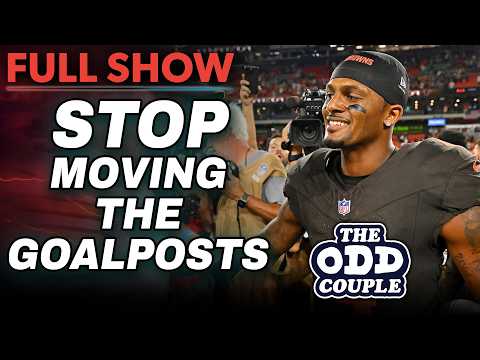
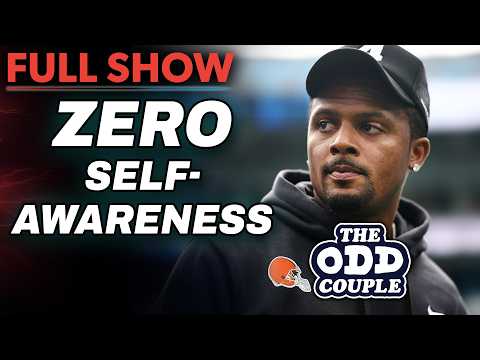
Rob Parker asserts that Shador Sanders will not be the starting quarterback for the Cleveland Browns because he is simply "not good enough." Parker dismisses the idea that coaching decisions or contract obligations are the primary factors, arguing that if Sanders were truly the future, the team would have moved on from Deshaun Watson. He points to Sanders' lack of significant on-field achievements despite favorable circumstances, including his famous last name and jersey sales, suggesting that his current position is a result of his own limitations rather than external obstacles.
Rob Parker asserts that Shador Sanders is not good enough to be the starting quarterback for the Cleveland Browns. He argues that if Sanders possessed the necessary talent and upside, the team would have moved on from Deshaun Watson, regardless of his contract. Parker believes the decision to stick with Watson is purely based on his perceived inadequacy, not financial obligations.
Kelvin Washington: The Intrigue is in Shador Sanders
Kelvin Washington suggests that while Deshaun Watson may start due to his contract, the real intrigue lies with Shador Sanders. He believes the Browns have likely seen the best of Watson and that Sanders, despite potential contract issues, offers more potential for the future. Washington implies that if Sanders doesn't drastically separate himself, the team will be stuck with an expensive backup.
Rob Parker: Mahomes' Ranking is Based on Past Glory
Rob Parker argues that Patrick Mahomes' high ranking on the NFL's Top 100 list is a 'lifetime achievement award' and not reflective of his recent performance. He contends that Mahomes' perceived average play over the last couple of seasons, especially last year, warrants a more significant tumble in the rankings, similar to how other players' rankings fluctuate based on current performance.
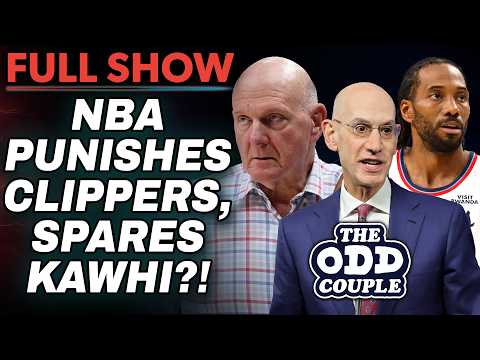
The NBA's investigation into Steve Balmer and the Clippers for allegedly circumventing the salary cap to pay Kawhi Leonard has found no evidence, which Rob Parker attributes to Adam Silver being the 'worst commissioner' and unwilling to challenge wealthy owners. He suggests the league is merely going through the motions.
Kelvin Washington: Salary Cap Circumvention is Commonplace
Kelvin Washington argues that practices like funneling money through team sponsors to players, as alleged with Kawhi Leonard, are likely common across the NBA, citing examples like Jason Tatum's endorsement deals. He believes the NBA is hesitant to crack down due to the prevalence of such tactics and the potential for owners to retaliate by scrutinizing other teams' books.
Rob Parker: The NBA's Schedule Favors LeBron James
Rob Parker contends that the NBA's schedule release, particularly the favorable treatment of the Philadelphia 76ers with few early Western Conference games and back-to-backs, is a direct result of the league's continued coddling of LeBron James and a fear of his departure impacting ratings.
Rob Parker expresses significant concern over the Lakers' sale, citing a pattern of 'new owner syndrome' where incoming ownership groups often make detrimental, short-sighted decisions driven by ego or a desire to prove themselves, rather than sound basketball strategy.
Historical Precedents of NBA Ownership Changes
The discussion draws parallels between the Lakers' new ownership and past instances like the Dallas Mavericks, Phoenix Suns, Brooklyn Nets, and Minnesota Timberwolves, where new owners often disrupted successful teams or made costly mistakes, leading to prolonged periods of mediocrity or rebuilding.
Balano's on Ownership's Financial Motives
Monty Balano's highlights that the new Lakers owners, Josh Kushner and Bob Iger, are primarily motivated by business and profit, referencing Iger's past focus on quantity over quality at Disney. This suggests their decisions may prioritize financial gain over the team's on-court success or fan experience.
Rob G: New Ownership Signals a Dark Day for Lakers Fans
The sale of the Los Angeles Lakers to Josh Kushner and Bob Iger represents a potentially negative shift for the franchise, as history shows new ownership often leads to detrimental shake-ups and a focus on profit over team success. This 'new owner syndrome' has been observed in other NBA franchises, leading to poor decisions and long-term struggles.
Ephraim Salaam: Bob Iger's Disney Tenure Raises Red Flags
Bob Iger's past leadership at Disney, marked by a focus on 'quantity over quality' and chasing quick profits with franchises like Marvel and Star Wars, suggests he may prioritize financial returns over the integrity and quality of the Lakers' product. This history indicates a potential for similar business-driven decisions with the team.
Ephraim Salaam: League Approval Speeds Up Sales for Owner Benefit
The NBA and its owners are quick to approve high-value bids, like the Lakers' sale, because it inflates the valuation of all existing franchises. This creates a conflict of interest where owners prioritize increasing their own net worth over vetting new owners for their commitment to the sport and its fans.
Dusty Baker recounts his early life and career, emphasizing that while he was drafted by the Braves at 18, he truly became a man and found his stride with the Los Angeles Dodgers. He shares how his childhood idol, Tommy Davis, influenced his decision to wear number 12 and how meeting Davis confirmed his admiration for the player's character.
Rob Parker's Recognition from the Negro Leagues Baseball Museum
Rob Parker shares his honor from the Negro Leagues Baseball Museum, receiving the Wilkinson Innovator Award. He emphasizes that the award is a testament to the hard work of his staff at MLB Bro.com, who are dedicated to covering the history and stories of Black and Brown baseball players.
John Cirillo: 'Elvis, Aretha and the Babe'
Author John Cirillo discusses his new book, 'Elvis, Aretha and the Babe,' detailing its availability on Amazon and through Archway Publishing. The book explores the intersection of these iconic figures, offering a unique historical perspective.
Kyler Murray consistently receives opportunities in the NFL that he has not earned, dating back to his draft by the Cardinals. Despite a lack of significant achievements, a history of off-field distractions, and mediocre performance, he continues to be handed starting quarterback roles, most recently with the Minnesota Vikings.
Ephraim Salaam: The Talent Argument for Murray
Despite criticisms, Kyler Murray remains the most talented quarterback on the Vikings' roster, and the team's offensive structure, coaching, and receiving corps provide an ideal environment for his potential resurgence, similar to Sam Darnold's career trajectory.
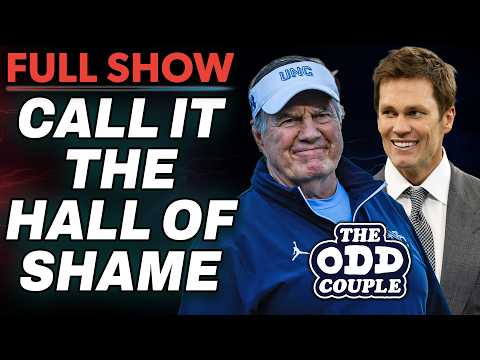
Ephraim Salaam: Belichick's Hall of Fame Snub
Bill Belichick's exclusion from the Hall of Fame on the first ballot is a disservice, as his undeniable coaching achievements and culture-building should outweigh controversies like Spygate and Deflategate, which are often used to delay or deny recognition.
Vinatieri's Jab Reignites Belichick Hall of Fame Debate
Adam Vinatieri's Hall of Fame speech, filled with playful jabs at Bill Belichick, has reignited the conversation about why the legendary coach wasn't a first-ballot Hall of Famer. The hosts agree that Belichick's accomplishments are undeniable, but acknowledge that controversies like Spygate and Deflategate, along with his perceived arrogance and treatment of media and players, likely prevented immediate enshrinement. They suggest voters used this as a way to 'bring him down a peg.' The discussion concludes that while his induction is inevitable, the delay highlights a reluctance to overlook his controversial methods.
Preseason Football: A Waste of Time?
Ephraim Salaam expresses a strong disdain for preseason NFL football, stating he is 'out on it.' He argues that if coaches and teams, like the Rams, don't prioritize it by resting starters, then fans shouldn't either. He finds the games boring and believes they don't accurately predict regular-season success, citing examples of teams with strong preseasons failing and vice-versa. Kelvin Washington agrees, noting that the increasing length of the regular season necessitates keeping star players healthy, making preseason participation minimal. Both hosts feel that the high prices charged for tickets and concessions during preseason games are unjustified.
Jerry Harrison Jr.: Dodgers' Offensive Woes
Jerry Harrison Jr. identifies the Dodgers' offensive struggles, citing their high rate of double plays and poor situational hitting as key issues. He also points to surprisingly bad base running as a contributing factor, suggesting a need for improvement in these areas to regain momentum.
Despite an eight-game lead in the NL West, the Dodgers' recent six-game losing streak has created significant concern, potentially dropping them into a Wild Card spot and a tougher postseason path. This series against the Diamondbacks is crucial for them to regain momentum and correct their course.
Missed Opportunities: Brewers and Rays at the Trade Deadline
Teams like the Milwaukee Brewers and Tampa Bay Rays missed significant opportunities at the trade deadline by not aggressively pursuing top talent like Tarik Skubal. While the Dodgers' acquisition is seen as 'the rich getting richer,' these other contenders could have bolstered their rosters to better compete for a World Series, especially given the American League's open nature.
Mookie Betts' Offensive Struggles and Defensive Versatility
Despite his Hall of Fame trajectory, Mookie Betts has struggled offensively over the past two seasons, hitting poorly for stretches. However, he has shown remarkable defensive versatility, transitioning to second base and shortstop, earning Gold Glove consideration. His recent four-hit game offers hope for a turnaround.
Rob Parker firmly believes that preseason football is a waste of time and is 'awful.' He argues that if coaches and teams don't prioritize it by resting their star players, fans shouldn't care either. He finds it doesn't move the needle and is only relevant for gamblers.
Rob Parker: Jared Goff is Overrated
Rob Parker argues that Jared Goff is overrated, especially considering his ranking on the NFL Top 100 list, which placed him ahead of quarterbacks like Lamar Jackson and Joe Burrow. Parker points to Goff's struggles in crucial games, such as the playoff loss to Washington and a poor performance against the Vikings, as evidence that he falters when it matters most.
Al Shares a Heartwarming Story of the Show's Impact
A caller named Al shares a deeply personal story about how listening to The Odd Couple helped his daughter recover mentally after a severe car accident. He expresses profound gratitude, stating that the show's humor was 'the best medicine' and played a role in her healing process. This highlights the show's impact beyond sports commentary.
Jared Goff is overrated and his ranking ahead of quarterbacks like Justin Herbert, Joe Burrow, and Lamar Jackson is nonsensical. His inability to perform in crucial games, evidenced by the loss to Washington as heavy favorites and a poor showing against the Vikings, proves he's not an elite quarterback.
Kelvin Washington: Goff is Properly Rated
Jared Goff is properly rated, and the criticism is overblown. His career accomplishments, including a Super Bowl appearance and a strong record with the Lions (48-33-1), demonstrate his value. The argument that he's not better than Lamar Jackson is valid, but his overall career achievements, including more 4500-yard seasons than many elite QBs, warrant his ranking.
Rob Parker: Josh Allen's Window is Closing
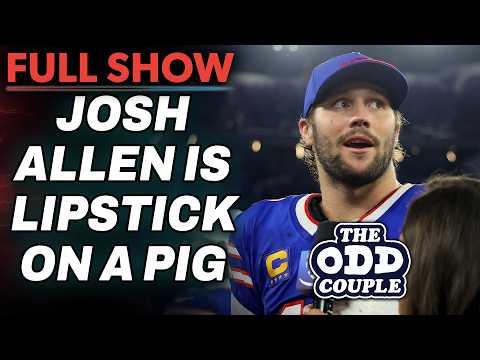
Josh Allen's 'knock on the door' mentality is naive; his aggressive, street-football style leads to costly turnovers, as seen in the playoff loss to Denver. Despite his talent, his inability to consistently win in the postseason, mirroring Jim Kelly's fate, suggests the Bills' Super Bowl window will close without a championship.
Rob Parker argues that Josh Allen's high-risk, 'street football' style, characterized by turnovers and risky plays, will ultimately prevent the Buffalo Bills from winning a Super Bowl. He draws parallels to Jim Kelly's era, where despite talent, Super Bowls were elusive, and points to Allen's playoff struggles as evidence that his aggressive approach is a liability, not an asset, for championship contention.
Kelvin Washington: Lamar Jackson Deserves Tier 1 Status
Kelvin Washington vehemently defends Lamar Jackson, arguing that his consistent elite performance, including record-breaking passer ratings and multiple MVP awards, warrants top-tier quarterback status. He criticizes the subjective nature of player rankings, pointing out that Jackson's statistical achievements, even with playoff shortcomings, far exceed those of many highly-ranked quarterbacks, making his consistent placement outside the top tier illogical.
Kelvin Washington emphasizes Lamar Jackson's all-time career passer rating among qualified quarterbacks, a statistic that directly contradicts the narrative that he cannot throw effectively. He presents this as irrefutable evidence of Jackson's elite passing ability, further questioning the validity of his lower tier rankings and the perception of his overall game.
Patrick Mahomes is no longer the undisputed best quarterback in the NFL, despite his top-tier ranking. His performance over the last three years, while still good, has not consistently matched his previous MVP-caliber play, suggesting he may be benefiting from reputation rather than current form. This shift warrants a re-evaluation of his standing among peers like Josh Allen and Lamar Jackson.
Critique of Sports Media Rankings
Sports media outlets, particularly in their annual quarterback rankings, often rely too heavily on a player's past reputation rather than their current on-field performance. This tendency leads to outdated assessments, as seen with Patrick Mahomes, and fails to acknowledge shifts in player ability or the emergence of new talents. The media's role in shaping these narratives is thus called into question.
The Dodgers' Transactional Identity
The Los Angeles Dodgers, through their aggressive acquisition of players like Tyler Glasnow, have become a 'transactional' baseball team rather than a villainous one. Unlike historical powerhouses with a core identity, the Dodgers assemble talent through deals, making their success feel expected and their failures the only source of significant reaction. This approach, while effective, diminishes their narrative impact in baseball.
Rob Parker: Dodgers Aren't Villains, They're Obscure
The Dodgers are no longer perceived as villains in baseball because they lack a truly hateable figure. Instead, their constant acquisition of top talent has led to a state of obscurity where their actions are expected, and only their failures in the postseason generate significant reaction. This transactional approach, unlike the core-driven Yankees of the past, makes them harder for fans to connect with or passionately oppose.
Rob Parker: The Dodgers' Transactional Nature
The Dodgers are a 'transactional baseball team,' assembling stars like Freddie Freeman and Shohei Ohtani who previously played for other franchises. This contrasts sharply with the 'core of Yankees' like Derek Jeter and Mariano Rivera, who were homegrown and built a dynasty. This lack of a foundational, developed core makes the Dodgers' success feel less organic and harder for fans to rally behind or against.
Rob Parker: LeBron vs. Shaq/Kobe Fan Connection
Lakers fans never truly connected with LeBron James in the same way they did with Shaq and Kobe Bryant. This is because LeBron's arrival was a business decision, unlike the organic growth and shared journey fans experienced with Kobe, who matured from a young player to a legend in Los Angeles. Shaq, while dominant, was ultimately traded, suggesting a different dynamic than the deep-seated adoration Kobe commanded.
CBS made a critical error by not firing Tony Romo following his DUI arrest and the release of his bodycam footage. The network's decision to place him on indefinite leave, rather than terminate his contract, signals a lack of accountability for his actions, which included driving under the influence with an open container. This leniency, coupled with Romo's perceived decline in broadcasting quality, suggests CBS prioritized financial considerations over journalistic integrity and public safety.
Rob Parker: The Shanahan Cover-Up
The delayed reporting of Kyle Shanahan's car accident is disgraceful and highlights a disturbing trend of preferential treatment and lack of transparency. For 13 days, the media and local police withheld information about the 49ers coach's serious injuries, which he himself admitted were his fault. This cover-up, facilitated by connections between the team and local authorities, undermines public trust and suggests that powerful figures can operate with impunity.
Rob Parker: CBS's Missed Opportunity with Tony Romo
CBS should have fired Tony Romo following his DUI arrest, viewing it as a chance to address his declining performance and perceived privilege. The network's failure to act is seen as protecting their own, despite Romo's legal issues stemming from his home state.
Rob Parker asserts that the WNBA is a 'fake league,' comparing it to the WWE and arguing that its inconsistent handling of player conduct, particularly regarding gambling, makes it unserious. He believes the league fails to take itself seriously, leading to a lack of credibility.
Kelvin Washington: WNBA Needs to Read the Room
Kelvin Washington argues that the WNBA, despite its growing popularity, has failed to 'read the room' by not taking incidents like the Angel Reese-Paige Bueckers wager seriously. He believes the league's lenient response, especially in light of the NBA's own gambling issues, demonstrates a lack of preparedness for prime time and undermines its credibility.
Rob Parker: Inconsistency in WNBA Rule Enforcement
Rob Parker criticizes the WNBA for its inconsistent application of rules, citing the suspension of Sandy Brondello for a common Australian phrase while overlooking the gambling wager between Angel Reese and Paige Bueckers. He argues this disparity demonstrates a failure to enforce rules uniformly and seriously.
Rob Parker: Dodgers' Pursuit of Skubal Fuels 'Money Wins' Debate
The Dodgers' renewed interest in pitcher Tarik Skubal, especially with Shohei Ohtani's injuries, highlights how their immense financial resources allow them to mask mistakes and acquire top talent. This practice is seen as unfair by smaller market teams who cannot afford to cover up failed acquisitions. Rob Parker argues that while spending money doesn't guarantee wins, the Dodgers' ability to absorb errors and continuously reload makes the competition uneven. He believes Skubal should move on from the Tigers, as they are unlikely to offer a contract comparable to what a team like the Dodgers could afford, and it would be better for the Tigers to trade him for prospects.
Kelvin Washington: Shanahan Accident Coverage Raises Media Integrity Questions
The 13-day delay in reporting Kyle Shanahan's serious car accident is deemed 'disgraceful' by Kelvin Washington. He criticizes the police in Santa Clara for withholding public records and questions Chris Sims' role as a media member for explaining the delay based on personal goodwill towards Shanahan. Washington argues that such actions undermine public trust in law enforcement and media objectivity, suggesting that if the accident had occurred in San Francisco, it would have been harder to conceal. He believes Mike Florio should have fired Chris Sims for withholding such a significant story.
Bryce Harper's Blunt Assessment
Bryce Harper's direct statement that the Philadelphia Phillies need help and that the clubhouse is 'garbage' is a bold, albeit potentially controversial, assessment of the team's current state. While Harper's performance has dipped in July, his status as a star player grants him significant equity to voice such concerns, especially with the trade deadline approaching.
Kyle Shanahan's severe car accident on July 14th was deliberately concealed by media and local authorities for two weeks, despite initial police reports incorrectly blaming the other driver. Shanahan himself admitted to being distracted by his phone, leading to a crash that resulted in multiple serious injuries. The prolonged silence has fueled accusations of a cover-up, with Chris Sims, a friend of Shanahan, admitting he knew and withheld the information.
Rob Parker: The Shanahan Cover-Up is the Real Story
The primary outrage surrounding Kyle Shanahan's car accident isn't the accident itself, but the two-week delay in its reporting and the perceived cover-up by authorities and media. This lack of transparency is unacceptable for a public figure and coach.
Charles Barkley Critiques LeBron's 'Stacking' Strategy
Charles Barkley maintains his long-standing criticism that LeBron James consistently 'stacks' his teams by joining already talented rosters, citing his moves to Miami, Cleveland, and now Philadelphia as evidence, contrasting this with historical championship teams built differently.
Jamal Hill analyzes LeBron James' decision to leave the Lakers for the Philadelphia 76ers, initially considering Golden State a strong contender due to its balance of personal and professional benefits, including proximity to LA and relationships with key players. However, she concludes that Philadelphia offered the best purely basketball fit for his final pursuit of a championship, acknowledging that many Lakers fans were ready for his departure. The move signifies a clear prioritization of on-court success over other factors in the twilight of his career.
The Deeper Cut of Ryan Clark's ESPN Firing
Rob Parker expresses surprise at Ryan Clark's emotional reaction to being fired from ESPN, attributing it to the subjective nature of the business. Jamal Hill counters, explaining that Clark's deep emotional response stems from his journey as an undrafted player who climbed the ranks at ESPN, becoming a prominent voice and a representative for his New Orleans community. She argues that for many black sportscasters, their position is more than just a job; it's a platform for representation, making a public dismissal feel like a profound letdown to their community. This perspective reframes the narrative from a simple business decision to a deeply personal and communal loss.
Rob Parker: Steph Curry Must Be the Anti-LeBron
Rob Parker passionately argues that Steph Curry should emulate Derek Jeter by remaining a one-team player with the Golden State Warriors, contrasting this with LeBron James's frequent team changes. He asserts that Curry's four championships with one team already cement his legacy, making further 'ring chasing' unnecessary and potentially detrimental to his image. This stance positions Curry as a paragon of loyalty in an era of player movement.
Rob Parker Declares LeBron James the GOAT of 'Going to Another Team'
Rob Parker controversially declares LeBron James the GOAT, but redefines it as 'Goes On Another Team,' criticizing his move to Philadelphia as a desperate act for a ring and evidence of him being a 'journeyman.' Parker argues this move, especially for a veteran minimum, diminishes any claim to greatness and suggests James is chasing championships rather than building a legacy.
Kelvin Washington Defends LeBron's Decision as Strategic and Personal
Kelvin Washington pushes back against Rob Parker's harsh criticism, arguing that LeBron James's decision to join the 76ers is strategic and that players have the right to choose their path, especially late in their careers. He suggests that leaving the Lakers for a chance at a championship, even on a veteran minimum, is a rational choice and that the narrative of 'ring chasing' is oversimplified.
Rob Parker Questions LeBron's 'Family First' Narrative
Rob Parker dismisses LeBron James's stated reason for the move being 'for family,' arguing that taking a significant pay cut to play in Philadelphia contradicts this. He suggests that if family was the priority, James could have stayed with the Lakers for a similar salary and maintained stability, implying the 'family' narrative is a convenient excuse for chasing another championship.
Steph Curry's Hall of Fame Exhibit: A Controversial First
The Naismith Basketball Hall of Fame is breaking tradition by honoring active player Steph Curry with his own exhibit, 'Stephen Curry Beyond the Arc.' This marks the first time in its nearly 75-year history an active player has received such an honor, featuring game-worn gear and Curry's own narration. Rob Parker views this as a desperate move by the Hall, questioning the deviation from established norms.
Parker: Curry 'Ruined' Basketball with the Three-Pointer
Rob Parker contends that Steph Curry's prolific three-point shooting has fundamentally altered and 'ruined' basketball. He argues that Curry's success encouraged a generation of players to abandon the mid-range game in favor of inefficient three-point attempts, leading to a less diverse and aesthetically poorer style of play. Parker believes this trend has negatively impacted the sport's strategic depth.
Parker on LeBron's Decision: Indecision and Family
Rob Parker criticizes LeBron James' prolonged decision-making process regarding his next team, labeling it 'indecision' rather than a strategic choice. Parker suggests that if family is the priority, James could have taken a veteran's minimum to stay in Los Angeles, questioning the need to explore other options when winning is unlikely anywhere. He implies James is seeking a situation that doesn't truly exist.
Rob Parker argues that the current era of NBA parity, driven by the league's rules and the distribution of talent, has made the 2020s a forgettable period for basketball fans. He laments the lack of consistent rivalries and dominant dynasties that characterized previous decades, leading to a series of one-off champions without sustained narratives.
Kelvin Washington: The NBA's Last Decade Was Compelling
Kelvin Washington strongly disagrees, asserting that the NBA's last decade has been filled with compelling storylines and significant player achievements. He highlights championships won by diverse teams and players like Kawhi Leonard, Giannis Antetokounmpo, Nikola Jokic, and Jaylen Brunson, arguing that these narratives are far from mundane and showcase the league's dynamism.
Parker: Dominant Players Should Lead to Dominant Teams
Rob Parker insists that truly dominant players, especially MVPs, should be expected to lead their teams to repeated success and championships. He questions the narrative of players like Nikola Jokic or Giannis Antetokounmpo if they don't consistently reach or win finals, arguing that such expectations are natural for the league's best.