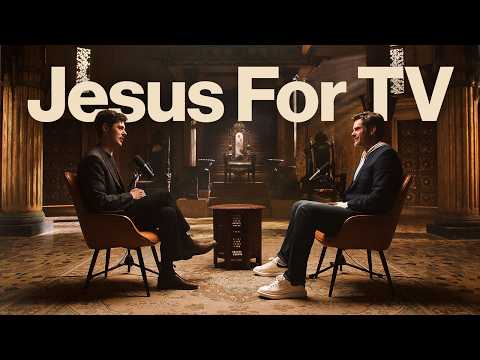
Dallas Jenkins explains that his first responsibility when writing and directing is to create compelling, watchable drama rather than an evangelistic tool. If a film fails basic storytelling rules, any higher mission will fail as well. He focuses solely on making the best possible show while leaving audience reactions to God.
Jenkins Defends Adding Unrecorded Details
Dallas Jenkins denies that his show adds to the Bible, asserting that the scriptural text remains entirely unchanged. He treats the series as a historical drama employing creative imagination to fill plausible narrative gaps without contradicting the character of Jesus. This approach allows viewers to connect emotionally while understanding the difference between scripture and art.
Harmonizing the Cleansing of the Temple
Alex O'Connor highlights that John places the temple cleansing early in Jesus's ministry while the synoptic gospels place it during Passion Week. Jenkins explains his decision to depict the event only once late in the story, rejecting the harmonizing theory of two cleansings because repeating it would diminish dramatic tension. Staging the confrontation during Passover week logically escalates religious opposition leading directly to the crucifixion.
Ecumenical Advisory Board Balances Decisions
Jenkins relies on an advisory panel consisting of a New Testament scholar, a Catholic priest, and a Messianic Jewish rabbi to review scripts. When reconciling conflicting gospel accounts like the anointing at Bethany, the consultants help identify points that would generate severe doctrinal offense. This collaborative oversight ensures creative choices remain broadly defensible across diverse Christian traditions.
Negotiating Reverence in the Crucifixion Scene
During the filming of season six, lead actor Jonathan Roumie expressed discomfort with lines showing Jesus speaking casually on the cross. For Roumie and Catholic theological advisers, maintaining solemnity during the Passion is essential to the theological meaning of redemptive suffering. Jenkins worked extensively with Roumie to trim and revise the dialogue, finding a respectful balance between realism and reverent theology.
Putting Unscripted Claims on Jesus's Lips
Alex O'Connor questions dramatic scenes where Jesus makes provocative theological statements not recorded in scripture, such as declaring that he is the law of Moses. Jenkins admits these lines are bold additions that likely would have been recorded had Jesus spoken them verbatim in historical reality. However, he defends the choice as capturing holistic theological truth regarding Christ fulfilling Mosaic law.
Exploring Disability and Unanswered Healing
Casting Jordan Walker Ross, an actor with scoliosis and cerebral palsy, compelled the writers to address why Jesus did not heal Little James. In the script, Jesus asks if he wants to be healed, declines the request, and explains the higher witness of patient endurance. Jenkins recognizes this places an unrecorded theodicy directly onto Jesus, yet thousands of viewers living with chronic illness have reported finding comfort in the scene.
Humanizing Judas Beyond Pure Greed
Dallas Jenkins rejects the flat archetype of Judas Iscariot as a purely malicious or greedy cartoon villain. Instead, the series portrays Judas as an ardent follower attempting to force Jesus's hand to conquer Roman oppression. This psychological depth makes his betrayal more understandable while preserving the tragic weight of his fatal miscalculation.
Jesus Prays for Judas's Agency
Addressing a scene where Jesus tells Judas he has a choice and promises to pray for him, Jenkins explores theological tensions between divine foreknowledge and free will. In Gethsemane, Jesus himself experienced a human will distinct from the Father's while submitting to divine destiny. Portraying Jesus praying for Judas reflects genuine compassion and spiritual choice rather than deterministic fatalism.
Elevating Women Reflects Gospel Evidence
Responding to whether expanding female roles was driven by modern cultural pressure, Jenkins argues that the gospels themselves give women vital prominence. Women financed the ministry, witnessed the resurrection first, and engaged in deep theological dialogue at the well. Giving female characters substantial screen time simply develops historical dynamics that ancient patriarchal writers recorded only briefly.
Hesitation Around Overtly Supernatural Scenes
Jenkins admits to feeling nervous about staging overt supernatural events such as the Transfiguration or walking on water because heavy visual effects can break audience immersion. He prefers grounding the show in relatable human relationships and intends to save the Transfiguration for a future miniseries on Moses. The series is not intended as an exhaustive theological catalog and encourages viewers to turn to scripture for missed events.
Agnostic Appreciation for Jesus's Humanity
Alex O'Connor shares that as an agnostic, watching The Chosen humanizes first-century Judea and strips away the rigid, emotionally distant iconography of traditional church paintings. While remaining unconvinced of literal supernatural miracles, O'Connor finds the character-driven narrative deeply moving and historically evocative. The series succeeds as compelling art by portraying Jesus and his followers as living, breathing figures navigating high-stakes social conflict.