The current discourse around AI is dominated by hype, with inflated market size estimates and a focus on potential rather than tangible business building. While AI has seen massive investment and rapid development, particularly since ChatGPT's release, the actual revenues generated are still relatively small compared to the capital expenditure. This disconnect between hype and reality necessitates a more grounded approach to valuation and business strategy.
Aswath Damodaran: Deconstructing AI Market Size
The total addressable market (TAM) for AI is often exaggerated by founders and bankers to inflate valuations. While current annualized revenue run rates for major LLMs like OpenAI and Anthropic are growing rapidly, they collectively reach only around $120-150 billion, with the highest overall estimates for AI products and services reaching $250 billion. This is a small fraction of the trillions claimed, necessitating a realistic assessment of market potential.
Aswath Damodaran: Factors Shrinking the AI Market
Several factors are shrinking the realistic market for AI: the cost of AI agents, the concentration of high earners susceptible to displacement, and geographical variations in income. Premium AI products can only replace high-cost labor, and professions requiring rule-based tasks are more vulnerable than those involving human interaction. Furthermore, AI's adoption and impact will likely be greater in regions with higher average incomes, like North America and parts of Europe.
Leo Aschenbrenner, a young prodigy with a background in AI safety and a controversial stint at OpenAI, launched the Situational Awareness hedge fund. The fund achieved an astonishing 367% return in under two years by betting heavily on AI's imminent success and investing in related companies, leading to comparisons with Warren Buffett. However, within weeks, the fund collapsed, losing two-thirds of its public equity value and ultimately being liquidated.
Investor Traits Fueling Conviction: Intelligence, Personality, and Track Record
Beyond market factors, an investor's personal attributes significantly shape conviction. Higher intelligence can lead to overconfidence in one's analytical edge, while strong self-confidence can border on overconfidence, diminishing self-doubt. A successful track record, even if due to luck, can inflate conviction, leading investors to overestimate their abilities and attach undue certainty to future bets.
Conviction's Lifecycle Dance
Investment conviction is not static; it ebbs and flows with a company's lifecycle. Young companies, rife with pricing uncertainty and fewer tangible catalysts for market correction, inherently foster weaker conviction. Conversely, mature or declining companies offer more concrete data points, allowing for stronger conviction. This disparity dictates portfolio strategy: weaker conviction necessitates diversification and less leverage, while stronger conviction permits concentration and greater leverage.
Humanity tends to glorify 'empire builders' like conquerors and visionary business leaders, often overlooking their flaws and undervaluing more understated, yet critical, figures. This tendency can lead to a skewed perception of success, prioritizing fanfare over sustained, quiet competence.
Jobs' Second Coming: Visionary Rebirth
Steve Jobs' return to Apple in 1997 marked a legendary turnaround, driven by his visionary leadership and the introduction of disruptive products like the iPod and iPhone. This success was attributed to his personal growth, learning to compromise, and crucially, his recognition of his own strengths and delegation to operational experts like Tim Cook.
The Restrained CEO: Acquisitions and AI
Tim Cook's leadership is characterized by restraint, evident in Apple's strategy of making numerous small acquisitions rather than large, transformative ones, and its comparatively low capital expenditure, particularly in AI. This cautious approach contrasts sharply with the aggressive investment strategies of other tech giants.
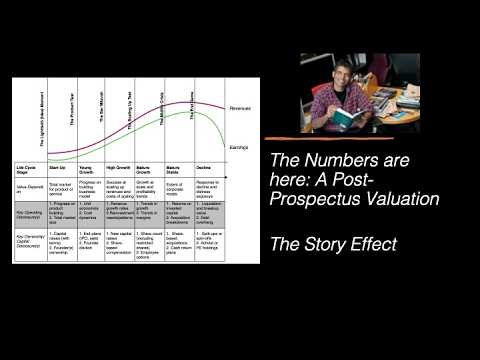
Damodaran: Prospectus Numbers Align with Pre-IPO Estimates
The financial numbers revealed in the SpaceX prospectus, including revenues and balance sheet items like debt and cash, were largely in line with Asawth Damodaran's prior estimates. While XAI revenues were higher than expected due to lease income, the aggregate operating loss and net debt figures did not significantly alter the overall valuation. The substantial cash reserves offset the reported debt, rendering the net debt impact negligible on the company's multi-trillion dollar valuation. This suggests the core financial health and operational scale were already well-understood.
Connectivity Business Growth Outpaces Launch Services
SpaceX's revenue growth in 2025 was 33% overall, but the composition reveals a significant shift. The connectivity (Starlink) business is the fastest-growing segment, expanding at 50%, and now represents the largest portion of revenue. In contrast, the space launch business experienced modest growth of only 8%. This indicates a strategic evolution where satellite internet services are becoming the primary revenue and growth engine for the company.
Increased Reinvestment Driven by AI Expansion
SpaceX's capital expenditures and R&D expenses have significantly doubled in 2025, with a substantial portion attributed to the AI business. This increased reinvestment is a direct consequence of the company's aggressive pursuit of the broader business services market. Damodaran adjusts his sales-to-capital ratio assumptions to reflect this higher upfront investment, indicating that the AI expansion requires more capital than initially anticipated, impacting free cash flows.
The Three Agendas Against AI Company Index Inclusion
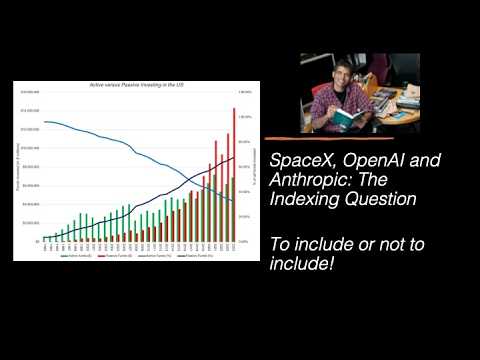
Arguments against including major AI companies like SpaceX, OpenAI, and Anthropic in the S&P 500 stem from three distinct groups: active investors seeking to discredit passive investing, academics and experts warning of risks to small investors from potentially overvalued companies, and politicians focused on curbing billionaire wealth.
Aswath Damodaran: The Evolving Purpose of Indices
Indices initially served as simple market measurement tools. However, they have evolved to become benchmarks for evaluating active fund manager performance and, crucially, as direct investment vehicles through index funds and ETFs, which now dominate market inflows.
Aswath Damodaran: The Declining Influence of Index Inclusion
The notion that being added to the S&P 500 provides a significant, lasting stock price boost is largely outdated. While a small 'inclusion bump' may occur, studies show that over the last two decades, the effect of index inclusion on a company's stock performance has become negligible, and even removal has a less pronounced negative impact than before.
Country risk, once overlooked, is now an inescapable element of financial analysis. The initial assumptions that US-centric investing or global diversification could negate country-specific risks have been proven wrong due to increased global correlation and the international reach of even developed-market companies.
Measuring Sovereign Default Risk: Ratings and CDS
Lenders assess sovereign default risk through official ratings (S&P, Moody's, Fitch) and market-based measures like Credit Default Swaps (CDS). While ratings agencies are often slow to react, CDS spreads offer a real-time market perspective, though coverage is limited to about 80 countries.
Asawth Damodaran's Country Risk Premium Calculation
Damodaran calculates country risk premiums by starting with a mature market premium (derived from an implied equity risk premium for the S&P 500, adjusted for the US's non-AAA rating) and adding a country-specific default spread based on its sovereign rating. This approach accounts for both general market risk and country-specific default risk.
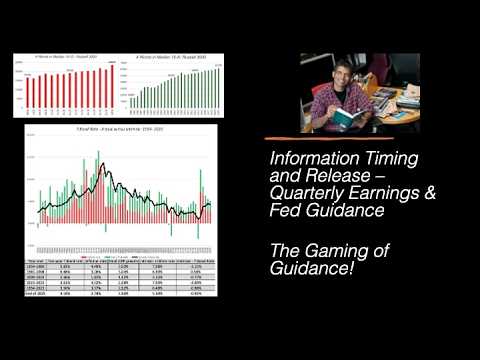
The SEC's proposal to shift from quarterly to semi-annual earnings reports and Kevin Warsh's suggestion for less Fed guidance both aim to reduce market 'news' and short-termism. However, opponents argue this will decrease price informativeness and increase volatility, creating a fundamental tension between reducing noise and maintaining market efficiency.
The Bloating of Earnings Reports
Beyond frequency, the content of earnings reports has dramatically expanded since the 1970s, with the number of words in 10-Ks quadrupling and 10-Qs increasing significantly. This growth is attributed to accounting rule changes, responses to scandals, a drive for accountant relevance, the impact of global crises, legal protection clauses, and a surge in management guidance.
Investor Perspective: Information vs. Catalysts
While quarterly reports provide valuable information for updating valuations, their material impact is often small, especially for mature companies. However, they can serve as crucial catalysts for price adjustments, enabling investors to capitalize on market inefficiencies. The speaker advocates for maintaining quarterly reporting but calls for slimmer, more data-focused reports, reducing 'disclosure diarrhea'.