Ben Shapiro argues that JD Vance's recent statements on Joe Rogan, which question free markets and advocate for government intervention, are fundamentally at odds with conservative principles. Shapiro contends that these views align more closely with Democratic or socialist ideologies, making Vance an unsuitable candidate for the Republican party.
The 'Coolness Problem' and Political Strategy
Ben Shapiro addresses JD Vance's assertion that Republicans have a 'coolness problem' compared to Democrats, suggesting that Vance's attempt to appear 'cool' by adopting left-leaning ideas is a flawed strategy. Shapiro argues that truth and conviction, not trendiness, should guide conservative politics, and that mimicking Democratic policies is not a winning approach.
Vance's Embrace of Rerum Novarum
Shapiro criticizes JD Vance for citing Pope Leo XIII's encyclical 'Rerum Novarum' as a basis for American economic policy, arguing it's an unusual and potentially problematic move for a conservative. Shapiro contends that Vance's interpretation of the encyclical, which calls for state protection of the vulnerable and worker rights, mirrors socialist talking points and is not aligned with American founding principles.
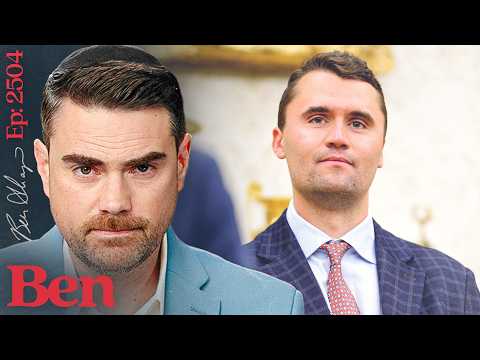
Ben Shapiro: Owens' Alleged Financial Windfall from Kirk's 'Assassination'
Ben Shapiro posits that Candace Owens' brand experienced a resurgence, marked by record merchandise sales, directly following the fictional assassination of Charlie Kirk. He highlights that revenue flowed through corporate entities like Candace Owens LLC, suggesting a deliberate financial strategy tied to the event. Shapiro implies that Kirk's death was a catalyst for Owens' increased wealth and influence.
The 'Strategic Acquisition' of George Farmer
Ben Shapiro questions the whirlwind romance and marriage between Candace Owens and George Farmer, highlighting their brief acquaintance and lack of romantic overtures before engagement. He describes their union not as a love story but as a 'strategic corporate acquisition' into the British House of Lords, implying a calculated alliance for wealth and influence, especially given Farmer's family background.
Suspicious Memory Gaps and Travel Itinerary
Ben Shapiro points to Candace Owens' admitted memory gaps, specifically forgetting a trip to Maine after giving birth, as highly suspicious. He questions her whereabouts on September 8th and 9th, two days before Kirk's assassination, noting her pre-recorded episodes and lack of public presence, suggesting a deliberate attempt to obscure her movements during a critical period.
Graham Platner, the Democratic Senate candidate in Maine, has suspended his campaign due to serious allegations of sexual assault and his association with Nazi imagery. Shapiro highlights this as a prime example of a party making poor candidate choices, suggesting that the Democrats are prioritizing ideological alignment over candidate quality, a mistake he argues Republicans made in 2022.
Ben Shapiro: Platner's 'Victim' Narrative
Shapiro dissects Graham Platner's video announcing his withdrawal, characterizing Platner's portrayal of himself as a victim of 'powerful systems' as disingenuous. Shapiro mocks Platner's claims of seeking 'fairness' and 'ending genocide' while allegedly being a 'rapey McNazi,' suggesting that such a narrative is only plausible within a certain ideological framework where the individual is always absolved of personal responsibility.
Shapiro: Platner's socialist leanings are a liability
Ben Shapiro argues that Graham Platner's self-identification with socialist ideals, despite his claims otherwise, is a significant political liability in Michigan. He highlights the close nature of past Senate races in the state and suggests that such an ideological alignment would alienate voters, potentially costing Democrats a crucial seat. Shapiro frames this as a strategic misstep by the Democratic party.
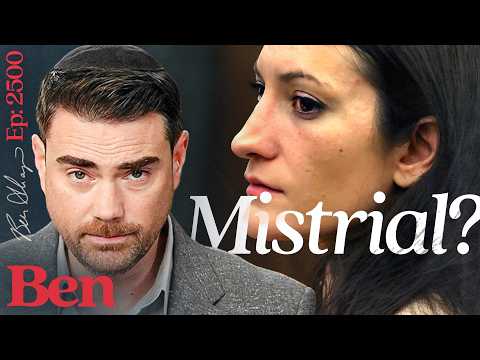
The prosecution's case against Tyler Robinson is overwhelmingly strong, supported by surveillance footage capturing his movements, the discovery of the murder weapon with his DNA, and his own confessions to his roommate. The evidence directly contradicts any notion of a cover-up or alternative perpetrator.
Owens' Escalating and Unfounded Accusations
Despite pleas from Erica Kirk and the clear evidence, Candace Owens persisted with increasingly bizarre conspiracy theories, including claims involving the Israeli Prime Minister and Egyptian Air Force planes. Shapiro highlights that Owens continued these narratives, building her business on these lies, even after being directly asked to stop.
Tucker Carlson Amplifies Misinformation
Tucker Carlson has actively amplified and even laughed along with conspiracy theories surrounding Charlie Kirk's death, particularly those suggesting it was related to Israel rather than transgender issues. This includes featuring guests like Jimmy Dore who mock the official narrative and promote outlandish scenarios, thereby lending credibility to baseless claims.
The Supreme Court's 6-3 decision upholding birthright citizenship, based on the interpretation of the 14th Amendment's Citizenship Clause, is legally flawed and a 'legal abomination.' The majority's view that 'subject to the jurisdiction thereof' is largely superfluous, meaning nearly all individuals born in the U.S. are citizens, is a misinterpretation of history and law. This ruling effectively grants immunity from deportation to the parents of U.S.-born children of undocumented immigrants, creating a significant policy problem.
Hakeem Jeffries: A 'Nuremberg Race Laws Moment'?
House Minority Leader Hakeem Jeffries criticized the attempt to dismantle birthright citizenship, calling it a 'modern Nuremberg race laws moment.' Ben Shapiro vehemently dismisses this comparison as 'stupid,' arguing that Jeffries, as a beneficiary of birthright citizenship himself, is mischaracterizing the debate. Shapiro contends that the comparison is an inflammatory overstatement that distracts from the actual policy issues.
Historical Immigration Trends: A Shifting Landscape
Ben Shapiro presents data showing that the percentage of immigrants in the U.S. population was high between 1850 and 1930, comparable to current levels, yet this period is not typically viewed as a time when America was 'wrecked' by immigration. He contrasts this with the period from 1930 to 1970, where the immigrant share dropped significantly, followed by a spike again. The critical change, he argues, is not the sheer number but the 'nature' and origin of immigrants, with a significant shift from European to non-European countries since the 1965 Immigration and Nationality Act.
Chief Justice Roberts' majority opinion interprets the 14th Amendment's citizenship clause as incorporating the English common law rule of birthright citizenship, meaning anyone born on U.S. soil is a citizen. This interpretation is rooted in a historical narrative starting from British common law, through the Reconstruction era, and culminating in the Wong Kim Ark case, asserting that the phrase 'subject to the jurisdiction thereof' did not exclude children of temporary visitors. The opinion concludes that this broad interpretation has been consistently applied for over a century, solidifying birthright citizenship for nearly all children born in the U.S. This broad interpretation is the bedrock of the court's decision to uphold birthright citizenship.
Kavanaugh on Roundup: Federal Preemption Reigns
Justice Kavanaugh, writing for the majority in Monsanto v. Durnell, ruled that federal law preempts state-level lawsuits regarding warning labels on Roundup. He stated that because the EPA has concluded glyphosate is not likely to cause cancer, it has not required a cancer warning. Therefore, state claims demanding such warnings are preempted, preventing the destruction of industries by conflicting state mandates. The decision hinges on federal regulatory authority over product labeling.
Kavanaugh on Trans Athletes: Title IX and Biological Sex
Justice Kavanaugh, writing the majority opinion in West Virginia v. BPJ, affirmed that Title IX permits schools to maintain separate sports teams for biological females. He reasoned that the term 'sex' in Title IX and its regulations refers to biological sex, not gender identity, and that separate teams are justified by the inherent physical differences between males and females. The ruling allows states to exclude biological males from women's sports based on these general physical differences.
The left's increasing aversion to the American flag is not merely a political stance but a symptom of a deeper rejection of the nation's foundational principles, which Shapiro argues are intrinsically linked to biblical values. He contends that this rejection allows for the adoption of alternative, often contradictory, symbols and ideologies.
The Bible as a Foundation for American Values
Shapiro asserts that the Declaration of Independence and the Constitution are deeply rooted in biblical values, making knowledge of the Bible essential for understanding Western civilization and American governance. He defends the Texas State Board of Education's decision to include Bible stories in the curriculum as a matter of cultural literacy, not religious imposition.
The Bible's Influence on Western Literature
Shapiro contends that a comprehensive understanding of Western literature, from Shakespeare to modern works, is impossible without a foundational knowledge of the Bible. He cites research indicating the Bible's significant influence on founding-era political writings, underscoring its role in shaping American thought and culture.
Ben Shapiro argues that the Democratic Socialists of America (DSA) and their allies are forming a 'Hate America Coalition' that is gaining significant traction, particularly among young people. He posits that this anti-American sentiment is not a bug but a feature of their strategy to win elections, evolving from the 'Obama Coalition' to the 'Coalition of the Oppressed' and now the 'Anti-Trump Coalition.' Shapiro asserts that this movement despises America and aims to fundamentally alter its systems.
DSA's Radical Platform
Shapiro outlines the DSA's platform, which includes abolishing the Senate, replacing the president and Supreme Court with Congress-controlled bodies, defunding the military, abolishing prisons, supporting Palestine, ending sanctions on Cuba, Venezuela, and Iran, abolishing ICE, open borders, public ownership of major corporations, and remaking elections to establish a democratic socialist republic. He highlights the dramatic growth in DSA membership from 6,500 in 2012 to over 100,000, with projections of half a million by year-end.
The Demographic of DSA Support
Ben Shapiro contends that DSA candidates win primaries not due to affordability platforms, but because they appeal to a specific demographic: young, white, college-educated voters. He contrasts this with lower-income and minority areas, which he claims tend to support more moderate candidates. Shapiro cites poll data showing that while DSA support is low among older demographics, it is significant among 18-29 year olds, forming a core of the 'Hate America Coalition.'
President Trump's foreign policy, characterized by 'peace through strength,' involves issuing direct and severe warnings to adversaries like Iran regarding actions such as closing the Strait of Hormuz. This approach aims to deter aggression through the credible threat of overwhelming force, ensuring American interests and allies are protected. The goal is to maintain open trade routes and prevent hostile actions by demonstrating unwavering resolve.
Rubio's Efforts in Lebanon
Secretary of State Marco Rubio is actively engaged in diplomatic efforts to manage the conflict in Lebanon, aiming to de-escalate tensions involving the Iranian-backed group Hezbollah. The strategy involves fostering cooperation between Israel and Lebanon to counter Iranian influence, thereby securing the region and preventing further escalation that could threaten international stability and American interests.
US Diplomatic Protocol and Iranian Refusal
The Iranian delegation refused a planned joint photo opportunity with the US delegation, and later walked through the press room without acknowledging the Vice President, signaling a deliberate snub. This protocol breach, coupled with Iran's refusal to shake hands, underscores a strategy to publicly diminish the United States' standing during sensitive negotiations.
President Trump signed the memorandum of understanding with Iran primarily due to economic calculations and concerns about the upcoming midterm elections, believing that lower oil prices and economic stability would benefit his party. This pragmatic approach, prioritizing short-term economic gains over a potentially stronger stance against Iran, is a key driver behind the deal.
The Optics of Weakness
Despite a significant military victory against Iran, the signing of the MOU creates poor optics, making the United States appear weak and allowing an Islamic tyranny to dictate terms. This undermines America's global standing and sends a dangerous signal to adversaries like China and Russia, suggesting that aggression can yield concessions.
The MOU as an Empty Paper
The memorandum of understanding is fundamentally flawed and unlikely to become a binding deal, serving more as a temporary stopgap. Its terms, such as an immediate and permanent cessation of hostilities and respect for sovereignty, are not enforceable, making it an 'empty piece of paper' that doesn't fundamentally alter the conflict or Iran's behavior.
The core issue surrounding the reported US-Iran deal is the profound lack of transparency, with conflicting narratives emerging from both sides. Without the official text, it's impossible to ascertain the true nature of the agreement, leaving the public in the dark about critical details regarding nuclear capabilities, ballistic missile development, and the flow of funds.
Shapiro Questions Pakistan and Turkey's Mediation Roles
The involvement of Pakistan and Turkey as mediators in the US-Iran deal is highly suspect, given Pakistan's close ties to Iran and Turkey's alleged support for terrorist networks. Their participation raises serious questions about the neutrality and integrity of the mediation process, potentially compromising the fairness of any agreement reached.
Shapiro Critiques Trump's 'Rational Iran' Framing
President Trump's characterization of the Iranian regime as 'rational' is a dangerous misstep, according to Shapiro. This framing risks legitimizing a state sponsor of terrorism and operating under a flawed premise that Iran is a reliable negotiating partner, potentially leading to concessions that embolden the regime and endanger US allies.
The left has lost touch with what it means to be a man, resorting to stereotypes and alienating traditional male voters. Their attempts to redefine masculinity through figures like James Telerico, who they perceive as a 'Ned Flanders' type, are seen as inauthentic cosplay that fails to resonate with genuine conservative values. This disconnect is a primary reason for their electoral struggles with men.
The Traditional Definition of Manliness
True masculinity, according to a traditional conservative viewpoint, is defined not by aesthetics or superficial traits, but by fulfilling specific duties: marrying a woman, protecting family, providing for them, and contributing to the community. This definition emphasizes responsibility and action over mere appearance or ideology, contrasting sharply with what the speaker perceives as the left's superficial understanding of the concept.
Graham Platner: The Socialist 'Working-Class Hero' Costume
Graham Platner, the Republican Senate candidate in Maine, is depicted as a manufactured 'working-class hero' whose image was shaped by socialist strategists Daniel Moraff and Leanne Fan. His background, including private schooling and an oyster business, is contrasted with the 'toxic male' persona he allegedly adopts, further fueled by controversial online posts and accusations from his former campaign manager.
Ben Shapiro argues that the Los Angeles mayoral election was compromised not by direct ballot fraud, but by systemic issues like widespread voter registration irregularities and legal ballot harvesting, which he claims benefit Democrats. He points to the vote count shifts as evidence of these systemic problems, suggesting that mail-in ballots and harvesting allow for manipulation. The core issue, according to Shapiro, is the integrity of who is voting, not necessarily the legitimacy of the ballots themselves. He concludes that these practices are a recipe for corruption and detrimental to sound voter policy.
The 'Cosplay Politician' Phenomenon
Shapiro criticizes politicians, specifically Zohran Mamdani and Alexandria Ocasio-Cortez, for what he terms 'cosplaying' as sports fans to appear relatable. He contrasts Mamdani's late adoption of Knicks fandom with Donald Trump's long-standing association with the team, suggesting Mamdani's actions are a calculated political tactic. Shapiro dismisses the idea that these politicians are genuine fans, viewing their public displays as inauthentic attempts to connect with voters, particularly the working class, by adopting cultural symbols. He concludes that this performative behavior is a cynical manipulation of public sentiment.
The 'Blame the Jews' Defense Strategy
Graham Platner, facing scrutiny over a Nazi tattoo and alleged antisemitic remarks, employs a defense strategy that deflects criticism by accusing his detractors, including John Fetterman and Susan Collins, of being controlled by 'the Jews' or AIPAC. This tactic is seen as a desperate attempt to shift blame and exploit existing political divisions.
Graham Platner claims he did not know his prominent chest tattoo was a Nazi symbol until it became a campaign issue, attributing it to a 'death unit' tattoo chosen by Marines in Croatia. However, an ex-girlfriend, Lindsey Fifield, states he knew it was a Nazi symbol and joked about it, comparing his unit to the SS. The New York Times report also suggests his claim of ignorance is not credible. Platner's campaign did not deny the allegations.
Allegations of Rape Fantasies and Abuse
Lindsey Fifield alleges that Graham Platner fantasized about raping home invaders to show dominance, stating 'it would not be in a sexual way, not in a gay way.' She also described instances of physical aggression, including grabbing her by the shoulders hard enough to leave marks, yanking her wrist, and shoving her into a room. Platner denies these physical abuse allegations, stating they stopped early in his marriage.
Shapiro: Platner's Past and Democratic Hypocrisy
Ben Shapiro highlights the controversy surrounding Maine Senate candidate Graham Platner, who allegedly has a Nazi tattoo and made disturbing statements. Shapiro criticizes the Democratic Party for its perceived hypocrisy in condemning such actions while simultaneously supporting figures like AOC and Brett Kavanaugh in different contexts, suggesting a double standard.
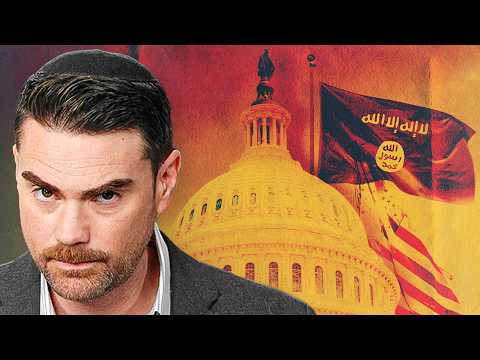
Candace Owens's visit to Russia is not a genuine exploration but a deliberate propaganda effort, akin to historical psychological operations designed to undermine the United States. Her participation in forums alongside figures like Vladimir Putin and Alexander Dugin, and her praise for Russian policies, serve the interests of the Russian regime.
Historical Revisionism on Anti-Semitism
Candace Owens's claims that Russia has never promoted anti-Semitism and her attempts to link anti-Semitism concerns to Israel are historically inaccurate. The speaker points out that anti-Semitism has deep roots in Russia, including Tsarist forgeries like 'The Protocols of the Elders of Zion' and Soviet-era persecution. The Soviet Union's initial support for Israel's establishment is presented as a historical fact ignored by Owens.
The Futility of Talking to Putin
The idea that increased dialogue with Russia, as suggested by figures like Anna Paulina Luna and Marco Rubio, will lead to a resolution of conflicts like the war in Ukraine is misguided. Decades of 'reset' attempts have failed, indicating that talking alone does not deter Putin's aggressive actions. The speaker argues that such engagement is ineffective and potentially harmful.
Shapiro: Pelley's Firing Signals Left's Media Decline
Ben Shapiro argues that the firing of Scott Pelley from 60 Minutes signifies a broader loss of institutional control for the left in media. He contends that the left believed they had a stranglehold on media outlets, but this is now unraveling, leading to their anger over changes at 60 Minutes. Shapiro dismisses the idea that Bari Weiss is a right-winger, instead positioning her as a center-left figure now considered right-wing due to the left's extreme shift.
Shapiro: 60 Minutes' Historical Bias and Pelley's Self-Serving Narrative
Ben Shapiro argues that 60 Minutes has never been objective, but rather a left-leaning outlet, and that Scott Pelley's dramatic statement about being fired is self-serving. He criticizes Pelley's claims of risking his life in war zones for journalism, calling it self-praise. Shapiro dissects Pelley's statement, highlighting its 'overweening arrogance' and 'self-obsession,' and suggests Pelley's real grievance is the perceived loss of his political alignment within the show, not journalistic integrity.
Shapiro on Democratic Radicalization
Ben Shapiro asserts that the Democratic party has moved significantly leftward since the mid-2000s, making figures like Bill Clinton appear conservative by today's standards. He argues that when Democrats lose power, their base becomes antsy and demands radical change, leading to a 'gigantic left-wing civil war.' This is evidenced by primary election results where establishment candidates are challenged by more progressive or radical figures.
The handling of the Henry Novak stabbing case by UK police, where the victim was handcuffed while bleeding out after the attacker falsely claimed racism, suggests a systemic bias. This incident implies that accusations of racism are given precedence over factual investigation, leading to tragic outcomes and undermining the value of opposing racism.
Hasan Piker & Cenk Uygur: Banned and Accused
Internet personalities Hasan Piker and Cenk Uygur were denied entry into the UK, with reports suggesting their anti-Semitic rhetoric and claims that Israel controls America were the basis. Shapiro argues they are hypocrites who claim to champion liberalism while supporting authoritarian regimes and despising Western values, effectively weaponizing liberalism to undermine it.
Bernie Sanders' AI Ownership Plan
Senator Bernie Sanders' proposal for the government to seize 50% ownership of AI companies via a tax on stock is characterized as a communist seizure of private property, not a tax. The speaker argues this move, influenced by Chinese interests, would stifle innovation and benefit no one, contrasting it with free market principles that have historically benefited humanity.
Ben Shapiro: Democrats Backing a 'Nazi Tattoo Guy'
Ben Shapiro argues that the Democratic party's nomination of Graham Platner, who has a Nazi tattoo and a history of offensive online posts and sexting scandals, to run against Susan Collins, a moderate Republican, demonstrates the party's radicalization. He asserts that Democrats are willing to overlook severe character flaws to defeat even a centrist Republican.
Platner's Wife Defends Marriage Amidst Scandal
Amy Girtner, Graham Platner's wife, released a statement acknowledging marital difficulties and their use of marriage counseling. She expressed her commitment to their marriage and admiration for her husband's past military service and resilience, framing the issues as personal struggles rather than disqualifying flaws.
Platner's Campaign Defends Him as 'Piece of Crap'
Graham Platner's campaign strategist, Morris Katz, defended Platner by suggesting that his flaws make him relatable to Trump voters, stating he is a 'piece of crap' like them. This controversial defense attempts to reframe Platner's scandals as authentic characteristics that appeal to a segment of the electorate.
Candace Owens' Russian Sojourn: More Than a Fishing Trip
Candace Owens claims her trip to St. Petersburg is for fishing and sightseeing, but reporting indicates she is attending the St. Petersburg International Economic Forum (SPIEF) alongside Vladimir Putin, Alexander Dugin, and other sanctioned Russian officials. SPIEF is described as a hub for Russian intelligence and a recruitment pipeline for foreign collaborators.
Yuri Beznov's Blueprint for Subversion
Former KGB operative Yuri Beznov outlined a four-stage process of ideological subversion: demoralization (15-20 years), destabilization, crisis, and normalization. He argued that demoralization targets generations of students, programming them to think in patterns that resist factual information, ultimately weakening a nation from within.
Shapiro: Russia's Christian Protector Myth Debunked
Ben Shapiro refutes the notion that Russia is a protector of Christianity, citing its secular nature, low church attendance, government control over the Orthodox Church, high abortion rates, and low fertility rates. He argues that these claims, often echoed by figures like Marjorie Taylor Greene, are part of a Russian 'demoralization operation.' The argument concludes by highlighting the stark contrast between the purported Christian values and Russia's actual social statistics.
Alexandria Ocasio-Cortez's decision to wear a hijab at an event is not a sign of religious respect but a deliberate political 'costume' signaling solidarity with radical Islamism and 'third worldist' ideology. This is seen as a strategic move for a potential presidential run, aligning with a perceived rising tide of anti-American sentiment within the Democratic party. The speaker contrasts this with previous instances of Western politicians visiting the Middle East without adopting traditional Islamic head coverings, arguing AOC's choice is a calculated political statement, not a neutral act.
The Left's Shift to 'Third Worldism'
The Democratic party is increasingly embracing 'third worldism,' an ideology that posits the West, particularly the United States, is responsible for global poverty and underdevelopment. This ideology, according to the speaker, fuels a desire among some Democrats to 'subjugate' themselves to the desires of people from developing cultures. Alexandria Ocasio-Cortez's actions, like wearing a hijab, are seen as signaling solidarity with this anti-colonial and anti-American sentiment, which the speaker believes is becoming a dominant force within the party.
Graham Platner's 'Trump Voter' Cosplay
Senate candidate Graham Platner is accused of 'cosplaying' as a Trump voter, adopting a persona that the left perceives Trump supporters to be: economically dispossessed, 'bro-like,' and 'Nazi adjacent.' The speaker argues Platner, who comes from a wealthy background, is fabricating an identity that is not authentic, citing his expensive education, family wealth, and a Time magazine cover where he appears in a hoodie. This is presented as a disingenuous attempt to win votes by mimicking a stereotype rather than representing genuine concerns.
Podcaster and streamer Hasan Piker has been subpoenaed by the Justice Department as part of an investigation into whether US organizations and individuals violated sanctions laws by supporting Cuba's communist regime. Allegations include aiding the Communist Party of Cuba, staying at restricted hotels, and participating in unlicensed flotillas, which could lead to significant civil or criminal penalties.
Shapiro: Roy Singum's Influence on Leftist Causes
Neville Roy Singum, a wealthy individual living in China, has allegedly funded numerous nonprofit groups pushing pro-China, pro-Cuba, and anti-US narratives with substantial amounts of money. Code Pink, co-founded by Midia Benjamin, received over $1.3 million from Singum after his marriage to Jod Evans, suggesting a pattern of foreign funding for leftist activism.
Shapiro: Democratic Candidate Adam Hamawi's Terrorist Links
Adam Hamawi, a Democratic candidate for Congress in New Jersey, reportedly has a long-standing past relationship with terrorist mastermind Sheikh Omar Abdal Rahman, including traveling with him and serving as his translator. Hamawi also associated with a group later shut down for supporting al-Qaeda, yet he has received endorsements from prominent progressive Democrats like Bernie Sanders and Alexandria Ocasio-Cortez.
Ben Shapiro argues that free markets and private property are the fundamental drivers of economic affordability. He contends that providing better goods and services at lower costs, coupled with fiscal responsibility, leads to individual and societal success. He criticizes the notion that billionaires are inherently bad, suggesting they often become wealthy by improving lives through innovation and better products, and that government intervention, not free markets, causes unaffordability.
Shapiro on AI and Technological Disruption
Ben Shapiro discusses Jeff Bezos's views on Artificial Intelligence, emphasizing that AI, like previous technological innovations, will not destroy jobs but rather transform them and create new opportunities. Bezos argues that fears of widespread job loss due to AI are overblown and that such advancements will ultimately elevate human capabilities. He also notes that while there might be investment bubbles in new tech sectors like AI, these cycles are normal and drive progress, with good ideas eventually outweighing the bad.
O'Leary's Financial Advice Sparks Outrage
Kevin O'Leary faced backlash for advising individuals earning $70,000 annually against spending $28 daily on lunch, suggesting this money could be invested for long-term growth. Shapiro defends O'Leary's advice as basic financial common sense, highlighting the significant portion of income consumed by taxes and daily expenses. He criticizes the public's negative reaction as a rejection of reality and financial prudence, often fueled by those who advocate for policies that discourage personal responsibility.
Thomas Massie's defeat in the Kentucky primary was not due to external factors like AIPAC money, but rather his direct and personal conflict with former President Donald Trump. Massie's consistent opposition to Trump's key policies and his personal attacks, including conspiracy theories about Epstein, alienated Trump and his supporters.
Massie's Primary Loss: A Rejection of Online Extremism
Thomas Massie's defeat in the Kentucky primary is attributed to his focus on niche, online-driven issues like the Israel conflict, which alienated his district's voters. His association with figures like Cenk Uygur further underscored his disconnect from the local electorate, proving that online fervor does not translate to real-world electoral success. Reality, it seems, still exists beyond the digital echo chamber.
The Democratic Party's Radical Shift and Anti-Semitic Candidates
The Democratic party is increasingly embracing radical candidates who traffic in anti-Semitic and anti-Israel conspiracy theories. Figures like Chris Rabb, Graham Plathner, and Maureen Galindo are presented as examples of this trend, with their controversial statements and associations raising alarms. This embrace of extremism, the host argues, is a dangerous path for the party.

A New York judge's ruling to suppress key evidence in the Luigi Mangione case, including a phone and loaded magazines, is criticized as an example of the criminal justice system overly favoring perpetrators over victims. The judge's reasoning, applying New York law to evidence seized in Pennsylvania and questioning the handling of the search, is deemed 'super duper weird' and indicative of broader legal issues stemming from cases like Mapp v. Ohio and Miranda rights, which the speaker argues penalize the public for police failures.


The Left's 'Social Murder' Doctrine
The left's ideology, characterized by blaming the private sector for societal ills and advocating for increased government control, creates a framework for 'social murder.' This concept, exemplified by commentators like Hassan, argues that individuals like Brian Thompson, CEO of United Healthcare, are responsible for deaths due to systemic issues in healthcare, thus justifying violence against them. This perspective is seen as a dangerous permission structure for political violence, leading to a society that increasingly condones or celebrates it.
Homicidal Empathy and Envy
Shapiro extends Saad's concept to 'homicidal empathy,' where empathy for one group leads to hatred and violence against another, particularly targeting successful individuals or civilizations. He posits that this isn't solely driven by empathy but also by envy and a deep-seated dislike of success, leading to support for policies like mass migration that aim to dismantle perceived societal structures. This ideology flattens the distinction between government actors (seen as good) and private sector participants (seen as potentially deserving of murder).