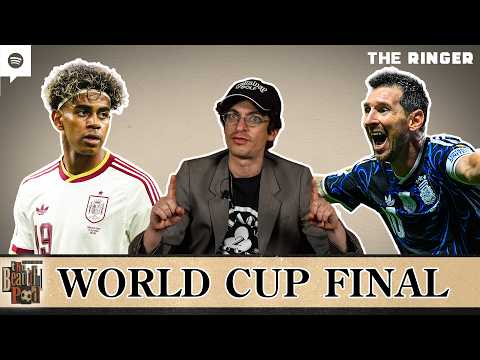
Spain demonstrated superior football against France, showcasing a level of play that makes them the best team remaining in the tournament and the likely winner of the final. Their possession-based style and tactical cohesion were evident.
Chris: England's Tactical Capitulation
England's familiar pattern of conceding a lead and then retreating defensively, a tactic described as 'parking the bus,' led to their downfall against Argentina. Manager Tommy Tukul's substitutions and decisions, like not replacing Harry Kane, were questioned.
Adam: The Rise of 'Penaldo Bots' on X
The proliferation of 'Penaldo bots' on X (formerly Twitter), dedicated to promoting Cristiano Ronaldo, has surprisingly found traction during this World Cup. These bots, often linked to political propaganda, are now seeing success due to Ronaldo's comparatively weaker performance.
Adam and Chris dissect the media frenzy surrounding a supposed rift between England manager Thomas Tuchel and player Jude Bellingham, arguing it's largely manufactured by British tabloids. They suggest the narrative is overblown and unlikely to impact the team's performance against Argentina.
Argentina's Unshakeable Mentality
Chris Ryan argues that the Argentine national team is uniquely resilient and impervious to external criticism or attempts to villainize them, contrasting this with England's past vulnerabilities to media pressure. He suggests that any negative narrative will only galvanize the Argentine squad.
England's Path to Victory: Jude Bellingham's Ascent
Adam Friedland posits that England has a strong chance to win the World Cup, particularly if key players like Declan Rice are healthy. He highlights Jude Bellingham's exceptional performance and leadership, comparing his trajectory to that of Zinedine Zidane and asserting Bellingham has become England's de facto captain and best player.
France's current manager employs a more adventurous system than previous iterations, but their reliance on a two-man midfield with four attackers leaves them vulnerable. While they can be comfortable without the ball, teams that can effectively press and maintain possession, like Spain, could exploit this weakness, as seen when Morocco's low block and counter-attacks created opportunities.
Elliot Smith: Mbappé's Ascent to Greatness
Kylian Mbappé is arguably already one of the greatest World Cup players ever, with the potential to become the all-time leading scorer and win his second World Cup. His brilliance, sometimes obscured by Real Madrid's mediocrity, is undeniable. He possesses all the tools and seems motivated to solidify his legacy, potentially surpassing even Pelé and Zidane in historical standing.
Adam Friedland: The Legacy of Garrincha
Garrincha, despite a low IQ and a crooked leg, led Brazil to two World Cup victories through extraordinary on-pitch intuition and dribbling ability. His style, even from the 1950s, looks remarkably modern, comparable to players like Ronaldo, showcasing that raw talent and instinct can overcome perceived limitations.
Adam Friedland: Ronaldo's Insecurity vs. Messi's Freedom
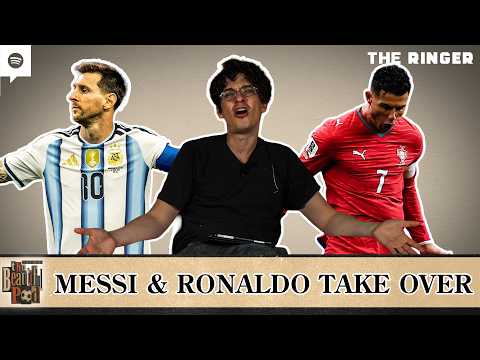
Adam Friedland argues that Cristiano Ronaldo's career is framed by an intense, almost desperate, rivalry with Lionel Messi, leading to perceived insecurity, while Messi, having achieved national validation, now plays with a sense of freedom. This dynamic highlights how external pressures and personal history profoundly shape a player's public persona and on-field performance.
Nick Wright: USMNT's Round of 16 Failure
The USMNT's 4-1 defeat to Belgium was a catastrophic failure to break the 'hard ceiling' of the round of 16, indicating they are simply not a good enough team to advance further in major tournaments. The performance was far from noble, and the team lacked the necessary quality and grit.
Adam Friedland: Pulisic's Tournament Disappearance
Christian Pulisic was a total no-show throughout the entire tournament, failing to deliver when it mattered most. Despite being hyped as the star, his performances were abysmal, and he seemed to disappear when the team needed him, especially in the knockout stages.
When discussing the greatest players, personal preference and 'swag factor' can heavily influence opinions, even overriding objective skill assessments. The debate between Cristiano Ronaldo and Lionel Messi often comes down to subjective appeal, with Ronaldo's perceived coolness and physical presence making him a more appealing figure for some, despite Messi's widely acknowledged superior on-field performance.
Adam Friedland: The USMNT's Gauntlet
The USMNT faces an incredibly difficult path through the World Cup knockout stages. Their potential journey includes facing Mexico in a high-stakes match, followed by a challenging encounter against Brazil in Miami, and potentially a final showdown with the formidable French team. Overcoming these obstacles, especially considering the USMNT's historical struggles to advance past the Round of 16, would represent an unprecedented accomplishment in football history.
Spain's Tactical Identity and Yamal's Burden
Spain's possession-based style is discussed, with concerns that it can be slow and energy-draining, especially without key players like Nico Williams. Lamine Yamal is seen as their primary offensive threat, but the reliance on him and the defensive attention he draws raise questions about their overall attacking potency and ability to break down strong defenses.
Traditional European football powerhouses like Germany and Italy are struggling because they've abandoned their core footballing identities in pursuit of modern, 'boring' tactics. Germany's failure to win knockout games since 2014 and Italy's absence from the World Cup are cited as evidence. The hosts argue that these nations, once known for their distinct styles (Germany's machine-like efficiency, Italy's defensive grit), have become generic and lost their edge.
Erlend Borch: The Bayern Munich Monopoly
The dominance of Bayern Munich in the Bundesliga, where they consistently acquire the best players from rival clubs like Dortmund, creates an unhealthy league structure. This practice weakens other teams and potentially impacts the development of a cohesive German national team, as players are not accustomed to diverse tactical systems within their domestic league. This concentration of talent in one club is seen as a 'mafia kickback scheme' that stifles competition.
Mimir Christensen: South Africa's Tactical Advantage
The South African national team's recent success is partly attributed to its players largely competing within the same domestic league. This shared tactical language and understanding, fostered by playing together consistently, provides a distinct advantage over teams whose players are scattered across various international leagues with different playing styles. This contrasts with teams like Belgium, whose players are more globally dispersed.
The United States has delivered the greatest World Cup of all time, proving doubters wrong and demonstrating a superior ability to host major sporting events, even without a deep cultural investment in soccer. This success serves as a rebuke to those who doubted America's capabilities.
Chris Ryan: Germany and Netherlands Betrayed Their Footballing Souls
Germany and the Netherlands both suffered shocking World Cup exits because they abandoned their core footballing identities and principles, opting for overly modern, 'hipster' tactical approaches that ultimately failed them. They deserved their fate for straying from what made them great.
Erlend Morch: Bayern's Dominance Skews German Football
Germany's national team struggles may be linked to Bayern Munich's overwhelming dominance in the Bundesliga, which leads to them acquiring the best players from other German clubs, potentially hindering the development of a broader, more diverse talent pool and a cohesive national team identity.
Sports have played a crucial role in uniting South Africa, particularly during pivotal moments in its history. Following the end of apartheid, the 1995 Rugby World Cup and the 1996 Africa Cup of Nations victory provided much-needed national cohesion and pride, preventing the country from falling apart during a period of immense division and challenges. This highlights sports' unique ability to transcend political and social divides.
Messi's Liberation: The World Cup Redemption
Lionel Messi's World Cup victory has fundamentally liberated him, allowing him to play with unprecedented joy and freedom. This release from the immense pressure of living up to Diego Maradona's legacy, coupled with overcoming past criticisms from Argentina, has allowed him to play with a 'nothing to lose' mentality, making him a frightening prospect for opponents. His journey reflects a return to his core strengths of vision and technique, unburdened by the need to constantly prove himself.
Ronaldo's Controversial Associations and Messi's Political Savvy
Cristiano Ronaldo's return to the US in 2023 marked his first visit since a settled sexual assault accusation, and he attended events with figures like Donald Trump and Muhammad bin Salman. In contrast, Messi is perceived as politically astute, avoiding such high-profile, potentially controversial associations, suggesting a strategic approach to maintaining his image and influence.
The current World Cup is exciting because the biggest stars like Lionel Messi, Cristiano Ronaldo, and Kylian Mbappé are performing exceptionally well, fulfilling Adam's personal preferences for top talent. This resurgence of established stars, alongside emerging talents, makes the tournament compelling.
Ben Foster: Player Performance and Team Fit
Ben Foster observes that many star players are performing well in the World Cup because their national teams are built to maximize their strengths, unlike their club situations. He specifically notes how players like Vinícius Júnior and Jude Bellingham seem to have the perfect platform to excel, suggesting that team structure is key to unlocking individual potential.
Chris Ryan: Turkey's Disappointing Campaign
Chris Ryan expresses strong disappointment with Turkey's performance in the tournament, noting their high number of shots (58) but poor results. He suggests that manager Montella is likely to be fired, labeling Turkey as a team that is 'in the mud' and questioning their effectiveness despite offensive volume.
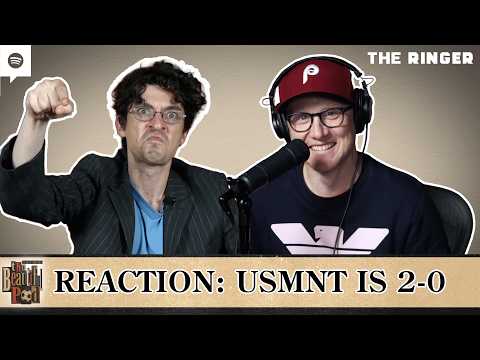
The United States Men's National Team demonstrated a clear tactical identity and impressive cohesion in their 2-0 victory over Australia, particularly in the first half. Their ability to 'run their ass off' and 'take the game to the opponents' suggests they are a formidable side in this tournament.
Hervé Renard: A Controversial Appointment?
The appointment of Hervé Renard as Tunisia's new coach is met with a mix of intrigue and skepticism. His history of coaching various African nations and his intense, motivational halftime speeches, as seen with Saudi Arabia, suggest a passionate but potentially volatile leadership style.
Maguire's Humiliation Tour and Defensive Woes
Harry Maguire's public appearances and perceived lack of form are characterized as a 'humiliation tour,' further highlighting England's defensive vulnerabilities. His struggles, coupled with issues in goal and at center-back, suggest significant weaknesses that opposing teams could exploit.
Callahan describes using his computer to pass the time and search for information, but acknowledges it brings out the worst in him, exposing him to disturbing content. He likens the machine to a 'village guillotine' for free speech, yet also sees it as a tool for understanding and processing thoughts.
Bill Callahan: Songwriting as Lifeblood
Bill Callahan views songwriting not merely as a craft but as a fundamental way to communicate with himself, others, and the 'spirits,' stating it 'gave me a life.' He emphasizes its role in processing loneliness, sorrow, and confusion, leading to realizations.
Humor as an Inviting Artistic Tool
Callahan believes humor is crucial in his art and life, stating that without it, things become 'too heavy.' He sees humor as an inviting element that opens people's hearts, making them more receptive to deeper information, likening it to 'comedy driving school.'
Adam Friedland: The 'Freddy from Germany' Investigation Begins
Adam Friedland introduces his 'investigative project' into the social media persona 'Freddy from Germany,' claiming to have uncovered evidence that challenges the persona's authenticity and intent. He presents this to journalist Pablo Torre, framing it as a revelation that the establishment media has ignored.
Pablo Torre: Initial Skepticism and 'Freddy Fever'
Pablo Torre admits to only recently following 'Freddy from Germany' due to media attention and expresses mild curiosity, likening the phenomenon to a viral trend. He acknowledges the comparison to Alexis de Tocqueville, a foreigner observing America, but questions the depth of his own engagement.
Friedland's Jealousy and Sponsorship Deals
Adam Friedland confesses to feeling jealous of 'Freddy's' viral success, admitting it hurt to see someone achieve larger numbers with seemingly simple content while he is working hard on his own 'viral soccer content' for The Ringer and Spotify. He mentions securing sponsorships from 'Rathon and Lohee Martin,' implying a professional motivation behind his content creation.
Adam Friedland: The Beautiful Pod's World Cup Preview
This limited series, 'The Beautiful Pod,' serves as a World Cup preview, running until the tournament's end, alongside regular Adam Friedland Show content. The hosts, Adam Friedland and Chris Ryan, are excited to dive into the tournament, with Ryan eager to 'power rank everything' and view the world through GOAT debates.
Chris Ryan: Mexico's Toxic Fanbase and Homophobic Chants
Chris Ryan criticizes Mexico's 'toxic fan base,' comparing their self-importance to Real Madrid. He points out their roster lacks European-based players, features a young star, and faces challenges with their homophobic chants, which have been subject to appeals. He notes that playing at the Estadio Azteca offers a home advantage, but the team's performance could lead to national disaster or a surprising run.
Chris Ryan: US Soccer Development and Coaching Criticisms
Chris Ryan discusses the USMNT's development system, noting that soccer's cost in the US hinders youth participation compared to other sports. He agrees with criticisms about structural issues within USA Soccer, starting from youth development, and the need to get players into European academies earlier. He also touches on Jesse Marsch's critical comments about the system.
The conversation touches on Amazon's labor practices and Jeff Bezos's public image. While acknowledging potential hypocrisies in consumerism, Heidecker expresses a peculiar respect for Bezos, citing his 'Miami guy' persona and physical appearance, which the hosts playfully dissect. This leads to a brief discussion on personal fitness and the pressures of aging in the public eye.
The 'Stolen Act' Accusation and Sarah Sherman
The hosts playfully confront Tim Heidecker with the accusation that he and Eric (presumably Eric Wareheim) 'stole' Sarah Sherman's act. Heidecker denies ever hearing this claim, while the hosts humorously recount a fabricated story about Sherman's early work and its supposed influence on their own material, emphasizing their admiration for her comedic talent.
Tim's Early Comedy Diet
Tim Heidecker's comedic sensibilities were shaped by a diverse range of early influences, including classic vaudeville acts like Abbott and Costello, silent film stars like Buster Keaton, and influential sketch comedy shows such as Monty Python and Saturday Night Live. He also cites Weird Al Yankovic and Kids in the Hall as significant inspirations during his formative years.
The video opens with Kurt Vile performing three songs: 'Zoom 97,' 'Every Time I Look at You,' and 'Hit of the Highlife.' These performances showcase his distinctive guitar playing and songwriting style. He mentions writing 'Smoke on My Lip' and describes his 'charming chords on a gold tone man guitar.' Vile also reflects on his early career, including opening for Neil Young and the intense security measures that were in place, almost leading to him being tackled. He humorously recounts trying to give Neil Young a Sades CD, highlighting his early fan enthusiasm.
The Art of Songwriting and Collaboration
Vile emphasizes his role as the primary songwriter, stating, 'I wrote the song. I don't care how much anybody else puts into it.' He describes his collaborative process as musicians showing up and figuring out their parts, with him ultimately deciding if he likes it. This approach highlights his firm creative control while still valuing the input of his bandmates. He contrasts this with the idea of a 'synth player or a drummer' potentially feeling overshadowed, but asserts his ownership of the songwriting process.
Vile's Enduring Career
Kurt Vile reflects on his long career in music, noting that he feels he has no choice but to continue making music as it's what he's meant to do. He humorously laments paving the way for younger artists, suggesting a sense of veteran status in the industry. This perspective highlights his dedication and the cyclical nature of musical trends, where guitar-driven music is seeing a resurgence. The final thought is that his continued presence in music is a testament to his passion and perhaps a touch of stubbornness. He acknowledges being influenced by artists like Charlie XCX and Caroline Polachek, showing an awareness of contemporary music.
Adam Friedland claims he was sent to Wu Dang Mountain Kung Fu Academy at age 11, trained under Master Wongshi Ming, and was eventually sent to battle a Shaolin opponent named Robert, who turned out to be RZA and decapitated him. He asserts this story is 100% true.
RZA: Music as 'Audio Movies'
RZA explains his ambition was to create albums that functioned as 'audio movies,' emphasizing cinematic experiences over singles. He achieved this by using soul samples and focusing on the emotional impact of chords, even without formal music theory knowledge.
RZA's Diverse Upbringing
RZA details his nomadic childhood, having lived in over 20 locations by the age of 21. This constant movement, while not by choice, shaped his experiences and likely contributed to his broad artistic influences.
The conversation opens by addressing the common confusion between Governor Wes Moore and another individual named Wes Moore, who gained notoriety for a controversial social media post. This distinction is crucial for understanding the Governor's public persona and the narrative he presents.
Jamaican Roots and Family History
Moore delves into his family's Jamaican heritage, explaining his mother's upbringing in Trelawny and his grandmother's Cuban roots. He shares a compelling story about his great-grandfather fleeing the US due to the Ku Klux Klan, underscoring themes of resilience and migration.
Military School and Personal Transformation
Moore recounts his experience being sent to military school at 13, initially viewing it as a harsh punishment. However, he ultimately found value in the structure and discipline, recognizing it as a turning point that helped him overcome behavioral issues and become a better son.
Adam Friedland and Maury Povich recount a hilariously awkward situation where both believed they were the interviewer for an Interview magazine feature, leading to a 45-minute conversation where each spoke extensively about themselves. This misunderstanding, stemming from unclear communication by the magazine, created a unique and memorable interview dynamic.
Reflections on the Bush and Trump Eras
Povich shares his observations on various political figures, including George W. Bush's post-presidency art, the perceived seriousness of Dick Cheney, and the perceived superficiality of Donald Trump's White House decor. He recounts a prank involving a Gorbachev lookalike to illustrate Trump's eagerness for attention.
Maury Povich: From Newsman to Daytime King
Maury Povich recounts his early career as a news anchor, moving through various cities and facing professional setbacks, before finding massive success in daytime television with his talk show. He notes that his initial career was 'tame' before pivoting to more sensational topics that propelled him to fame. The transition was marked by a willingness to explore themes like paternity tests and 'out of control teenagers,' which significantly boosted ratings. This pivot marked a significant shift in his career trajectory, moving from traditional journalism to a more dramatic and controversial form of entertainment television. He found a 'winner' when the audience reactions, like boos and cheers, indicated a hit. He also mentions that his brother was in Skull and Bones at Yale, a detail he found intriguing. He states that his show was the 'real deal' compared to Jerry Springer's, which he implies was more manufactured.
Bruce Hornsby shared his experiences playing with Jerry Garcia and the Grateful Dead, noting Garcia's introduction to the Jerky Boys and his struggles with health. Hornsby recounted playing with Garcia during his final months, including two performances in Charlotte and RFK Stadium in 1995, just months before Garcia's passing. He also recalled Garcia's positive outlook during his stay at the Betty Ford Center, making his eventual death a profound shock.
The Allen Iverson Basketball Anecdote
Bruce Hornsby recounted a unique experience playing a one-on-one basketball game against Allen Iverson, which he claims to have won. He explained the context of the game, played under 'piano hand' rules to protect his fingers, and mentioned his role in lobbying the governor to help Iverson with a felony charge during his high school years. This intervention, he suggests, may have contributed to Iverson's ability to pursue his basketball career.
Hornsby's Lifelong Pursuit of Musical Mastery
Bruce Hornsby described himself as a lifelong student of music, constantly striving for improvement. He expressed dissatisfaction with his early work, including his first record, and continues to be a harsh self-critic. Despite being 71, he remains deeply engaged with his craft, finding new inspiration and motivation, even when initially resistant to writing new material. This dedication fuels his continuous creative output and artistic evolution.
Ilhan Omar recounts her early life, escaping civil war in Somalia at age eight and living in a Kenyan refugee camp before immigrating to the United States. This foundational experience of displacement and survival has profoundly shaped her resilience and perspective. She emphasizes that while her childhood had loving aspects, the constant threat of war and instability left lasting impacts, including PTSD, which informs her understanding of conflict and her determination to remain in public service. This journey underscores the human cost of war and the complex reality of seeking a new life.
Parenting and Generational Differences
Omar discusses her experiences as a mother of four, particularly during the COVID-19 pandemic when her children were homeschooled. She reflects on raising her children with a sense of autonomy, influenced by her own upbringing where her father and grandfather treated her and her siblings like adults. This approach contrasts with the more traditional immigrant parent dynamic, where strictness and cultural expectations can be more pronounced. She also touches on the generational differences in parenting and the unique challenges faced by children during the pandemic, noting the missed social interactions.
The Impact of War and Displacement
Omar reflects on the profound and lasting effects of war, stating that her experiences have given her a unique understanding of conflict and a diminished sense of fear. She notes that while many Americans cannot fully comprehend the trauma of war unless they've experienced combat, the impacts are far-reaching, including displacement, psychological trauma, and loss of connection to history and family. She shares the personal grief of not being able to say goodbye to her great-grandmother due to the war, illustrating the deep emotional cost that transcends political narratives. This perspective challenges simplistic views of refugees and war survivors.
MJF contrasts the 'ruthless aggression' and 'PG era' of WWE with the more traditional, grittier style he prefers from the '80s territories and the Attitude Era. He sees AEW as recapturing that old-school feel, offering a product that is more 'real' and less 'woke' or overly produced than contemporary WWE.
MJF: The "Better Than You" Persona
Maxwell Jacob Friedman's core catchphrase, 'I'm better than you and you know it,' is not just a slogan but a reflection of his wrestling philosophy and connection with the audience. He believes this simple, direct statement resonates because it taps into a universal feeling of aspiration and superiority, making him a compelling figure.
The Influence of Wrestling on Childhood
Both MJF and Friedland acknowledge that growing up watching wrestling often led to imitation and rough play, with fans attempting signature moves. This shared experience, though sometimes leading to minor injuries, forged a unique bond among wrestling fans and contributed to the cultural pervasiveness of wrestling catchphrases and actions.
Wyclef Jean recounts his early exposure to music through battle rap in the Marrow Projects, which served as a non-violent outlet for expression and competition. He began battle rapping at age 12, finding it a way to resolve conflicts lyrically rather than physically, a common practice alongside breakdancing and graffiti in his neighborhood.
Haiti's Historical Significance & Exploitation
Wyclef Jean emphasizes Haiti's crucial historical role as the first black republic and its subsequent exploitation, particularly its forced payment of over a billion dollars to France after independence. He argues that this historical debt and the suppression of its influence by powers like the US (e.g., during the slave trade and Louisiana Purchase) have contributed to its ongoing struggles and lack of global attention.
Wyclef's Journey to America & Culture Shock
Wyclef Jean describes his arrival in America from Haiti as a profound culture shock, moving from a rural village to the projects. The sheer abundance of basic amenities like running water from a faucet and electricity, along with the sight of the Twin Towers, felt like entering a 'city of diamonds' or a scene from 'Avatar,' starkly contrasting with his previous life and highlighting the vast disparities.
2 Chainz discusses his early life, including playing basketball in college and his aspirations to be a professional player. He highlights his skills as a passer and playmaker, drawing a comparison to NBA players like Jaylen Brown and Anthony Edwards. This athletic background, he suggests, instilled a competitive nature that translated into his music career.
College Park's Influence
Growing up in College Park, Georgia, instilled resilience and independence in 2 Chainz. He built significant relationships and social bandwidth there, making the area deeply meaningful to him. This upbringing provided a foundation that shaped his character and career trajectory.
The Genesis of 'The Voice in My Head Is God'
2 Chainz explains that his book, 'The Voice in My Head Is God,' is not religious but focuses on intuition as a sixth sense. The 'voice' represents his conscience and intuition, while 'God' signifies giving credit to something higher than his ego. He aims for the book to help readers make decisions based on their own divine guidance, essentially trusting their gut.
Sean Avery explains his role as an NHL enforcer was not just about fighting, but about psychological warfare and shifting game momentum. He describes intentionally drawing attention and aggression to himself to create space and comfort for his teammates, acting as a strategic distraction and intimidation factor.
Hockey's Unique Culture and Player Archetypes
Avery discusses the diverse player archetypes within the NHL, contrasting Canadians with Americans, Russians, Swedes, and Finns. He touches on regional differences within Canada (Western vs. Ontario League) and the distinct personalities and drinking habits associated with each group, illustrating the complex social fabric of the league.
Undrafted to the NHL: Avery's Journey
Sean Avery recounts being an undrafted player who faced criticism for his 'prickish' on-ice behavior, which he felt was misunderstood. He expresses lingering resentment towards Hockey Canada for perceived slights related to national team selections, suggesting his aggressive style was a barrier to recognition despite his talent.