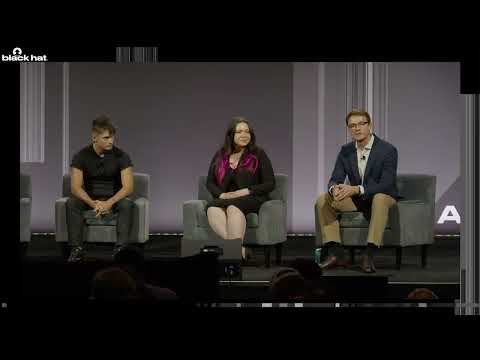
Black Hat's Black Hat USA 2026 | AI and the Future of Cyber Defense Panel: skim's analysis identifies 11 key moments, with 2 potential conflicts of interest flagged. Security leaders from OpenAI, Anthropic, PwC, and Luta Security examine how frontier AI reshapes cyber defense across enterprise IT and critical infrastructure.
Category: Tech. Format: Panel Discussion. YouTube video analyzed by skim.
skim AI Analysis
Credibility assessment: Seasoned Practitioner Insight. The panel brings together front-line security leaders from OpenAI, Anthropic, Luta Security, and PwC alongside former US Cyber Command and NSA officials. Claims are grounded in operational experience, real-world architecture limits, and industry statistics rather than speculative hype.
Bias assessment: Pro-Adoption Industry Pragmati. With representatives from frontier AI labs and major security consultancies on stage, the panel naturally treats enterprise AI adoption as inevitable. However, panelists candidly acknowledge current product limitations, such as AI breaking codebases during automated patching.
Originality: 78% — Candid Cross-Lab Dialogue. Bringing security leads from rival frontier labs OpenAI and Anthropic onto the same stage alongside veteran vulnerability and OT specialists yields fresh, practical perspectives on agent identity, supervisory models, and industrial control system packet analysis.
Depth: 82% — Applied Operational Focus. In a 40-minute window, the discussion bypasses high-level platitudes to examine concrete defensive mechanisms: dynamic agent authorization, sandbox privilege escalation reviews, memory-safe code rewriting, and physics-level PCAP analysis in operational technology.
Key Points (11)
1. Katie Moussouris on Turning AI Against Shadow AI
Timestamp: 00:00:49 to 00:02:58
Katie Moussouris argues that incorporating AI into cyber defense is inevitable if organizations want to keep up with agentic attacks. Enterprises are struggling with shadow AI as employees suddenly build AI-enabled applications without oversight. She concludes that the only way to mitigate the risk posed by AI is to embrace AI and turn it toward defending against that risk.
Significance (Medium): Frames defensive AI adoption not as an optional efficiency upgrade, but as a mandatory countermeasure against internal shadow AI proliferation and external automated attacks.
Sources in support: Katie Moussouris (Founder and CEO, Luta Security), Morgan Adamski (Principal, US Cyber, Data & Technology Risk, Platform Leader, PwC)
Neutral sources: Michael Sulmeyer (Professor of the Practice, Georgetown University, School of Foreign Service)
2. Morgan Adamski on Governance Before Autonomy
Timestamp: 00:03:51 to 00:06:53
Morgan Adamski advises enterprises to build security governance, accountability, and agent monitoring at the forefront of their AI architecture rather than bolting it on later. While clients use autonomous capabilities to map network visibility and triage anomalous incidents, human-in-the-loop validation remains crucial. She notes that full self-healing and autonomous patch remediation remain complex because organizations fear breaking their networks.
Significance (Medium): Highlights the operational tension between rapid autonomous triage and the risk of automated remediation causing self-inflicted outages across complex enterprise networks.
Sources in support: Morgan Adamski (Principal, US Cyber, Data & Technology Risk, Platform Leader, PwC), Michael Sulmeyer (Professor of the Practice, Georgetown University, School of Foreign Service)
3. The Speaker on Scaling Defense Beyond Humans
Timestamp: 00:06:56 to 00:09:38
The speaker explains that AI does not rewrite the fundamental cyberattack playbook of reconnaissance, persistence, and exfiltration, but hits a fast-forward button on it. Because attack speed is accelerating exponentially, requiring a human in the loop for every core defensive action will not scale. Defenders must reserve human approval strictly for consequential, irreversible actions while automating everything else.
Significance (High): Establishes a clear operational rule for security automation: gate only irreversible, high-consequence actions behind human review so routine defense can match machine-speed attacks.
Sources in support: YouTube: Black Hat
Neutral sources: Michael Sulmeyer (Professor of the Practice, Georgetown University, School of Foreign Service)
4. Why AI Suggests Flawed Patches, per Moussouris
Timestamp: 00:09:38 to 00:11:38
Katie Moussouris reports that automated self-healing is currently tricky because AI lacks the context to know if a suggested patch will introduce breaking changes across a codebase or deployment pipeline. Citing a conversation with the head of Mozilla security, she notes that engineers still manually write patches because AI suggestions often get the fix wrong while helping humans derive the right answer. She hopes full automated defense arrives in well under three to five years.
Significance (High): Tempers expectations around autonomous code remediation by showing that even sophisticated engineering teams currently use AI patch suggestions mainly as diagnostic aids.
Sources in support: Katie Moussouris (Founder and CEO, Luta Security)
Neutral sources: Michael Sulmeyer (Professor of the Practice, Georgetown University, School of Foreign Service)
5. Sergiy Konovalov on Legacy OT and Air-Gap Myths
Timestamp: 00:12:36 to 00:15:55
Sergiy Konovalov warns that critical infrastructure faces severe constraints, including tiny security teams, maintenance windows spaced months or years apart, and 30 to 60 percent of operational technology assets no longer being supported. Despite these hurdles, he sees AI helping three-person utilities manage scale and understand their assets. He also rejects relying on air gaps as a solution, noting that incidents repeatedly hit supposedly air-gapped systems.
Significance (High): Exposes the vulnerability of industrial control systems where up to 60 percent of hardware cannot be patched and boards falsely believe air gaps protect them.
Sources in support: Sergiy Konovalov (Global Technology Partner Lead, Anthropic), Michael Sulmeyer (Professor of the Practice, Georgetown University, School of Foreign Service)
6. Why You Cannot Patch Your Way Out of AI Threats
Timestamp: 00:16:40 to 00:20:41
Katie Moussouris contends that organizations could never patch their way out of vulnerabilities, and AI has destroyed any remaining illusion by discovering bugs at exponential volume and chaining low-severity flaws into exploits. Relying on external CVSS scores fails because it ignores internal context and mitigations. Instead of expecting patch management to yield the highest return, defenders must reduce attack surfaces, enforce segmentation, implement zero trust, and use AI to rewrite code in memory-safe languages.
Significance (High): Forces a strategic shift from reactive vulnerability whack-a-mole toward structural containment, attack surface reduction, and automated migration to memory-safe code.
Sources in support: Katie Moussouris (Founder and CEO, Luta Security), Morgan Adamski (Principal, US Cyber, Data & Technology Risk, Platform Leader, PwC)
Neutral sources: Michael Sulmeyer (Professor of the Practice, Georgetown University, School of Foreign Service)
7. Translating Cyber Hygiene Into Revenue Risk
Timestamp: 00:20:41 to 00:24:48
Morgan Adamski emphasizes that not every AI-discovered vulnerability will have a patch, making micro-segmentation, crown-jewel protection, and breach recovery budgets essential. To win over boards that resist foundational security hygiene, leaders must translate cyber risk into concrete operational downtime and lost daily revenue. Once a company maps its basic footprint, she recommends prioritizing identity management, specifically governing agent identities and their sandbox privileges.
Significance (Medium): Gives security leaders a practical board-level communication strategy while pinpointing agent privilege management as the primary identity frontier.
Sources in support: Morgan Adamski (Principal, US Cyber, Data & Technology Risk, Platform Leader, PwC), YouTube: Black Hat
Neutral sources: Michael Sulmeyer (Professor of the Practice, Georgetown University, School of Foreign Service)
8. Dynamic Agent Identity and Supervisory AI
Timestamp: 00:24:55 to 00:28:10
The speaker identifies agent identity as the single most critical control when deploying AI agents with tools and credentials, noting that OpenAI is working with the IETF on industry standards. Whether an agent runs locally like Codex or acts as a shared synthetic coworker, organizations must track its actions, maintain audit trails, and use models in the loop to dynamically upscope or downscope access per task. OpenAI also deployed an auto-review supervisory agent in Codex to evaluate privilege escalations across sandbox boundaries without causing human decision fatigue.
Significance (High): Details a concrete technical blueprint for securing autonomous agents using task-scoped dynamic credentials and supervisory models that prevent human alert fatigue.
Sources in support: YouTube: Black Hat, Morgan Adamski (Principal, US Cyber, Data & Technology Risk, Platform Leader, PwC)
Neutral sources: Michael Sulmeyer (Professor of the Practice, Georgetown University, School of Foreign Service)
9. Physics-Level OT Visibility and Unifying IT-OT
Timestamp: 00:28:10 to 00:33:31
Addressing recent water facility intrusions across seven states, Sergiy Konovalov warns that an incoming tsunami of vendor-discovered vulnerabilities will overwhelm small utilities where only about two out of ten operators truly know their asset inventory. He highlights that models like Claude can analyze industrial PCAP files to reconstruct system operations down to the physics and control settings level, while also accelerating virtual patching and digital twin fidelity. Finally, he argues that organizations should unify IT and OT security under holistic leadership because many critical infrastructure attacks originate in IT networks.
Significance (High): Demonstrates how frontier models can bridge the severe staffing and visibility gap in utilities by translating raw network captures into physical process insights.
Sources in support: Sergiy Konovalov (Global Technology Partner Lead, Anthropic)
Neutral sources: Michael Sulmeyer (Professor of the Practice, Georgetown University, School of Foreign Service)
10. Real-Time Threat Context and Model Reviews
Timestamp: 00:33:31 to 00:37:44
Drawing on her tenure leading the NSA Cybersecurity Collaboration Center, Morgan Adamski says government agencies must give industry real-time, actionable context on adversary intent rather than three-month-old indicators without timestamps. Fast threat context helps CISOs prioritize which actively exploited vulnerabilities to fix first. She also calls for government transparency around the 30-day executive order review process for covered cyber models and clear export pathways so defenders can access frontier tools.
Significance (Medium): Defines what private-sector defenders actually need from intelligence agencies in the AI era: timely adversary intent for patch prioritization and clarity on model regulations.
Sources in support: Morgan Adamski (Principal, US Cyber, Data & Technology Risk, Platform Leader, PwC), Michael Sulmeyer (Professor of the Practice, Georgetown University, School of Foreign Service)
11. First-Week CISO Priorities and Keeping Junior Talent
Timestamp: 00:37:45 to 00:40:41
In a closing lightning round, the panelists share immediate priorities for CISOs returning from Black Hat: Sergiy Konovalov urges using AI for asset inventory and dropping air gaps; the speaker advises inventorying agents, red-teaming continuously with frontier models, and automating routine defense; and Morgan Adamski emphasizes building agility over rigid compliance. Katie Moussouris closes by warning leaders to stop replacing entry-level staff and interns with AI, because defenders must build the next generation of humans capable of directing AI with strategic intent.
Significance (High): Delivers an actionable Monday-morning checklist culminating in a vital warning: hollowing out entry-level security roles today destroys the senior human judgment needed tomorrow.
Sources in support: Katie Moussouris (Founder and CEO, Luta Security), Morgan Adamski (Principal, US Cyber, Data & Technology Risk, Platform Leader, PwC), YouTube: Black Hat, Sergiy Konovalov (Global Technology Partner Lead, Anthropic)
Neutral sources: Michael Sulmeyer (Professor of the Practice, Georgetown University, School of Foreign Service)
This analysis was generated by skim (skim.plus), an AI-powered content analysis platform by Credible AI. Scores and classifications represent the platform's AI-generated assessment and should be considered alongside other sources.