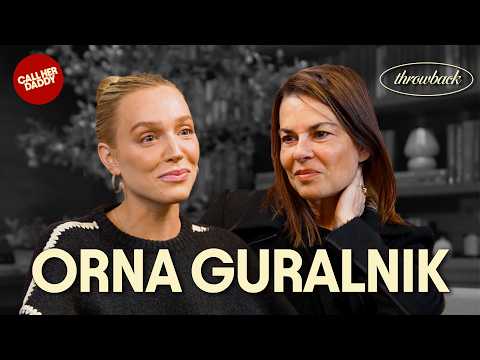
Psychologist and psychoanalyst Dr. Orna Guralnik joins Alex Cooper on Call Her Daddy to demystify couples therapy and explore the unconscious forces shaping romantic relationships. Drawing from her clinical practice and her docuseries Couples Therapy, Orna explains that therapy works best during a specific window when partners are stuck in a repeating, destructive pattern but still have goodwill left. She outlines how couples can argue productively by staying within a regulated emotional zone and shifting from convincing their partner to deep listening, while also defending the normal 'thrill of conflict' in a lived-in partnership.
In the second half, the conversation examines how past experiences drive adult intimacy, from repetition compulsion in toxic relationships to infant colic shaping adult trust. Orna advises couples to keep outside resentments out of the bedroom, address sexual dissatisfaction with nonverbal cues and positive requests, and avoid rushing intimacy to escape the discomfort of getting to know a stranger.
How time-sensitive the topic is: Evergreen
By the numbers
3+ years: Time elapsed since Alex Cooper and Dr. Orna Guralnik last saw each other in person for an interview. (Mentioned at 0:18)
2 years: Amount of time Dr. Orna Guralnik feels it takes her to truly know a patient in therapy. (Mentioned at 52:12)
Questions this video answers
How do you know when it is the right time to start couples therapy?
Dr. Orna Guralnik explains that couples therapy is not necessary for everyone, nor is it useful before problems actually emerge. The ideal window is when you and your partner are stuck in a repeating, destructive pattern that you cannot resolve on your own, but before you have waited so many years that all goodwill and hope are gone.
Dr. Orna Guralnik, 5:14 to 7:20
From this keypoint: The Window for Starting Couples Therapy
What is the biggest mistake couples make when arguing?
Couples fail in conflict when they try to argue while overly agitated or emotionally shut down, and when they focus on convincing their partner rather than trying to understand them. Shifting from persuasion to deep listening while staying curious about unconscious triggers transforms a stalemate into a real conversation.
Dr. Orna Guralnik, 12:04 to 17:44
From this keypoint: Convincing Versus Deep Listening in Fights
Why are some people attracted to toxic relationships?
In psychoanalysis, being drawn to unhealthy relationships is explained by repetition compulsion, where people replay unresolved childhood trauma either to finally master it or to reinforce deep-seated shame. Without working through the original wound, individuals stay trapped in self-negating cycles.
Dr. Orna Guralnik, 24:31 to 28:34
From this keypoint: Repetition Compulsion and Toxic Partners
How do you talk to your partner about being unsatisfied in bed without hurting their feelings?
Dr. Orna Guralnik recommends starting without words by signaling what you want through your body in real time during intimacy. When speaking, translate complaints like 'you never kiss me' into positive requests like 'let's kiss' to avoid triggering defensiveness.
Dr. Orna Guralnik, 37:18 to 42:04
From this keypoint: Nonverbal Cues and Requests in the Bedroom
How do you convince a reluctant partner to go to couples therapy?
Reluctant partners usually fear being ganged up on or forced to give up something important to them. Dr. Orna Guralnik suggests bartering to get them through the door for a trial, after which a skilled therapist will act as an ally to both partners so each feels they have something to gain.
Dr. Orna Guralnik, 7:20 to 12:04
From this keypoint: Dr. Orna Guralnik on Reluctant Partners
Why do couples stop having sex or develop mismatched libidos over time?
While some partners naturally have different sex drives, many couples polarize because they bring outside resentments into the bedroom. Withholding sex over household or parenting anger punishes the higher-libido partner and turns intimacy into a power struggle.
Dr. Orna Guralnik, 32:17 to 37:18
From this keypoint: When Bedroom Battles Mask Other Resentments
Where is the line between supporting a partner with trauma and being codependent?
Caring for a partner crosses into codependency when you become symbiotically enmeshed and try to fix them to avoid your own insecurities. True care supports a partner's independence and encourages professional help rather than acting as their sole caretaker.
Dr. Orna Guralnik, 47:49 to 51:45
From this keypoint: Caring For a Partner Versus Codependency
What are the signs that a romantic relationship is moving too fast?
A relationship moves too fast when partners assume they know everything about each other early on, projecting their own fantasies onto a virtual stranger. Rushing intimacy is often a defense mechanism to avoid the awkward discomfort of unfamiliarity.
Dr. Orna Guralnik, 51:45 to 56:06
From this keypoint: Why Rushing Intimacy Avoids Discomfort
Is it normal for couples to pick fights just to let off steam?
Dr. Orna Guralnik says experiencing a 'thrill of conflict' or letting off steam is acceptable in a lived-in relationship, comparing it to using furniture without coasters. Conflict only becomes unacceptable when it crosses into retaliation, abuse, or the thrill of injuring your partner.
Dr. Orna Guralnik, 17:44 to 22:03
From this keypoint: The Thrill of Conflict in Lived-In Love
How can someone develop attachment issues if they were never abused or neglected as a child?
Attachment expectations begin forming in earliest infancy based on whether distress is relieved. Even with loving parents, a baby who suffered from unsoothable colic may internalize a baseline feeling that the world cannot help them when they are in pain.
Dr. Orna Guralnik, 42:04 to 46:40
From this keypoint: How Infancy Shapes Adult Attachment
Credible AI™ signals
Confidence: Clinical Practice Grounded. Dr. Orna Guralnik speaks directly from her clinical experience as a practicing psychologist and psychoanalyst. While the conversation relies on therapeutic concepts and clinical observation rather than cited empirical studies, her claims remain measured, appropriately hedged, and grounded in established psychoanalytic theory.
Bias: Psychoanalytic Lens. Both Alex Cooper and Dr. Orna Guralnik strongly favor therapy and psychoanalytic exploration as primary tools for personal and relational growth. However, Dr. Orna Guralnik avoids dogmatic prescriptions, explicitly noting that couples therapy is not always necessary and that relationship needs vary widely.
Originality (78%): Nuanced Clinical Take. Rather than repeating standard pop-psychology clichés, Dr. Orna Guralnik offers counterintuitive insights, such as defending the 'thrill of conflict' in lived-in relationships, advising against premature premarital counseling, and recommending nonverbal communication over verbal talks for sexual dissatisfaction.
Depth (80%): Unconscious Dynamics Explored. The interview moves beyond surface-level dating advice to examine unconscious motivations, repetition compulsion, infancy attachment formation, and how couples displace non-sexual resentments into the bedroom. The host's personal anecdotes effectively illustrate the clinical concepts.
Key points (12)
Short (16 min): key points 1, 4, 6 and 11
Medium (28 min): key points 1, 2, 4, 6, 8, 9 and 11
Relaxed (49 min): all 12 key points
1. Why Couples Guard Their Struggles
Timestamp: 00:03:03 to 00:05:14 (2 min)
Speaker: Dr. Orna Guralnik
Dr. Orna Guralnik explains that couples therapy carries a heavy stigma because people maintain an intense firewall around their relationships to preserve a facade of success. Alex Cooper adds that partners fear oversharing with friends during a fight because it leaves a lasting negative impression and risks violating their partner's trust once they reconcile.
Impact: Medium. Why it matters: Highlights how social shame and privacy boundaries isolate struggling couples, preventing them from seeking timely outside perspective.
“there's this like really intense firewall around couples in general. Well, people do not like to share the fact that they're having struggles and trouble in their coup's relationship with other people.”
In the video: Dr. Orna Guralnik, at 3:29
For: Alex Cooper
2. The Window for Starting Couples Therapy
Timestamp: 00:05:14 to 00:07:20 (2 min)
Speaker: Dr. Orna Guralnik
Dr. Orna Guralnik rejects the idea that every couple needs therapy, arguing instead that there is a specific window when it is effective. Couples should seek help when they are stuck in a repeating, destructive pattern they cannot change on their own, rather than going prematurely before problems exist or waiting so many years that all goodwill and hope have vanished.
Impact: High. Why it matters: Reframes couples therapy from a universal preventative measure into a targeted intervention that requires remaining goodwill to succeed.
“If you're in a relationship and you feel like there's a certain kind of pattern that feels destructive and not like not a growth pattern that keeps repeating and you and your partner are trying different ways to change it and nothing's changing”
In the video: Dr. Orna Guralnik, at 5:33
For: Alex Cooper
3. Dr. Orna Guralnik on Reluctant Partners
Timestamp: 00:07:20 to 00:12:04 (5 min)
Speaker: Dr. Orna Guralnik
When one partner refuses therapy out of fear of being ganged up on or forced to sacrifice what matters to them, Dr. Orna Guralnik suggests bartering to get them through the door for a trial session. Once inside, it is the therapist's job to act as an ally to the relationship itself so both partners feel heard and realize they have something to gain.
Impact: High. Why it matters: Dismantles the common fear that therapy is a courtroom, giving reluctant partners a clear benchmark for what good clinical care looks like.
“the job of the therapist is to make sure that you're really helping the couple, not one person. And I think once two people feel like they're really being heard and that they both have something to gain from it, they're going to want to stay.”
In the video: Dr. Orna Guralnik, at 8:38
For: Alex Cooper
4. Convincing Versus Deep Listening in Fights
Timestamp: 00:12:04 to 00:17:44 (6 min)
Speaker: Dr. Orna Guralnik
Productive disagreement requires staying within a regulated emotional zone where partners are neither overly agitated nor completely shut down. Within that zone, Dr. Orna Guralnik identifies the central tactical shift as noticing when you are trying to convince your partner of your point versus moving into deep listening to understand them, while keeping curiosity about unconscious childhood triggers.
Impact: High. Why it matters: Provides couples with two immediate self-checks during arguments: monitoring emotional agitation and shifting from persuasion to curiosity.
“Are you noticing when you're busy trying to convince your partner of something and when are you actually trying to understand”
In the video: Dr. Orna Guralnik, at 13:46
For: Alex Cooper
5. The Thrill of Conflict in Lived-In Love
Timestamp: 00:17:44 to 00:22:03 (4 min)
Speaker: Dr. Orna Guralnik
Dr. Orna Guralnik argues that there is nothing wrong with experiencing a 'thrill of conflict' or letting off steam in a relationship, comparing healthy partnerships to uncoastered furniture meant to be lived in. As long as partners do not cross the line into retaliation, abuse, or the thrill of injury, disagreements and small recoveries are natural parts of closeness.
Impact: Medium. Why it matters: Relieves couples of unrealistic 'Hallmark' expectations, distinguishing normal relational friction from destructive emotional abuse.
“I don't even use coasters on my furniture. I'm like, furniture is to be used like like leave a stain and cut through the board and and it's like that's what it's here for. And relationships are like that too.”
In the video: Dr. Orna Guralnik, at 19:31
For: Alex Cooper
6. Repetition Compulsion and Toxic Partners
Timestamp: 00:24:31 to 00:28:34 (4 min)
Speaker: Dr. Orna Guralnik
People are drawn to unhealthy or toxic relationships through what psychoanalysis calls repetition compulsion, where an individual unconsciously repeats unresolved past trauma either to master it or to reinforce internal shame. Alex Cooper illustrates the repair attempt by recalling how she pursued unattainable men in college to heal childhood insecurities, while Dr. Orna Guralnik notes others repeat cycles as self-punishing masochism.
Impact: High. Why it matters: Explains the psychological mechanism behind why people stay in destructive dating cycles despite knowing the relationship is harmful.
“the more kind of classical psychoanalytic way to think about like why people get pulled towards like abusive and toxic relationships is that it's some form of what we call in jargon repetition compulsion.”
In the video: Dr. Orna Guralnik, at 24:54
For: Alex Cooper
7. Revisiting Childhood Trauma in Therapy
Timestamp: 00:28:34 to 00:32:17 (4 min)
Speaker: Dr. Orna Guralnik
Dr. Orna Guralnik explains that early childhood abuse can lock teenagers and adults into self-punishing, promiscuous, or harmful relationship cycles because that is the only way they know how to view themselves. Breaking this pattern in psychoanalytic therapy requires revisiting the original trauma with a mature adult mind to tend to neglected injuries and reclaim personal freedom.
Impact: High. Why it matters: Clarifies why suppressing trauma fails and how clinical revisiting allows survivors to stop past abuse from defining their adult relationships.
For: Alex Cooper
8. When Bedroom Battles Mask Other Resentments
Timestamp: 00:32:17 to 00:37:18 (5 min)
Speaker: Dr. Orna Guralnik
While the importance of sex varies widely across couples, Dr. Orna Guralnik warns that partners often polarize sexually because they use the bedroom to work out unrelated resentments. When one partner withholds sex over household or parenting grievances, the higher-libido partner feels punished and rejected, requiring couples to pull non-sexual conflicts out of the bedroom.
Impact: High. Why it matters: Identifies how power dynamics and displaced anger turn minor libido differences into entrenched pursuer-distancer standoffs.
“Sometimes what happens and that is a problem is that people work out other tensions or difficulties through in that arena and then they polarize.”
In the video: Dr. Orna Guralnik, at 35:01
For: Alex Cooper
9. Nonverbal Cues and Requests in the Bedroom
Timestamp: 00:37:18 to 00:42:04 (5 min)
Speaker: Dr. Orna Guralnik
To address sexual dissatisfaction without triggering defensiveness or shame, Dr. Orna Guralnik advises starting with nonverbal, bodily signals in real time rather than heavy verbal discussions. When partners do use words, she recommends translating complaints like 'you never kiss me' into direct, forward-looking requests such as 'let's kiss.'
Impact: High. Why it matters: Offers a practical communication shift that protects partner vulnerability while actively improving physical intimacy.
For: Alex Cooper
10. How Infancy Shapes Adult Attachment
Timestamp: 00:42:04 to 00:46:40 (5 min)
Speaker: Dr. Orna Guralnik
Dr. Orna Guralnik explains that adult expectations of whether the world will respond to our needs are established in infancy, even without overt abuse or neglect. A baby who had severe colic that parents could not soothe may grow up with a baseline mistrust that help will not come during distress, shaping how they navigate adult intimacy.
Impact: Medium. Why it matters: Broadens the understanding of attachment wounds beyond severe trauma, showing how early physiological distress shapes adult trust.
“Sometimes it's really difficult to help calicky babies and they start off the world with some idea that when I'm in distress, the world can't always help me.”
In the video: Dr. Orna Guralnik, at 44:01
For: Alex Cooper
11. Caring For a Partner Versus Codependency
Timestamp: 00:47:49 to 00:51:45 (4 min)
Speaker: Dr. Orna Guralnik
Drawing the line between supporting a traumatized partner and absorbing their trauma comes down to distinguishing genuine care from symbiotic enmeshment or codependency. Dr. Orna Guralnik urges partners to ask whether they are over-functioning to escape their own insecurities, while Alex Cooper notes that over-caretakers can actually prevent a partner from seeking professional help.
Impact: Medium. Why it matters: Helps listeners recognize when 'helping' a struggling partner is actually a self-serving avoidance tactic that stunts both people.
“it's important to try to ask yourself, am I getting super involved because I care for the well-being of this person or am I answering some need of mine here?”
In the video: Dr. Orna Guralnik, at 49:48
For: Alex Cooper
12. Why Rushing Intimacy Avoids Discomfort
Timestamp: 00:51:45 to 00:56:06 (4 min)
Speaker: Dr. Orna Guralnik
Dr. Orna Guralnik states that truly knowing another person takes years, noting it takes her about two years to fully understand a patient. Couples move too fast when they project their fantasies onto a stranger and pretend they already know each other to avoid the scary, awkward discomfort of unfamiliarity and otherness, which can lead to decades of self-absorbed marriage.
Impact: Medium. Why it matters: Exposes fast-tracked romance and prolonged honeymoon phases as defense mechanisms against the anxiety of sitting with a stranger.
“the idea of like moving too fast is when you assume you know more than you do. When you think you got it, you you understood everything about them.”
In the video: Dr. Orna Guralnik, at 52:39
For: Alex Cooper
Conflicts of interest (2)
Promotion of Couples Therapy Docuseries
Commercial conflict, Medium severity
Dr. Orna Guralnik stars in the docuseries Couples Therapy, which is releasing a new season at the time of the interview.
Sources: Dr. Orna Guralnik
Significance: The appearance serves to promote the upcoming season of her television show alongside general clinical discussion.
Host-Read Commercial Sponsorships
Commercial conflict, Low severity
Alex Cooper delivers paid sponsor reads for SoFi, Tinder, Uber, and T-Mobile during the episode.
Sources: Alex Cooper
Significance: The Tinder sponsorship touches on dating and social events, though the ad reads are clearly separated from the clinical interview.
Key sources
Alex Cooper: Host of Call Her Daddy
Dr. Orna Guralnik: Psychologist, Psychoanalyst, Star of Couples Therapy
Who's in this
Couples Therapy
Matt
SoFi
Tinder
Uber
T-Mobile
Also mentioned
Call Her Daddy (First mentioned at 0:05)
FDIC (First mentioned at 2:49)
Luna Park (First mentioned at 11:49)
Hallmark (First mentioned at 18:55)
The New York Times (First mentioned at 32:26)
Alcoholics Anonymous (First mentioned at 51:38)
Cancun (First mentioned at 53:55)
This analysis was generated by skim (skim.plus), an AI-powered content analysis platform by Credible AI. Scores and classifications represent the platform's AI-generated assessment and should be considered alongside other sources.