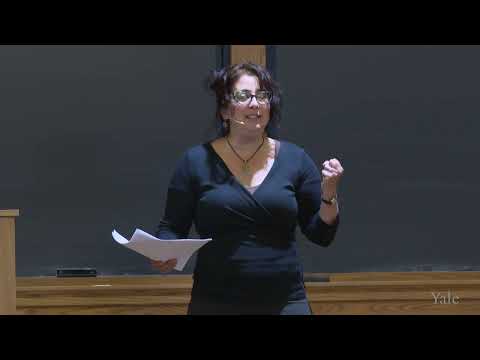
YaleCourses's European Intellectual History since Nietzsche: Class 8, Leninism, the Rushing of History: skim's analysis identifies 10 key moments. Yale professor Marci Shore examines how Vladimir Lenin modified classical Marxism in 1902 to accelerate historical time through an elite vanguard party.
Category: Education. Format: Educational. YouTube video analyzed by skim.
skim AI Analysis
Credibility assessment: Scholarly Historical Analysis. Yale history professor Marci Shore grounds her lecture in primary political texts by Vladimir Lenin, Rosa Luxemburg, and Georg Lukács, alongside established historical records of the Russian Empire and 1917 revolutions. She clearly separates textual exposition from her own interpretive arguments on historical contingency.
Bias assessment: Anti-Totalitarian Liberal. While presenting Marxist and Leninist theory with academic rigor and empathy for oppressed workers, Marci Shore explicitly frames the Soviet project as a catastrophe and warns that excessive faith in human perfectibility leads directly to torture chambers.
Originality: 78% — Temporality-Focused Framing. Rather than delivering a standard chronological recounting of 1917, Marci Shore organizes the transition from Marxism to Leninism around the philosophical problem of temporality and whether historical stages can be artificially accelerated.
Depth: 86% — Rigorous Conceptual Synthesis. The lecture connects abstract Hegelian dialectics and Calvinist predestination to the material realities of agrarian Russia, showing how philosophical dilemmas among bourgeois intellectuals produced the concrete political structure of the vanguard party.
Key Points (10)
1. Marci Shore on Rushing Marxist Historical Time
Timestamp: 00:01:51 to 00:06:10
Marci Shore frames the Bolshevik Revolution around the philosophical question of whether linear historical time can be rushed. She clarifies how turn-of-the-century thinkers like Lenin and Rosa Luxemburg used 'social democracy' to mean revolutionary communism rather than a modern welfare state. Ultimately, she sets up Leninism as a deliberate attempt to speed up Marx's historical stages.
Significance (Medium): Framing Leninism as a theory of accelerated time explains why Russian revolutionaries refused to wait for capitalism to mature.
Sources in support: Marci Shore (Associate Professor of History at Yale)
2. Western Industrialization vs. Agrarian Russia
Timestamp: 00:08:19 to 00:12:35
Marx and Engels formulated their theories in rapidly industrializing Western Europe, where Enlightenment ideas were strong and peasants were becoming urban factory workers. By contrast, late 19th-century Russia remained a feudal autocracy where serfs were only emancipated in 1861 and rapid urban growth in St. Petersburg brought severe disease and exploitation to a tiny working class. Consequently, Russia lacked the mature capitalist conditions Marx assumed would precede revolution.
Significance (High): Highlights the structural mismatch between Western European Marxist theory and the overwhelmingly agrarian reality of the Tsarist Empire.
Sources in support: Marci Shore (Associate Professor of History at Yale)
3. Why Russian Worker Study Circles Stalled
Timestamp: 00:12:36 to 00:17:06
In the late 19th century, Russian revolutionary intellectuals organized study circles called kruzhki to teach Marx and Hegel to factory workers. However, exhausted, largely illiterate laborers working 14 to 15 hours a day struggled to grasp Hegelian dialectics and historical totality despite knowing their immediate lives were miserable. This slow pace of education left Lenin deeply frustrated and convinced that orthodox waiting would take too long.
Significance (Medium): Shows how the practical failure of worker study groups drove Lenin to abandon orthodox Marxist patience.
Sources in support: Marci Shore (Associate Professor of History at Yale)
4. Shore on Lenin's 1902 Critique of Economism
Timestamp: 00:17:12 to 00:20:15
Marci Shore analyzes Lenin's 1902 pamphlet What Is To Be Done?, which she calls arguably the most important text of the 20th century for its historical impact. In it, Lenin critiques 'spontaneity,' 'trade unionism,' and 'economism' because striking workers left to themselves only demand small, immediate improvements like shorter hours or higher pay rather than systemic overthrow. By diagnosing this limitation, Lenin justified active intervention to nudge history forward.
Significance (High): Establishes the theoretical pivot where Lenin rejected spontaneous worker action as insufficient for revolution.
Sources in support: Marci Shore (Associate Professor of History at Yale)
5. The Vanguard Party and the 1903 Bolshevik Split
Timestamp: 00:20:21 to 00:28:04
Just as Calvinist predestination raises the question of why believers should act at all, deterministic Marxism left bourgeois intellectuals wondering what role they could play. Lenin solved their dilemma by proposing a conspiratorial vanguard Party of professional revolutionaries who would bring class consciousness to the workers from without. This modification split the Russian Social Democratic Labor Party in 1903 into Lenin's impatient Bolshevik majority and the orthodox Menshevik minority.
Significance (High): Explains the birth of the vanguard party model and the 1903 institutional split that created the Bolsheviks.
Sources in support: Marci Shore (Associate Professor of History at Yale)
6. Luxemburg and Lukács Debate Lenin's Vanguard
Timestamp: 00:28:12 to 00:33:55
Marci Shore contrasts two major Marxist responses to Lenin's vanguard theory: Rosa Luxemburg and Georg Lukács. Reading from Luxemburg's critique, Shore shows that Luxemburg rejected Lenin's 'ultra centralism' as a sterile overseer spirit akin to Jacobinism, warning that party elites always turn conservative and must instead trust the workers. Conversely, Lukács sided with Lenin in History and Class Consciousness, arguing that the disciplined Party embodies totality and true class consciousness.
Significance (High): Captures the central fissure in European Marxism between democratic worker spontaneity and authoritarian party discipline.
Sources in support: Marci Shore (Associate Professor of History at Yale)
7. Bloody Sunday and the Incomplete 1905 Revolution
Timestamp: 00:33:56 to 00:36:45
In 1905, uncoordinated strikes, peasant uprisings, and protests erupted across the Tsarist Empire, radicalized by the Bloody Sunday massacre in January when police in St. Petersburg killed about 130 demonstrators. Following a general strike in October, Tsar Nicholas II consented to create a legislative Duma that pointed toward a constitutional monarchy. Although the Tsar largely undid these reforms a year later, the incomplete 1905 revolution established a lasting precedent of rebellion.
Significance (Medium): Demonstrates how Tsarist violence and broken constitutional promises in 1905 primed Russia for deeper radicalization.
Sources in support: Marci Shore (Associate Professor of History at Yale)
8. Shore on World War I and the February Revolution
Timestamp: 00:36:46 to 00:41:50
Marci Shore traces how the 1914 assassination of Archduke Franz Ferdinand drew the impoverished Russian Empire into a devastating war alongside Serbia. By February 1917, freezing dark winter conditions, severe food shortages, and soldier mutinies in Petrograd forced Tsar Nicholas II to abdicate on March 2, ending centuries of Romanov rule.
Significance (High): Explains how the strain of World War I toppled the Romanov dynasty and created an unstable power vacuum in Petrograd.
Sources in support: Marci Shore (Associate Professor of History at Yale)
9. Lenin's Sealed Train Return and October Takeover
Timestamp: 00:41:51 to 00:46:50
Exiled in Switzerland in early 1917, Lenin demanded immediate withdrawal from the imperialist war, non-cooperation with the Provisional Government, nationalization of land, and all power to the Soviets. Hoping to knock Russia out of the war, Germany smuggled Lenin in a sealed train car back to Petrograd in April 1917, where he boldly declared at the June Congress of Soviets that his tiny Bolshevik party was ready to take power.
Significance (High): Reveals that the October Revolution was an audacious minority seizure of power rather than an organic proletarian uprising.
Sources in support: Marci Shore (Associate Professor of History at Yale)
10. Brest-Litovsk and the Sealed Train Contingency
Timestamp: 00:46:51 to 00:50:58
After taking power, Lenin signed the 1918 Treaty of Brest-Litovsk with Germany, wagering on an imminent worldwide workers' revolution that historian Alex Rabinovich calls the biggest mistake of the 20th century because it failed to materialize despite near-revolutions in Hungary, Slovakia, and Germany. Shore notes that the ensuing Soviet project became a catastrophic attempt to re-engineer human beings, showing how excessive faith in human perfectibility leads to torture chambers.
Significance (High): Challenges deterministic Marxism by arguing that the entire Soviet experiment hinged on the contingent arrival of one individual.
Sources in support: Marci Shore (Associate Professor of History at Yale)
This analysis was generated by skim (skim.plus), an AI-powered content analysis platform by Credible AI. Scores and classifications represent the platform's AI-generated assessment and should be considered alongside other sources.