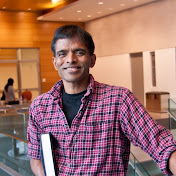
Y Combinator's Open Models Change The Economics of AI: skim's analysis identifies 12 key moments, with 2 potential conflicts of interest flagged. Ollama CEO Jeffrey Morgan reports a 150x surge in Ollama Cloud token usage since the start of 2026, driven by coding agents, co-work tools like OpenClaw and Hermes, and capable Chinese open models.
Category: Tech. Format: Interview. YouTube video analyzed by skim.
skim AI Analysis
Credibility assessment: Direct Operational Data. Jeffrey Morgan shares proprietary usage metrics from Ollama Cloud, alongside published reporting from The Information on AT&T. Because the discussion centers on Ollama's own platform growth and market positioning, internal figures remain self-reported and unverified by outside auditors.
Bias assessment: Open-Source Ecosystem Booster. Hosted by Y Combinator, an investor in Ollama, the conversation naturally champions open-weight models and developer tooling. While the participants acknowledge where frontier labs still lead, the framing consistently favors open-model economics and Ollama's role in the stack.
Originality: 82% — Proprietary Token Insights. The episode pairs unpublished internal telemetry on cloud versus local model consumption with candid founder history, including an previously undiscussed intermediate pivot from Kubernetes security to desktop developer security before launching Ollama.
Depth: 80% — Systems-Level Stack Analysis. Rather than staying at high-level AI hype, the discussion examines concrete infrastructure layers: model harnesses, tool-calling mechanics, stateful memory, GPU procurement, and the division of workloads between local Apple or Nvidia hardware and cloud clusters.
Key Points (12)
1. Coding agents drive a 150x token surge, says Jeff
Timestamp: 00:01:16 to 00:05:31
Jeffrey Morgan reports that Ollama Cloud token usage jumped 150x since the start of 2026, propelled first by coding agents and then by co-work tools like OpenClaw and Hermes. Enterprises such as AT&T have reportedly shifted 40% of their token consumption to open models to cut costs and customize workflows. Expanded context windows over one million tokens and capable out-of-the-box Chinese models turned open models into mainstream enterprise workhorses.
Significance (High): Demonstrates that open-weight models have crossed the threshold from hobbyist tinkering to high-volume enterprise automation across both engineering and business teams.
Sources in support: Jeffrey Morgan (Co-founder and CEO of Ollama), YouTube: Y Combinator (Podcast hosts on The Lightcone (Y Combinator))
2. Rapid open releases and security testing gains
Timestamp: 00:05:31 to 00:08:26
Faster release cycles, such as three iterations of DeepSeek Flash in one summer, narrow the gap with frontier labs and complicate custom fine-tuning. While security and governance remain the main blockers for enterprise adoption, open models hold a distinct advantage in defensive cybersecurity testing. Unlike closed models like Claude that refuse penetration-testing prompts, open models let security teams test their own software.
Significance (Medium): Positions cybersecurity testing and governance tooling as high-leverage startup opportunities as enterprises seek safe ways to adopt Chinese-origin open models.
Sources in support: Jeffrey Morgan (Co-founder and CEO of Ollama), YouTube: Y Combinator (Podcast hosts on The Lightcone (Y Combinator))
3. Morgan on Ollama as the OS layer for day-zero drops
Timestamp: 00:08:26 to 00:13:58
Coordinating a day-zero model launch requires aligning inference engines, developer harnesses like OpenCode or Codex, and hardware optimization across Nvidia and Apple Silicon, often within a 24-hour scramble. Drawing on VMware and Docker backgrounds, the Ollama team acts as an operating system glue layer that standardizes tool calling and runtime execution. This orchestration replicates the integrated five-layer stack of frontier labs for the open ecosystem.
Significance (High): Explains why model weights alone do not create developer adoption; reliable harnesses and hardware-level speed determine whether a new open model succeeds.
Sources in support: Jeffrey Morgan (Co-founder and CEO of Ollama), YouTube: Y Combinator (Podcast hosts on The Lightcone (Y Combinator))
4. Unbundling knowledge, coordination, and sandboxes
Timestamp: 00:13:58 to 00:17:28
Between raw model weights and end applications lie critical middleware layers: connecting company knowledge, coordinating local and cloud sub-agents, and executing code in cloud sandboxes. While frontier labs bundle these into walled gardens, open-source abundance shifts scarcity to orchestration above the token layer. Stateful problems like up-to-date memory, data storage, and credential security cannot live inside trained weights and will remain independent software layers.
Significance (High): Identifies stateful infrastructure, memory, and security tooling as durable moats for startups worried about foundation models absorbing their features.
Sources in support: Jeffrey Morgan (Co-founder and CEO of Ollama), YouTube: Y Combinator (Podcast hosts on The Lightcone (Y Combinator))
5. Why 80-90% of enterprise tokens may go to open AI
Timestamp: 00:17:28 to 00:20:41
Jeffrey Morgan predicts that in a steady state, 80% to 90% of an enterprise's tokens will run on open models, even if open models only consume 10% to 20% of the total AI budget. Under this hybrid model, frontier labs handle the hardest reasoning and routing tasks while cheap open models execute high-volume line-item work. Just as cloud customers pair proprietary AWS DynamoDB with open-source Postgres, businesses will blend closed and open models.
Significance (High): Reframes enterprise AI economics: open models expand total token consumption rather than simply replacing frontier model budgets dollar for dollar.
Sources in support: Jeffrey Morgan (Co-founder and CEO of Ollama), YouTube: Y Combinator (Podcast hosts on The Lightcone (Y Combinator))
6. Chinese models lead cloud while local stays mixed
Timestamp: 00:20:41 to 00:24:01
Customers increasingly use a hybrid setup where 20B to 40B parameter models handle document workflows locally on laptops while complex coding agents run on large cloud models. On local devices, usage splits evenly between US, European, and Chinese models like Llama, Gemma, and Qwen. In contrast, cloud coding-agent consumption on Ollama is almost entirely dominated by large Chinese models, though Nvidia's Nemotron Ultra begins a new US wave.
Significance (High): Exposes a stark competitive gap in large open-weight cloud models, where US labs have ceded almost the entire high-end coding agent market to Chinese releases.
Sources in support: Jeffrey Morgan (Co-founder and CEO of Ollama), YouTube: Y Combinator (Podcast hosts on The Lightcone (Y Combinator))
7. Desktop hardware brings coding agents back locally
Timestamp: 00:24:01 to 00:28:43
New desktop hardware from Nvidia and Apple, including GB300 workstations, the 128GB unified-memory DGX Spark, and Mac Studios running MLX, can run 20B to 120B models on a desk or chain together for 400B models. While GPU supply for B200 and B300 cloud clusters remains volatile and hard for startups to forecast, Ollama pools capacity across inference providers. Over time, Morgan expects powerful desktop GPUs to bring sub-100ms coding loops back to local machines.
Significance (Medium): Signals a hardware pendulum swing where next-generation desktop workstations can offload expensive cloud inference for latency-sensitive developer workflows.
Sources in support: Jeffrey Morgan (Co-founder and CEO of Ollama), YouTube: Y Combinator (Podcast hosts on The Lightcone (Y Combinator))
8. DeepSeek Flash and chaining beat a single God model
Timestamp: 00:28:56 to 00:33:37
For budget-conscious founders, Jeffrey Morgan recommends ultra-efficient flash models like DeepSeek Flash, which is the fastest-growing model on Ollama Cloud and handles roughly 80% of tasks cheaply. Rather than relying on a single giant 'God model' for every task, developers can chain fast, inexpensive models together through an orchestration layer. Meanwhile, open models like Kimi and GLM already compete head-to-head with frontier labs on specialized tasks like web development.
Significance (High): Gives startups a practical blueprint to scale AI features without burning venture capital: orchestrate specialized flash models instead of defaulting to frontier APIs.
Sources in support: Jeffrey Morgan (Co-founder and CEO of Ollama), YouTube: Y Combinator (Podcast hosts on The Lightcone (Y Combinator))
9. Model origin, hosting security, and critical tasks
Timestamp: 00:33:37 to 00:36:14
Enterprise attitudes toward geopolitics split evenly between customers who only care that a model runs in a secure environment and those who require full training-data provenance, such as Nvidia's Nemotron, for mission-critical work like Finnish power-plant analytics. Asked about hidden backdoors in Chinese models, Morgan notes he knows of no such incidents to date.
Significance (Medium): Clarifies how enterprise security teams evaluate foreign-origin AI weights: hosting isolation and deterministic output screening matter more than nationality alone for many buyers.
Sources in support: Jeffrey Morgan (Co-founder and CEO of Ollama), YouTube: Y Combinator (Podcast hosts on The Lightcone (Y Combinator))
10. Two years in the wilderness before a two-week build
Timestamp: 00:36:14 to 00:44:49
Having previously built Docker Desktop, Jeffrey Morgan and his co-founder applied to Y Combinator in Winter 2021 to build a desktop tool for Kubernetes and raised a 2022 Series A from Benchmark before pivoting. They spent two scary years with a 10+ person team struggling to find product-market fit across Kubernetes and desktop security ideas. In July 2023, they threw everything out, gave themselves two weeks to build a local LLM runner for Llama 2, and saw immediate adoption.
Significance (Medium): Offers a candid counter-narrative to overnight AI success stories: Ollama's breakout followed two years of over-engineering and a disciplined two-week sprint aligned with founder strengths.
Sources in support: Jeffrey Morgan (Co-founder and CEO of Ollama), YouTube: Y Combinator (Podcast hosts on The Lightcone (Y Combinator))
11. From Reddit hobbyists to Fortune 500 monetization
Timestamp: 00:44:49 to 00:51:49
Ollama rapidly surpassed 100,000 GitHub stars and spread from Reddit hobbyists to 85% of the Fortune 500 because stateless local models required no IT permission or budget to start using. Despite massive adoption in 2023, the company waited until 2026 to monetize via Ollama Cloud once open models became capable enough to power coding agents at scale. Drawing on lessons from Docker and YC peers, Morgan warns open-source founders against treating users as an anonymous internet blob.
Significance (Medium): Illustrates how permissionless local developer tools can Trojan-horse into the Fortune 500, while highlighting the discipline required to time open-source cloud monetization.
Sources in support: Jeffrey Morgan (Co-founder and CEO of Ollama), YouTube: Y Combinator (Podcast hosts on The Lightcone (Y Combinator))
12. Why old DevOps rules break in the AI infrastructure era
Timestamp: 00:51:49 to 00:57:01
While working on a team that has shipped high-quality software teaches vital engineering standards, Morgan argues several classic DevOps and cloud rules no longer apply in AI. Unlike the PaaS era where being a thin layer on top of infrastructure was seen as vulnerable, moving up the AI stack closer to the customer and curating fragmented providers is highly valuable. Furthermore, engineers must embrace non-deterministic LLM behavior as a feature and run leaner support teams.
Significance (Medium): Challenges conventional venture wisdom against 'wrapper' or middleware startups, showing how fragmentation across models and inference providers makes curation a durable business.
Sources in support: Jeffrey Morgan (Co-founder and CEO of Ollama), YouTube: Y Combinator (Podcast hosts on The Lightcone (Y Combinator))
This analysis was generated by skim (skim.plus), an AI-powered content analysis platform by Credible AI. Scores and classifications represent the platform's AI-generated assessment and should be considered alongside other sources.