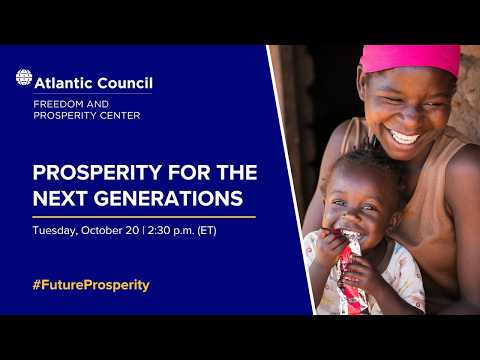
At an Atlantic Council forum moderated by James Maserella and Patrick Quirk, US Special Envoy Charity Wallace outlines the First Lady's Fostering the Future Together coalition of 60 first spouses and over 30 private partners. Focusing on educational technology, super intelligence, and child online safety, the initiative pairs companies like Starlink, Google, and Zoom with local schools while promoting the US Take It Down Act over blanket youth internet bans. Wallace also confirms regional first-spouse summits in St. Kitts and Nevis, the Philippines, and Poland in November, followed by a Miami G20 event in December.
In the second panel, Kathleen Fox of UNICEF USA, Elisa Maki Gford of the Church of Jesus Christ of Latter-day Saints, and Ann Austin of the WTA Foundation examine how private philanthropy can offset record declines in official development assistance. They highlight UNICEF's Child Nutrition Fund, which has unlocked over $900 million in domestic government co-investment and a $500 million matching pledge from Mike and the late Jackie Bezos to build self-sustaining national health systems.
How time-sensitive the topic is: Developing story
By the numbers
4 billion US dollars: Investment mobilized globally by the Development Finance Corporation's 2X women's economic empowerment program (Mentioned at 3:12)
60 first spouses: Members participating in the First Lady's Fostering the Future Together global coalition alongside over 30 private partners (Mentioned at 4:41)
1.2 billion young people: Youth projected to enter the global workforce over the next 10 years, half of whom are girls (Mentioned at 9:53)
5.8 million refugee children: Refugee children remaining out of school globally according to 2026 UN education report findings cited by James Maserella (Mentioned at 25:20)
858 million US dollars: Private contributions given to UNICEF through UNICEF USA last year by American families, foundations, faith groups, and companies (Mentioned at 39:48)
900 million US dollars: Domestic budget funding committed to nutrition by eight national governments through UNICEF's Child Nutrition Fund (Mentioned at 43:44)
500 million US dollars: Dollar-for-dollar matching commitment to the Child Nutrition Fund pledged by Mike and the late Jackie Bezos (Mentioned at 44:30)
25 million US dollars: Contribution by the Church of Jesus Christ of Latter-day Saints to the Child Nutrition Fund, matched to become $50 million (Mentioned at 49:00)
3 billion vaccine doses: Vaccines delivered by UNICEF last year, reaching nearly half of the world's children under five (Mentioned at 55:34)
1.7 billion US dollars: Supplies expedited for children since 2020 through UNICEF's Vaccine Independence Initiative bridge financing (Mentioned at 56:28)
Questions this video answers
What is the US First Lady's Fostering the Future Together initiative and how does it work?
Fostering the Future Together is a global coalition launched in September 2025 that unites 60 first spouses and more than 30 private sector partners around four pillars: super intelligence in education, edtech tools, online child protection, and digital literacy. Managed by Special Envoy Charity Wallace at the State Department, it pairs companies like Starlink, Google, and Zoom with first spouses to customize educational connectivity and child safety programs.
Charity Wallace, 3:51 to 9:24
From this keypoint: Charity Wallace outlines the 60-spouse coalition
How does UNICEF's Child Nutrition Fund finance maternal and child nutrition programs?
Launched in 2023, the Child Nutrition Fund operates through three mechanisms: matching domestic nutrition spending by national governments, providing direct grants in fragile states like Sudan and Yemen, and using advance supplier payments and loan guarantees. In 2025, it reached over 1 million children with severe malnutrition treatment and unlocked over $900 million in domestic government co-investment across eight countries.
Kathleen Fox, 40:32 to 45:40
From this keypoint: Kathleen Fox details the Child Nutrition Fund
How is the US State Department handling foreign education assistance after the dissolution of USAID?
Special Envoy Charity Wallace states that since USAID was dissolved, the State Department's regional bureaus have been given greater flexibility to deliver foreign assistance directly. Her office coordinates with those regional bureaus and the Global Health and Security division to pair appropriated basic and higher education funds with vetted private sector and NGO implementing partners.
Charity Wallace, 19:53 to 27:09
From this keypoint: Post-USAID regional bureaus and refugee schooling
Why does the State Department oppose banning children under 16 or 18 from going online?
Charity Wallace argues that blanket age bans on internet access do not work because children inevitably find ways around them and still need to learn how to use digital and super intelligence tools analytically. Instead, the US exports the Take It Down Act as a legislative model and pressures tech companies to build friction into their platforms to block harmful red-light content.
Charity Wallace, 12:29 to 15:58
From this keypoint: Exporting the Take It Down Act over age bans
What is the difference between UNICEF and UNICEF USA?
UNICEF is the United Nations agency for children operating in 190 countries and funded entirely through voluntary contributions rather than assessed UN dues. UNICEF USA is an independent US nonprofit and one of 33 national committees that raises private American funds—totaling about $858 million last year—and advocates for bipartisan US government support.
Kathleen Fox, 36:02 to 40:32
From this keypoint: WTA Foundation and UNICEF USA mobilize donors
How does UNICEF help developing countries buy their own vaccines when government budgets are delayed?
As the world's largest vaccine buyer, UNICEF procures over three billion doses annually and allows 87 governments to buy supplies at UNICEF bulk prices and quality standards using their own domestic budgets. When a country faces budget delays or political transitions, UNICEF's Vaccine Independence Initiative fronts the money so vaccines arrive on time and recycles the capital once the government repays it, expediting $1.7 billion since 2020.
Kathleen Fox, 52:59 to 1:01:18
From this keypoint: Strengthening vaccine supply chains and health workers
Why did the Church of Jesus Christ of Latter-day Saints invest $25 million in the Child Nutrition Fund?
Elisa Maki Gford explains that the church contributed $25 million because the Child Nutrition Fund's matching structure doubled the gift to $50 million, maximizing the impact of member donations toward reaching 320 million women and children. The investment builds on the church's partnership with UNICEF since 2013 and focuses on strengthening local systems for long-term self-reliance.
Elisa Maki Gford, 45:40 to 52:58
From this keypoint: Mormon and WTA leaders back matched nutrition aid
How did Ecuador reduce its child malnutrition rate below 20 percent?
Ecuadorian Ambassador L. Backer reports that Ecuador reduced its child malnutrition rate from 27 percent to under 20 percent over roughly six years through a coalition involving the government, the foundation Rednei, and the Church of Jesus Christ of Latter-day Saints. Targeted projects in provinces like Chimborazo focused on early nutrition so children's brains can develop fully.
L. Backer, 1:01:18 to 1:07:25
From this keypoint: Ecuador's malnutrition drop and household support
Why is the first five years of a child's life so critical for nutrition interventions?
Panelists emphasize that physical and cognitive brain development depends heavily on maternal prenatal vitamins, breastfeeding support, and early childhood nutrition during the first five years. Elisa Maki Gford and Kathleen Fox note that children born with low birth weight or left malnourished past age five face lifelong developmental disadvantages that are extremely difficult to reverse later.
Elisa Maki Gford, 1:07:25 to 1:18:31
From this keypoint: Local mentorship, interfaith ties, and the first five years
Credible AI™ signals
Confidence: Direct Institutional Reporting. Senior officials from the Department of State, UNICEF USA, the Church of Jesus Christ of Latter-day Saints, and the WTA Foundation report directly on their own active programs and funding commitments. Because figures are self-reported by program sponsors without independent scrutiny during the event, the discussion stays promotional in tone.
Bias: Public-Private Partnership. Speakers uniformly champion public-private partnerships, corporate tech integration, and philanthropic co-investment as the solution to declining official development assistance. Critical questions about USAID dissolution and foreign aid cuts are briefly deflected rather than debated.
Originality (72%): Firsthand Program Briefings. The forum brings together a US Special Envoy and major philanthropic leaders to share firsthand operational details on the Fostering the Future Together coalition and UNICEF's Child Nutrition Fund, including specific summit plans and field observations from Uganda, Tanzania, and Ghana.
Depth (68%): Operational Policy Overview. While the first half remains at a high diplomatic level regarding educational technology and first-spouse networks, the second panel explains the specific financing mechanics of domestic budget matching, advance vaccine procurement, and community nutrition screening.
Key points (12)
Short (26 min): key points 1, 5, 8 and 10
Medium (43 min): key points 1, 3, 5, 6, 8, 10 and 11
Relaxed (1h 13min): all 12 key points
1. Charity Wallace outlines the 60-spouse coalition
Timestamp: 00:03:51 to 00:09:24 (6 min)
Speaker: Charity Wallace
Charity Wallace explains that the First Lady's Fostering the Future Together initiative unites 60 first spouses and over 30 private sector partners around four pillars: super intelligence in education, edtech tools, online child protection, and digital literacy. She notes that lessons from working with Laura Bush showed how public-private partnerships can amplify first spouses who have large platforms but small staffs.
Impact: High. Why it matters: By routing educational tech diplomacy through first spouses and corporate partners, the State Department relies on private infrastructure rather than traditional bilateral aid grants.
“There are 60 first spouses that are part of the global coalition and more than 30 private sector partners that work with us. Um, our REMA is really narrowly focused on education and technology.”
In the video: Charity Wallace, at 4:40
For: James Maserella
2. Preparing 1.2 billion youth for digital jobs
Timestamp: 00:09:24 to 00:12:29 (3 min)
Speaker: Charity Wallace
James Maserella cites data that 1.2 billion young people will enter the global workforce over the next decade, half of them girls, creating instability risks if jobs are scarce. Charity Wallace responds that her team focuses on the human capital side of trade-over-aid foreign policy so youth in Africa, South Asia, and the Middle East gain digital skills. She adds that technologies and NGOs addressing basic tasks like water collection help free girls to attend school alongside boys.
Impact: Medium. Why it matters: Framing youth education as a trade-over-aid stability measure aligns global girls' schooling and American tech stack adoption with US economic and security priorities.
“we think a lot about human the human capital aspect of our trade over aid and our foreign policy. That's kind of where our our little team sits is to ensure that we are um helping for spouses”
In the video: Charity Wallace, at 10:45
For: James Maserella
3. Exporting the Take It Down Act over age bans
Timestamp: 00:12:29 to 00:15:58 (3 min)
Speaker: Charity Wallace
Addressing technology risks, Charity Wallace states that her office exports the US Take It Down Act as a legislative model for foreign first spouses to protect children online. Rather than backing blanket online bans for youth under 16 or 18, which she argues children easily bypass, the initiative pushes tech platforms to build in friction around harmful red-light content and consults the Global Human Flourishing Project.
Impact: High. Why it matters: Rejecting strict age bans in favor of platform friction and targeted legislation aligns US diplomatic advice with continued youth access to American digital platforms.
“there's a number of countries that have banned kids from being online until they're 16 or 18. Personally, we know that um we don't really agree with that because we know that that actually doesn't work.”
In the video: Charity Wallace, at 14:41
Neutral: James Maserella
4. Scaling low-tech catch-up schooling and NGO grants
Timestamp: 00:16:00 to 00:19:53 (4 min)
Speaker: Charity Wallace
When asked how to justify long-term education investments to policymakers, Wallace argues that global education outcomes are poor enough that proven, verifiable interventions sell themselves. She highlights matching a first spouse facing conflict-related schooling gaps with a low-tech partner that helps out-of-school children catch up. She also notes that both the State Department and the Labor Department fund NGOs working on youth training for changing labor markets.
Impact: Medium. Why it matters: Pairing verifiable impact reports with low-tech catch-up models shows the coalition is not limited to high-end connectivity where basic schooling has been disrupted.
“one of our first spouses came to us and said our biggest issue is that kids have been out of school and they need to be caught up and I said I know exactly the right partner for you”
In the video: Charity Wallace, at 17:47
Neutral: James Maserella
5. Post-USAID regional bureaus and refugee schooling
Timestamp: 00:19:53 to 00:27:09 (7 min)
Speaker: Charity Wallace
Charity Wallace announces three regional first-spouse summits in November in St. Kitts and Nevis, the Philippines, and Poland, plus a First Lady event at the December Miami G20 summit. Responding to audience questions on early childhood and USAID cuts, she explains that since USAID was dissolved, State Department regional bureaus hold greater flexibility to deliver basic and higher education appropriations alongside global health programs.
Impact: High. Why it matters: Confirming that State Department regional bureaus now manage foreign assistance after USAID's dissolution clarifies how US education and health funds are routed.
“when USAD was disseminated um uh or dissolved I should say that the regional bureaus now have a lot more flexibility in the foreign assistance and are delivering foreign assistance from those regional bureaus.”
In the video: Charity Wallace, at 23:21
For: James Maserella
6. Patrick Quirk warns of historic aid decline
Timestamp: 00:28:41 to 00:36:02 (7 min)
Speaker: Patrick Quirk
Opening the second panel, Save the Children US Chief Policy Officer Patrick Quirk warns that developing nations face the largest annual decline in official development assistance in history just as 1.2 billion youth prepare to enter the workforce. To counter eroding child protection systems, he argues that every public and private dollar must be better leveraged through faith-based groups, philanthropy, and international NGOs.
Impact: High. Why it matters: Quirk's warning about record official aid cuts sets the urgent financial backdrop for why humanitarian agencies are courting religious and corporate donors.
“these governments and communities are grappling with impacts of the largest ever annual decline in official development assistance in history with recorded drastic impacts on children in particular around the globe.”
In the video: Patrick Quirk, at 29:58
For: Elisa Maki Gford
7. WTA Foundation and UNICEF USA mobilize donors
Timestamp: 00:36:02 to 00:40:32 (5 min)
Speaker: Kathleen Fox
Ann Austin explains that the WTA Foundation uses the platform of professional women's tennis to champion maternal and child health, surpassing its initial goal by reaching 1.5 million women through its Global Women's Health Fund. Kathleen Fox then distinguishes UNICEF, the UN agency operating in 190 countries, from UNICEF USA, the independent US nonprofit that raised about $858 million from American private donors last year.
Impact: Medium. Why it matters: Mobilizing $858 million annually from private American donors gives UNICEF USA substantial leverage to structure matching funds alongside shrinking public aid budgets.
“Last year, American families, foundations, faith communities, and companies gave about $858 million to UNICEF through UNICEF USA.”
In the video: Kathleen Fox, at 39:43
For: Ann Austin
Neutral: Patrick Quirk
8. Kathleen Fox details the Child Nutrition Fund
Timestamp: 00:40:32 to 00:45:40 (5 min)
Speaker: Kathleen Fox
Kathleen Fox explains that although malnutrition is linked to over half of all deaths in children under five, global financing has historically been fragmented and reactive to emergencies. Launched in 2023, UNICEF's Child Nutrition Fund addresses this by matching domestic nutrition spending in countries like Indonesia, Benin, and the Philippines, providing grants in fragile states like Sudan and Yemen, and offering advance supplier payments.
Impact: High. Why it matters: Requiring partner governments to co-invest at a five-to-one ratio shifts nutrition financing from temporary crisis relief toward permanent national budget ownership.
“Eight countries through the CNF have committed more than $900 million of their own money to nutrition. That's more than five government dollars for every CNF dollar invested in those countries.”
In the video: Kathleen Fox, at 43:41
For: Patrick Quirk
9. Mormon and WTA leaders back matched nutrition aid
Timestamp: 00:45:40 to 00:52:58 (7 min)
Speaker: Elisa Maki Gford
Elisa Maki Gford recounts a field visit to Uganda where UNICEF early-learning support convinced a mother that her disabled child could attend school and have a future. She explains that the Church of Jesus Christ of Latter-day Saints invested $25 million in the Child Nutrition Fund because matching mechanisms doubled it to $50 million toward CNF's goal of reaching 320 million women and children.
Impact: Medium. Why it matters: Dollar-for-dollar matching pools attract major institutional donors who want verifiable leverage and an exit strategy for foreign aid dependence.
“When we can put in $25 million and have it matched and that becomes $50 million, my goodness, why wouldn't we do that?”
In the video: Elisa Maki Gford, at 48:58
For: Ann Austin, Patrick Quirk
10. Strengthening vaccine supply chains and health workers
Timestamp: 00:52:59 to 01:01:18 (8 min)
Speaker: Kathleen Fox
Ann Austin describes leveraging the WTA's global audience of over one billion fans across 30 countries to connect corporate partners with maternal health causes. Kathleen Fox explains how UNICEF strengthens national systems beyond nutrition by purchasing over three billion vaccine doses annually and fronting $1.7 billion since 2020 through its Vaccine Independence Initiative so 87 governments can procure supplies at bulk prices.
Impact: High. Why it matters: Bridge financing and bulk procurement allow developing nations to buy their own vaccines at scale, reducing long-term reliance on donor handouts.
“UNICEF is the largest single buyer of vaccines in the world and last year delivered more than three billion doses, enough to reach nearly half of the world's children under five.”
In the video: Kathleen Fox, at 55:28
For: Ann Austin, Elisa Maki Gford
Neutral: Patrick Quirk
11. Ecuador's malnutrition drop and household support
Timestamp: 01:01:18 to 01:07:25 (6 min)
Speaker: L. Backer
During the Q&A, Ecuador's Ambassador L. Backer reports that working with the foundation Rednei, the government, and the Church of Jesus Christ of Latter-day Saints reduced Ecuador's child malnutrition rate from 27 percent to under 20 percent over roughly six years.
Impact: Medium. Why it matters: Ecuador's seven-point drop in child malnutrition offers concrete country-level evidence that coordinated government and foundation programs can move national health indicators.
For: Elisa Maki Gford, Kathleen Fox, Ann Austin
Neutral: Patrick Quirk
12. Local mentorship, interfaith ties, and the first five years
Timestamp: 01:07:25 to 01:18:31 (11 min)
Speaker: Elisa Maki Gford
Answering audience questions on non-financial barriers, Elisa Maki Gford stresses that money alone cannot change habits without local peer mentors who guide mothers after church-hosted nutrition screenings.
Impact: Medium. Why it matters: Pairing pooled global financing with neighborhood-level peer coaching addresses the last-mile behavioral barriers that money alone cannot solve.
“we really only have the first five years of a child's life to make the most significant impact and that after that it's hard to make those gain make up those gains that have been lost in the first five years.”
In the video: Elisa Maki Gford, at 1:17:27
For: Kathleen Fox, Ann Austin
Neutral: Patrick Quirk, Maggie Dhy, Kate Thomas, Evan Miller
Conflicts of interest (2)
UNICEF USA Event Sponsorship
Commercial conflict, Medium severity
UNICEF USA sponsored this Atlantic Council program while its Deputy Director of Global Programs Kathleen Fox and donor partners used the panel to showcase UNICEF's Child Nutrition Fund.
Sources: Patrick Quirk, Kathleen Fox, UNICEF USA
Significance: Panelists frame the Child Nutrition Fund and its donor partnerships entirely through success stories without independent critique of program efficacy or administrative overhead.
Panelists Promoting Own Funded Programs
Professional conflict, Low severity
Charity Wallace, Elisa Maki Gford, Ann Austin, and Kathleen Fox are executives and officials evaluating initiatives their own institutions fund, manage, or politically champion.
Sources: Charity Wallace, Elisa Maki Gford, Ann Austin, Kathleen Fox
Significance: Speakers naturally emphasize positive outcomes and collaborative harmony while downplaying structural funding shortfalls from the dissolution of USAID and historic declines in official aid.
Key sources
James Maserella: Senior Director, Atlantic Council Freedom and Prosperity Center
Charity Wallace: US Special Envoy for Best Future Generations, Department of State
Patrick Quirk: Chief Policy Officer, Save the Children US; Senior Adviser, Atlantic Council
Elisa Maki Gford: Director of Humanitarian Services, Church of Jesus Christ of Latter-day Saints
Ann Austin: Executive Director, WTA Foundation
Kathleen Fox: Deputy Director of Global Programs, UNICEF USA
L. Backer: Ambassador of Ecuador to the United States
Maggie Dhy: Eleanor Crook Foundation
Kate Thomas: Creative Associates International
Evan Miller: Graduate Student
Who's in this
Atlantic Council
Department of State
Development Finance Corporation
Laura Bush
Starlink
Google
Zoom
UNICEF
UNICEF USA
Save the Children US
Church of Jesus Christ of Latter-day Saints
WTA Foundation
Gates Foundation
Children's Investment Fund Foundation
Mike Bezos
Jackie Bezos
Kirk Humanitarian
Billy Jeene King
Also mentioned
Fostering the Future Together (First mentioned at 4:34)
Child Nutrition Fund (First mentioned at 40:24)
Take It Down Act (First mentioned at 13:20)
G20 (First mentioned at 20:17)
USAID (First mentioned at 22:53)
Tanzania (First mentioned at 50:19)
2X (First mentioned at 3:03)
France (First mentioned at 5:41)
UN General Assembly (First mentioned at 6:11)
Bush Center (First mentioned at 7:12)
White House (First mentioned at 8:11)
Global Human Flourishing Project (First mentioned at 14:31)
G7 (First mentioned at 20:20)
St. Kitts and Nevis (First mentioned at 20:41)
Philippines (First mentioned at 20:55)
Poland (First mentioned at 21:03)
Miami (First mentioned at 24:58)
Ukraine (First mentioned at 25:29)
Indonesia (First mentioned at 42:41)
Benin (First mentioned at 42:42)
Sudan (First mentioned at 43:00)
Yemen (First mentioned at 43:02)
Uganda (First mentioned at 46:55)
Ghana (First mentioned at 1:16:39)
Papua New Guinea (First mentioned at 5:42)
This analysis was generated by skim (skim.plus), an AI-powered content analysis platform by Credible AI. Scores and classifications represent the platform's AI-generated assessment and should be considered alongside other sources.