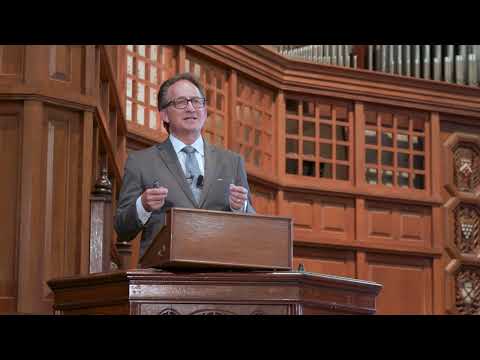
YaleCourses's The Founding of Yale College - Purposes of College Education, Lecture 5: skim's analysis identifies 9 key moments, with 2 potential conflicts of interest flagged. This lecture details the founding of Yale College (Collegiate School) in 1701, exploring its religious and educational purposes, its early struggles, and its eventual establishment in New Haven.
Category: Education. Format: Educational. YouTube video analyzed by skim.
skim AI Analysis
Credibility assessment: Highly Credible. The speaker is a professor at Yale, providing historical context and citing primary sources. The analysis is balanced, acknowledging different perspectives and historical debates. The information is presented in an academic and well-researched manner.
Bias assessment: Slightly Pro-Yale. While the speaker is a Yale professor and expresses a positive view on the importance of institutional independence and academic freedom, the analysis remains largely objective. The bias is subtle, stemming from an insider's perspective on the university's historical development and its comparative strengths.
Originality: 70% — Insightful Analysis. The lecture offers a detailed historical account of Yale's founding, connecting it to broader philosophical and societal contexts. It goes beyond a simple recounting of facts to explore the 'is' and 'ought' of college education and institutional independence, providing a nuanced perspective.
Depth: 85% — Deep Dive. The analysis delves into the historical, religious, and political factors influencing Yale's founding. It examines the strategic naming of the institution, the motivations of its founders, and the evolving role of higher education, demonstrating a thorough understanding of the subject.
Key Points (9)
1. The Collegiate School's Genesis
Timestamp: 00:00:38 to 00:05:26
Yale was established in 1701 as the Collegiate School by ten Congregationalist ministers who sought legislative permission to create an institution for higher learning. Their primary motivation was to ensure the continuation of Protestant religious education and to train ministers and individuals for public service, partly as a response to theological concerns at Harvard.
Significance (High): This foundational act set the stage for a new institution of higher learning, distinct from Harvard, with a specific religious and civic mission.
Sources in support: Professor Paul Freedman (Lecturer, Yale University)
2. Strategic Naming and Governance
Timestamp: 00:07:31 to 00:11:46
The founders deliberately named the institution a 'Collegiate School' and appointed a 'rector' rather than a 'college' or 'president' to avoid attracting undue attention and potential interference from royal authorities. This strategy aimed to secure the colony's autonomy in governing the new educational institution, positioning it as a voluntary association independent of direct government control.
Significance (High): These strategic choices reveal the founders' astute navigation of political sensitivities, prioritizing institutional autonomy and laying groundwork for the model of independent American colleges.
Sources in support: Professor Paul Freedman (Lecturer, Yale University)
3. The Role of Religion and Liberal Arts
Timestamp: 00:11:51 to 00:14:53
From its inception, Yale mandated the study of Protestant religion and chapel attendance, but its curriculum also encompassed the arts and sciences, broadly defined as liberal arts. While science teaching was not cutting-edge in 1701, it was integral to the educational mission, preparing students for both church and civil employment.
Significance (Medium): This dual focus on religious instruction and liberal arts education shaped the intellectual development of early graduates, preparing them for diverse roles in society.
Sources in support: Professor Paul Freedman (Lecturer, Yale University)
4. The Move to New Haven and Elihu Yale's Gift
Timestamp: 00:18:03 to 00:21:05
After early periods in Killingworth and Saybrook, the Collegiate School moved to New Haven in 1716, partly due to local financial support. The institution was renamed Yale College following a significant donation from Elihu Yale, an Anglican merchant, which helped fund the construction of the first college building.
Significance (High): The relocation to New Haven and the renaming after Elihu Yale marked critical milestones in the college's physical and institutional development, solidifying its identity.
Sources in support: Professor Paul Freedman (Lecturer, Yale University)
5. Anglican Influence and Rector Cutler's Dismissal
Timestamp: 00:21:12 to 00:23:15
Tensions arose between the Congregationalist founders and Anglican benefactors like Elihu Yale. This culminated in a crisis in 1722 when Rector Cutler was dismissed for using an Anglican phrase during commencement, highlighting the delicate balance of religious affiliations within the early college.
Significance (Medium): The dismissal of Rector Cutler underscores the deep-seated religious divisions of the era and the potential consequences for those who deviated from the dominant Congregationalist orthodoxy.
Sources in support: Professor Paul Freedman (Lecturer, Yale University)
6. Student Body and Admission Standards
Timestamp: 00:25:09 to 00:27:35
Admission to Yale in the 18th century required passing exams in Latin, some Greek, and arithmetic, though it was considered less demanding than Harvard's entrance requirements. Students typically prepared through grammar schools or private tutoring, and parental financial support was essential for study.
Significance (Medium): These admission standards reveal the academic rigor expected of students and the socio-economic prerequisites for attending college in the colonial era.
Sources in support: Professor Paul Freedman (Lecturer, Yale University)
7. The Founding Vision: God, Clergy, and Colonial Society
Timestamp: 00:37:44 to 00:42:57
Yale College was established with a primary purpose of educating ministers and leaders for a society deeply rooted in Calvinist principles, emphasizing piety and service to God and community. The early curriculum and student life were structured to instill these values, reflecting the socio-religious landscape of colonial Connecticut.
Significance (High): This foundational purpose shaped Yale's early identity and curriculum, prioritizing theological education and moral development over broader liberal arts, setting a precedent for higher education in America.
Sources in support: Professor Paul Freedman (Lecturer, Yale University)
8. The Great Awakening's Schism and Educational Divergence
Timestamp: 00:43:59 to 00:47:12
The Great Awakening, an evangelical movement emphasizing personal conversion and a direct relationship with God, created a significant schism within American religious and educational institutions. This movement led to the 'New Lights' founding Princeton, a rival institution to Yale, highlighting a divergence in educational philosophy and religious practice.
Significance (High): The Great Awakening's influence demonstrates how religious fervor could directly shape the development of higher education, leading to institutional diversification and ideological competition that continues to resonate.
Sources in support: Professor Paul Freedman (Lecturer, Yale University)
9. The Enduring American Tradition of Rebellion and Authority
Timestamp: 00:47:51 to 00:49:16
The lecture posits that recurring waves of rebellion and questioning of authority, from the Great Awakening to modern movements like Occupy Wall Street and 'woke' protests, are deeply rooted in American society's historical emphasis on individual spiritual significance and challenging established rules.
Significance (High): This perspective frames contemporary social movements not as isolated incidents but as part of a long-standing American tradition of challenging norms and seeking utopian ideals, connecting historical religious dissent to modern activism.
Sources in support: Professor Paul Freedman (Lecturer, Yale University)
Potential Conflicts of Interest (2)
Speaker's Affiliation with Yale (Low severity)
Type: Professional
The speaker is a professor at Yale University, the institution whose founding is being discussed.
Significance: This professional affiliation could subtly influence the narrative, potentially leading to a more favorable portrayal of Yale's historical decisions and its institutional values. While the analysis is largely objective, an insider's perspective might inherently frame certain events or decisions in a particular light.
Benefactor's Religious Affiliation (Low severity)
Type: Editorial
Elihu Yale and Jeremiah Dummer, key benefactors, were Anglicans, a minority religious group in Puritan Connecticut. Their donations, including books, sometimes reflected Anglican leanings, causing tension with the Congregationalist founders.
Significance: The religious differences between benefactors and founders highlight the complex denominational politics of the era. This tension raises questions about whose theological and cultural values were prioritized in the early curriculum and whether the college was truly independent or influenced by specific religious factions.
This analysis was generated by skim (skim.plus), an AI-powered content analysis platform by Credible AI. Scores and classifications represent the platform's AI-generated assessment and should be considered alongside other sources.