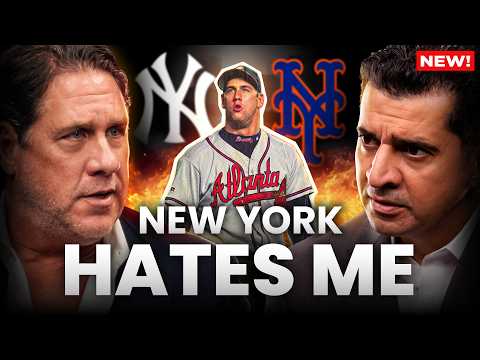
The Mets Used to Set John Rocker Off. Now It’s Zohran Mamdani | PBD Podcast #895
PBD Podcast
Summary
Former Atlanta Braves closer John Rocker sits down with Patrick Bet-David to reflect on his 0.00 career postseason ERA, his mental breakthrough in Double-A baseball, and eccentric clubhouse stories about Hall of Famer Greg Maddux. Rocker candidly admits he began taking Sustanon at age 23 to recover from throwing 260 innings in a single year and estimates 60% of MLB players used steroids during that era. He also alleges that after his 1999 Sports Illustrated interview, Commissioner Bud Selig's office forced him to take a steroid test that he failed miserably, only for MLB to bury the result to protect the league's image.
Looking back at the 1999 controversy, Rocker accuses writer Jeff Pearlman of cherry-picking quotes from a 10-hour conversation while omitting his point about immigrant assimilation, and recalls returning to Shea Stadium in a bulletproof SUV with 700 police officers. Connecting his past remarks to current politics, Rocker and Bet-David criticize New York voters for electing Zohran Mamdani and debate whether U.S. conflict with Iran could help an anti-war Democrat like Alexandria Ocasio-Cortez win the presidency.
How time-sensitive the topic is: Retrospective
By the numbers
20.2 innings pitched: John Rocker's career MLB postseason innings pitched with 26 strikeouts, 10 hits, and zero earned runs. (Mentioned at 1:41)
26 million dollars: Size of the second real estate development deal Rocker entered in 2006 right before the 2007 crash. (Mentioned at 7:21)
180 million dollars: The highest team payroll in Major League Baseball in 2003, compared to roughly $600 million today. (Mentioned at 39:49)
260 innings: Approximate innings Rocker says he pitched across a 12-month span at age 22 before starting Sustanon in spring training. (Mentioned at 59:16)
60%: Rocker's estimate of the percentage of Major League Baseball players using steroids during his era. (Mentioned at 1:00:13)
500 molecular combinations: Number of steroid molecular combinations Rocker says Charles Poliquin told him standard doping tests screened for out of roughly 10,000. (Mentioned at 1:13:16)
700 NYPD officers: Approximate number of New York police officers assigned when Rocker returned to pitch at Shea Stadium in June 2000. (Mentioned at 1:35:31)
30%: Share of the Jewish voting population in New York that Bet-David and Rocker state voted for Zohran Mamdani. (Mentioned at 1:56:36)
27%: Percentage of Democrats saying they are proud to be American in a displayed Gallup poll, down from 87% in 2001. (Mentioned at 2:02:58)
Questions this video answers
Why did John Rocker start taking anabolic steroids in Major League Baseball?
John Rocker says he started taking Sustanon at age 23 during spring training after pitching roughly 260 innings in 12 months across Double-A, the Arizona Fall League, and Puerto Rico left his arm exhausted and his fastball down to 89 mph. He explains that 60-day steroid cycles restored his velocity to 95-98 mph and allowed him to compete in a league where he estimates 60% of players were using performance enhancers.
John Rocker, 56:07 to 1:01:44
From this keypoint: Rocker Explains Starting Steroids at Age 23
Did John Rocker ever fail an MLB steroid test?
Rocker claims that after his 1999 Sports Illustrated interview, Commissioner Bud Selig's office pressured him into taking a steroid test because they suspected roid rage. Rocker states he failed the test miserably, but Selig and MLB never released or punished the result because they wanted to hide the sport's widespread steroid problem.
John Rocker, 1:02:25 to 1:07:25
From this keypoint: Alleging Bud Selig Hid His Failed Steroid Test
What does John Rocker say today about his 1999 Sports Illustrated interview?
Rocker contends that Sports Illustrated writer Jeff Pearlman cherry-picked his most inflammatory quotes from a 10-hour conversation and omitted his core argument about the lack of immigrant assimilation. He argues that Pearlman had a pattern of writing hit pieces on athletes and that his frustration with New York stemmed from abusive fans at Shea and Yankee Stadiums.
John Rocker, 1:22:08 to 1:30:27
From this keypoint: Rocker Says Jeff Pearlman Cherry-Picked 1999 Quotes
What was John Rocker's career postseason ERA in Major League Baseball?
Across 20.2 career playoff innings, Rocker recorded 26 strikeouts, allowed 10 hits, and maintained a 0.00 earned run average. He notes that television broadcasts routinely left his name off graphics showing the lowest postseason ERAs with a 15-inning minimum because of his controversial reputation.
John Rocker, 1:32 to 5:59
From this keypoint: Rocker Claims Media Omitted His 0.00 Playoff ERA
What was Greg Maddux like inside the Atlanta Braves clubhouse?
While the Atlanta Braves maintained a strict, corporate-like clubhouse under Bobby Cox, Rocker calls Hall of Famer Greg Maddux the most vulgar and eccentric teammate he ever played with. Rocker recounts that Maddux never lifted weights or ran cardio and routinely wiped himself with clean sanitary socks from the communal laundry basket before throwing them back in for teammates to find.
John Rocker, 17:07 to 23:52
From this keypoint: Greg Maddux's Vulgar Pranks in the Braves Clubhouse
How did John Rocker overcome his fear of failure in the minor leagues?
For four years in the minors, Rocker pitched with severe anxiety about failing in front of his hometown fans in Macon, Georgia. Before pitching an inconsequential Double-A season finale in Jacksonville, he reframed the meaningless game as a chance to finally play for fun without fear, throwing seven dominant innings with 12 strikeouts and permanently adopting his aggressive bullpen mentality.
John Rocker, 45:38 to 56:07
From this keypoint: Reframing Fear of Failure in Double-A Baseball
How did John Rocker come up with his famous sprint from the bullpen?
Rocker's full-speed sprint to the mound began instinctively during winter ball in Puerto Rico when manager Tom Gamboa called on him to face All-Star catcher Ivan Rodriguez. After sprinting out and striking Rodriguez out on four pitches, Rocker decided to keep the routine to lock himself into an aggressive mental state.
John Rocker, 12:21 to 17:07
From this keypoint: Striking Out Ivan Rodriguez in Puerto Rico
What does John Rocker claim happened with Rafael Palmeiro's positive steroid test?
Rocker insists his former Texas Rangers teammate Rafael Palmeiro never knowingly took steroids and did not have a steroid physique. According to Rocker, another teammate was angry at Palmeiro over a personal dispute involving a woman and secretly spiked him to trigger a positive test.
John Rocker, 1:07:25 to 1:15:07
From this keypoint: Defending Palmeiro and Explaining Designer PEDs
Why did John Rocker demand a trade from the Atlanta Braves in 2001?
Rocker says his relationship with the Braves soured during a 2001 salary arbitration hearing over the difference between $2 million and $3 million. After sitting through more than two hours of Atlanta executives criticizing his performance, he angrily asked his agent to get him traded, though he later regretted leaving his childhood team.
John Rocker, 1:40:10 to 1:48:32
From this keypoint: Arbitration Bitterness With Atlanta and Career End
Who are John Rocker's top five greatest MLB pitchers of all time?
Rocker ranks his former Braves teammate Greg Maddux number one, followed by Roger Clemens, Bob Gibson, Nolan Ryan, and a tie between Randy Johnson, Pedro Martinez, and Steve Carlton. He excludes pre-integration legends like Cy Young because they never had to pitch against Black or Latin players.
John Rocker, 1:15:07 to 1:22:08
From this keypoint: Questioning Pre-Integration Records and Top Pitchers
Why did John Rocker never get married during his baseball career?
During his second season with the Braves, Rocker watched veteran teammates Tom Glavine, Chipper Jones, and Mark Wohlers go through painful divorces in the same year. Seeing them reduced to shells of men fighting over pensions and custody convinced him not to marry while living the fast lifestyle of an active MLB player.
John Rocker, 23:52 to 30:29
From this keypoint: Teammates' Divorces Kept Rocker Single
Why did John Rocker decide not to run for Congress in Georgia?
In 2017, Rocker met with a top Republican campaign manager in Atlanta to explore running for Georgia's 6th Congressional District. When the consultant asked if he could keep his composure in a committee hearing across from Alexandria Ocasio-Cortez and Nancy Pelosi, Rocker immediately shook his hand and walked out, knowing his temper would get the best of him.
John Rocker, 2:06:42 to 2:12:12
From this keypoint: Why Rocker Rejected a Congressional Run and Iran Risks
Credible AI™ signals
Confidence: Candid Personal Recollections. John Rocker offers direct, first-person accounts of his baseball career, clubhouse dynamics, and steroid use. However, major allegations—such as MLB concealing his failed 2000 steroid test and a teammate sabotaging Rafael Palmeiro—rely entirely on his uncorroborated memory alongside subjective political commentary.
Bias: Unapologetic Right-Wing Edge. Both speakers share an explicitly conservative, anti-establishment perspective. Rocker defends his 1999 remarks about New York, criticizes immigrant assimilation, and attacks progressive politicians like Zohran Mamdani and Alexandria Ocasio-Cortez without counterarguments from the host.
Originality (82%): Unfiltered Clubhouse Stories. The interview uncovers rarely heard insider anecdotes from late-1990s Major League Baseball, including candid admissions about Rocker's steroid cycles, his alleged failed MLB drug test, and eccentric behind-the-scenes stories about Hall of Famer Greg Maddux.
Depth (58%): Conversational Storytelling. The episode excels as a wide-ranging biographical conversation exploring sports psychology and MLB history, though its late-stage political analysis relies primarily on broad generalizations and gut reactions rather than structured policy examination.
Key points (18)
Short (25 min): key points 1, 9, 10 and 14
Medium (54 min): key points 1, 8, 9, 10, 13, 14 and 17
Relaxed (2h 10min): all 18 key points
1. Rocker Claims Media Omitted His 0.00 Playoff ERA
Timestamp: 00:01:32 to 00:05:59 (4 min)
Speaker: John Rocker
John Rocker confirms he threw 20.2 scoreless postseason innings with 26 strikeouts and a 0.00 ERA, a record he took immense pride in until Jonathan Papelbon opened his career with 26 scoreless frames. He claims major networks intentionally omitted his name from all-time postseason ERA graphics for years due to liberal media bias over his 1999 remarks. Despite the lack of broadcast recognition, his postseason dominance remains a point of personal pride.
Impact: Medium. Why it matters: Highlights how off-field controversy can overshadow statistical dominance in sports broadcasting history.
“I saw that stat I don't know, seven, eight straight years. Minimum 15 innings pitched, low never on there. Rivera would always be number one.”
In the video: John Rocker, at 5:34
For: Patrick Bet-David
2. Surviving the 2007 Crash and a Strict Upbringing
Timestamp: 00:05:59 to 00:12:21 (6 min)
Speaker: John Rocker
After retiring from baseball in 2005, Rocker transitioned into real estate development, jumping from a $1.9 million project to a $26 million deal in 2006 right before the market crash cost him two to three million dollars. He explains that his fiery public persona is half performance, contrasting it with his upbringing as a shy only child in rural Georgia raised by a strict, religious mother and a respected father who served as CEO of Georgia Farm Bureau. That disciplined small-town foundation kept him grounded even as he navigated financial setbacks after baseball.
Impact: Low. Why it matters: Deconstructs the wild-man relief pitcher archetype by tracing his private discipline and financial survival after retirement.
“I really like to ease into things. You know, I'm very cautious. And the second deal I did was a $26 million deal. And I did that deal in 2006. And then 2007 happened.”
In the video: John Rocker, at 7:16
Neutral: Patrick Bet-David
3. Striking Out Ivan Rodriguez in Puerto Rico
Timestamp: 00:12:21 to 00:17:07 (5 min)
Speaker: John Rocker
Rocker recalls throwing so hard at age eight or nine that only Little League coaches would play catch with him, leading to a Pittsburgh Pirates workout at age 14 or 15. He says he truly knew he belonged in the major leagues during winter ball in Puerto Rico when manager Tom Gamboa brought him in to face All-Star catcher Ivan Rodriguez with a runner on second. Sprinting out of the bullpen on instinct, he struck Rodriguez out on four pitches with a back-foot slider, cementing his signature entrance and his big-league confidence.
Impact: Medium. Why it matters: Pinpoints the exact winter-ball at-bat that birthed Rocker's famous sprint from the bullpen and validated his major league readiness.
“without even thinking just like a like a bolt to the mound and punch pudge out on four pitches back back foot slider swinging”
In the video: John Rocker, at 16:28
Neutral: Patrick Bet-David
4. Greg Maddux's Vulgar Pranks in the Braves Clubhouse
Timestamp: 00:17:07 to 00:23:52 (7 min)
Speaker: John Rocker
Joining an Atlanta Braves rotation filled with legends, Rocker found a strict, business-like clubhouse shaped by manager Bobby Cox and serious veterans like Tom Glavine and Chipper Jones. In sharp contrast, Hall of Famer Greg Maddux never lifted weights or ran cardio and routinely pulled vulgar pranks, such as wiping himself with clean sanitary socks from the communal laundry cart and tossing them back in. Rocker concludes that anyone freakishly talented at their craft carries an eccentric streak that normal society would never understand.
Impact: Medium. Why it matters: Offers an unfiltered look at the contrast between the Atlanta Braves' corporate public image and Greg Maddux's crude locker room humor.
“Greg's post post start day was him laying on the train table with electronic stem on his shoulder doing a cross word puzzle.”
In the video: John Rocker, at 20:16
Neutral: Patrick Bet-David
5. Teammates' Divorces Kept Rocker Single
Timestamp: 00:23:52 to 00:30:29 (7 min)
Speaker: John Rocker
Newly engaged at the time of the interview, Rocker explains that he avoided marriage throughout his playing career by using neuro-linguistic programming to future-pace his life. During his second big-league season, he watched veteran stars Tom Glavine, Chipper Jones, and Mark Wohlers go through devastating divorces in the same year, turning from world-on-a-string athletes into shells of men fighting over pensions and custody. Knowing he enjoyed the fast nightlife in cities like Miami alongside Orlando spring training fight nights, he refused to marry while active.
Impact: Medium. Why it matters: Illustrates how witnessing high-net-worth divorces inside an MLB clubhouse shaped a young athlete's long-term personal decisions.
“The next year I saw all four of those guys get divorced in one year and they went from being time their life etc to just being shells of men”
In the video: John Rocker, at 26:03
Neutral: Patrick Bet-David
6. Tiger Woods Breaking Bats and Jim Thome's Naivety
Timestamp: 00:30:29 to 00:37:37 (7 min)
Speaker: John Rocker
Reflecting on memorable clubhouse personalities, Rocker recounts Tiger Woods taking batting practice with the Braves via his friendship with John Smoltz and breaking multiple bats without ever lifting a 60-mph pitch out of the infield. Moving to his time with the Cleveland Indians, he praises Hall of Famer Jim Thome as a genuinely kind, country-strong hitter who never took steroids. When teammate Travis Fryman spent ten minutes explaining creatine to an exhausted Thome and warned him to hydrate, Thome innocently asked where he could buy hydrate.
Impact: Low. Why it matters: Humanizes elite athletes across sports by contrasting Tiger Woods's batting struggles with Jim Thome's wholesome naivety during the steroid era.
“Travis finishes off the conversation with Jim. But if you take creatine, make sure you hydrate. You know what Jim's question was?”
In the video: John Rocker, at 37:11
Neutral: Patrick Bet-David
7. Rocker Contrasts Bobby Cox With Rangers Management
Timestamp: 00:37:37 to 00:45:38 (8 min)
Speaker: John Rocker
While fights were never tolerated inside the professional Atlanta Braves locker room, Rocker says Texas Rangers pitching coach Oscar Acosta tried to fight him after a bullpen miscommunication in Toronto left Rocker running late to the mound. He criticizes Rangers manager Jerry Narron for mismanaging a $180 million payroll—the highest in baseball in 2003—comparing him to a teenager given a Ferrari. By contrast, he credits Bobby Cox's eye for talent in the late 1980s and 1990s for building Atlanta's dynasty, even if the New York Yankees had more clutch October hitters.
Impact: Medium. Why it matters: Demonstrates how front-office competence and bullpen communication separate perennial contenders from high-payroll underachievers.
“Well, same thing in the big leagues. You know, there's a reason some teams just keep winning and winning and winning. The folks are running the show know what the hell they're doing.”
In the video: John Rocker, at 41:37
Neutral: Patrick Bet-David
8. Reframing Fear of Failure in Double-A Baseball
Timestamp: 00:45:38 to 00:56:07 (10 min)
Speaker: John Rocker
For his first four minor-league seasons, Rocker admits he pitched like a scared prospect terrified of failing in front of his hometown fans in Macon, Georgia, even secretly hoping the 1994 MLB strike would permanently cancel baseball so he had an excuse. After working with hitting coordinator Leon Roberts on mental toughness, a breakthrough occurred on the final night of the Double-A season in Jacksonville when he realized the next day's game was completely meaningless to the standings. Reframing the start as a chance to finally have fun, he threw seven dominant innings with 12 strikeouts and carried that aggressive mentality into the playoffs.
Impact: High. Why it matters: Shows how a single psychological reframe can unlock an athlete's physical potential after years of self-sabotage and performance anxiety.
“For the first time in four years, I can I can I can throw a game where the results don't matter.”
In the video: John Rocker, at 52:57
For: Patrick Bet-David
9. Rocker Explains Starting Steroids at Age 23
Timestamp: 00:56:07 to 01:01:44 (6 min)
Speaker: John Rocker
Rocker reveals that alongside his new aggressive mindset, anabolic steroids made him feel ten feet tall and bulletproof on the mound. After throwing roughly 260 innings across Double-A, the Arizona Fall League, and Puerto Rico within 12 months, he arrived at big-league spring training at age 23 completely exhausted, his fastball dropping from 98 mph to 89 mph. A teammate gave him Sustanon, which restored his velocity and recovery across 60-day cycles in a league where he estimates 60% of players were using performance enhancers.
Impact: High. Why it matters: Provides a candid explanation of how year-round minor-league workloads pushed young pitchers toward anabolic steroids for recovery rather than bulk.
“left Puerto Rico all natural 95 98. It got me back to 95 98 where I could comb my hair without my arm being on fire.”
In the video: John Rocker, at 59:45
Neutral: Patrick Bet-David
10. Alleging Bud Selig Hid His Failed Steroid Test
Timestamp: 01:02:25 to 01:07:25 (5 min)
Speaker: John Rocker
Following the 1999 Sports Illustrated uproar, Rocker claims Commissioner Bud Selig's office pressured him for weeks to take a steroid test under the suspicion that he was suffering from roid rage. Rocker says he eventually took the test, failed miserably, and continued taking steroids afterward because Selig and MLB buried the positive result to protect the league's image prior to Jose Canseco's 2004 book. Reflecting on the steroid era, he describes Mark McGwire's freakish 280-pound physique and names Barry Bonds as the toughest, greatest hitter he ever faced.
Impact: High. Why it matters: Directly accuses former MLB Commissioner Bud Selig of possessing and suppressing a failed steroid test result in 2000 to shield the sport from scandal.
Neutral: Patrick Bet-David
11. Defending Palmeiro and Explaining Designer PEDs
Timestamp: 01:07:25 to 01:15:07 (8 min)
Speaker: John Rocker
Discussing how Rod Carew and other Hall of Famers vow to keep steroid users out of Cooperstown, Rocker insists his former Rangers teammate Rafael Palmeiro never used steroids and only tested positive because an angry teammate spiked him over a personal dispute involving a woman. Looking at modern testing, Rocker recalls strength coach Charles Poliquin explaining in 2004 that labs can alter a single molecule in testosterone or Winstrol for $6,000 to $8,000 a cycle to bypass tests that only screen for 500 out of 10,000 combinations. Even so, Rocker believes steep 80- to 162-game suspensions and reputational damage have largely eliminated the freakish steroid bodies of the 1990s.
Impact: Medium. Why it matters: Reveals both the alleged clubhouse sabotage behind Rafael Palmeiro's positive test and the chemical mechanics of designer doping.
“That that was a a a teammate who was pissed off at Rafie and and and and got him.”
In the video: John Rocker, at 1:08:30
Neutral: Patrick Bet-David
12. Questioning Pre-Integration Records and Top Pitchers
Timestamp: 01:15:07 to 01:22:08 (7 min)
Speaker: John Rocker
Asked to rank his top five pitchers of all time, Rocker questions the records of pre-integration legends like Cy Young and Babe Ruth, arguing their numbers deserve as much scrutiny as steroid-era stats because they never faced Black or Latin stars like Bob Gibson, Hank Aaron, or Alex Rodriguez. For his all-time top five, he selects Greg Maddux first, followed by Roger Clemens, Bob Gibson, Nolan Ryan, and a tie between Randy Johnson, Pedro Martinez, and Steve Carlton. Both men note that modern pitch usage makes another 300-game winner or Nolan Ryan's 19 one-or-no-hitters nearly impossible to repeat.
Impact: Medium. Why it matters: Challenges baseball orthodoxy by equating the competitive distortion of segregated rosters with the steroid era.
“How would how would Sai Young do? How would Babe Ruth do if they had to face black players and Latin players? I'm talking about put an aster by somebody's name”
In the video: John Rocker, at 1:15:24
For: Patrick Bet-David
13. Rocker Says Jeff Pearlman Cherry-Picked 1999 Quotes
Timestamp: 01:22:08 to 01:30:27 (8 min)
Speaker: John Rocker
Revisiting the 1999 Sports Illustrated article that triggered a national outcry, Rocker argues his career still would have ended early around 2004 from playing through a pinched neck nerve that destroyed his shoulder. After watching a news clip of his infamous quotes about the number 7 train and foreigners in New York, he contends that writer Jeff Pearlman cherry-picked inflammatory lines from a 10-hour conversation while cutting out his core point about the lack of immigrant assimilation. He adds that the whole interview stemmed from an on-field rivalry with hostile New York fans who spat on Braves players and threw darts at Andruw Jones.
Impact: High. Why it matters: Provides Rocker's full defense of the 1999 Sports Illustrated scandal, framing it as hostile journalism colliding with an intense New York baseball rivalry.
“that interview was 10 hours long and and and th those comments were cherrypicked out of a a much broader uh conversation”
In the video: John Rocker, at 1:24:42
Neutral: Patrick Bet-David
14. Bulletproof SUV at Shea Stadium and Fickle Fans
Timestamp: 01:30:27 to 01:40:10 (10 min)
Speaker: John Rocker
Rocker claims Commissioner Bud Selig handed down an unprecedented suspension—reduced in arbitration to roughly 15 games—to appease the media while hiding behind the players' union. He maintains his teammates supported him and reiterates his frustration with immigrants who refuse to learn English, noting he still sells 'Speak English' shirts. When he returned to Shea Stadium in June 2000 accompanied by 700 NYPD officers and a bulletproof SUV, he pitched a 1-2-3 inning, though the later contrast between being worshipped in Cleveland and booed there months later with Texas left him cynical that fans only cheer for laundry.
Impact: High. Why it matters: Captures the surreal security spectacle of Rocker's return to New York and how tribal sports fandom hardened his cynicism.
“I had to like like ride separately to the game and like a blacked out SUV with bulletproof glass like something that that the the the president would ride in”
In the video: John Rocker, at 1:35:41
Neutral: Patrick Bet-David
15. Arbitration Bitterness With Atlanta and Career End
Timestamp: 01:40:10 to 01:48:32 (8 min)
Speaker: John Rocker
Asked why he left Atlanta, Rocker points to a bitter 2001 salary arbitration hearing over the gap between $2 million and $3 million, where listening to Braves executives trash his performance for over two hours made him demand a trade. Once traded to Cleveland in June, however, he admits he lay on the clubhouse couch watching Braves broadcasts during Indians games and never cared as passionately about playing for other franchises. After shoulder surgery, Yankees GM Brian Cashman secretly scouted him during a 2006 Pros vs. Joes stunt in Bryant Park, and Rocker reflects on how media fallout similarly keeps Trevor Bauer out of MLB today.
Impact: Medium. Why it matters: Reveals how the adversarial nature of MLB salary arbitration alienated a lifelong Braves fan from his hometown franchise.
“I can remember most games sitting on on laying on the couch in the food room watching the Braves game while my Indians team is outside playing”
In the video: John Rocker, at 1:42:15
Neutral: Patrick Bet-David
16. Living in Chelsea and Deadpan Baseball Humor
Timestamp: 01:48:32 to 01:55:54 (7 min)
Speaker: John Rocker
Recalling his later visits to New York, Rocker discusses his friendly 2014 HBO Vice appearance and reveals he spent over three years dating Black fitness model Alicia Marie, living with her in Manhattan's Chelsea neighborhood and working out at a predominantly gay gym while media critics dismissed the relationship as a PR stunt. He also defends former teammate Ozzie Guillen, explaining that baseball players constantly make outrageous, deadpan remarks purely for shock value. As an example, he recounts telling 20-year-old players in a summer wood-bat league with a completely straight face to go catch herpes so they have one less thing to worry about.
Impact: Low. Why it matters: Contrasts Rocker's public caricature with his personal life in New York and illustrates the deadpan shock humor common in baseball clubhouses.
“That's one thing about that most people don't understand about baseball players. We're rarely serious about anything and most of us are just constantly just playing grab ass”
In the video: John Rocker, at 1:52:42
Neutral: Patrick Bet-David
17. Attacking Zohran Mamdani and Debating Trump on Iran
Timestamp: 01:55:54 to 02:06:42 (11 min)
Speaker: John Rocker
Turning to current New York politics, Rocker calls himself a 'bigoted Nostradamus' and expresses disbelief that New York elected a Muslim mayor in Zohran Mamdani with 30% of the Jewish vote, while criticizing Mamdani for handing a 9/11 executive order pen to chief counsel Ramzi Kassem. When the conversation shifts to U.S. conflict with Iran, Bet-David warns that even if Donald Trump achieves regime change, the war could allow an anti-war Democrat like Alexandria Ocasio-Cortez to win the presidency. After watching a clip from Columbus, Ohio, Rocker reveals he walked out of a 2017 congressional Exploratory meeting because he knew he could never keep his composure sitting across from Ocasio-Cortez or Nancy Pelosi, and warns that Trump's public trash-talking only stiffens Iranian resistance.
Impact: Medium. Why it matters: Connects Rocker's 1999 New York grievances to contemporary right-wing critiques of municipal politics, immigration, and U.S. military intervention in Iran.
“That that is the most insane thing I I've ever ever heard of. 30% of of Jewish people in New York voted for a Muslim after October 7th.”
In the video: John Rocker, at 1:56:54
For: Patrick Bet-David
18. Why Rocker Rejected a Congressional Run and Iran Risks
Timestamp: 02:06:42 to 02:12:12 (6 min)
Speaker: John Rocker
Rocker recounts meeting with a top Atlanta Republican campaign manager in 2017 about running for Georgia's 6th Congressional District, only to get up and leave immediately when asked if he could keep his composure in a committee hearing with Alexandria Ocasio-Cortez and Nancy Pelosi. Moving back to foreign policy, he argues that while he supports Donald Trump, the president's weekly televised trash-talking about decimating Iran only provokes a proud regime to keep fighting out of spite, drawing a comparison to Vladimir Putin's miscalculation in Ukraine. Both men agree Iran cannot be allowed a nuclear weapon, warning that if the IRGC survives, it will patiently play the long game to retaliate over the next five to 20 years.
Impact: Medium. Why it matters: Shows Rocker's self-awareness regarding his temper in politics while offering a conservative critique of Trump's rhetorical strategy toward Iran.
“I certainly don't think his cause is being helped by again rubbing their nose in it uh in international media on a weekly basis.”
In the video: John Rocker, at 2:09:37
For: Patrick Bet-David
Conflicts of interest (2)
Rocker's Self-Interest in the 1999 SI Fallout
Reputational conflict, Medium severity
John Rocker is directly recounting the 1999 Sports Illustrated controversy and his MLB disciplinary history that defined his public reputation.
Sources: John Rocker
Significance: Rocker has a personal incentive to shift blame onto writer Jeff Pearlman and former Commissioner Bud Selig to rehabilitate his legacy.
Valuetainment Commercial Footwear Promotions
Commercial conflict, Low severity
Patrick Bet-David embeds commercial advertisements for his own Valuetainment-affiliated FLB footwear line during and after the interview.
Sources: Patrick Bet-David
Significance: The commercial breaks promote host-owned merchandise directly to the audience, though they do not alter the baseball or political discussion.
Key sources
Patrick Bet-David: Host, PBD Podcast and CEO of Valuetainment Media
John Rocker: Former MLB Closer and Co-Host of The John Rocker & Southside Steve Show
Who's in this
Jeff Pearlman
Greg Maddux
Bud Selig
Bobby Cox
Barry Bonds
Jim Thome
Rafael Palmeiro
Zohran Mamdani
Alexandria Ocasio-Cortez
Donald Trump
Atlanta Braves
New York Mets
Sports Illustrated
Also mentioned
New York (First mentioned at 0:00)
New York Yankees (First mentioned at 4:56)
Ivan Rodriguez (First mentioned at 15:54)
Tom Glavine (First mentioned at 17:16)
John Smoltz (First mentioned at 17:16)
Cleveland Indians (First mentioned at 17:51)
Texas Rangers (First mentioned at 17:51)
Chipper Jones (First mentioned at 18:21)
Mark McGwire (First mentioned at 1:04:27)
Roger Clemens (First mentioned at 1:08:03)
Bob Gibson (First mentioned at 1:15:37)
Nolan Ryan (First mentioned at 1:17:18)
Trevor Bauer (First mentioned at 1:45:58)
Iran (First mentioned at 1:59:07)
Cy Young (First mentioned at 0:34)
Babe Ruth (First mentioned at 0:35)
Jonathan Papelbon (First mentioned at 2:25)
Mariano Rivera (First mentioned at 5:02)
Andruw Jones (First mentioned at 14:21)
Juan Gonzalez (First mentioned at 15:27)
Kevin Millwood (First mentioned at 17:16)
Tiger Woods (First mentioned at 31:00)
Albert Belle (First mentioned at 33:10)
Jason Grimsley (First mentioned at 33:39)
John Schuerholz (First mentioned at 41:56)
Leon Roberts (First mentioned at 49:23)
Jose Canseco (First mentioned at 1:00:16)
Sammy Sosa (First mentioned at 1:09:20)
Charles Poliquin (First mentioned at 1:12:36)
Herschel Walker (First mentioned at 1:39:07)
Bo Jackson (First mentioned at 1:39:19)
Rob Manfred (First mentioned at 1:43:35)
Brian Cashman (First mentioned at 1:45:00)
Alicia Marie (First mentioned at 1:50:42)
Ozzie Guillen (First mentioned at 1:52:08)
This analysis was generated by skim (skim.plus), an AI-powered content analysis platform by Credible AI. Scores and classifications represent the platform's AI-generated assessment and should be considered alongside other sources.