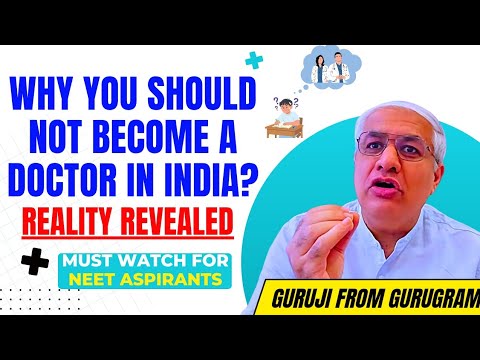
Guruji From Gurugram's The Pain Of Being A Doctor In India | Must Watch For All: skim's analysis identifies 12 key moments, with 1 potential conflict of interest flagged. An Indian commentator argues that middle-class students should avoid becoming doctors in India due to grueling entrance exams, toxic working conditions, physical violence, and stagnating pay in corporate hospitals.
Category: Opinion. Format: Monologue. YouTube video analyzed by skim.
skim AI Analysis
Credibility assessment: Opinion-Driven Commentary. The monologue combines broad medical seat and WHO doctor-patient ratio figures with unverified personal opinions on doctor divorce rates, substance use, and hospital financials. While the financial metrics like ARPOB are real industry terms, most claims about working conditions and personal lives rely on anecdotal observation.
Bias assessment: Market-Pragmatic Pro-Doctor. Strongly sympathetic to the working conditions and low pay of Indian doctors, while simultaneously advocating for deregulated, high-fee private medical colleges for the wealthy and viewing healthcare through an investor's lens.
Originality: 76% — Unconventional Career Critique. Challenges the deeply ingrained Indian middle-class obsession with becoming a doctor by comparing medical education to buying hospital stocks or training as a commercial pilot, and proposing luxury medical colleges to curb exam paper leaks.
Depth: 64% — Broad Socio-Economic Take. Connects medical entrance competition, postgraduate seat bottlenecks, corporate hospital financials (ARPOB, employee cost ratios), and social pressures into a cohesive argument, though it relies on conversational generalizations rather than rigorous data.
Key Points (12)
1. High-Fee Medical Colleges to Curb Paper Leaks
Timestamp: 00:00:00 to 00:02:55
Addressing Pralhad Joshi, the speaker proposes launching luxury, deregulated medical colleges for wealthy students who currently pay for exam paper leaks or study abroad. He notes that 25,000 to 30,000 Indian students go overseas and argues that expanding domestic seats to 200,000 would keep that capital in India.
Significance (High): Creating a legal, high-fee tier for medical education could absorb wealthy demand and reduce black-market exam fraud, though critics worry it may inflate overall healthcare costs.
Sources in support: YouTube: Guruji From Gurugram (Host and Commentator (also mentions running another channel named Clarity For You))
2. Qualifying Exams and Service Ethos Over Rank
Timestamp: 00:02:55 to 00:05:19
High scores in Physics, Chemistry, and Biology do not guarantee a good doctor; common sense and a spirit of service matter more. The speaker suggests replacing cutthroat ranking for expensive colleges with a minimum qualifying threshold, similar to how DGCA licenses commercial pilots.
Significance (Medium): Shifting from hyper-competitive ranking to a competency threshold could allow empathetic students into medicine while letting hospital hiring markets sort out employment.
Sources in support: YouTube: Guruji From Gurugram (Host and Commentator (also mentions running another channel named Clarity For You))
3. Why Middle-Class Students Should Avoid Medicine
Timestamp: 00:05:19 to 00:07:34
While poor students or children of wealthy doctor families with existing clinics may benefit from medicine, ordinary middle-class children should avoid the profession. Dismissing fears that society will run out of doctors if people opt out, the speaker compares the argument to sanitation or military work.
Significance (Medium): Challenging the default middle-class aspiration toward medicine forces families to evaluate the realistic return on investment before committing to a decade of study.
Sources in support: YouTube: Guruji From Gurugram (Host and Commentator (also mentions running another channel named Clarity For You))
4. Postgraduate Bottlenecks and Violence at Work
Timestamp: 00:07:34 to 00:10:30
Doctors suffer poor marital quality, high stress, and years of struggle through NEET, MBBS, and postgraduate seat bottlenecks where many fail to get their preferred specialty. In government hospitals, overworked doctors handle dying patients dumped by private clinics and face physical assaults from angry relatives.
Significance (High): Highlights the severe personal toll and workplace hazards facing Indian doctors, explaining why junior doctor strikes have become a recurring crisis.
Sources in support: YouTube: Guruji From Gurugram (Host and Commentator (also mentions running another channel named Clarity For You))
5. Corporate Hospital Profits vs Stagnant Doctor Pay
Timestamp: 00:10:30 to 00:13:34
The corporatization of Indian healthcare means listed hospital chains capture rising surgery and room fees while employee costs as a percentage of sales decline. Because the supply of doctors is rising, average doctors earn modest salaries and rarely reach the wealth of elites like Dr. Trehan or Dr. Devi Shetty.
Significance (High): Exposes the structural wage compression in corporate healthcare, warning students that rising medical bills enrich hospital shareholders rather than practicing physicians.
Sources in support: YouTube: Guruji From Gurugram (Host and Commentator (also mentions running another channel named Clarity For You))
6. Testing for Empathy Over Pure Academic Pressure
Timestamp: 00:13:34 to 00:16:04
Only a tiny fraction of aspirants possess genuine passion for healing, yet current entrance exams test only Physics, Chemistry, and Biology rather than ethics or temperament. Recalling his own inability to dissect a rat in 12th grade, the speaker argues parents blindly push unsuited children into medicine.
Significance (Medium): Calls for adding ethics and aptitude assessments to medical admissions so students without the stomach for clinical realities do not waste years under parental pressure.
Sources in support: YouTube: Guruji From Gurugram (Host and Commentator (also mentions running another channel named Clarity For You))
7. Night Shift Exhaustion, Substance Abuse, and NPA
Timestamp: 00:16:04 to 00:18:43
After 9:00 PM in Indian hospitals, senior doctors are rarely present, leaving exhausted interns and postgraduate trainees to handle emergencies. The speaker claims some overworked trainees turn to prescription substance abuse to cope, and argues government doctors deserve a higher Non-Practicing Allowance for enduring daily trauma.
Significance (High): Draws attention to the night-shift care gap for patients and the severe mental health and substance risks among overworked medical trainees.
Sources in support: YouTube: Guruji From Gurugram (Host and Commentator (also mentions running another channel named Clarity For You))
8. Rejecting Outdated Parental Dreams and Cardiac Risk
Timestamp: 00:18:45 to 00:23:04
Middle-class parents impose outdated 30-to-40-year-old dreams of becoming a doctor onto their children without considering the terrible risk-reward ratio. Citing a 45-year-old cardiologist in Rohtak who died of a heart attack, the speaker notes that graveyard shifts destroy doctors' health and recommends practicing abroad instead.
Significance (Medium): Challenges young Indians to push back against toxic parental expectations that ignore modern occupational health hazards in Indian medicine.
Sources in support: YouTube: Guruji From Gurugram (Host and Commentator (also mentions running another channel named Clarity For You))
9. WHO Doctor Ratios and Tiered Medical Education
Timestamp: 00:24:09 to 00:27:56
While WHO recommends 1 doctor per 1,000 people and India reports 1 per 811 (including Ayurveda), flooding the market with more doctors will only depress their pay below schoolteachers' salaries. The speaker defends creating luxury medical colleges by comparing them to First AC train coaches that coexist with sleeper class.
Significance (Medium): Frames the tension between public health doctor-supply targets and physician income, arguing that tiered private education is no different from tiered public transport.
Sources in support: YouTube: Guruji From Gurugram (Host and Commentator (also mentions running another channel named Clarity For You))
10. Buying Hospital Stocks or Becoming a Pilot Instead
Timestamp: 00:27:56 to 00:31:18
Healthcare and education face the steepest inflation in India, and listed hospitals track Average Revenue Per Operating Bed (ARPOB) up to 75,000 rupees just like hotels track room rates. The speaker discloses he invests in hospital stocks and argues spending 1 crore on hospital shares or 65 lakhs on pilot training beats medical school.
Significance (High): Offers a stark financial comparison for families willing to spend 60 lakh to 1 crore rupees on private medical education, contrasting doctor earnings with aviation pay and equity returns.
Sources in support: YouTube: Guruji From Gurugram (Host and Commentator (also mentions running another channel named Clarity For You))
11. Unethical Cheaters and Small-Town Desperation
Timestamp: 00:31:18 to 00:34:50
Because doctors practice until age 75, older physicians outperform 27-year-old graduates while keeping the market crowded, so failing NEET is not the end of the world. The speaker warns that students who buy leaked NEET papers might harvest kidneys to recoup costs, noting small-town unreserved students told him cheating felt like their only chance.
Significance (Medium): Connects the ethics of medical admissions fraud directly to patient safety while illustrating how intense competition and reservation policies fuel desperation in smaller towns.
Sources in support: YouTube: Guruji From Gurugram (Host and Commentator (also mentions running another channel named Clarity For You))
12. Government Hospital Trauma and Digital Branding
Timestamp: 00:34:50 to 00:38:57
Working in an Indian government hospital is the hardest job in the country due to broken equipment, filthy toilets, dying patients, and police batons during protests. In closing, the speaker advises doctors to build digital media brands focused on preventive health rather than relying solely on clinical consultations.
Significance (Medium): Provides practicing doctors with a practical alternative revenue stream through digital preventive-health content to escape miserable hospital working conditions.
Sources in support: YouTube: Guruji From Gurugram (Host and Commentator (also mentions running another channel named Clarity For You))
This analysis was generated by skim (skim.plus), an AI-powered content analysis platform by Credible AI. Scores and classifications represent the platform's AI-generated assessment and should be considered alongside other sources.