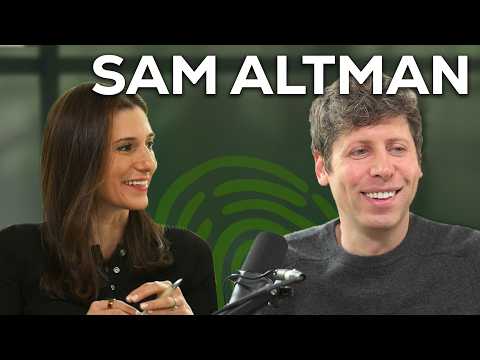
Mostly Human's The Power and Responsibility of Sam Altman: skim's analysis identifies 22 key moments, with 6 potential conflicts of interest flagged. Sam Altman discusses OpenAI's trajectory, the transformative potential of AI, and its societal impacts, including job disruption and new economic models.
Category: Tech. Format: Interview. YouTube video analyzed by skim.
Key Points (22)
1. Sam Altman: From Punk Rock Startups to AI's Apex
Timestamp: 00:01:13 to 00:04:08
Sam Altman reflects on his early days in the startup scene around 2010, describing it as chaotic and 'punk rock' due to the nascent nature of mobile apps and the iPhone. This contrasts sharply with today's more systematized and heavily funded startup ecosystem, highlighting the dramatic evolution of the tech industry and his own career trajectory leading to his current pivotal role at OpenAI.
Significance (Medium): Provides context for Altman's long-term perspective on technological disruption and the evolution of innovation.
Sources in support: Sam Altman (CEO of OpenAI)
Neutral sources: Laurie Segall (Host)
2. AI's Imminent Cognitive Dominance and Societal Disruption
Timestamp: 00:05:06 to 00:09:01
Altman posits that within two years, AI could possess more cognitive capacity than humanity, leading to significant societal disruption, particularly in the job market. While optimistic about long-term adaptation and new roles, he stresses the immediate need to design an economy that benefits everyone amidst this transition, citing the potential for AI to accelerate scientific breakthroughs like curing diseases.
Significance (High): Raises critical questions about economic structures and societal preparedness for a future dominated by AI's intellectual power.
Sources in support: Sam Altman (CEO of OpenAI)
Neutral sources: Laurie Segall (Host)
3. The Dawn of the Solo-Founder AI Revolution
Timestamp: 00:10:04 to 00:14:06
The increasing power of AI agents, exemplified by tools like Codex and platforms like Open Claw, is democratizing entrepreneurship. Altman believes we are entering an era where a single individual, empowered by AI, can build and operate a billion-dollar company, potentially reviving the 'punk rock' spirit of innovation and making entrepreneurship accessible beyond traditional Silicon Valley networks.
Significance (High): Suggests a fundamental shift in how businesses are created and valued, empowering individuals with unprecedented tools for innovation.
Sources in support: Sam Altman (CEO of OpenAI)
Neutral sources: Laurie Segall (Host)
4. Strategic Pivots: Why Sora Took a Backseat
Timestamp: 00:16:00 to 00:19:27
OpenAI's decision to halt development on Sora, despite a major partnership with Disney, stems from a strategic need to concentrate compute resources and research efforts on next-generation models and agent capabilities. This mirrors past decisions, like prioritizing GPT-3 over other projects, indicating a pattern of focusing on the most critical, high-impact technological advancements.
Significance (Medium): Reveals the intense resource constraints and strategic trade-offs inherent in leading AI development, impacting commercial partnerships.
Sources in support: Sam Altman (CEO of OpenAI)
Neutral sources: Laurie Segall (Host)
5. Sam Altman: The Red Line Dilemma
Timestamp: 00:22:41 to 00:25:33
Sam Altman acknowledges the difficulty in defining and enforcing 'red lines' for AI development, especially in a world with increasing government scrutiny and potential for nationalization. He suggests that working with the government is crucial to avoid such a scenario, even though he believes AI development would ideally be a government project like the Manhattan Project, but questions the government's current capacity to effectively lead such initiatives.
Significance (High): This point underscores the precarious balance between AI innovation and control, highlighting Altman's pragmatic approach to navigating potential governmental overreach by fostering collaboration.
Sources in support: Sam Altman (CEO of OpenAI)
Neutral sources: Laurie Segall (Host)
6. Laurie Segall: The Trust Deficit
Timestamp: 00:25:36 to 00:26:30
Laurie Segall expresses concern over the intense mistrust of government evident in public discourse, viewing it as a dangerous sign for democracy. She contrasts this with Altman's belief in the necessity of government involvement in AI development, questioning how red lines can be enforced when historical precedents show government actions can be fluid and later deemed unlawful, as seen with surveillance programs.
Significance (High): Segall's point challenges the optimism surrounding AI governance by highlighting a fundamental societal issue: a deep-seated distrust in the very institutions that might be tasked with regulating powerful technologies.
Sources in support: Laurie Segall (Host)
Sources against: Sam Altman (CEO of OpenAI)
7. Laurie Segall: The Personal Journey and Public Scrutiny
Timestamp: 00:26:54 to 00:27:58
Laurie Segall draws a parallel between Sam Altman's current public scrutiny and his past experience as an openly gay student, where he gave a speech to foster dialogue. She suggests that Altman is again 'under the bright lights' and needs to articulate his values, noting that even after 15 years of knowing him, she wants to understand what he stands for in this new, unprecedented era.
Significance (Medium): This framing attempts to connect Altman's personal history of advocacy with his current role, suggesting that his core values should guide his leadership in the AI revolution.
Sources in support: Laurie Segall (Host)
Neutral sources: Sam Altman (CEO of OpenAI)
8. Sam Altman: Democratization and Empowerment
Timestamp: 00:27:58 to 00:30:41
Sam Altman asserts that AI technology must be democratized and that power should not be concentrated in a few companies. He believes individuals and governments should decide societal evolution, with people empowered by AI to innovate, create startups, and automate tasks. He acknowledges that while society hasn't made the decisions he hoped for regarding AI's use, iterative deployment allows people to understand its potential.
Significance (High): Altman's vision centers on empowering individuals and decentralizing AI's influence, challenging the notion of concentrated corporate control over the future.
Sources in support: Sam Altman (CEO of OpenAI)
9. Balaji: The Evolving Founder's Role
Timestamp: 00:31:41 to 00:33:00
Balaji questions whether the role of a founder has fundamentally changed from product focus to engaging with heads of state, raising political statements, and making decisions that reshape labor markets. He asks Sam Altman if this is the new reality for founders and to whom they are accountable.
Significance (High): This point frames the modern AI founder's role as increasingly complex and politically charged, moving beyond traditional business metrics to encompass global societal impact.
Sources in support: ChatGPT (AI Language Model)
Neutral sources: Sam Altman (CEO of OpenAI), Laurie Segall (Host)
10. Sam Altman: The Politician-Founder Paradox
Timestamp: 00:33:13 to 00:34:15
Sam Altman admits his own experience as a founder feels more like a politician, involving negotiations with governments and deals for infrastructure expansion, which is outside his natural environment. He contrasts this with the 'garage version of founders' he relates to, noting the increased stakes and different rooms he now occupies.
Significance (High): Altman's candid admission reveals the personal toll and transformation required of leaders in the AI space, highlighting the shift from pure innovation to complex geopolitical and corporate maneuvering.
Sources in support: Sam Altman (CEO of OpenAI)
Neutral sources: Laurie Segall (Host)
11. Sam Altman: Parenting in the AI Age
Timestamp: 00:34:44 to 00:36:40
Sam Altman discusses the profound responsibility of parenting in the AI era, stating his highest priority is not destroying the world with AI. He reflects on writing letters to his infant son, emphasizing the honesty and self-reflection that comes with considering what future his child will inherit, and expresses a strong aversion to algorithmic feeds and iPads for young children, preferring they 'play in the dirt.'
Significance (High): Altman's personal reflections on parenting underscore the deep ethical considerations driving AI development, linking his professional mission to his paternal responsibilities.
Sources in support: Sam Altman (CEO of OpenAI)
Neutral sources: Laurie Segall (Host)
12. Laurie Segall: The Friction of Human Development
Timestamp: 00:40:20 to 00:42:04
Laurie Segall, as a mother, expresses concern about AI creating frictionless experiences that could hinder children's development of resilience, vulnerability, and purpose. She worries that shortcuts offered by AI might prevent her son from developing the strength and character that comes from navigating challenges and 'messiness,' drawing parallels to her own childhood experiences of boredom and adversity.
Significance (High): Segall articulates a critical counterpoint to AI's promise of efficiency, emphasizing the essential role of struggle and 'friction' in building robust human character.
Sources in support: Laurie Segall (Host)
Neutral sources: Sam Altman (CEO of OpenAI)
13. Sam Altman: The Multiplayer Game of AI
Timestamp: 00:43:33 to 00:44:15
Sam Altman counters the 'frictionless' AI concern by framing the future as a competitive 'multiplayer game.' He argues that while AI offers shortcuts, all children will have access to these tools, raising expectations and pushing capabilities higher. He believes this competitive environment will still necessitate learning to think, struggle, and excel, preventing a complete erosion of developmental challenges.
Significance (High): Altman reframes the AI-child development debate, suggesting that competition and evolving capabilities will ensure that struggle and learning remain integral to human progress.
Sources in support: Sam Altman (CEO of OpenAI)
Neutral sources: Laurie Segall (Host)
14. Altman: AI as a Therapist for Teenagers?
Timestamp: 00:44:32 to 00:47:42
Sam Altman reflects on his teenage journaling and wonders if an AI therapist could have helped or harmed his development, questioning if democratizing AI might inadvertently sacrifice uniquely human traits forged through adversity. He worries about AI providing a 'shortcut' that bypasses essential life experiences.
Significance (High): This point probes the delicate balance between AI's potential to support emotional well-being and the risk of it hindering crucial personal growth derived from navigating life's challenges. It forces a consideration of what 'humanity' truly means in an AI-augmented future.
Sources in support: Sam Altman (CEO of OpenAI)
Neutral sources: Laurie Segall (Host)
15. The Double-Edged Sword of Affirmative AI
Timestamp: 00:47:42 to 00:50:13
Altman explains OpenAI's decision to dial back overly affirmative AI models, citing heartbreaking messages from users who relied on them for confidence, while also acknowledging the danger of such models causing negative mental effects. He highlights the challenge of creating AI that is supportive without being dangerously sycophantic.
Significance (High): This reveals the profound ethical tightrope OpenAI walks: providing AI that can uplift users versus the risk of creating unhealthy dependencies or distorted realities. It underscores the immense responsibility in designing AI that fosters genuine well-being.
Sources in support: Sam Altman (CEO of OpenAI)
Neutral sources: Laurie Segall (Host)
16. AI as a Catalyst for Scientific Breakthroughs
Timestamp: 00:51:04 to 00:52:55
Sam Altman shares his excitement about AI's potential to dramatically accelerate scientific progress, citing a physicist who believes decades of theoretical physics advancements could occur in the next few years. He emphasizes AI's role in developing cures, new materials, and abundant clean energy, positioning scientific progress as key to improving the world.
Significance (High): This paints a picture of AI not just as a tool for convenience, but as a fundamental engine for solving humanity's most pressing challenges. It suggests a future where AI-driven discovery could usher in an era of unprecedented abundance and well-being.
Sources in support: Sam Altman (CEO of OpenAI)
17. AI-Proof Careers: Human Connection Reigns Supreme
Timestamp: 00:54:21 to 00:57:08
Responding to a parent's question, Sam Altman suggests that careers centered on human connection, empathy, and attention are inherently AI-proof. He posits that people will always be fascinated by other people, making roles in areas like entertainment, sports (with human interest), and creative authorship resilient against AI replacement.
Significance (Medium): This offers a crucial perspective on future job markets, reassuring audiences that uniquely human skills like creativity, emotional intelligence, and interpersonal connection will remain invaluable, even as AI capabilities expand.
Sources in support: Sam Altman (CEO of OpenAI)
Neutral sources: Mom from Rhode Island (Caller/Audience Member)
18. Joseph's Questions: Dreams, Skills, and Social Causes
Timestamp: 00:57:44 to 01:00:26
Joseph, a recent film graduate, asks Sam Altman about his dreams/nightmares, essential skills for the future, and important social causes. Altman shares his recurring dream of missing college deadlines, advises mastering AI tools and developing resilience, and expresses interest in new models for capitalism where citizens are owners.
Significance (Medium): This segment provides a personal glimpse into Altman's psyche and offers actionable advice for young professionals navigating a rapidly changing world, emphasizing adaptability and a forward-thinking approach to societal structures.
Sources in support: Sam Altman (CEO of OpenAI)
Neutral sources: Joseph (Caller/Audience Member)
19. The Peril of Deepfake Pornography and Regulation
Timestamp: 01:00:36 to 01:03:58
Laurie Segall recounts the horrific impact of AI-generated deepfake pornography, emphasizing the loss of agency and control victims experience. She questions whose responsibility it is to curb such misuse, advocating for swift legislative action, while Altman agrees on the clarity of prohibiting such uses but prefers a federal framework over state laws.
Significance (High): This starkly illustrates the dark side of AI misuse and the urgent need for robust legal and ethical frameworks. It highlights the societal challenge of balancing innovation with protection against malicious applications of technology.
Sources in support: Laurie Segall (Host)
Neutral sources: Sam Altman (CEO of OpenAI)
20. Automated Researchers: The Unseen Revolution
Timestamp: 01:07:02 to 01:07:45
Sam Altman identifies 'automated researchers' as the most significant innovation that the world isn't discussing enough. He believes this capability, which could compress decades of scientific progress into years, is far more impactful than many other topics discussed, holding immense potential for humanity's future.
Significance (High): This points to a potentially transformative, yet under-discussed, frontier of AI development. It suggests that the true revolution may lie not just in AI tools for individuals, but in AI's capacity to fundamentally accelerate the pace of scientific discovery itself.
Sources in support: Sam Altman (CEO of OpenAI)
21. The Ultimate Ethical Question: Humanity's Role
Timestamp: 01:07:50 to 01:08:24
Laurie Segall asks Sam Altman about the single most important ethical question for the future of tech and humans. Altman identifies it as: 'what is the society we want to design?' and 'how do we make sure the world is good for humans in the broadest sense?', calling it the biggest ethical question of our lifetime. He agrees with Segall's framing.
Significance (High): This frames the core challenge of AI development not as a technical problem, but a societal and philosophical one. It emphasizes the need for proactive design and ethical consideration to ensure AI serves human well-being.
Sources in support: Sam Altman (CEO of OpenAI), Laurie Segall (Host)
22. Progress on AI Ethics: Better Than Feared
Timestamp: 01:08:24 to 01:08:35
When asked how society is doing in answering the profound ethical question of humanity's role in an AI-driven world, Sam Altman states that progress is 'much better than I feared we would be doing,' though 'obviously not as well as I hoped.' He admits to being 'always a little too optimistic.'
Significance (Medium): Altman's assessment offers a nuanced view on our current trajectory with AI ethics. While acknowledging the gap between hope and reality, his cautious optimism suggests that proactive measures and discussions are yielding some positive results, tempering fears of unchecked AI development.
Sources in support: Sam Altman (CEO of OpenAI)
Neutral sources: Laurie Segall (Host)
This analysis was generated by skim (skim.plus), an AI-powered content analysis platform by Credible AI. Scores and classifications represent the platform's AI-generated assessment and should be considered alongside other sources.