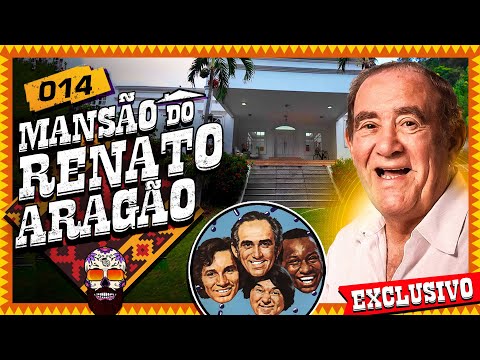
Inteligência Ltda's VISITANDO A MANSÃO DO RENATO ARAGÃO - DIDI MOCÓ - Su Casa Mi Casa #14: skim's analysis identifies 12 key moments, with 1 potential conflict of interest flagged. Rogério Vilela visits Brazilian comedy legend Renato Aragão (Didi Mocó) and his family at their Rio de Janeiro home for a rare retrospective interview.
Category: Entertainment. Format: Interview. YouTube video analyzed by skim.
skim AI Analysis
Credibility assessment: Firsthand Career Recollections. Renato Aragão and his wife Lília share direct, personal memories of his comedy career, family life, and television milestones. Because the conversation relies on retrospective anecdotes from an elderly subject, his wife frequently steps in to supply chronological details and historical context.
Bias assessment: Affectionate Tribute. Rogério Vilela openly frames the conversation as a reverent homage to his childhood idol, while Lília, Lívia, and staff member Eli Monteiro speak with deep personal devotion. The interview avoids critical probing in favor of celebrating Renato Aragão's legacy.
Originality: 86% — Rare At-Home Access. Securing an in-home interview with Renato Aragão, who rarely grants media appearances at his advanced age, offers an uncommon, intimate glimpse into his current life, family dynamics, and personal memorabilia.
Depth: 52% — Light Nostalgic Retrospective. The episode prioritizes warm storytelling, emotional tributes, and brief career anecdotes over deep historical or industry analysis, frequently pausing to accommodate Renato Aragão's stamina.
Key Points (12)
1. Rogério Vilela on Recording with an Aging Idol
Timestamp: 00:02:22 to 00:05:15
Rogério Vilela explains that interviewing Renato Aragão required four or five breaks because the elderly comedian tired easily and grew emotional while recalling the past. Despite the shorter runtime, the family hosted the crew warmly and selected the podcast out of trust. The visit fulfilled Vilela's childhood dream of meeting the man who united Brazilian families every Sunday night.
Significance (Medium): Frames the interview's fragmented pace with transparency, setting realistic viewer expectations while highlighting the rarity of Renato Aragão granting media access at his advanced age.
Sources in support: Rogério Vilela (Host of Inteligência Ltda.), Renato Aragão (Comedian, Actor, and Creator of Didi Mocó)
2. How Oscarito Inspired the Creation of Didi
Timestamp: 00:05:15 to 00:10:19
Growing up in Sobral with strict parents and radio entertainment, Renato Aragão completed his law degree before watching comedian Oscarito perform three times and deciding to become a clown instead. When television arrived, he entered a comedy writing contest and coined the name Didi because it was easy to type on a typewriter. Lília adds that he studied old theater collections extensively to master scriptwriting.
Significance (High): Demonstrates that Renato Aragão's slapstick persona was backed by a law education and deliberate study of classic theater and visual comedy.
Sources in support: Renato Aragão (Comedian, Actor, and Creator of Didi Mocó), YouTube: Inteligência Ltda
3. Winning the Fortaleza TV Contest With Slapstick
Timestamp: 00:10:20 to 00:13:22
Competing against nine radio writers in Fortaleza, Renato Aragão was the only candidate who wrote physical comedy involving running and falling for the camera, winning first place. Lília recounts that after just two or three live broadcasts, crowds waited for him outside the station, forcing him to buy a Vespa to get home. His rapid local fame soon earned him an invitation to perform on the Rio de Janeiro show A E I O Urca.
Significance (High): Captures the pivotal transition in early Brazilian broadcasting from static radio jokes to kinetic, visual television comedy.
Sources in support: Renato Aragão (Comedian, Actor, and Creator of Didi Mocó), YouTube: Inteligência Ltda
4. Recruiting Dedé Santana for Physical Comedy
Timestamp: 00:13:29 to 00:18:06
Renato Aragão expresses deep brotherly affection for Dedé Santana, noting they never fought over ego during their decades together. After shocking Rio and São Paulo studio crews by rolling on the floor and moving outside static camera frames, Aragão realized he needed a comedic partner to exchange dialogue. Lília explains that Aragão spotted Dedé performing in a play, admired his circus agility, and immediately handed him a script from his pocket.
Significance (High): Shows how Renato Aragão recognized the limitations of solo slapstick and intentionally sought out a circus-trained straight man to build a duo.
Sources in support: Renato Aragão (Comedian, Actor, and Creator of Didi Mocó), YouTube: Inteligência Ltda
5. Assembling Mussum and Zacarias Into a Quartet
Timestamp: 00:18:07 to 00:21:50
Lília explains how Renato Aragão expanded the duo into a quartet by recruiting Mussum from the musical group Os Originais do Samba and theater actor Zacarias, alongside longtime regular Roberto Guilherme as Sargento Pincel. Aragão fondly recalls Mussum's constant joy and Zacarias's childlike innocence and signature wig gag during live shows. He reflects that their four-man chemistry remains irreplaceable.
Significance (High): Details how Renato Aragão acted as the creative architect of Os Trapalhões, scouting distinct musical and theatrical talents to write tailored roles for each.
Sources in support: Renato Aragão (Comedian, Actor, and Creator of Didi Mocó), YouTube: Inteligência Ltda
6. From Os Insociáveis to a 10x Raise at TV Globo
Timestamp: 00:21:50 to 00:25:45
Before adopting the name Os Trapalhões, a network owner forced the group to call themselves Os Insociáveis, which sounded like a mafia movie. When Boni invited them to join TV Globo, Renato Aragão refused to name a salary price, prompting the executive to write down a figure ten times higher than what Aragão had been earning. Aragão also recalls improvising the long comedic full name of Didi Mocó during a sketch and praises Boni as a lifelong friend.
Significance (High): Illustrates the massive commercial valuation TV Globo placed on Os Trapalhões as they secured their iconic Sunday evening time slot.
Sources in support: Renato Aragão (Comedian, Actor, and Creator of Didi Mocó), YouTube: Inteligência Ltda
7. Why Old Reruns Hurt and How 50 Films Were Funded
Timestamp: 00:26:20 to 00:29:50
Renato Aragão and Lília reveal that he avoids watching old Os Trapalhões episodes featuring the late Mussum and Zacarias because the nostalgia is too painful, preferring to focus on future plans like an AI-assisted English-language film. Turning to his business career, Aragão explains that he self-financed, wrote, and produced 50 feature films through his own company—releasing two per year in July and January—to maintain creative control without ever directing.
Significance (High): Highlights Renato Aragão's rare dual status in Brazilian entertainment as both a beloved slapstick performer and an independent studio mogul who funded 50 theatrical releases.
Sources in support: Renato Aragão (Comedian, Actor, and Creator of Didi Mocó), YouTube: Inteligência Ltda
8. Dismissing Xuxa Romance Rumors as Eternal Friendship
Timestamp: 00:29:52 to 00:32:33
Asked about old rumors of a romance with Xuxa, Renato Aragão dismisses the gossip, stating that talking is easy while proving is hard, and affirms their bond is an eternal friendship. Lília warmly corroborates this, explaining that Xuxa was one of the first people Aragão introduced her to and used to drop by their house unannounced as a neighbor just to hug him. Lília declares that she loves anyone who loves her husband.
Significance (Medium): Directly addresses decades-old tabloid speculation with both Renato Aragão and his wife emphasizing their close, family-wide bond with Xuxa.
Sources in support: Renato Aragão (Comedian, Actor, and Creator of Didi Mocó), YouTube: Inteligência Ltda
9. Lília on 34 Years of Marriage and Protecting Didi
Timestamp: 00:33:13 to 00:38:46
Renato Aragão and Lília recount how they met when he used a stage show audition as an excuse to get to know her, leading to marriage within six months. Now together for 34 years—surpassing his first marriage of 33 years—Aragão jokingly admits she controls everything, down to choosing his clothes for filming. Lília embraces her role as a protective Leo leader who fiercely defends her husband and family from any mistreatment.
Significance (Medium): Addresses public commentary about Lília's strong hand in managing Renato Aragão, framing her oversight as devoted protection of an aging icon.
Sources in support: Renato Aragão (Comedian, Actor, and Creator of Didi Mocó), YouTube: Inteligência Ltda
10. Lívia Shares Childhood Memories of Her Father
Timestamp: 00:38:46 to 00:43:44
After looking at photos of his X-9 samba school tribute, Renato Aragão jokes about being a jealous father while acting alongside his daughter Lívia. In a solo segment, Lívia recalls visiting her father's sets as a child thinking his slapstick was playtime rather than work, and describes crying beside him at the musical O Adorável Trapalhão. Next, family communications manager Eli Monteiro describes the household's simple, welcoming daily routine.
Significance (Medium): Offers a generational perspective on how Renato Aragão's public persona as Didi blended seamlessly with his role as a father at home.
Sources in support: Renato Aragão (Comedian, Actor, and Creator of Didi Mocó), YouTube: Inteligência Ltda, Eli Monteiro (Communications Manager for the Aragão Family)
11. Kissing the Hand of Christ the Redeemer
Timestamp: 00:43:44 to 00:47:17
Renato Aragão recounts his famous climb onto the arm of the Christ the Redeemer statue in Rio de Janeiro, an idea born from his desire to thank God. Secured by safety cables after alarming the production crew, he crawled out along the statue's arm, kissed its hand in a transcendent moment without feeling fear, and had to crawl backward while dodging lightning rods to return inside. He also expresses lifelong gratitude to Rede Globo.
Significance (High): Recounts one of the most iconic and physically daring moments in Brazilian television history from the perspective of the performer who conceived it.
Sources in support: Renato Aragão (Comedian, Actor, and Creator of Didi Mocó)
12. Final Reflections and Desire to Die Working
Timestamp: 00:47:17 to 00:50:03
Answering Rogério Vilela's closing questions, Renato Aragão says he never experienced a discouraging moment in his career after choosing comedy over law. Asked to leave a message for viewers 200 years in the future, he thanks the public for welcoming him into their homes with joy. He reveals that his only current question in life is how to start working again, stating he wants to die working.
Significance (Medium): Provides an emotional closing statement showing that even in advanced age, Renato Aragão defines his purpose through performing for the public.
Sources in support: Renato Aragão (Comedian, Actor, and Creator of Didi Mocó)
This analysis was generated by skim (skim.plus), an AI-powered content analysis platform by Credible AI. Scores and classifications represent the platform's AI-generated assessment and should be considered alongside other sources.