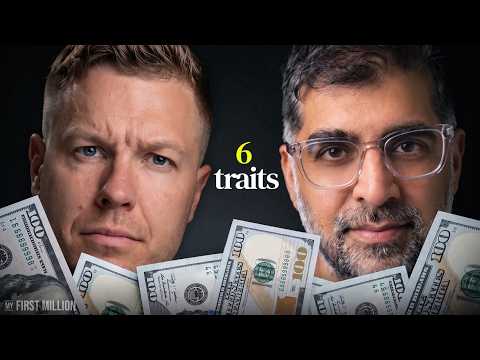
Drawing on nearly 1,000 podcast episodes, Sam Parr and Shaan Puri define 'natural money makers' as unemotional, high-IQ maximizers who spot pricing spreads and win across unrelated industries. They illustrate the archetype through Carl Icahn cutting 12 floors of staff, Nick Kokonas making $100 million on an ETF fiber-cable arbitrage before building the restaurant Alinea to $26 million in annual revenue at nearly 20% profit, Jay Gould buying a railroad on his deathbed, and Syed Balkhi buying gas stations and spending only the 'second derivative' returns on his invested income.
While admiring dealmakers who turn unfamiliar industries into simple payback math, Puri warns that competence feedback loops often trap wealthy founders into trading valuable hours for useless dollars instead of improving their health, marriages, or hobbies. For founders not wired as dealmakers, the hosts outline other winning play styles: missionaries like Brian Chesky, extreme balancers like Jesse Itzler, militant tanks like Frank Slootman, creative tricksters like Alex Tew and Eric Ryan, fierce nerds like Mark Zuckerberg, deep students like David Senra, and early trend 'sniffers' like Austin Rief.
How time-sensitive the topic is: Evergreen
By the numbers
12 floors of employees: Number of floors of staff Carl Icahn reportedly fired in a single day two weeks after buying a shipping company. (Mentioned at 2:37)
100 million dollars: Annual profit Nick Kokonas's trading firm made in his best year from a single ETF pricing arbitrage. (Mentioned at 4:23)
26 million dollars: Peak annual revenue of Nick Kokonas's three-Michelin-star restaurant Alinea, operating at almost 20% profit margin. (Mentioned at 6:39)
150,000 dollars: Price Nick Kokonas reported paying to acquire a wine collection valued at $1 million. (Mentioned at 7:08)
14%: Approximate return a wealthy friend of Sam Parr and Shaan Puri targeted by buying defaulted credit card debt. (Mentioned at 7:41)
200,000 dollars: Approximate purchase price of individual gas stations bought by multi-millionaire entrepreneur Syed Balkhi. (Mentioned at 13:43)
3%: Maximum percentage of liquid net worth that Sam Parr allocates for his annual personal spending budget. (Mentioned at 19:32)
30 dollars: Fee customers paid to name a star in a private registry created by a 'trickster' entrepreneur who made millions from it. (Mentioned at 29:47)
Questions this video answers
What is the difference between a natural money maker and a traditional startup founder?
According to Sam Parr and Shaan Puri, traditional founders like Ted Turner rely on passion, vision, and recruiting, and often fail multiple times before succeeding. Natural money makers are unemotional, rational dealmakers who instinctively spot pricing spreads and win consistently across multiple unrelated industries.
0:00 to 3:17
From this keypoint: Sam Parr Defines the Natural Money Maker
How did Nick Kokonas make $100 million as a trader before starting Alinea?
Shaan Puri explains that Nick Kokonas noticed a pricing lag between early ETFs and their underlying individual stocks while floor traders were still using paper slips. By running fiber optic cable between the New York and Chicago exchanges to capture real-time quotes in that 30-second window, his firm made $100 million in profit in a single year.
3:17 to 7:20
From this keypoint: Shaan Puri Recounts Nick Kokonas's Arbitrage Wins
How did the restaurant Alinea make money during COVID shutdowns?
At its peak, Nick Kokonas and Grant Achatz's three-Michelin-star restaurant Alinea generated $26 million in annual revenue with nearly 20% profit margins. When COVID shut down indoor dining, they pivoted from high-end tasting menus to $35 takeaway dinners and remained profitable.
3:17 to 7:20
From this keypoint: Shaan Puri Recounts Nick Kokonas's Arbitrage Wins
What does it mean to only spend the second derivative of your income?
Taught to Syed Balkhi by a mentor, the rule states that you should never spend your primary income on lifestyle upgrades. Instead, you invest the principal (the first derivative) and only spend the investment yield it generates (the second derivative), which compounds over five to seven years until investment returns cover all living costs.
17:51 to 20:23
From this keypoint: Spending Only the Second Derivative of Income
How do successful e-commerce founders overcome slim profit margins and rising costs?
Shaan Puri recounts how an e-commerce founder facing 6% to 14% EBITDA margins and rising cost of goods visited a European manufacturer, verified a two-month machine payback period, and paid the European team to set up a US factory. Within a year, the plant was running and cut the company's cost of goods in half.
14:00 to 17:51
From this keypoint: Shaan Puri on Turning Unfamiliarity Into Simple Math
Why do wealthy entrepreneurs keep working for money they will never spend?
Shaan Puri argues that founders get addicted to the status and positive feedback loop of being good at business. As a result, they trade valuable hours for useless dollars to avoid the discomfort of being a beginner in areas where they are weak, such as fitness, marriage, or new hobbies.
20:23 to 26:31
From this keypoint: Trading Valuable Hours for Useless Dollars
What are the different types of founder personalities besides dealmakers?
Sam Parr and Shaan Puri identify missionaries (Brian Chesky), extreme life balancers (Jesse Itzler), militant operational tanks (Frank Slootman), viral product tricksters (Alex Tew, Eric Ryan), competitive fierce nerds (Mark Zuckerberg, Travis Kalanick), deep historical students (David Senra), and trend-spotting sniffers (Austin Rief).
26:31 to 33:06
From this keypoint: Missionaries, Balancers, Tanks, and Fierce Nerds
How do 'sniffer' investors differ from natural money makers?
While natural money makers tend to stay quiet to protect their deal spreads, sniffers like Austin Rief and Sean Parker are enthusiastic evangelists who love sharing early discoveries. They make money through conviction arbitrage—backing non-obvious founders and trends like Bitcoin in 2014, Facebook, or Spotify before the mainstream catches on.
33:06 to 36:56
From this keypoint: The Sniffer Archetype and Conviction Arbitrage
Credible AI™ signals
Confidence: Anecdotal Founder Analysis. Sam Parr and Shaan Puri draw on direct interviews and personal relationships with wealthy founders, combined with well-known historical business anecdotes like Jay Gould and Carl Icahn. Claims about specific returns and deals rely on self-reported stories from guests rather than audited records.
Bias: Founder-Centric Optimism. The hosts admire wealth creation and entrepreneurial dealmaking while openly acknowledging the personal trade-offs, such as neglecting family or health, that accompany extreme financial maximization.
Originality (82%): Fresh Founder Taxonomy. Instead of repeating standard business school leadership categories, Sam Parr and Shaan Puri coin memorable, informal archetypes like the natural money maker, the trickster, and the sniffer, backed by specific stories from their network.
Depth (76%): Nuanced Behavioral Breakdown. The discussion moves past surface-level admiration to examine the psychology of dealmakers, how they process complexity versus unfamiliarity, the math of spending investment yields, and the diminishing life returns of chasing extra millions.
Key points (9)
Short (14 min): key points 1, 2 and 8
Medium (26 min): key points 1, 2, 6, 7, 8 and 9
Relaxed (37 min): all 9 key points
1. Sam Parr Defines the Natural Money Maker
Timestamp: 00:00:00 to 00:03:17 (3 min)
Sam Parr distinguishes 'natural money makers' from visionary founders like CNN creator Ted Turner, describing them as cold, logical dealmakers who build $100 million to multi-billion dollar businesses across multiple fields. Shaan Puri adds that these individuals defy normal entrepreneurial batting averages through pure instinct, sniffing out opportunities and avoiding bad deals without relying on a single functional skill like design or management.
Impact: High. Why it matters: Separating dealmaking instinct from operational leadership explains why certain investors repeatedly win in unrelated industries where passionate specialists struggle.
“But a natural money maker does all those things plus they're way colder uh about money and they're way more logical and they're m way more rational.”
In the video: Sam Parr, at 0:54
For: Sam Parr, Shaan Puri
2. Shaan Puri Recounts Nick Kokonas's Arbitrage Wins
Timestamp: 00:03:17 to 00:07:20 (4 min)
Shaan Puri profiles former derivatives trader Nick Kokonas, who risked $250,000 to $300,000 daily and once generated $100 million in annual company profit by running fiber cable between New York and Chicago exchanges to arbitrage a 30-second pricing lag in early ETFs. Kokonas then entered the notoriously low-margin restaurant industry with chef Grant Achatz to build Alinea into a three-Michelin-star venue generating $26 million in peak annual revenue at nearly 20% profit.
Impact: High. Why it matters: Nick Kokonas's jump from high-speed ETF arbitrage to a 20%-margin fine-dining restaurant shows how pricing and structural insight can transfer across completely unrelated markets.
“His best year, his company made a h 100red million in profit off of one arbitrage that he found.”
In the video: Shaan Puri, at 4:23
For: Shaan Puri, Sam Parr
3. Extreme Maximizers Never Stop Chasing Deals
Timestamp: 00:07:20 to 00:10:10 (3 min)
Sam Parr argues that natural money makers have no off button and treat diminishing returns as worthwhile returns, citing a wealthy friend who buys defaulted credit card debt for a 14% yield. He illustrates this relentless drive with 19th-century tycoon Jay Gould, who ignored his family's pleas while dying of tuberculosis to acquire a failing railroad six months before his death.
Impact: Medium. Why it matters: Recognizing that extreme maximizers view dealmaking as a compulsion rather than a means to an end clarifies why massive net worth rarely slows their activity.
“And that's like an extreme example, but these natural money makers are extreme maximizers. It never turns off. And there the the perfect number is more.”
In the video: Sam Parr, at 9:21
For: Sam Parr, Shaan Puri
4. High IQ and a Drive to Conquer Fuel Dealmakers
Timestamp: 00:10:10 to 00:14:00 (4 min)
Responding to Shaan Puri's question on whether dealmaking is innate or learned, Sam Parr suggests it stems from growing up in business-focused families combined with high IQ and comfort with multi-contingency complexity. When pressed on why many high-IQ, math-skilled people fail to make money, Parr attributes the gap to a Napoleon-like competitive streak to conquer at a young age.
Impact: Medium. Why it matters: Raw intelligence only translates into multi-industry wealth when paired with a tolerance for multi-step deal contingencies and an aggressive drive to win.
“I have noticed that natural money makers have very very very high IQs and they can grasp very complex topics.”
In the video: Sam Parr, at 10:49
For: Sam Parr
Neutral: Shaan Puri
5. Shaan Puri on Turning Unfamiliarity Into Simple Math
Timestamp: 00:14:00 to 00:17:51 (4 min)
Shaan Puri pushes back on the idea that dealmakers love complexity, arguing they actually prize fortune-cookie simplicity while others confuse unfamiliarity with complexity. He shares how an e-commerce founder facing slim 6% to 14% EBITDA margins and rising cost of goods visited a European factory, verified a two-month machine payback period, paid the European operators to set up a US plant within a year, and cut his cost of goods in half.
Impact: High. Why it matters: Separating genuine risk from mere unfamiliarity allows operators to execute intimidating vertical integrations by boiling decisions down to payback math and experienced partners.
“Maybe it is simpler than I think on the outside, having never done it because I'm confusing uncertainty with risk. I'm confusing unfamiliarity with complexity.”
In the video: Shaan Puri, at 17:42
For: Shaan Puri
Neutral: Sam Parr
6. Spending Only the Second Derivative of Income
Timestamp: 00:17:51 to 00:20:23 (3 min)
Shaan Puri shares Syed Balkhi's personal finance rule learned from a mentor: never spend principal income, and instead only spend the 'second derivative,' meaning the investment returns generated by that saved income. Under this strategy, earning $100,000 and investing it at a 10% to 12% return yields $10,000 to $24,000 in early years for discretionary lifestyle upgrades, compounding over five to seven years until investment gains cover all living expenses.
Impact: High. Why it matters: Restricting lifestyle inflation to the yield on invested savings creates a mathematical floor that prevents high earners from ever going broke.
“See that? That's your you'll never go broke strategy because you are only spending not your income but the investment returns off your income.”
In the video: Shaan Puri, at 18:39
For: Shaan Puri, Sam Parr
7. Trading Valuable Hours for Useless Dollars
Timestamp: 00:20:23 to 00:26:31 (6 min)
Sam Parr notes that strict money makers are not uniformly miserable misers, citing Bryan Johnson and his generous friend Val as genuinely happy examples alongside others who are miserable. Shaan Puri agrees that critics often dismiss financial discipline out of guilt, but warns that many successful founders fall into the trap of trading valuable life hours for useless dollars they will never spend.
Impact: High. Why it matters: Highlighting how competence feedback loops trap wealthy founders in work explains why high earners neglect high-leverage life areas like health, marriage, and play.
“Meaning you're trading valuable hours for useless dollars, right? They basically are trading their time and their energy for money they will never need, never spend, never use.”
In the video: Shaan Puri, at 22:51
For: Sam Parr, Shaan Puri
8. Missionaries, Balancers, Tanks, and Fierce Nerds
Timestamp: 00:26:31 to 00:33:06 (7 min)
Expanding beyond natural money makers, Sam Parr and Shaan Puri outline five other winning entrepreneurial archetypes: the 'missionary' like Airbnb's Brian Chesky, the regimented 'extreme balancer' like Jesse Itzler, and the militant 'tank' operator like Frank Slootman who absorbs massive damage to lead large teams.
Impact: High. Why it matters: Mapping six distinct founder archetypes gives entrepreneurs a framework to audit their own strengths rather than forcing themselves into a dealmaker mold.
“So, it's like you'll have the the tank which is like your uh brute force relentless forward energy. This is like the Frank Lootman's of the world.”
In the video: Shaan Puri, at 28:04
For: Sam Parr, Shaan Puri
9. The Sniffer Archetype and Conviction Arbitrage
Timestamp: 00:33:06 to 00:36:56 (4 min)
Echoing Ray Dalio's advice to work with one's natural wiring rather than against it, Shaan Puri introduces a final archetype: the 'sniffer,' who spots non-obvious trends, people, and deals early as an investor rather than a hands-on operator. Puri names Morning Brew's Austin Rief, his friend Val—who pushed him to buy Bitcoin in 2014 and predicted stablecoins, privacy coins, and prediction markets early—and Napster co-founder Sean Parker, who spotted Facebook and Spotify before almost anyone else.
Impact: High. Why it matters: Distinguishing enthusiastic trend-spotters from secretive dealmakers shows how early conviction acts as its own form of arbitrage in venture investing.
“You know it's a conviction arbitrage. You you you believe before everybody else believes. You see it before everybody else sees it for to be true.”
In the video: Shaan Puri, at 36:25
For: Shaan Puri, Sam Parr
Conflicts of interest (1)
HubSpot Lead-Gen Quiz Promotion
Commercial conflict, Medium severity
My First Million is produced by HubSpot Media, and Sam Parr pauses the episode to promote a producer-made founder archetype quiz hosted on a HubSpot tracking link.
Sources: Sam Parr, Shaan Puri
Significance: Framing the episode around six distinct founder archetypes directly serves the mid-roll call-to-action driving listeners into the network's quiz funnel.
Key sources
Sam Parr: Co-host, My First Million and founder of Hampton
Shaan Puri: Co-host, My First Million
Who's in this
Nick Kokonas
Syed Balkhi
Jay Gould
Carl Icahn
Charlie Munger
Austin Rief
Jesse Itzler
Brian Chesky
Frank Slootman
Alex Tew
Mark Zuckerberg
Ray Dalio
Alinea
Also mentioned
Sulie (First mentioned at 1:06)
My First Million (First mentioned at 13:09)
Val (First mentioned at 21:12)
Ted Turner (First mentioned at 0:43)
S&P 500 ETF (First mentioned at 4:33)
New York (First mentioned at 5:17)
Michelin Guide (First mentioned at 5:53)
Spotify (First mentioned at 11:58)
WordPress (First mentioned at 13:17)
Facebook (First mentioned at 15:01)
Bryan Johnson (First mentioned at 21:02)
Calm.com (First mentioned at 29:07)
Eric Ryan (First mentioned at 29:58)
Paul Graham (First mentioned at 30:31)
Travis Kalanick (First mentioned at 31:08)
CNN (First mentioned at 0:46)
JP Morgan (First mentioned at 3:40)
Chicago (First mentioned at 5:19)
Grant (First mentioned at 6:21)
John Rockefeller (First mentioned at 8:31)
Warren Buffett (First mentioned at 9:42)
Berkshire (First mentioned at 9:45)
Arie (First mentioned at 11:42)
YouTube (First mentioned at 11:56)
Napoleon (First mentioned at 12:37)
Europe (First mentioned at 15:27)
Airbnb (First mentioned at 27:19)
Richard Branson (First mentioned at 27:26)
Overwatch (First mentioned at 28:26)
Reinhardt (First mentioned at 28:27)
Pet Rock (First mentioned at 29:00)
John Fiorentino (First mentioned at 29:17)
Method Soap (First mentioned at 30:04)
Dan Carlin (First mentioned at 31:33)
David Senra (First mentioned at 31:35)
Bitcoin (First mentioned at 34:33)
This analysis was generated by skim (skim.plus), an AI-powered content analysis platform by Credible AI. Scores and classifications represent the platform's AI-generated assessment and should be considered alongside other sources.