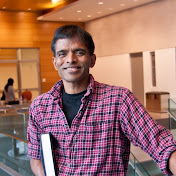
Y Combinator's What If We Stopped Using GPUs? | YC Paper Club: skim's analysis identifies 12 key moments. Researchers and technologists examine alternatives to conventional GPUs and backpropagation for artificial intelligence.
Category: Tech. Format: Panel Discussion. YouTube video analyzed by skim.
skim AI Analysis
Credibility assessment: Rigorous Technical Exchange. The seminar brings together specialized researchers and venture technologists presenting peer-reviewed research, algorithmic formalisms, and open-source experimental systems. Claims are anchored in concrete physical limitations and published literature, though some future architecture timelines remain speculative research directions.
Bias assessment: Hardware Pluralist. The session explicitly interrogates the dominant GPU and backpropagation paradigm, promoting optical, neuromorphic, and biological alternatives. While the speakers naturally advocate for their specific domains, they maintain sobriety regarding physical scaling bottlenecks, precision issues, and fabrication constraints.
Originality: 91% — Pioneering Paradigms. The presentations showcase cutting-edge experimental paradigms, including optical diffractive diffusion models, zero-order optimization via sharded mixture of assemblies, and closed-loop reinforcement learning running on biological neural cultures playing video games.
Depth: 88% — Deep Physical Architecture. Discussions delve directly into the physical equations and trade-offs of computation, contrasting capacitance, analog-digital conversion overheads, thermodynamic noise, and mathematical loss landscapes across silicon, optical, and biological substrates.
Key Points (12)
1. GPU Efficiency Plateau Demands New AI Architectures
Timestamp: 00:01:12 to 00:04:53
Modern artificial intelligence hardware has become bottlenecked by memory capacity and bandwidth rather than pure computational throughput. Standard GPUs have seen diminishing energy efficiency gains per gigaflop in recent generations, while transformer attention scaling exacerbates power consumption. Consequently, deep learning requires alternative paradigms that emulate biological efficiency.
Significance (High): Exposes the economic and physical ceilings facing hyperscale data centers relying exclusively on standard silicon.
Sources in support: Francois Chaubard (CEO of Focal Systems and Stanford PhD Researcher)
2. Zero-Order Optimization and Sharded Assemblies
Timestamp: 00:08:08 to 00:13:21
Backpropagation requires holding massive activation states in memory and assumes bidirectional weight symmetry that physical hardware struggles to support. By leveraging Simultaneous Perturbation Stochastic Approximation within a sharded mixture of assemblies, models can be trained without computing analytic gradients. This architecture distributes small recurrent experts that bypass high gradient estimation noise.
Significance (Medium): Offers a pathway to train complex models on physical substrates that cannot compute or propagate gradients.
Sources in support: Francois Chaubard (CEO of Focal Systems and Stanford PhD Researcher)
3. Photonic Propagation Offers Low-Loss Parallelism
Timestamp: 00:15:16 to 00:19:24
Optical computing leverages the fundamental physics of photons, which possess approximately ten thousand times lower loss and broader bandwidth than electrons. Because photons do not interact or create electrical interference, multiple beams propagate simultaneously through the same space. Modulating light passively through diffractive masks allows matrix operations whose energy scales linearly with input dimensions rather than quadratically.
Significance (High): Provides the theoretical foundation for orders-of-magnitude energy reductions in large tensor matrix multiplications.
Sources in support: Ilker Oguz (Postdoctoral Researcher at Stanford, Former EPFL PhD)
4. Conversion Costs Limit Optical Advantage
Timestamp: 00:19:27 to 00:22:20
Commercializing optical accelerators is hampered by the high energy cost of digital-to-analog and analog-to-digital conversions. Because current models and parameters reside in digital memory, repeatedly converting signals across domains consumes the vast majority of the photonic system energy budget. Additionally, realizing non-linear activation functions in optical media introduces severe physical complexity.
Significance (High): Explains why initial commercial photonic systems struggle to beat standard silicon chips on mixed-workload computing.
Sources in support: Ilker Oguz (Postdoctoral Researcher at Stanford, Former EPFL PhD)
5. Diffractive Light System Executes Generative Diffusion
Timestamp: 00:22:23 to 00:29:51
Generative diffusion models can be realized in hardware by programming the passive propagation of light through stacked phase masks. Dividing the iterative denoising process into fixed sub-schedules avoids the need for dynamic, real-time weight re-programming on the optical elements. Experimental prototypes demonstrated image synthesis across benchmark datasets while preserving standard power-law parameter scaling.
Significance (High): Demonstrates the practical viability of using specialized passive physical media for continuous generative inference tasks.
Sources in support: Ilker Oguz (Postdoctoral Researcher at Stanford, Former EPFL PhD)
6. Optical Interface and Nonlinearity Trade-Offs
Timestamp: 00:30:59 to 00:38:49
Deploying optical computing requires evaluating how data loops through hardware and managing spatial constraints. While electronic transistors operate at nanometer scales, optical features are bounded by the longer wavelengths of visible light, often requiring wavelength multiplexing to pack density. Until rewritable optical memories mature, co-designing application-specific optics remains more viable than building general-purpose optical processors.
Significance (Medium): Clarifies the precise architectural constraints separating experimental optical hardware from drop-in GPU replacements.
Sources in support: Ilker Oguz (Postdoctoral Researcher at Stanford, Former EPFL PhD)
7. Vasudev Outlines Core Neuromorphic Principles
Timestamp: 00:40:01 to 00:46:44
Biological brains achieve multimodal real-time reasoning on approximately twenty watts by closely intertwining memory and computation within synapses. Unlike digital circuits that shuttle bits between isolated storage and arithmetic units, neurons transmit sparse, event-driven spikes with continuous analog dynamics. Capturing these characteristics in silicon requires moving away from the conventional von Neumann architecture.
Significance (High): Establishes the engineering rationale for emulating biological event-driven circuits in modern semiconductor hardware.
Sources in support: Alok Vasudev (Co-founder and Partner at Standard)
8. Digital Silicon Diverged From Biological Fidelity
Timestamp: 00:46:45 to 00:49:34
Modern artificial intelligence owes conceptual inspiration to biological neural networks, but practical progress came from exploiting native digital silicon capabilities. Techniques such as backpropagation, transformer self-attention, and massive parallel matrix multiplications share almost no mechanistic overlap with biological brains. Attempting to replicate biology too literally often undercuts the fabrication and architectural advantages of digital CMOS.
Significance (Medium): Warns hardware designers against naive bio-mimicry when engineering high-throughput computing platforms.
Sources in support: Alok Vasudev (Co-founder and Partner at Standard)
9. Commercial Neuromorphic Hardware Focuses on Memory
Timestamp: 00:49:35 to 00:57:27
Commercial startups pursuing neuromorphic principles predominantly focus on near-memory digital compute rather than exotic analog spiking substrates. By placing static random-access memory directly adjacent to processing logic, accelerators alleviate the interconnect capacitance bottleneck that dominates power consumption. More speculative avenues, such as memristors and coupled oscillators, remain in exploratory research phases.
Significance (Medium): Identifies the near-term commercial horizon for brain-inspired computing as architectural memory proximity rather than analog spiking.
Sources in support: Alok Vasudev (Co-founder and Partner at Standard)
Neutral sources: Francois Chaubard (CEO of Focal Systems and Stanford PhD Researcher)
10. Closed-Loop Biological Computing on Video Games
Timestamp: 01:04:24 to 01:10:36
Biological computing systems interface living neurons with multielectrode arrays to process dynamic game observations into motor actions. Because complex game states like Doom exceed hand-mapped channel capacities, encoders must transform scalar and visual data into electrical stimulation frequencies. A low-capacity linear decoder then converts the resulting neuronal spike responses into game commands.
Significance (High): Establishes a repeatable experimental framework for treating living biological cell cultures as physical processing units.
Sources in support: Sean Cole (CEO of Parasma)
11. Cole Warns Against Overfitting Biological Readouts
Timestamp: 01:10:37 to 01:13:06
A major technical trap in biological wetware computing is deploying an oversized digital decoder that overfits on random neural baseline activity. If a complex neural network is used to interpret spikes, the silicon decoder learns to play the task independently, leaving the cells functionally unengaged. Constraining readouts to minimal linear projections ensures genuine computational contribution from the culture.
Significance (High): Exposes methodology flaws across bio-computing demonstrations and defines standards for true biological contribution.
Sources in support: Sean Cole (CEO of Parasma)
12. Surprise-Modulated Feedback Drives Cellular Adaptation
Timestamp: 01:13:07 to 01:19:59
Directing biological neural networks cannot rely on standard backpropagation, requiring instead electrophysiological feedback rooted in the free energy principle. Delivering synchronous stimulation rewards preferred behavior, whereas asynchronous chaotic stimulation penalizes performance by increasing cultural entropy. Modulating the intensity and frequency of feedback using temporal-difference error ensures cells receive stable training signals.
Significance (High): Provides an operational training algorithm for guiding self-organization in living neuronal substrates without gradients.
Sources in support: Sean Cole (CEO of Parasma)
This analysis was generated by skim (skim.plus), an AI-powered content analysis platform by Credible AI. Scores and classifications represent the platform's AI-generated assessment and should be considered alongside other sources.