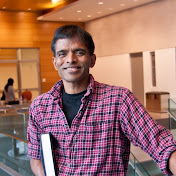
Machine Learning Street Talk's When Talking Becomes the Main Way We Use Computers — Pavan Muddireddy: skim's analysis identifies 14 key moments, with 3 potential conflicts of interest flagged. Mistral AI's Pavan Muddireddy details Voxtral, their audio AI suite, highlighting end-to-end models for tasks like transcription and TTS.
Category: Tech. Format: Interview. YouTube video analyzed by skim.
skim AI Analysis
Credibility assessment: Highly Credible. The speaker is a research scientist at Mistral AI, a leading AI company. The discussion is technical, referencing specific models, architectures, and research papers. The information provided is detailed and grounded in current AI research and development.
Bias assessment: Slightly Pro-Mistral. While the speaker is an employee of Mistral AI and discusses their work positively, the conversation also acknowledges trade-offs and limitations of their approaches. The focus is primarily on technical details rather than overt promotion.
Originality: 84% — Highly Original. The video delves into the cutting-edge of audio AI, discussing novel architectures like Voxtral Chat and real-time streaming models. It explores the nuances of end-to-end vs. cascaded systems and the future of voice interfaces, offering fresh perspectives on complex technical challenges.
Depth: 92% — Deeply Analytical. The discussion provides a thorough technical breakdown of Mistral AI's audio models, including architectural details, training methodologies, and performance trade-offs. It contrasts different approaches (end-to-end vs. cascaded) and explores failure modes and potential improvements with significant depth.
Key Points (14)
1. Mistral AI's Audio Frontier
Timestamp: 00:00:45 to 00:04:15
Mistral AI is expanding into audio research with models like Voxtral Chat, aiming to create a unified, end-to-end system for audio understanding and generation, moving beyond traditional cascaded approaches.
Significance (High): This signals Mistral AI's ambition to be a full-stack AI provider, integrating audio capabilities into their broader multimodal strategy and challenging existing paradigms.
Sources in support: Pavan Muddireddy (Research Scientist, Mistral AI)
Neutral sources: Tim Scarfe (Host)
2. Pavan Muddireddy: Voxtral's Architecture for Real-Time Audio
Timestamp: 00:09:27 to 00:19:27
Voxtral's architecture is designed for real-time audio processing, featuring a dual-stream decoder that consumes audio and emits text simultaneously with configurable low latency. This approach allows for continuous embeddings from an audio encoder to be fed directly into a text trunk, enabling the model to answer questions about audio characteristics without an intermediate transcript.
Significance (High): This technical innovation enables more responsive and context-aware voice agents, moving beyond simple transcription to understanding nuances within the audio stream itself.
Sources in support: Pavan Muddireddy (Research Scientist, Mistral AI)
Neutral sources: Tim Scarfe (Host)
3. Real-Time Streaming vs. Batch Processing
Timestamp: 00:21:10 to 00:26:10
Streaming audio models, like Voxtral Realtime, are designed for continuous listening and outputting transcripts with controllable latency, offering a trade-off between responsiveness and accuracy, unlike batch models that process entire segments.
Significance (High): This capability is crucial for interactive voice agents, enabling near-instantaneous responses and a more natural conversational flow, though careful parameter tuning is needed to balance speed and quality.
Sources in support: Pavan Muddireddy (Research Scientist, Mistral AI)
Neutral sources: Tim Scarfe (Host)
4. Pavan Muddireddy: Continuous Latents Over Discrete Tokens
Timestamp: 00:30:27 to 00:38:25
Mistral AI's Voxtral TTS model moves away from discrete tokens, which require complex autoregressive decoding over multiple codebooks, towards continuous latents predicted via flow matching. This approach offers more control and a finer trade-off between generation steps and quality, as the neural codec's compression bottleneck is unnecessary for pure generation.
Significance (High): This architectural shift aims to simplify the generation process and enhance controllability in text-to-speech systems.
Sources in support: Pavan Muddireddy (Research Scientist, Mistral AI)
Neutral sources: Tim Scarfe (Host)
5. Tim Scarfe: The Rationale Behind Mel Spectrograms
Timestamp: 00:39:34 to 00:44:09
Tim Scarfe questions the use of mel spectrograms instead of raw waveforms in audio models, suggesting that while they offer dimensionality reduction and perceptual calibration, large compute and models might eventually render them unnecessary. Pavan Muddireddy explains that mel spectrograms provide sample efficiency and avoid modeling perceptually irrelevant waveform aspects, acting as a general-purpose feature that aids smaller models.
Significance (Medium): The choice of input features impacts model efficiency and performance, with mel spectrograms offering a pragmatic trade-off for sample efficiency in smaller models.
Sources in support: Pavan Muddireddy (Research Scientist, Mistral AI)
Sources against: Tim Scarfe (Host)
6. Pavan Muddireddy: Noise Augmentation for Robustness
Timestamp: 00:43:32 to 00:47:01
Noise augmentation is crucial for making audio models robust to various acoustic conditions, simulating diverse environments that might not be covered in limited datasets. While initial models might perform well, targeted augmentation helps prevent performance drops in real-world, uncontrolled scenarios, ensuring models generalize better.
Significance (High): This technique enhances model reliability by exposing it to a wider range of acoustic challenges, crucial for deployment in diverse environments.
Sources in support: Pavan Muddireddy (Research Scientist, Mistral AI)
Neutral sources: Tim Scarfe (Host)
7. Pavan Muddireddy: Fine-tuning for Adaptation and Privacy
Timestamp: 00:47:01 to 00:51:39
Model adaptation through fine-tuning is vital, especially for specific data distributions and sensitive information. Platforms like Mistral's Forge allow users to adapt transcription models with their own data, maintaining privacy and improving performance in niche acoustic conditions, even with limited data, by leveraging high-quality, in-distribution examples.
Significance (High): Fine-tuning empowers users to tailor models to their specific needs and data, addressing privacy concerns and improving performance in specialized contexts.
Sources in support: Pavan Muddireddy (Research Scientist, Mistral AI)
Neutral sources: Tim Scarfe (Host)
8. Tim Scarfe: Challenges in Speaker Diarization
Timestamp: 00:52:15 to 00:54:44
Tim Scarfe highlights the difficulties in speaker diarization, particularly the lag in speaker changes and the increased failure modes in streaming models, which can hallucinate extra speakers. He notes that while batch models are more robust, streaming models struggle with limited context, leading to inaccuracies.
Significance (High): The inherent limitations of streaming models in speaker diarization pose significant challenges for real-time applications requiring accurate speaker attribution.
Sources in support: Tim Scarfe (Host)
Neutral sources: Pavan Muddireddy (Research Scientist, Mistral AI)
9. Pavan Muddireddy on TTS: Modeling Multimodal Distributions
Timestamp: 01:11:14 to 01:20:14
Text-to-Speech (TTS) models, unlike ASR which is often many-to-one, operate on a one-to-many mapping, generating audio from text. This involves implicitly mapping words to phonemes and then modeling the multimodal distribution of human speech, including emotional intonation and emphasis derived from semantic content. Techniques like flow or diffusion-based methods are effective for capturing this variability.
Significance (High): This one-to-many generative capability allows TTS systems to produce more natural and varied speech, capturing nuances that are essential for engaging and contextually appropriate audio output.
Sources in support: Pavan Muddireddy (Research Scientist, Mistral AI)
Neutral sources: Tim Scarfe (Host)
10. The Enduring Value of Cascaded Systems
Timestamp: 01:20:06 to 01:24:06
Despite the rise of end-to-end models, cascaded systems persist because each specialized component (ASR, LLM, TTS) can be independently adapted, observed, and constrained, offering greater control and maintainability for complex deployments.
Significance (High): This modularity allows practitioners to fine-tune specific parts of the pipeline for particular acoustics or compliance needs, and to keep sensitive operations on-premise, which is often critical for enterprise adoption.
Sources in support: Pavan Muddireddy (Research Scientist, Mistral AI)
Neutral sources: Tim Scarfe (Host)
11. Pavan Muddireddy: The Frontier of Voice Tech is Not Solved
Timestamp: 01:28:06 to 01:30:05
The basic ASR task is far from solved in precise deployment scenarios, with significant mistakes occurring even in prominent customer service cases. Transcription quality drops sharply outside top languages and in non-ideal acoustic environments. While end-to-end models are advancing, cascaded systems offer the necessary flexibility, control, and observability for enterprise applications, especially when integrating audio interfaces with existing text-based systems.
Significance (High): This underscores that despite rapid progress, practical voice AI deployment faces substantial hurdles, particularly in multilingual support and robustness to real-world noise, reinforcing the value of modular, adaptable cascaded architectures.
Sources in support: Pavan Muddireddy (Research Scientist, Mistral AI)
Neutral sources: Tim Scarfe (Host)
12. Pavan Muddireddy: The Nuances of Real-Time Audio Performance
Timestamp: 01:30:10 to 01:32:25
Achieving high-quality, real-time audio performance, especially in noisy environments or for command systems, remains a significant challenge. While general-purpose models improve, specialized, customizable models offer a more practical and cost-effective solution for specific audio contexts. The ease of experimentation and smaller model sizes in audio make customization more feasible than in large text models. Performance in the wild and broad language coverage are key areas yet to be fully solved.
Significance (High): This highlights the ongoing gap between theoretical AI capabilities and practical, real-world deployment, particularly in diverse audio environments. It underscores the need for tailored solutions beyond general-purpose models.
Sources in support: Pavan Muddireddy (Research Scientist, Mistral AI)
Neutral sources: Tim Scarfe (Host)
13. Tim Scarfe: Voice as a Ubiquitous Interface
Timestamp: 01:32:26 to 01:34:31
Voice technology is poised to become increasingly ubiquitous over the next five years, embedding itself into daily life and work. Voice is a primary, ancient form of human communication, and even in text-heavy environments, it adds a depth that purely textual interfaces lack. While not always the primary mode of interaction, voice facilitates richer communication, as seen in meetings and collaborations, and is envisioned as a key interface for interacting with machines and humans.
Significance (High): This perspective frames voice not just as a convenience, but as a fundamental communication modality with the potential to reshape human-computer and human-human interaction, driving innovation in AI interfaces.
Sources in support: Tim Scarfe (Host)
Neutral sources: Pavan Muddireddy (Research Scientist, Mistral AI)
14. Voice Interfaces: Complementary, Not Replacement
Timestamp: 01:33:46 to 01:35:46
Voice alone is cognitively demanding; it becomes truly ubiquitous and effective when paired with visual interfaces like screens, rather than attempting to replace them entirely.
Significance (Medium): This perspective suggests that the future of human-computer interaction will likely involve hybrid voice-visual systems, leveraging the strengths of both modalities for optimal user experience and efficiency.
Sources in support: Pavan Muddireddy (Research Scientist, Mistral AI)
Neutral sources: Tim Scarfe (Host)
This analysis was generated by skim (skim.plus), an AI-powered content analysis platform by Credible AI. Scores and classifications represent the platform's AI-generated assessment and should be considered alongside other sources.