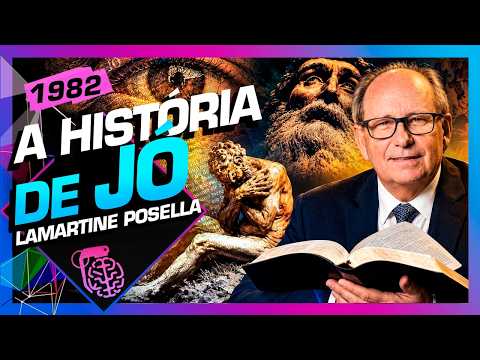
Inteligência Ltda's A HISTÓRIA DE JÓ: LAMARTINE POSELLA - Inteligência Ltda. Podcast #1982: skim's analysis identifies 20 key moments, with 2 potential conflicts of interest flagged. Baptist pastor and theologian Lamartine Posella joins Rogério Vilela to examine the Book of Job, arguing that God permitted Job's suffering not as punishment, but to move him from fearful, rule-based moralism into an intimate relationship based on grace.
Category: Education. Format: Interview. YouTube video analyzed by skim.
Key Points (20)
1. Posella Places Job as the Oldest Biblical Book
Timestamp: 00:04:30 to 00:06:49
Lamartine Posella explains that theologians consider Job the oldest book in the Bible, predating Genesis, the tabernacle, and formal Judaism. Set in Uz—likely modern-day Jordan—during the patriarchal era around 3,500 to 4,000 years ago, the text addresses universal human suffering. Posella admits he avoided studying the book for years before writing his own December release on it.
Significance (Medium): Framing Job as pre-Mosaic wisdom literature detaches its message from Israelite legalism and positions its inquiry into innocent suffering as a universal human question.
Sources in support: Lamartine Posella (Pastor at YAH Church, theologian, and author)
Neutral sources: Rogério Vilela (Host of Inteligência Ltda. Podcast)
2. Satan's Heavenly Access and the Wager Over Job
Timestamp: 00:07:10 to 00:12:01
Outlining the book's prose opening, Lamartine Posella describes Job as the wealthiest, most upright man in the East, owning 7,000 sheep and 3,000 camels and offering daily sacrifices for his 10 children. When Satan—referred to in Hebrew as hasatan, the accuser—appears before God in the third heaven, God highlights Job's integrity, prompting Satan to claim Job only loves God for His blessings. Posella notes that according to Revelation 12, Satan still retains access to accuse humanity in heaven until his final future expulsion.
Significance (High): Clarifying that 'hasatan' functions as a prosecutorial title and still accesses the heavenly court challenges popular assumptions about fallen angels and frames Job's ordeal as a cosmic legal test.
Sources in support: Lamartine Posella (Pastor at YAH Church, theologian, and author)
Neutral sources: Rogério Vilela (Host of Inteligência Ltda. Podcast)
3. Job's Catastrophic Loss and the 42-Chapter Arc
Timestamp: 00:12:02 to 00:19:09
In a single day, Sabean raiders, lightning, and a whirlwind destroy Job's servants, livestock, and all 10 of his children, followed by painful sores that leave Job scraping himself with pottery in an ash heap outside the city. Although Job initially blesses God and rejects his wife's plea to curse God and die, three rounds of poetic accusations from his friends Eliphaz, Bildad, and Zophar push him to defend his innocence and speak directly to God. The 42-chapter literary architecture concludes with speeches by Elihu and God before Job's double restoration.
Significance (High): Mapping the symmetric structure of Job's 42 chapters reveals how the text transitions from stoic prose acceptance to raw poetic confrontation with God.
Sources in support: Lamartine Posella (Pastor at YAH Church, theologian, and author)
Neutral sources: Rogério Vilela (Host of Inteligência Ltda. Podcast)
4. Historical Reality of Job vs. Moralistic Religion
Timestamp: 00:19:16 to 00:26:52
Responding to Rogério Vilela's question on whether Job is a metaphor or history, Posella notes that while theologians are divided, other biblical authors cite Job as a real historical figure who achieved the rare status of 'tamim' (whole or upright), alongside Noah. Posella then connects Job's predicament to Jesus's Parable of the Prodigal Son, arguing that the gospel condemns not only hedonism (the younger brother) but also self-righteous moralism (the older brother). Just as the older brother thought obedience earned the father's favor, Job initially relied on his own upright works rather than knowing God intimately.
Significance (High): Linking Job's uprightness to the older brother in the Prodigal Son reframes the entire book as a critique of merit-based religion rather than a simple tale of patience.
Sources in support: Lamartine Posella (Pastor at YAH Church, theologian, and author), Rogério Vilela (Host of Inteligência Ltda. Podcast)
5. The Three Traps of Job's Accusing Friends
Timestamp: 00:26:53 to 00:33:28
After sitting silently with Job for seven days, Eliphaz, Bildad, and Zophar turn into accusers who represent three dangers of religiosity according to Posella. Eliphaz judges Job through personal experience (Job 4:8), Bildad appeals to rigid historical tradition (Job 8:8), and Zophar applies merciless theological dogma, even claiming God is punishing Job less than his hidden sins deserve. Vilela and Posella observe that modern religious people still commit these errors when they weaponize personal experience or dogma instead of showing empathy to someone in pain.
Significance (High): Categorizing the three friends into experience without revelation, tradition without discernment, and truth without mercy gives viewers a practical framework for spotting toxic religious counsel.
Sources in support: Lamartine Posella (Pastor at YAH Church, theologian, and author), Rogério Vilela (Host of Inteligência Ltda. Podcast)
6. Questioning God Deepens Faith Rather Than Ruining It
Timestamp: 00:33:39 to 00:39:30
Driven to despair by his friends' accusations, Job stops speaking merely about God and begins questioning God directly, asking why he did not die at birth and demanding to know why God contends with him. Posella argues there is a vast difference between questioning God and abandoning God, citing Job's declaration that even if God kills him, he will still hope and plead his case before Him. Using an anecdote about emotional disagreements with his own daughter Érica, Posella explains that God welcomes raw lament and honest complaint because pain drives a person into deeper paternal intimacy.
Significance (High): Validating lament and angry questioning as signs of spiritual maturity relieves believers of the guilt that honest grief equals a lack of faith.
Sources in support: Lamartine Posella (Pastor at YAH Church, theologian, and author), Rogério Vilela (Host of Inteligência Ltda. Podcast)
7. Peter vs. Judas on Repentance and Legalistic Guilt
Timestamp: 00:40:00 to 00:45:59
Posella contrasts Jesus's harshness toward moralistic Pharisees with His mercy toward humble sinners like Zacchaeus, then compares the two disciples who failed Jesus: Judas and Peter. Both betrayed or denied Christ, and while God foreknew Judas's choice without causing it, their responses after sinning diverged completely. Judas acted as a legalist who believed his sin of betraying innocent blood was unforgivable and killed himself, whereas Peter wept, ran to the empty tomb, saw the folded burial cloth signaling Jesus's return, and accepted grace.
Significance (Medium): Contrasting Peter and Judas illustrates how legalistic self-condemnation leads to destruction while trusting divine grace enables restoration after severe failure.
Sources in support: Lamartine Posella (Pastor at YAH Church, theologian, and author), Rogério Vilela (Host of Inteligência Ltda. Podcast)
8. Job's Goel Prophecy and the Fear Behind Sacrifices
Timestamp: 00:46:08 to 00:52:22
Examining Job 19:25 ('I know that my Redeemer lives'), Posella explains the Hebrew concept of the 'goel'—a kinsman-redeemer who must be related, able, and willing to pay a family member's debt—as an unconscious messianic prophecy pointing to Christ. When a viewer challenges Posella by noting Job offered preventive sacrifices for his children, Posella replies that integrity ('tamim') means wholeness rather than sinlessness. Job's own words ('what I feared has come upon me') show his daily sacrifices were driven by fear of punishment rather than secure trust in God's unconditional love.
Significance (High): Unpacking the Hebrew concept of 'goel' connects Job's ancient cry in the ashes directly to Christian redemption theology while distinguishing moral integrity from relational trust.
Sources in support: Lamartine Posella (Pastor at YAH Church, theologian, and author)
Neutral sources: Rogério Vilela (Host of Inteligência Ltda. Podcast)
9. Elihu Reframes Suffering as a School, Not Punishment
Timestamp: 00:52:28 to 00:57:02
Posella highlights Job 28—which declares that the fear of the Lord is true wisdom—before introducing Elihu, the young man who speaks in chapters 32 through 37. Seeing that the three friends are obsessed with accusing Job while Job is consumed with justifying himself, Elihu proposes a third possibility: that suffering can be divine instruction rather than punishment. Comparing spiritual trials to muscle fibers tearing during exercise to grow back stronger, Posella and Vilela conclude that believers should ask 'for what purpose' rather than 'why' when facing pain.
Significance (High): Shifting the question from 'why am I being punished?' to 'what is this training me for?' offers a constructive psychological and spiritual reframe for enduring hardship.
Sources in support: Lamartine Posella (Pastor at YAH Church, theologian, and author), Rogério Vilela (Host of Inteligência Ltda. Podcast)
10. God Answers From the Whirlwind With Cosmic Questions
Timestamp: 00:57:28 to 01:04:27
In Job 38-41, God finally speaks out of a whirlwind—the same phenomenon that destroyed Job's children—yet never mentions the heavenly wager with Satan or explains the reason for Job's pain. Instead, God interrogates Job about the foundations of the earth, the stars, and mighty creatures like Behemoth (hippopotamus) and Leviathan (crocodile) to expand Job's limited perspective. Posella argues that God offers revelation of 'Who' is with Job rather than an explanation of 'why' he suffered, showing that when God reveals His majesty, human interrogations lose their urgency.
Significance (High): Highlighting that Job never learns about the heavenly wager underscores the book's central thesis: peace comes from encountering God's presence, not from receiving a causal explanation for tragedy.
Sources in support: Lamartine Posella (Pastor at YAH Church, theologian, and author), Rogério Vilela (Host of Inteligência Ltda. Podcast)
11. Vilela Links Job to Batman: The Killing Joke
Timestamp: 01:04:56 to 01:09:03
Rogério Vilela draws a cultural parallel between the Book of Job and Alan Moore's graphic novel Batman: The Killing Joke, noting that the Joker operates like Satan by claiming only 'one bad day' separates an upright person like Batman from madness. Posella agrees and adds Two-Face as a symbol of rigid legalism, leading both hosts to discuss how people dismiss others' discipline or faith by pointing to their wealth. Citing statements by Jim Carrey and Keanu Reeves, they argue that extreme wealth and fame never fill humanity's internal spiritual void.
Significance (Medium): Connecting Job's cosmic test to Batman: The Killing Joke and modern celebrity emptiness translates ancient theological arguments into relatable contemporary cultural terms.
Sources in support: Rogério Vilela (Host of Inteligência Ltda. Podcast), Lamartine Posella (Pastor at YAH Church, theologian, and author), Lene (Co-host and producer on Inteligência Ltda. Podcast)
12. Unconditional Paternal Love and Seeing God Firsthand
Timestamp: 01:10:39 to 01:19:05
Addressing why legalists resent grace—whether toward the thief on the cross or a struggling sibling in a family—Posella explains that a true father loves his children unconditionally rather than by merit. Answering a viewer who suggested Job's mistake was sacrificing on his children's behalf, Posella clarifies that while salvation cannot be inherited by proxy, Job's real flaw was offering sacrifices out of fear rather than trust. The book's greatest miracle occurs in Job 42:5 when Job declares he previously knew God only by hearsay, but now sees Him firsthand—mirroring Posella's own conversion from childhood rejection to gratitude.
Significance (High): Framing Job 42:5 ('now my eyes see You') as the true climax of the book elevates spiritual transformation over the material wealth restored in the final verses.
Sources in support: Lamartine Posella (Pastor at YAH Church, theologian, and author), Rogério Vilela (Host of Inteligência Ltda. Podcast)
13. Biblical Slavery, the Year of Jubilee, and Repentance
Timestamp: 01:19:06 to 01:28:12
Responding to viewer Jan Cléia's question about why God restored Job's servants if slavery is wrong, Posella argues that God created humans for freedom—citing Moses and Jesus—and that human greed invented slavery. He notes that Job's 'servants' were paid workers and that Mosaic law later instituted the 50th-year Jubilee to free debt-servants and return ancestral land. Turning to Job 42:6, Posella explains that Job repents in dust and ashes not for the sins his friends invented, but for his own resentful questioning of God's love and wisdom during his trial.
Significance (Medium): Distinguishing ancient debt-servitude and paid labor from chattel slavery while explaining the Jubilee law directly addresses a common modern ethical objection to the Old Testament.
Sources in support: Lamartine Posella (Pastor at YAH Church, theologian, and author), Rogério Vilela (Host of Inteligência Ltda. Podcast), Lene (Co-host and producer on Inteligência Ltda. Podcast)
14. Forgiving the Friends Unlocks Job's Double Restoration
Timestamp: 01:28:13 to 01:40:11
In Job 42:7-10, God rebukes Eliphaz, Bildad, and Zophar for misrepresenting His character and restores Job's fortunes only when Job prays for his accusing friends. Posella and Vilela discuss the difference between unilateral forgiveness and two-way reconciliation, noting that holding unforgiveness is like drinking poison while Jesus links receiving divine forgiveness to forgiving others. Crucially, Posella points out that God doubled Job's wealth—to 14,000 sheep, 6,000 camels, and 1,000 oxen and donkeys—through gifts brought by the very friends and relatives who had judged him.
Significance (High): Showing that Job's restoration occurred while praying for his accusers—and was funded in part by them—makes forgiveness an active prerequisite for spiritual and relational healing.
Sources in support: Lamartine Posella (Pastor at YAH Church, theologian, and author), Rogério Vilela (Host of Inteligência Ltda. Podcast), Lene (Co-host and producer on Inteligência Ltda. Podcast)
15. Humility in Theology and Audience Q&A on Job's Wife
Timestamp: 01:40:24 to 01:47:46
Posella stresses the importance of theological humility—being willing to say 'I don't know' rather than judging others—before answering live audience questions relayed by Lene. Asked by Ana Sales whether Job sinned by lamenting his birth, Posella admits he cannot be certain where Job's feelings crossed into sin, though asking honest questions in an intimate marriage or faith relationship is healthy. Answering Daniel's humorous question on why Satan spared Job's wife, Posella suggests the enemy used her despair ('curse God and die') to amplify Job's emotional trial.
Significance (Medium): Modeling theological humility by admitting uncertainty on borderline questions strengthens Posella's credibility while discouraging dogmatic judgment among believers.
Sources in support: Lamartine Posella (Pastor at YAH Church, theologian, and author), Rogério Vilela (Host of Inteligência Ltda. Podcast), Lene (Co-host and producer on Inteligência Ltda. Podcast)
16. Eternal Judgment, Unseen Battles, and the Year in Ashes
Timestamp: 01:48:16 to 01:56:25
Answering a viewer question on whether people who never deeply knew Jesus go to hell, Posella contrasts Adventist annihilationism (cited via Rodrigo Silva) with his own belief in eternal hell, while trusting God's omniscience to reach every receptive heart. Promoting his upcoming book on Job, Posella agrees with viewer Jonas that believers face unseen spiritual battles whose causes remain hidden on earth. He notes that Job endured his trial in the ash heap for a full year, during which the pressure stripped away his superficial religious narratives.
Significance (Medium): Addressing the fate of the unreached and the reality of unseen spiritual warfare connects Job's year-long ordeal to broader Christian questions about divine justice and perseverance.
Sources in support: Lamartine Posella (Pastor at YAH Church, theologian, and author), Rogério Vilela (Host of Inteligência Ltda. Podcast), Lene (Co-host and producer on Inteligência Ltda. Podcast)
17. Ten Core Spiritual Truths From the Book of Job
Timestamp: 01:56:50 to 02:04:46
Lamartine Posella synthesizes ten guiding truths from the Book of Job: (1) not all suffering is personal punishment; (2) an unseen spiritual reality exists; (3) Satan's power is strictly limited by God; (4) God remains sovereign when unintelligible; (5) believers can lament without abandoning faith; (6) simplistic theology worsens pain; (7) wisdom begins in the fear of the Lord; (8) God owes no explanations; (9) knowing God surpasses having answers; and (10) true restoration starts internally. He concludes that Jesus fulfills Job's longing for a mediator (1 Timothy 2:5) who places one hand on God and one hand on humanity.
Significance (High): Distilling 42 chapters into ten actionable theological principles provides listeners with a structured takeaways checklist for navigating personal crisis and comforting others.
Sources in support: Lamartine Posella (Pastor at YAH Church, theologian, and author), Rogério Vilela (Host of Inteligência Ltda. Podcast)
18. A Dying Politician's Conversion and Grace on the Cross
Timestamp: 02:05:27 to 02:11:57
To illustrate the difference between religious talk and genuine grace, Posella shares a personal story from his years as a congressman about a powerful politician diagnosed with terminal metastatic cancer and given six months to live. After Posella's wife Lílian dreamed of serving this politician simple bread, the man sought Posella out in fear of death, knelt before his family to confess his sins, accepted Christ in tears, and later received only Posella at Hospital Sírio-Libanês. Posella compares this deathbed conversion to Dimas, the repentant thief on the cross, citing Ephesians 2:8-9 to show salvation is an unmerited gift.
Significance (Medium): This firsthand account of a powerful politician's deathbed humility grounds Posella's abstract theology of unmerited grace in a vivid contemporary narrative.
Sources in support: Lamartine Posella (Pastor at YAH Church, theologian, and author), Rogério Vilela (Host of Inteligência Ltda. Podcast)
19. Job 31, Eternal Children, and the Unforgivable Sin
Timestamp: 02:11:58 to 02:22:15
In the final Q&A round, Posella explains that God used Satan as an unwitting instrument (just as in David's census) and unpacks Job 31, showing that Job's plea to be weighed on honest scales still reflected a merit-based mindset. Asked why God doubled Job's livestock but gave him only 10 new children rather than 20, Posella explains that children are not replaceable property and Job's first 10 children remained alive in eternity, giving him 20 in total. Finally, Posella reassures viewer Bidudir that feeling guilt proves one has not committed blasphemy against the Holy Spirit, and notes that unlike Noah, Job only began truly walking with God after his trial.
Significance (High): Resolving why Job received 10 children rather than 20 and clarifying blasphemy against the Holy Spirit addresses lingering textual and pastoral anxieties with precision.
Sources in support: Lamartine Posella (Pastor at YAH Church, theologian, and author), Rogério Vilela (Host of Inteligência Ltda. Podcast), Lene (Co-host and producer on Inteligência Ltda. Podcast)
20. Posella's Closing Gospel Appeal and Prayer for Viewers
Timestamp: 02:23:32 to 02:27:42
After thanking sponsor G4 and joking with Vilela and Lene that viewers should comment 'Jó corintiano' to prove they watched to the end, Lamartine Posella shares his social media handles and delivers a final pastoral message. Quoting John 3:16 and Romans 5:20 ('where sin abounded, grace abounded much more'), he urges legalists to stop accusing others and invites hurting or sin-burdened listeners to accept God's forgiveness. Posella concludes the broadcast with an intercessory prayer for viewers watching in cars, hospitals, or prisons, and blesses Vilela's family and podcast.
Significance (Low): Closing the two-and-a-half-hour theological analysis with a direct prayer for viewers in cars, hospitals, and prisons translates the discussion of Job's restoration into pastoral care.
Sources in support: Lamartine Posella (Pastor at YAH Church, theologian, and author), Rogério Vilela (Host of Inteligência Ltda. Podcast), Lene (Co-host and producer on Inteligência Ltda. Podcast)
This analysis was generated by skim (skim.plus), an AI-powered content analysis platform by Credible AI. Scores and classifications represent the platform's AI-generated assessment and should be considered alongside other sources.