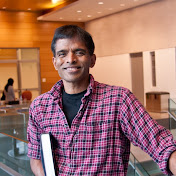
World Science Festival's Are There Limits To What Physics Can Explain? | World Science Festival: skim's analysis identifies 14 key moments. Brian Greene and Marcelo Gleiser explore the limits of physics, the origins of life and consciousness, and the human drive for understanding, contrasting scientific inquiry with philosophical perspectives on mortality and existence.
Category: Science. Format: Panel Discussion. YouTube video analyzed by skim.
skim AI Analysis
Credibility assessment: Highly Credible. The discussion features two highly respected theoretical physicists, Brian Greene and Marcelo Gleiser, who engage in a deep, nuanced conversation grounded in scientific principles and philosophical inquiry. Their expertise and thoughtful exchange lend significant credibility to the content.
Bias assessment: Slightly Philosophical. While striving for objectivity, the conversation leans towards philosophical interpretations of scientific concepts, particularly concerning consciousness, purpose, and the nature of reality. This philosophical lens, while enriching, introduces a subjective element.
Originality: 78% — Thought-Provoking. The video explores fundamental questions about existence, consciousness, and the limits of physics, moving beyond standard scientific discourse to engage with philosophical and existential themes. The interdisciplinary approach and the exploration of less conventional ideas contribute to its originality.
Depth: 85% — Deeply Analytical. The speakers delve into complex topics such as the nature of reality, the origin of life and consciousness, and the implications of physics with remarkable depth. They dissect concepts, explore different theoretical frameworks, and engage in rigorous intellectual debate.
Key Points (14)
1. The Limits of Knowledge
Timestamp: 00:00:00 to 00:01:27
While the fundamental structure of reality might be simple enough to grasp, our current technological capabilities and understanding create an 'epistemic problem,' making it impossible to definitively reach the 'bottom' of physical laws. It's a continuous quest, like 'turtles all the way down,' requiring further technological advancement to probe deeper.
Significance (Medium): This highlights the inherent limitations of scientific exploration, suggesting that even with theoretical breakthroughs, empirical verification remains a significant hurdle, pushing the boundaries of what we can know.
Sources in support: Brian Greene (Host and Theoretical Physicist), Marcelo Gleiser (Guest and Theoretical Physicist)
2. Marcelo Gleiser: The Urge for Awe
Timestamp: 00:02:36 to 00:06:41
The human drive to understand the universe stems not just from a fear of mortality, as Brian Greene posits, but more profoundly from an innate urge for awe, wonder, and connection. This perspective reframes our existential quest as an embrace of life's privilege, rather than a calculus of loss.
Significance (Medium): This reframing of existential motivation offers a more positive and celebratory view of human curiosity, linking our scientific and creative impulses to a deeper appreciation for existence itself.
Sources in support: Marcelo Gleiser (Guest and Theoretical Physicist)
Sources against: Brian Greene (Host and Theoretical Physicist)
3. The Mystery of Life's Origin
Timestamp: 00:10:30 to 00:16:39
The transition from non-living matter to life, even at the single-cell level, is a profound mystery. While science has moved away from vitalistic explanations, the emergence of autonomy and the drive to survive in organisms like bacteria, without a 'conductor' or conscious intent, remains difficult to fully model or explain through physics alone.
Significance (High): This highlights a significant gap in our understanding of abiogenesis, suggesting that the inherent 'urge' or autonomy in living systems may require explanations beyond current physical laws.
Sources in support: Marcelo Gleiser (Guest and Theoretical Physicist)
Neutral sources: Brian Greene (Host and Theoretical Physicist)
4. Recreating Life: Practical vs. Principle
Timestamp: 00:19:09 to 00:22:34
Creating life in a laboratory is a monumental challenge, primarily an 'epistemic problem' due to our incomplete knowledge of Earth's early conditions. While demonstrating life as organized chemistry would be a milestone, it differs fundamentally from life's spontaneous emergence without an intelligent 'conductor.'
Significance (Medium): This distinction between guided creation and spontaneous emergence raises critical questions about what constitutes 'life' and whether laboratory synthesis can truly replicate the natural origin of life.
Sources in support: Marcelo Gleiser (Guest and Theoretical Physicist)
Neutral sources: Brian Greene (Host and Theoretical Physicist)
5. Brian Greene: The 'Awesome' of Natural Selection
Timestamp: 00:23:03 to 00:26:16
Successfully recreating a single cell in a lab would be spectacular, potentially revealing multiple pathways to life. However, Greene views this as short-circuiting natural selection's trial-and-error process, which, given vast time and space, achieved complex life without a conductor, an 'awesome' feat in itself.
Significance (Medium): This perspective emphasizes the power and elegance of natural evolutionary processes, suggesting that the 'awesomeness' lies not just in the outcome but in the unguided journey of life's emergence.
Sources in support: Brian Greene (Host and Theoretical Physicist)
Neutral sources: Marcelo Gleiser (Guest and Theoretical Physicist)
6. Marcelo Gleiser: The Wonder of Unconducted Life
Timestamp: 00:26:16 to 00:28:03
The true wonder lies in life's emergence and evolution on Earth without any guiding intelligence or 'conductor.' While creating life in a lab is spectacular, it's fundamentally different from the spontaneous, trial-and-error process that unfolded over deep time, showcasing the inherent marvel of unguided natural processes.
Significance (Medium): Gleiser's emphasis on the 'awesomeness' of unguided emergence highlights the profound mystery and beauty of life's natural origins, positioning it as a pinnacle of cosmic evolution.
Sources in support: Marcelo Gleiser (Guest and Theoretical Physicist)
Neutral sources: Brian Greene (Host and Theoretical Physicist)
7. Brian Greene: The Decline of Creation Stories
Timestamp: 00:29:26 to 00:31:25
Brian Greene observes that while creation myths were once central to human culture and religion, they have become more niche and technical in the modern scientific age. He questions whether society has lost something profound by moving away from these narratives that once anchored our understanding of existence.
Significance (Medium): This point highlights a cultural shift from mythic storytelling to scientific explanation, raising questions about whether the enchantment and sense of belonging derived from ancient narratives are being replaced by a more fragmented, technical worldview.
Sources in support: Marcelo Gleiser (Guest and Theoretical Physicist)
Neutral sources: Brian Greene (Host and Theoretical Physicist)
8. Brian Greene & Marcelo Gleiser: The Finite Nature of Existence
Timestamp: 00:32:36 to 00:35:21
Both Gleiser and Greene express a preference for finite existence over immortality, viewing eternal life as potentially boring and devoid of meaning due to the loss of temporal significance. They suggest that the human drive for immortality stems from a fear of death, and that focusing on the life we have is more valuable.
Significance (High): This perspective challenges the common desire for eternal life, arguing that finitude is essential for meaning and appreciation. It suggests that embracing our mortality is key to living a richer, more engaged life.
Sources in support: Marcelo Gleiser (Guest and Theoretical Physicist), Brian Greene (Host and Theoretical Physicist)
9. Marcelo Gleiser: The Brain's Survival Bias
Timestamp: 00:35:34 to 00:37:17
Gleiser argues that the human brain, evolved for survival, possesses an inherent bias that limits our ability to understand 'true reality.' Our cognitive tools are designed for practical needs, not for grasping ultimate truths, making complete comprehension an unattainable goal.
Significance (High): This viewpoint suggests that our very biological design imposes fundamental limits on our knowledge, implying that even advanced science may only ever provide incomplete 'maps' of reality, rather than the territory itself.
Sources in support: Brian Greene (Host and Theoretical Physicist)
Neutral sources: Marcelo Gleiser (Guest and Theoretical Physicist)
10. Brian Greene: Mathematics as Human Invention
Timestamp: 00:38:54 to 00:40:43
Brian Greene controversially posits that mathematics is a human invention, not an inherent feature of reality waiting to be discovered. He believes concepts like prime numbers and triangles exist within the human mind, not in a platonic realm.
Significance (High): This challenges the common view among physicists that mathematics is the language of the universe, suggesting that our scientific models are constructs of the human intellect rather than direct reflections of objective reality.
Sources in support: Marcelo Gleiser (Guest and Theoretical Physicist)
Neutral sources: Brian Greene (Host and Theoretical Physicist)
11. Marcelo Gleiser: The Limits of Scientific Exploration
Timestamp: 00:40:43 to 00:42:56
Gleiser contends that even if we could theoretically reach the 'bottom' of reality, we might not recognize it or be able to confirm it due to technological limitations and the ever-receding horizon of discovery. He embraces 'epistemic humility,' accepting that not all knowledge may be attainable.
Significance (High): This perspective underscores the inherent uncertainty in scientific inquiry, suggesting that the pursuit of knowledge is an ongoing process of creating 'maps' rather than reaching a final, definitive understanding of the 'territory.'
Sources in support: Brian Greene (Host and Theoretical Physicist)
Neutral sources: Marcelo Gleiser (Guest and Theoretical Physicist)
12. Brian Greene & Marcelo Gleiser: Psychedelics and Perception
Timestamp: 00:43:25 to 00:45:32
The discussion explores whether psychedelics offer genuine insights into reality or merely alter brain chemistry. While acknowledging their transformative and healing potential for individuals, they note the debate on whether these experiences reveal objective truths or subjective fabrications.
Significance (Medium): This delves into the controversial intersection of altered states and reality perception, suggesting that while psychedelics can induce profound experiences and neuroplasticity, their capacity to unveil objective reality remains a subject of intense debate.
Sources in support: Marcelo Gleiser (Guest and Theoretical Physicist), Brian Greene (Host and Theoretical Physicist)
13. Brian Greene: The AI Knowledge Conundrum
Timestamp: 00:48:03 to 00:49:31
Brian Greene questions whether knowledge derived from an AI, even if verifiable and accurate, constitutes 'new knowledge' if its internal workings remain a black box. He highlights the potential for AI to provide answers that transcend human comprehension, blurring the lines of what constitutes understanding.
Significance (High): This probes the epistemological implications of advanced AI, suggesting that the source and comprehensibility of knowledge are as crucial as its accuracy, and that AI-generated insights might challenge our very definition of understanding.
Sources in support: Marcelo Gleiser (Guest and Theoretical Physicist)
Neutral sources: Brian Greene (Host and Theoretical Physicist)
14. Marcelo Gleiser: AI and the Nature of Consciousness
Timestamp: 00:48:45 to 00:51:23
Gleiser firmly believes AI cannot achieve consciousness because consciousness is embodied and experiential, involving subjective feelings and interactions with the world that cannot be purely programmed. He likens an omniscient AI to a divine entity, beyond the scope of current algorithmic understanding.
Significance (High): This stance draws a clear line between advanced computation and genuine consciousness, suggesting that the subjective, embodied nature of human experience is a fundamental barrier to artificial sentience.
Sources in support: Brian Greene (Host and Theoretical Physicist)
Neutral sources: Marcelo Gleiser (Guest and Theoretical Physicist)
This analysis was generated by skim (skim.plus), an AI-powered content analysis platform by Credible AI. Scores and classifications represent the platform's AI-generated assessment and should be considered alongside other sources.