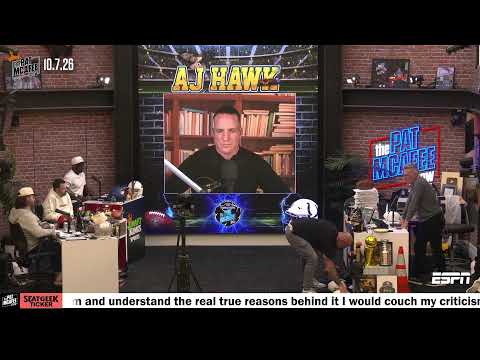
Pat McAfee highlights the ongoing MLB postseason action while pointing out looming collective bargaining negotiations. He notes that the lack of a salary cap creates both super-team deferred contracts and financial parity debates across small and large market franchises. The segment highlights how structural economic models dictate competitive balance.
Lane Johnson Retires From the NFL
AQ Shipley and the panel examine Lane Johnson's mid-season decision to step away from football for mental health and family priorities. The former players emphasize that offensive tackle demands immense mental resilience and physical sacrifice when physical standards begin to slip. They conclude that stepping away on one's own terms represents a deeply personal and respectable decision.
JJ Watt Evaluates Line Competitors
JJ Watt shares personal reflections on competing against Lane Johnson, recalling a matchup where Johnson played with relentless intensity after a Pro Bowl snub. Watt cautions commentators against judging Johnson's sudden departure without understanding the extreme physical and mental standards top players uphold. He underscores that even slight physical declines feel catastrophic to elite athletes.
Kenneth Walker Transforms Chiefs Offense
JJ Watt explains how the addition of running back Kenneth Walker III has opened up play-action passing opportunities for Patrick Mahomes and the Kansas City Chiefs. Defenses are forced to respect the running game and commit linebackers, creating favorable spacing for targets like Travis Kelce. This schematic balance has restored offensive rhythm to Kansas City.
Defensive Rotations and Snap Counts
AQ Shipley and JJ Watt debate the pros and cons of rotating top defensive linemen like Maxx Crosby and TJ Watt throughout four quarters. While rotation preserves stamina for late-game situations, taking a star off the field risks giving up massive chunk plays on rushing downs. Defensive stars often struggle mentally with sitting out plays where a decisive sack could have occurred.
Rushing Efficiency Dictates Coverage Spacing
AQ Shipley asks JJ Watt how establishing a dominant ground game reshapes defensive secondary structures. Watt explains that a credible ground threat forces safeties into the box and delays pass rushers from teeing off in true pass-rush sets. The resulting offensive unpredictability provides quarterbacks critical split seconds to locate downfield targets.
Cam Jurgens Traded to Ravens
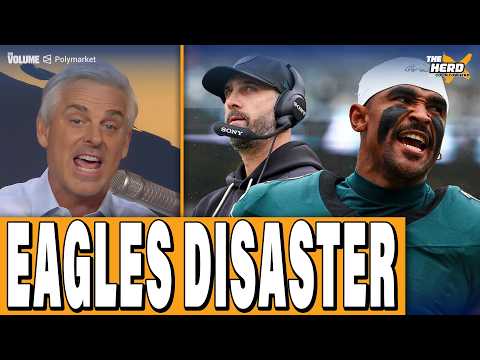
The panel reacts in real time as news breaks that the Philadelphia Eagles have traded center Cam Jurgens to the Baltimore Ravens for future draft picks. Coupled with Lane Johnson's retirement and Landon Dickerson's injury, Philadelphia suddenly loses multiple core starters upfront. The hosts debate whether the Eagles are entering a soft rebuild or capitalizing on draft assets.
Offensive Line Reconstruction in Philadelphia
AQ Shipley breaks down the implications of losing three starting offensive linemen in quick succession for the Philadelphia Eagles. Moving Jurgens away from guard to Baltimore leaves Philadelphia relying heavily on reserve linemen like Mekhi Becton and Tyler Steen. Shipley emphasizes that offensive line play depends entirely on unit continuity and shared instincts.
Jason Kelce Reacts to Line Moves
Jason Kelce joins live from London to share his reaction to Cam Jurgens being traded and Lane Johnson retiring. Kelce expresses support for Jurgens returning to his natural center position in Baltimore while praising Johnson's unmatched career as an elite pass protector. He stresses that stepping away after a lengthy career requires immense self-awareness.
Handling External Noise in Philadelphia
Jason Kelce explains how players must handle media criticism and fan frustration in demanding sports markets like Philadelphia. Rather than tuning everything out, Kelce advises athletes to evaluate whether external critique contains truthful feedback about their execution. He maintains that on-field performance ultimately dictates narrative control.
Canelo Alvarez Details Modern Camp Conditioning
Canelo Alvarez joins from his training base in Gandia, Spain to discuss preparing for his upcoming fight against Christian Mbilli. Alvarez explains that modern camp protocols emphasize personalized technology, biometric testing, and tailored recovery over generic old-school regimens. He emphasizes that custom training preserves his stamina and power at age 36.
Canelo Alvarez Discusses Nutrition and Focus
Canelo Alvarez describes his fight-day nutritional approach, noting that strategic carbohydrate loading and steady rehydration are essential to avoid fatigue in late rounds. He stresses the necessity of blocking out crowd distractions and walk-out spectacle once entering the arena. Strict discipline during weight cuts and fight-night preparation remains crucial to his sustained championship run.
Cowboys Pin and Pull Scheme
AQ Shipley highlights the Dallas Cowboys offensive line in his weekly rankings, breaking down a textbook pin-and-pull run design. Left guard TJ Bass and center Cooper Beebe pull into space against opposing linebackers and secondary defenders to open a clean touchdown lane. The film shows Dallas establishing physical dominance at the point of attack.
49ers Seal Blocks and Backside Leverage
AQ Shipley analyzes the San Francisco 49ers offensive line and backfield motion under Kyle Shanahan. Trent Williams seals the edge while Kyle Juszczyk executes a kick-out block on the outside linebacker, opening an interior cutback lane for Deebo Samuel. Shipley notes San Francisco has not surrendered a sack through four weeks.
Bears Front Paves Way for Rushing Scores
AQ Shipley evaluates the Chicago Bears offensive line, detailing how tight end Cole Kmet and guard Joe Thuney clear linebackers on second-level blocks. Motion from the perimeter draws defensive back leverage away from the designated gap, allowing Chicago rushers to hit creases untouched. The segment emphasizes the steady development of Chicago's line under Ben Johnson.
Falcons Leverage and Linestrom Pulls
AQ Shipley examines the Atlanta Falcons offensive line, praising guard Chris Lindstrom and tight end Charlie Woerner for setting perimeter cutbacks for Bijan Robinson. Pre-snap motion forces opposing linebackers to shift leverage, allowing interior linemen to climb to the second level. The Falcons front five continues to generate explosive running room.
Chiefs Top Rushing Line Rankings
AQ Shipley names the Kansas City Chiefs as the premier offensive line of Week 4, praising left tackle Kingsley Suamataia and right tackle Jawaan Taylor. Running back Kenneth Walker III capitalizes on reach blocks and perimeter seals to break off chunk gains and outrun defensive pursuit. The Kansas City front front five combines athletic reach blocking with physical finishes.
Texans Coverage Breakdowns Against CeeDee Lamb
An analyst presents his Situational Report examining how the Houston Texans allowed Dallas Cowboys receiver CeeDee Lamb to post 17 catches and 189 yards. Film reveals Houston defenders passing off Lamb into vacant grass, leaving him completely uncovered on crossers and red zone posts. Butler criticizes the lack of schematic adjustments and awareness late in a close contest.
Secondary Turnovers Deciding Games
An analyst analyzes game-clinching defensive plays, highlighting Denzel Ward's outside leverage against Michael Pittman Jr. and Deonte Banks' goal-line pick-six against the Arizona Cardinals. Butler emphasizes that in the red zone, cornerbacks must never yield inside slants and should treat the goal line like a cliff edge. Disciplined leverage and aggressive route anticipation seal crucial victories.