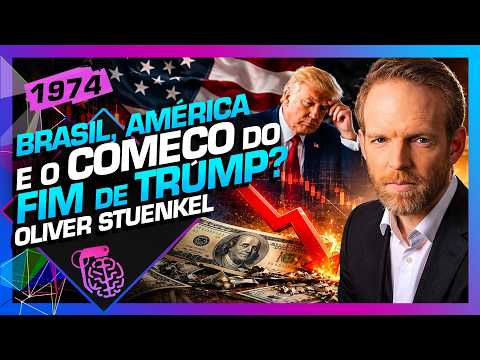
Inteligência Ltda's BRASIL, AMÉRICA E O COMEÇO DO FIM DE TRUMP? - OLIVER STUENKEL - Inteligência Ltda. Podcast #1974: skim's analysis identifies 21 key moments, with 1 potential conflict of interest flagged. International relations professor Oliver Stuenkel analyzes how Donald Trump's historic U.
Category: Politics. Format: Interview. YouTube video analyzed by skim.
Key Points (21)
1. Stuenkel on Trump's Historic Midterm Defeat
Timestamp: 00:04:24 to 00:07:34
Oliver Stuenkel states that Donald Trump suffered a historic midterm election defeat, losing both the House and Senate while remaining constitutionally barred from re-election in 2028. This shift forces conservative Latin American governments that won seven of the last eight regional elections to reconsider their alignment with Washington.
Significance (High): Losing both chambers of Congress weakens Donald Trump's leverage abroad and leaves ideologically aligned Latin American governments exposed ahead of 2028.
Sources in support: Oliver Stuenkel (Professor of International Relations at FGV and Researcher at Carnegie Endowment)
Neutral sources: Rogério Vilela (Host of Inteligência Ltda. Podcast)
2. Imperial Presidency Meets a Democratic Congress
Timestamp: 00:10:04 to 00:17:54
While legislatures in Brazil and Peru have grown stronger relative to the executive, the U.S. presidency has accumulated vast power over pardons and unapproved military strikes. However, because Democrats won roughly 260 House seats and 55 to 56 Senate seats, they can now investigate Donald Trump and paralyze domestic lawmaking.
Significance (High): A divided government creates legislative gridlock in Washington, as Democrats avoid giving Donald Trump policy wins and Trump can veto Democratic bills.
Sources in support: Oliver Stuenkel (Professor of International Relations at FGV and Researcher at Carnegie Endowment)
Neutral sources: Rogério Vilela (Host of Inteligência Ltda. Podcast)
3. Unexplained Iran War and ICE Raids Cost Votes
Timestamp: 00:17:55 to 00:24:01
Voters punished the Republicans because Donald Trump failed to prepare the public for the economic sacrifices of attacking Iran and pursued harsh deportations of non-violent undocumented migrants. This alienated Latino, female, and youth voters, prompting JD Vance to publicly blame the Iran war for the electoral defeat.
Significance (High): The electoral backlash shows that militarized foreign policy and aggressive deportations can fracture the populist coalition that elected Donald Trump.
Sources in support: Oliver Stuenkel (Professor of International Relations at FGV and Researcher at Carnegie Endowment)
Neutral sources: Rogério Vilela (Host of Inteligência Ltda. Podcast)
4. U.S. Strikes Consolidated the Iranian Regime
Timestamp: 00:24:03 to 00:27:52
Oliver Stuenkel argues that Donald Trump's military strikes against Iran backfired by rallying even regime opponents against American aggression and facilitating a generational leadership transition to the leader's son. By bombing regional neighbors hosting U.S. bases, Iran demonstrated that American protection carries severe risks.
Significance (High): Instead of toppling Tehran, limited U.S. strikes unified Iranian domestic opposition behind the government and exposed the vulnerability of Gulf allies.
Sources in support: Oliver Stuenkel (Professor of International Relations at FGV and Researcher at Carnegie Endowment), Rogério Vilela (Host of Inteligência Ltda. Podcast)
5. Disconnect Over Gas Prices and White House Decor
Timestamp: 00:27:58 to 00:33:23
While voters struggled with inflation and high gasoline prices, Donald Trump spent hours in campaign speeches boasting about Venezuelan oil deals, a planned triumphal arch in Washington, and a White House ballroom renovation. Furthermore, Trump voters expressed frustration over perceived corruption involving UAE investments in Trump-controlled crypto firms.
Significance (Medium): Focusing on personal vanity projects and opaque foreign business deals eroded Donald Trump's 2016 anti-establishment appeal among centrist and MAGA voters.
Sources in support: Oliver Stuenkel (Professor of International Relations at FGV and Researcher at Carnegie Endowment)
Neutral sources: Rogério Vilela (Host of Inteligência Ltda. Podcast)
6. Stuenkel Contrasts Rubio Hawks and Vance
Timestamp: 00:33:25 to 00:41:55
Oliver Stuenkel outlines parallel ideological splits in both U.S. parties: traditional interventionist Republicans like Marco Rubio clash with anti-interventionist MAGA figures like JD Vance. Simultaneously, establishment Democrats like Joe Biden and Chuck Schumer face an ascendant Democratic Socialist wing inspired by Bernie Sanders that champions anti-billionaire economic populism.
Significance (High): The decline of traditional party establishments on both sides points toward economic populism and skepticism of foreign military alliances in 2028.
Sources in support: Oliver Stuenkel (Professor of International Relations at FGV and Researcher at Carnegie Endowment)
Neutral sources: Rogério Vilela (Host of Inteligência Ltda. Podcast)
7. Universal Healthcare Push and End of AIPAC Consensus
Timestamp: 00:41:58 to 00:45:54
New Democratic candidates demand universal public healthcare far beyond Obamacare and sharply criticize Israel's actions in Gaza and the West Bank, turning financial backing from lobby groups like AIPAC into an electoral liability. Seeing this shift, Donald Trump even promised the day before the election to end U.S. military aid to Israel.
Significance (High): The collapse of bipartisan unconditional support for Israel marks a major realignment in U.S. Middle East policy.
Sources in support: Oliver Stuenkel (Professor of International Relations at FGV and Researcher at Carnegie Endowment)
Neutral sources: Rogério Vilela (Host of Inteligência Ltda. Podcast)
8. Why Trump Rejected a Massive Post-Midterm Iran Strike
Timestamp: 00:45:54 to 00:54:25
Oliver Stuenkel explains that Donald Trump discarded rumors of a massive post-election attack on Iran because economic advisors warned that depleting strategic oil reserves after nine months of conflict would trigger an oil price explosion. Stuenkel notes that Benjamin Netanyahu had originally appealed to Trump's vanity with hopes of a quick victory and a Nobel Peace Prize, with little pushback from cabinet advisors.
Significance (High): Depleted strategic petroleum reserves constrain U.S. military escalation, as further war risks severe domestic inflation ahead of 2028.
Sources in support: Oliver Stuenkel (Professor of International Relations at FGV and Researcher at Carnegie Endowment)
Neutral sources: Rogério Vilela (Host of Inteligência Ltda. Podcast)
9. Stephen Miller Appointed as Lame-Duck Trump Eyes Cuba
Timestamp: 00:54:45 to 00:59:02
Following the midterms, Donald Trump fired Chief of Staff Susie Wiles and appointed hardline immigration architect Stephen Miller, signaling potential radicalization. Because a lame-duck president blocked by Congress has little domestic room to maneuver, Stuenkel warns Trump may seek foreign policy trophies by pressuring Cuba or Nicaragua while pressuring Ukraine into a deal with Russia.
Significance (High): Replacing pragmatic staff with ideological hardliners while domestically paralyzed increases the likelihood of unpredictable U.S. foreign interventions.
Sources in support: Oliver Stuenkel (Professor of International Relations at FGV and Researcher at Carnegie Endowment)
Neutral sources: Rogério Vilela (Host of Inteligência Ltda. Podcast)
10. Diesel Prices in Kansas and Neighborhood Fear of ICE
Timestamp: 00:59:02 to 01:04:32
Reflecting on two years living in the U.S., Oliver Stuenkel notes that high diesel prices hurt farmers so severely that traditionally Republican states like Kansas voted Democratic. Meanwhile, aggressive ICE enforcement created such fear in local neighborhoods that Latino parents asked lighter-skinned neighbors to walk their children to school, leaving conservative voters disillusioned as Trump governed like George W. Bush.
Significance (Medium): Everyday economic pain for farmers and visible community disruption from immigration raids eroded Donald Trump's support across both rural and suburban America.
Sources in support: Oliver Stuenkel (Professor of International Relations at FGV and Researcher at Carnegie Endowment)
Neutral sources: Rogério Vilela (Host of Inteligência Ltda. Podcast)
11. American Backlash Against Data Centers and AI Jobs
Timestamp: 01:04:32 to 01:12:42
Unlike in Brazil where both Lula and Flávio welcomed data center investments, Americans increasingly resent Big Tech and fear data centers will raise local electricity prices. Stuenkel adds that artificial intelligence is replacing entry-level work for young lawyers and research assistants while contributing to severe social isolation among university students.
Significance (Medium): Growing public hostility toward Big Tech and AI-driven youth unemployment fuels anti-establishment populism and demands for tech regulation in the U.S.
Sources in support: Oliver Stuenkel (Professor of International Relations at FGV and Researcher at Carnegie Endowment), Rogério Vilela (Host of Inteligência Ltda. Podcast)
12. Stuenkel Warns of Cyberattacks and U.S.-Brazil Ties
Timestamp: 01:12:42 to 01:20:59
While two oceans shield the U.S. from conventional invasion, Oliver Stuenkel warns that societies remain unprepared for catastrophic cyberattacks on power grids and hospitals. Turning to Brazil, he notes that after Trump's administration relied on Bolsonarista lobbying in Mar-a-Lago and wrongly bet on Flávio winning, Washington will likely normalize ties with Lula to avoid pushing Brazil closer to China, even though Trump's refusal to recognize the election currently blocks Brazil's agrément for a new U.S. ambassador.
Significance (High): Despite diplomatic friction over election recognition, pragmatic competition with China pushes Washington toward stabilizing relations with Lula's government.
Sources in support: Oliver Stuenkel (Professor of International Relations at FGV and Researcher at Carnegie Endowment)
Neutral sources: Rogério Vilela (Host of Inteligência Ltda. Podcast)
13. Venezuela Oil Deals, Cuba Sanctions, and Campaign Trail
Timestamp: 01:20:59 to 01:30:40
Oliver Stuenkel states that Democrats will scrutinize Donald Trump's opaque oil agreements with Delcy Rodríguez's dependent regime in Venezuela, where Trump opposes Nobel laureate María Corina Machado taking power. Stuenkel also argues that U.S. sanctions perversely help Cuba's police state survive by giving it an external scapegoat and driving youth emigration, while noting that Republican candidates actively dodged the unpopular Trump during the midterms.
Significance (High): Democratic congressional oversight threatens the legal standing of Donald Trump's Venezuelan oil arrangements with Delcy Rodríguez.
Sources in support: Oliver Stuenkel (Professor of International Relations at FGV and Researcher at Carnegie Endowment)
Neutral sources: Rogério Vilela (Host of Inteligência Ltda. Podcast)
14. Netanyahu's Strategy Erodes U.S. Support for Israel
Timestamp: 01:30:40 to 01:35:06
Responding to a viewer question, Oliver Stuenkel argues that decades of unconditional U.S. backing encouraged Israel to take excessive strategic risks rather than normalizing regional ties. With more Americans now viewing Palestine positively than Israel, Benjamin Netanyahu's aggressive posture has turned pro-Israel advocacy into an electoral problem for U.S. politicians.
Significance (High): The erosion of American public sympathy forces future Israeli leaders to rebuild bipartisan legitimacy in Washington from a weakened position.
Sources in support: Oliver Stuenkel (Professor of International Relations at FGV and Researcher at Carnegie Endowment)
Neutral sources: Rogério Vilela (Host of Inteligência Ltda. Podcast), Leni (Co-host and Producer at Inteligência Ltda. Podcast)
15. James Talarico and the Rise of the U.S. Religious Left
Timestamp: 01:43:10 to 01:49:39
Oliver Stuenkel highlights newly elected Texas Senator James Talarico, a Presbyterian seminarian who uses biblical theology to challenge conservative policies such as mandatory Ten Commandments displays in classrooms. Simultaneously, Democrats like Texas Governor-elect Gina Hinojosa dropped culture war and 'woke' terminology to focus strictly on lowering the cost of living.
Significance (High): Combining Christian theological arguments with strict kitchen-table economics allows Democrats to compete in conservative strongholds like Texas.
Sources in support: Oliver Stuenkel (Professor of International Relations at FGV and Researcher at Carnegie Endowment)
Neutral sources: Rogério Vilela (Host of Inteligência Ltda. Podcast)
16. District Voting and the Battle for Latino Voters
Timestamp: 01:49:39 to 01:58:43
Oliver Stuenkel explains that single-member district voting entrenches the U.S. two-party system by preventing third-party parliamentary representation. Looking toward 2028, he argues that Republicans must rebuild their coalition after losing socially conservative Latino voters who were alienated by mass deportations, predicting a future president will eventually grant amnesty to non-violent undocumented residents.
Significance (Medium): Because the U.S. economy relies heavily on undocumented labor, mass deportation policies remain politically and economically unsustainable long-term.
Sources in support: Oliver Stuenkel (Professor of International Relations at FGV and Researcher at Carnegie Endowment), Rogério Vilela (Host of Inteligência Ltda. Podcast)
17. Stuenkel Says Trump's Decline Hurts Milei and Bukele
Timestamp: 01:58:43 to 02:03:13
Oliver Stuenkel argues that among Latin American right-wing leaders, Argentina's Javier Milei is the most exposed to Donald Trump's decline because Milei publicly endorsed Republican candidates, risking Democratic resistance if Argentina needs another financial bailout. El Salvador's Nayib Bukele and Venezuela's Delcy Rodríguez also face Democratic congressional scrutiny over prison and oil arrangements.
Significance (High): Foreign leaders who tied their domestic survival to partisan alignment with Donald Trump now face congressional hostility in Washington.
Sources in support: Oliver Stuenkel (Professor of International Relations at FGV and Researcher at Carnegie Endowment)
Neutral sources: Leni (Co-host and Producer at Inteligência Ltda. Podcast)
18. 2028 Presidential Contenders From Ossoff to Vance
Timestamp: 02:03:14 to 02:10:38
Oliver Stuenkel identifies Democratic figures who won in competitive or red states, such as Georgia's Jon Ossoff, Pennsylvania's Josh Shapiro, Kentucky's governor, and Texas's James Talarico, as top 2028 presidential contenders alongside Abdul El-Sayed and Alexandria Ocasio-Cortez. On the Republican side, he expects a contest between JD Vance, potentially paired with Tucker Carlson, and Marco Rubio.
Significance (Medium): Widespread voter discontent with political elites favors younger 2028 presidential candidates born in the 1970s or 1980s who can win swing states.
Sources in support: Oliver Stuenkel (Professor of International Relations at FGV and Researcher at Carnegie Endowment)
Neutral sources: Rogério Vilela (Host of Inteligência Ltda. Podcast), Leni (Co-host and Producer at Inteligência Ltda. Podcast)
19. Brazil's Autonomy, Mexico Cartel Risks, Paraguay Bank
Timestamp: 02:10:38 to 02:20:54
Oliver Stuenkel notes that while Brazil can leverage rare earths and clean energy to build strategic autonomy between the U.S. and China, high U.S. interest rates and Lula's weak congressional support limit regional leadership. He also praises Mexican President Claudia Sheinbaum's handling of Trump while noting lingering risks of U.S. strikes on cartels, and explains how a major bank collapse in Paraguay damaged investor confidence after insider lending.
Significance (Medium): Domestic fiscal pressures in Brazil, U.S. security demands on Mexico, and institutional fragility in Paraguay constrain Latin America's room for maneuver.
Sources in support: Oliver Stuenkel (Professor of International Relations at FGV and Researcher at Carnegie Endowment)
Neutral sources: Rogério Vilela (Host of Inteligência Ltda. Podcast), Leni (Co-host and Producer at Inteligência Ltda. Podcast)
20. Russian Hybrid Warfare in Europe and Baltic Risks
Timestamp: 02:20:55 to 02:28:55
Addressing Brazilians worried about living in Europe, Oliver Stuenkel states that while Ukraine can hold out for another one to two years with European aid, Russia is conducting hybrid attacks such as a drone incident at Leipzig airport and cyberattacks. He advises caution about buying property in Baltic states like Lithuania where Russia could test NATO's Article 5, noting that Finnish food-stockpiling advice targets cyber-induced power outages.
Significance (Medium): Without unconditional U.S. backing, Central and Eastern Europe face a prolonged era of Russian hybrid warfare and Baltic security risks.
Sources in support: Oliver Stuenkel (Professor of International Relations at FGV and Researcher at Carnegie Endowment)
Neutral sources: Rogério Vilela (Host of Inteligência Ltda. Podcast)
21. Nvidia CEO Espionage Scandal Deepens U.S.-China Rift
Timestamp: 02:33:19 to 02:41:11
Oliver Stuenkel discusses a scandal in which the CEO of Nvidia was romantically involved with a woman who ran a company accused of diverting cutting-edge Nvidia chips to restricted Chinese entities, even after intelligence warnings surfaced a year earlier. He warns this intelligence failure will trigger strict Silicon Valley rules and deepen mutual suspicion that already discourages U.S. students and future diplomats from studying in China.
Significance (High): The alleged infiltration of Nvidia's leadership strikes at the core of U.S. semiconductor export controls and accelerates U.S.-China decoupling.
Sources in support: Oliver Stuenkel (Professor of International Relations at FGV and Researcher at Carnegie Endowment), Rogério Vilela (Host of Inteligência Ltda. Podcast)
This analysis was generated by skim (skim.plus), an AI-powered content analysis platform by Credible AI. Scores and classifications represent the platform's AI-generated assessment and should be considered alongside other sources.