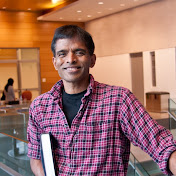
Abhijit Chavda's Delimitation and RESERVATIONS | Dr. Gautam Desiraju, Deekhit B on Abhijit Chavda Podcast 105: skim's analysis identifies 17 key moments, with 2 potential conflicts of interest flagged. This podcast episode critically examines India's reservation system and the historical context of caste.
Category: Politics. Format: Interview. YouTube video analyzed by skim.
skim AI Analysis
Credibility assessment: Well-Researched but Opinionated. The speakers, particularly Professor Desiraju, draw upon historical texts, legal judgments, and societal observations to build their arguments. However, the analysis is heavily framed by their specific viewpoints on reservations and the historical interpretation of caste, leading to a strong, sometimes polemical, stance rather than purely objective reporting.
Bias assessment: Reservation Skepticism. The discussion consistently frames reservations as a problematic system that has deviated from its original intent, becoming a tool for politicians and creating 'islands of special interest groups.' While acknowledging historical context, the narrative leans heavily towards critiquing the reservation system's efficacy and perpetuation.
Originality: 77% — Nuanced Historical Perspective. The video offers a deep dive into the historical evolution of caste and its intersection with modern Indian socio-political structures. It challenges common misconceptions about varna and jati, presenting a less-discussed perspective on the British influence in solidifying the caste system and its impact on reservations and delimitation.
Depth: 83% — Deep Historical & Legal Dive. The speakers meticulously dissect the origins and evolution of reservations, referencing the Puna Pact, Ambedkar's views, and the Mandal Commission. They also delve into the complexities of varna, jati, and the historical imposition of the caste system by the British, linking these to contemporary issues like delimitation. The analysis is thorough and multi-faceted.
Key Points (17)
1. Gautam Desiraju: The Perversion of Reservations
Timestamp: 00:00:30 to 00:04:39
Reservations, initially conceived as a temporary measure to uplift socially backward communities, have been systematically transformed into a tool for political gain and the creation of 'vote banks.' This shift has corrupted the original intent, turning a mechanism for social upliftment into a system that benefits specific interest groups and politicians, rather than achieving true equality.
Significance (High): This argument reframes reservations from a social justice tool to a political instrument, questioning its effectiveness and highlighting the potential for systemic abuse.
Sources in support: Gautam R. Desiraju (Professor and Co-author), Deekhit B (Co-author)
Neutral sources: Abhijit Chavda (Host)
2. Gautam Desiraju: Varna vs. Jati vs. Caste
Timestamp: 00:11:53 to 00:16:52
The terms varna and jati, often conflated with the British-defined 'caste,' represent distinct concepts. Varna was a broader, more fluid classification, while jati was often profession-based and exhibited flexibility, with inter-jati and intra-jati mobility and alliances. The British 'caste' system, however, imposed a rigid, hereditary, and often discriminatory structure, fundamentally altering the social landscape.
Significance (Medium): This distinction is crucial for understanding the historical evolution of Indian social structures and highlights how colonial policies may have distorted or exacerbated existing social stratifications.
Sources in support: Gautam R. Desiraju (Professor and Co-author), Deekhit B (Co-author)
Neutral sources: Abhijit Chavda (Host)
3. Deekhit B: The British Imposition of Caste Rigidity
Timestamp: 00:12:26 to 00:21:24
The rigid, hereditary caste system, as it is commonly understood and enforced today, was not an inherent feature of ancient Indian society but was largely a construct solidified by British colonial administration. The British, seeking administrative control and revenue, codified and rigidified social categories, transforming flexible varna and jati into inflexible, birth-based 'castes,' thereby entrenching divisions that were previously more fluid.
Significance (High): This perspective challenges the narrative of an immutable, ancient caste hierarchy, attributing its modern rigidity and discriminatory aspects significantly to colonial intervention, thereby shifting historical blame.
Sources in support: Deekhit B (Co-author), Gautam R. Desiraju (Professor and Co-author)
Neutral sources: Abhijit Chavda (Host)
4. Deekhit B: The Criminal Tribes Act and Social Engineering
Timestamp: 00:18:00 to 00:21:24
The British implemented policies like the Criminal Tribes Act, which forcibly tied certain communities to land and specific vocations, labeling them as 'criminal.' This social engineering, aimed at facilitating taxation and control, created entrenched generational divides and fostered societal opposition, a legacy that has persisted and continues to shape social dynamics.
Significance (High): This point reveals the deliberate and often destructive role of colonial policies in shaping social hierarchies and inter-group relations in India, moving beyond simple economic exploitation.
Sources in support: Deekhit B (Co-author), Gautam R. Desiraju (Professor and Co-author)
Neutral sources: Abhijit Chavda (Host)
5. Deekhit B: The Congruence of Varna, Jati, and Caste in Brahmins
Timestamp: 00:25:13 to 00:27:10
A specific subsection of Brahmins, those responsible for the ritualistic transmission and recitation of the Vedas, represents a unique case where varna, jati, and the British-defined 'caste' are largely congruent. This group, involved in temple worship and Vedic traditions, is fundamental to the civilizational identity of Bharat, and attempts to dismantle it through terms like 'Brahminical patriarchy' are misguided and potentially destructive.
Significance (Medium): This argument defends a specific traditional role within the Brahmin community as essential to Indian civilization, positioning it as a bulwark against perceived 'modernistic' principles that could erode cultural identity.
Sources in support: Deekhit B (Co-author), Gautam R. Desiraju (Professor and Co-author)
Neutral sources: Abhijit Chavda (Host)
6. Gautam Desiraju: The Delimitation Freeze and Political Influence
Timestamp: 00:29:12 to 00:30:33
The freeze on delimitation, initiated by Indira Gandhi in the 1970s, has led to significant political over-representation for rural constituencies with land but fewer people, while urban areas with larger populations are under-represented. This perpetuates an outdated system where land ownership, rather than population density, dictates political influence, particularly benefiting those who control land in sparsely populated regions.
Significance (High): This highlights a critical flaw in India's parliamentary representation, suggesting that the current political landscape is skewed by historical decisions that no longer reflect demographic realities.
Sources in support: Gautam R. Desiraju (Professor and Co-author), Deekhit B (Co-author)
Neutral sources: Abhijit Chavda (Host)
7. Gautam Desiraju: The South Indian Delimitation Conundrum
Timestamp: 00:30:46 to 00:33:42
The delimitation process has become a 'south Indian problem' due to heavily over-represented southern constituencies, creating an imbalance where each person's vote does not hold equal value. This issue is particularly acute in Tamil Nadu, fueling calls to retain outdated 1971 constituency limits.
Significance (High): This creates a fundamental inequality in democratic representation, where citizens in certain regions have a significantly diluted voice in national politics.
Sources in support: Abhijit Chavda (Host)
Neutral sources: Deekhit B (Co-author)
8. Anti-Reservation and the 'Vote Bank' Phenomenon
Timestamp: 00:31:46 to 00:34:24
The rise of anti-reservation sentiment is linked to certain groups, heavily represented in specific constituencies, receiving undue benefits and being treated as vote banks. This practice, seen in parties like DMK and Samwadi Party, clubs people through British notions of caste, granting them disproportionate representation and land ownership.
Significance (High): This system allows laws to be passed by those not truly representing the general population, but rather specific, politically-aligned groups, undermining the principle of broad-based governance.
Sources in support: Abhijit Chavda (Host)
Neutral sources: Deekhit B (Co-author)
9. The Neglected Urban Engine of India's Economy
Timestamp: 00:33:10 to 00:35:14
Vast numbers of people in big cities, who generate significant income and drive India's economic growth, are severely underrepresented in legislative bodies. Their contributions are vital for the nation's aspirational economy, yet their voices are largely absent from policy-making.
Significance (High): This disconnect means that policies may not adequately support or reflect the needs of the sectors and individuals most crucial to India's economic advancement.
Sources in support: Abhijit Chavda (Host)
Neutral sources: Deekhit B (Co-author)
10. Gautam Desiraju: The Education Crisis and Youth Disillusionment
Timestamp: 00:37:42 to 00:40:40
The Indian education system has failed its citizens since 1947, with no good thing to say about it. Young, educated individuals expect jobs commensurate with their qualifications, a basic expectation the state is unable to meet, leading to disillusionment and a feeling of nowhere to go, especially as opportunities abroad diminish.
Significance (High): This systemic failure in education and job creation breeds frustration among the youth, potentially fueling social and political unrest as they feel abandoned by the state.
Sources in support: Abhijit Chavda (Host)
Neutral sources: Deekhit B (Co-author)
11. Politicians' Myopia: Prioritizing Obscure By-Elections Over National Potential
Timestamp: 00:38:47 to 00:41:24
Politicians have become so myopic that they prioritize winning by-elections in obscure places over addressing the potential of major cities like Bangalore, Chennai, or Kolkata. This focus on trivial electoral gains distracts from crucial development and governance issues.
Significance (High): This short-sighted political strategy leads to the neglect of India's most promising urban centers, hindering national progress and economic development.
Sources in support: Abhijit Chavda (Host)
Neutral sources: Deekhit B (Co-author)
12. Deekhit B: The Absurdity of Proposed Delimitation
Timestamp: 00:42:42 to 00:44:44
The proposed delimitation by the Home Minister is absurd, especially when linked with women's reservation, as it magnifies the North-South imbalance by increasing seat numbers without addressing proportional representation. This move is driven by political expediency rather than sound policy.
Significance (High): This policy risks exacerbating existing regional disparities and undermining the principle of equitable representation, all for short-term political gains.
Sources in support: Gautam R. Desiraju (Professor and Co-author)
Neutral sources: Abhijit Chavda (Host), Deekhit B (Co-author)
13. Gautam Desiraju: The Landed Interest's Grip on Power
Timestamp: 00:44:58 to 00:46:16
The Lok Sabha's representation heavily favors landed interests, corresponding to specific castes, rather than reflecting the economic reality where secondary and tertiary sectors produce 80% of GDP. This imbalance benefits groups like the Marathas and Yadavas, who, despite not being backward, demand more reservations.
Significance (High): The legislative body is thus dominated by outdated land-based power structures, failing to represent the modern economic drivers of the country and perpetuating historical inequalities.
Sources in support: Abhijit Chavda (Host)
Neutral sources: Deekhit B (Co-author)
14. Gautam Desiraju: The Immediate Need for Policy Restraint
Timestamp: 00:58:13 to 00:59:22
The immediate priority should be to halt the proposed delimitation bill and allow for a cooling-off period. Politicians should not feel compelled to act daily; governance requires thoughtful action, not constant political maneuvering, especially concerning issues like women's reservation.
Significance (High): This advocates for a pause in potentially destabilizing policy changes, prioritizing stability and thoughtful deliberation over rushed political decisions.
Sources in support: Abhijit Chavda (Host)
Neutral sources: Deekhit B (Co-author)
15. Desiraju: The Nation on a Precipice
Timestamp: 00:59:25 to 01:00:23
India is a highly divided country, and the issue of reservations is a ticking time bomb. Youngsters trapped in the country, unable to find opportunities abroad due to ruinous loans and lack of jobs, are realizing this, leading to despair and potential large-scale violence. The government is sitting on a volcano, and if this situation is not addressed, it could lead to a scenario that enemies like China would relish.
Significance (High): This point highlights the severe socio-political instability predicted by the speaker, framing the current situation as a critical tipping point for India's future.
Sources in support: Abhijit Chavda (Host)
Neutral sources: Deekhit B (Co-author)
16. Desiraju: Pragmatism Over Ideology in Elections
Timestamp: 01:01:21 to 01:03:23
For the upcoming 2029 elections, the government should conduct them with 543 seats as before, ensuring women's reservation is implemented by having male politicians cede their seats. The focus should not be on a quarter of Lok Sabha members but on the entire country's well-being. Politicians must realize they cannot continue with the current approach; it has reached a dead end and risks inviting a 'holocaust' if problems are ignored.
Significance (High): This point advocates for a pragmatic approach to electoral reform and reservation implementation, warning of dire consequences if political inertia persists.
Sources in support: Abhijit Chavda (Host)
Neutral sources: Gautam R. Desiraju (Professor and Co-author), Deekhit B (Co-author)
17. Desiraju: Electoral Reckoning for the Ruling Party
Timestamp: 01:04:41 to 01:05:12
If the ruling party fails to course-correct after the UP election results, they will surely lose the 2029 election. Their current path is unsustainable and has reached a tipping point from which they cannot recover, regardless of opposition actions.
Significance (High): This is a bold prediction of electoral defeat, directly linking the government's current policy trajectory to its future political viability.
Sources in support: Abhijit Chavda (Host)
Neutral sources: Gautam R. Desiraju (Professor and Co-author), Deekhit B (Co-author)
This analysis was generated by skim (skim.plus), an AI-powered content analysis platform by Credible AI. Scores and classifications represent the platform's AI-generated assessment and should be considered alongside other sources.