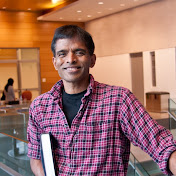
Abhijit Chavda's Iran's Victory, Adani Vindicated, Saudi-Pak Nukes, Student Protests | Abhijit Iyer-Mitra on ACP 104: skim's analysis identifies 18 key moments, with 4 potential conflicts of interest flagged. This discussion analyzes the geopolitical landscape, focusing on the Iran conflict's political victory for Tehran despite military setbacks, the potential for a new nuclear age with countries like Japan and Saudi Arabia considering nuclear capabilities, and the ongoing, attritional nature of the Ukraine war.
Category: Politics. Format: Panel Discussion. YouTube video analyzed by skim.
skim AI Analysis
Credibility assessment: Insightful but Speculative. The speaker provides a deep dive into geopolitical events, drawing connections between various conflicts and economic trends. However, much of the analysis relies on future predictions and speculative scenarios, particularly regarding nuclear proliferation and the outcomes of ongoing wars. While the reasoning is logical, the lack of concrete evidence for future events limits its objective credibility.
Bias assessment: Pro-West/Anti-Russia. The speaker exhibits a clear bias against Russia's actions in Ukraine, framing it as a brutal, meat-grinding war with no clear objective. While acknowledging potential Western war fatigue, the analysis consistently portrays Russia as the aggressor and the West as a victim of circumstance. The framing of Iran's 'victory' is also presented through a lens that highlights American and Israeli political costs, suggesting a preference for outcomes that challenge Western dominance.
Originality: 82% — Unique Perspectives. The analysis offers a fresh perspective on several complex geopolitical issues, moving beyond mainstream narratives. The discussion on Iran's strategic 'win' despite military losses, the potential for a new nuclear age driven by shifting global alliances, and the critique of American foreign policy's long-term consequences are particularly original. The speaker synthesizes information from diverse fields like economics, military strategy, and political science to form unique conclusions.
Depth: 85% — Deep Dive. The speaker demonstrates a strong analytical capability by dissecting complex geopolitical situations, such as the Iran conflict and the Ukraine war, into their political, economic, and strategic components. The discussion on nuclear proliferation, the impact of sanctions, and the shifting global power dynamics showcases a thorough understanding of the subject matter. The speaker connects historical precedents to current events, providing a layered analysis.
Key Points (18)
1. Iran's Strategic Victory
Timestamp: 00:02:05 to 00:07:07
Despite suffering significant military damage and leadership decapitation, Iran has strategically won its conflict with Israel and America. This political triumph has unified the Iranian population behind the hardliners, even leading moderates to accept an 'Islamic Republic 2.0'. The government is now seen as having delivered value through spectacular strikes against American interests, overshadowing past economic mismanagement.
Significance (High): This reframes the Iran conflict from a military defeat to a political win, highlighting the resilience of non-state actors against superpowers and potentially emboldening similar resistance movements globally.
Sources in support: Abhijit Iyer-Mitra (Senior Fellow, Institute of Peace and Conflict Studies)
Neutral sources: Abhijit Chavda (Host)
2. The Political Fallout for America and Israel
Timestamp: 00:07:07 to 00:10:44
The Iran conflict has inflicted severe political costs on America and Israel. For Israel, it has alienated even Jewish Democrats and could lead to Netanyahu being scapegoated. For America, Iran has demonstrated a template for defeating a superpower despite sanctions, a lesson that could be emulated by China and other adversaries, potentially leading to a permanent shift away from international cooperation and towards entrenched conflict.
Significance (High): This analysis suggests a profound crisis in American and Israeli foreign policy, indicating a loss of global influence and a potential future dominated by asymmetric warfare and entrenched geopolitical rivalries.
Sources in support: Abhijit Iyer-Mitra (Senior Fellow, Institute of Peace and Conflict Studies)
Neutral sources: Abhijit Chavda (Host)
3. China's Asymmetric Warfare Lessons
Timestamp: 00:07:54 to 00:10:44
Iran's success against America provides a clear template for China to adopt asymmetric warfare tactics, moving away from mirroring US strategies. Given China's superior manufacturing capabilities and the relative simplicity of modern drone technology, they could effectively disrupt global supply chains and key infrastructure in East Asia, potentially crippling economies without direct confrontation.
Significance (High): This highlights a significant shift in global power dynamics, suggesting that China could leverage asymmetric tactics to challenge US dominance, leading to widespread economic instability and a redefinition of modern warfare.
Sources in support: Abhijit Iyer-Mitra (Senior Fellow, Institute of Peace and Conflict Studies)
Neutral sources: Abhijit Chavda (Host)
4. The Dawn of a New Nuclear Age
Timestamp: 00:12:22 to 00:18:36
The perceived weakening of the US nuclear umbrella and the demonstrated success of nations like Iran in challenging superpowers makes nuclear proliferation almost inevitable. Countries like Japan, with significant plutonium stockpiles, and Saudi Arabia, potentially through a pact with Pakistan, are poised to develop nuclear capabilities, signaling the beginning of a second nuclear age where deterrence may prove to be a fragile notion.
Significance (High): This prediction of a new nuclear arms race fundamentally alters the global security paradigm, increasing the risk of nuclear conflict and forcing nations to reassess their defense strategies in a multipolar nuclear world.
Sources in support: Abhijit Iyer-Mitra (Senior Fellow, Institute of Peace and Conflict Studies)
Neutral sources: Abhijit Chavda (Host)
5. Russia's Ukraine Stalemate and Internal Pressures
Timestamp: 00:19:17 to 00:24:13
The Ukraine war has devolved into a costly stalemate for Russia, characterized by massive losses and a lack of clear strategic objectives. Despite the attritional nature of the conflict, which favors Russia in the long run due to Western war fatigue, internal pressures and historical precedents suggest that Russian leadership may face severe consequences if the war does not yield decisive results, potentially leading to instability or a more aggressive stance.
Significance (High): This suggests that the Ukraine conflict is not only a geopolitical quagmire but also a potential catalyst for internal change within Russia, with significant implications for global stability and the future of Eastern Europe.
Sources in support: Abhijit Iyer-Mitra (Senior Fellow, Institute of Peace and Conflict Studies)
Neutral sources: Abhijit Chavda (Host)
6. Abhijit Iyer-Mitra on Ukraine's European Drone Factories
Timestamp: 00:24:37 to 00:25:55
Ukraine's drone production facilities are secretly located in Romania and Germany, not within Ukraine, which explains why Russia cannot target them directly. This strategic placement in NATO countries complicates Russia's military response and highlights Europe's indirect yet significant support for Ukraine's defense capabilities. The host questions why Russia isn't targeting these supply lines, a mystery even to Russia's own defense ministry.
Significance (High): This revelation, if accurate, fundamentally alters the understanding of the Ukraine conflict's logistics and the extent of European involvement. It suggests a deeper, more covert level of support that could escalate geopolitical tensions if Russia were to act on it.
Sources in support: Abhijit Chavda (Host)
Neutral sources: Abhijit Iyer-Mitra (Senior Fellow, Institute of Peace and Conflict Studies)
7. Adani's Vindication and DOJ's Weak Case
Timestamp: 00:27:40 to 00:30:59
The US Department of Justice's settlement with the Adani Group for a mere $18 million, without any criminal findings despite serious accusations, serves as an 'absolute vindication' for the conglomerate. This outcome suggests the initial Hindenburg allegations and subsequent DOJ actions were based on extremely weak evidence, failing to meet the bar for significant penalties typically seen in similar corporate cases. The minimal settlement amount, equivalent to 'four Rolls-Royces,' highlights the lack of substantive proof against Adani.
Significance (High): This point challenges the narrative surrounding the Adani-Hindenburg saga, suggesting a significant overreach or lack of evidence by US authorities. It could restore confidence in the Adani Group while raising questions about the integrity of the initial accusations.
Sources in support: Abhijit Chavda (Host)
Neutral sources: Abhijit Iyer-Mitra (Senior Fellow, Institute of Peace and Conflict Studies)
8. Political Motivation Behind Adani-Hindenburg Allegations
Timestamp: 00:31:00 to 00:34:20
The timing of the Hindenburg report and the Department of Justice's charges against Adani, coupled with the minimal settlement, strongly indicates a politically motivated 'name and shame' exercise by the Biden administration. This suggests a coordinated effort to destabilize Adani, mirroring past politically charged prosecutions like those against Donald Trump. The DOJ's acceptance of a paltry sum, despite seizing Sagar Adani's devices, implies a complete lack of criminal evidence, making the entire episode appear as a partisan attack.
Significance (High): This analysis casts a shadow on the impartiality of US legal processes, suggesting they can be weaponized for political ends. It implies that the Adani case was less about justice and more about strategic influence, potentially eroding trust in international institutions.
Sources in support: Abhijit Chavda (Host)
Neutral sources: Abhijit Iyer-Mitra (Senior Fellow, Institute of Peace and Conflict Studies)
9. Xi Jinping's Intentions Towards Taiwan
Timestamp: 00:36:56 to 00:38:40
While there's speculation about a 2027 deadline for China to act on Taiwan, Xi Jinping's unpredictable nature makes a definitive prediction difficult. His decision will likely hinge on a calculation of the costs of losing such a war and his own political survival within China's opaque, feudal system. The Chinese system, while easy to gauge in hindsight, remains impossible to predict due to its Byzantine and ruthless internal politics.
Significance (High): This analysis underscores the inherent instability posed by Xi Jinping's leadership, where personal survival may outweigh national interest in critical geopolitical decisions. It highlights the global uncertainty surrounding Taiwan's future and the potential for miscalculation.
Sources in support: Abhijit Chavda (Host)
Neutral sources: Abhijit Iyer-Mitra (Senior Fellow, Institute of Peace and Conflict Studies)
10. China's Economic Pressure Points and Debt
Timestamp: 00:39:06 to 00:41:59
China's economy is characterized by saturation, deep losses, and massive debt across its banking, construction, and high-speed rail sectors, a consequence of its addiction to state-led spending post-Tiananmen Square. Deng Xiaoping's initial vision for private demand was abandoned, making the middle class dependent on public sector demand. Despite these vulnerabilities, the global financial system's deep investment in China may prevent an outright collapse, allowing for past debt to be 'wiped out by fiat' and reset to zero.
Significance (High): This deep dive into China's economic fragility reveals a system propped up by unsustainable spending and global financial interdependence. It suggests that a true economic reckoning for China is being artificially delayed, with potentially massive implications for the world economy.
Sources in support: Abhijit Chavda (Host)
Neutral sources: Abhijit Iyer-Mitra (Senior Fellow, Institute of Peace and Conflict Studies)
11. East Asian Demographic Crisis and Policy Failure
Timestamp: 00:44:37 to 00:47:57
South Korea and Japan face severe demographic declines, with birth rates far below replacement levels, leading to school closures and an uncertain future. Their governments are criticized for not seriously addressing this 'death wish' by incentivizing child-rearing or improving lifestyle, unlike Israel's proactive approach. This lack of foresight in planning for their future, despite being deeply in debt, suggests a profound systemic failure to adapt to an existential threat. China, however, is seen as having a better plan due to its crucial role in the international system.
Significance (High): The stark portrayal of East Asia's demographic crisis highlights a looming societal collapse that governments appear unwilling or unable to confront effectively. This inaction could lead to irreversible economic and social consequences, fundamentally reshaping these nations.
Sources in support: Abhijit Chavda (Host)
Neutral sources: Abhijit Iyer-Mitra (Senior Fellow, Institute of Peace and Conflict Studies)
12. Abhijit Iyer-Mitra: Russia's Strategic Pivot to China
Timestamp: 00:50:02 to 00:55:33
Russia's potential full alignment with China represents a significant strategic victory for China, creating a powerful Eurasian bloc that poses a major challenge to the West. This alliance is amplified by the transfer of Russian technological superiority in areas like jet engines and ballistic missiles to China, which currently lags in these fields. The speaker warns that this consolidation of power leaves other nations, particularly India, isolated and vulnerable.
Significance (High): This geopolitical shift could fundamentally alter the global balance of power, creating a formidable counterweight to Western influence and potentially leading to increased regional instability.
Sources in support: Abhijit Iyer-Mitra (Senior Fellow, Institute of Peace and Conflict Studies)
Neutral sources: Abhijit Chavda (Host)
13. US Strategy: Alienating Russia, Misjudging China
Timestamp: 00:54:23 to 00:57:57
The speaker argues that the US establishment has systematically alienated Russia through actions like opposing its intervention in Syria and rebuffing its attempts to join NATO. This strategy, rather than isolating Russia, has pushed it further into China's orbit. The speaker questions the US's ability to manage China, citing past failed attempts like the 'G2' proposal and expressing skepticism about the US's belief in its deep interwovenness with China's economy as a safeguard.
Significance (High): The US's perceived strategic missteps have inadvertently strengthened the Russia-China axis, creating a more challenging geopolitical landscape for the West.
Sources in support: Abhijit Iyer-Mitra (Senior Fellow, Institute of Peace and Conflict Studies)
Neutral sources: Abhijit Chavda (Host)
14. Abhijit Iyer-Mitra: China as a 'Snake' in International Relations
Timestamp: 00:58:17 to 01:01:14
Abhijit Iyer-Mitra uses the analogy of a snake to describe China's approach to international relations, contrasting it with the loyalty of dogs. He suggests that China lacks genuine filial loyalty or piety and operates purely on self-interest, unlike more trustworthy nations. This perspective informs his distrust of China and his belief that it cannot be reliably engaged with.
Significance (Medium): This stark characterization of China as a deceptive and untrustworthy entity shapes the speaker's view of geopolitical strategy, advocating for extreme caution and skepticism in dealings with Beijing.
Sources in support: Abhijit Iyer-Mitra (Senior Fellow, Institute of Peace and Conflict Studies)
Neutral sources: Abhijit Chavda (Host)
15. Soravdas: Questionable Origins and Rapid Social Ascent
Timestamp: 01:01:38 to 01:05:12
Soravdas, a prominent figure in the student protests, is presented as having a dubious background, potentially lacking Indian citizenship due to his Nepali parentage. His rapid and unexplained financial and social progression, from humble origins to a luxurious GK-1 residence, is highlighted as suspicious. The speaker suggests this ascent is a result of systemic cultivation and media promotion, questioning the source of his wealth and influence.
Significance (High): These allegations cast significant doubt on Soravdas's credibility and the authenticity of his leadership role in the protests, suggesting potential external manipulation.
Sources in support: Abhijit Iyer-Mitra (Senior Fellow, Institute of Peace and Conflict Studies)
Neutral sources: Abhijit Chavda (Host)
16. Abhijit DK: Unverified Education and Media Access
Timestamp: 01:06:18 to 01:09:04
Abhijit DK's claim of graduating from Boston University is challenged due to a lack of evidence on the university's alumni portal and his continued enrollment status. His family's financial capacity to afford his education and a high-end camera is also questioned. The speaker points out his appearance on CNN with Christian Amanpour as indicative of access granted by specific agencies, suggesting his public profile is being manufactured.
Significance (High): The questions surrounding Abhijit DK's educational credentials and financial background undermine his authority and suggest his prominence may be artificially constructed.
Sources in support: Abhijit Iyer-Mitra (Senior Fellow, Institute of Peace and Conflict Studies)
Neutral sources: Abhijit Chavda (Host)
17. Government's Protest Mishandling
Timestamp: 01:16:06 to 01:17:56
The government's initial issuance of 'sinister rules' with criminal charges for alleged casteism, followed by a quiet withdrawal and then the re-issuance of less severe guidelines, is seen as a 'blunder.' This approach, characterized by postponement and a lack of engagement, ultimately legitimized the 'wrong people' and created an untenable situation, echoing past government missteps.
Significance (High): The government's reactive and inconsistent approach to student protests, particularly concerning UGC guidelines, has been criticized as a strategic failure that alienated stakeholders and amplified dissent.
Sources in support: Abhijit Iyer-Mitra (Senior Fellow, Institute of Peace and Conflict Studies)
Neutral sources: Abhijit Chavda (Host)
18. Opposition's Lack of Viability
Timestamp: 01:20:02 to 01:20:33
Abhijit Iyer-Mitra expresses a strong conviction that India's political opposition offers no compelling alternative to Prime Minister Modi, stating 'never that.' While acknowledging that any government has room for improvement, he finds the opposition's offerings so unappealing that he prefers the status quo, a sentiment shared by many who prioritize stability over perceived radical change.
Significance (High): This perspective suggests a significant challenge for democratic renewal in India, as a perceived lack of credible alternatives could entrench the current political leadership, regardless of its shortcomings.
Sources in support: Abhijit Iyer-Mitra (Senior Fellow, Institute of Peace and Conflict Studies)
Neutral sources: Abhijit Chavda (Host)
This analysis was generated by skim (skim.plus), an AI-powered content analysis platform by Credible AI. Scores and classifications represent the platform's AI-generated assessment and should be considered alongside other sources.