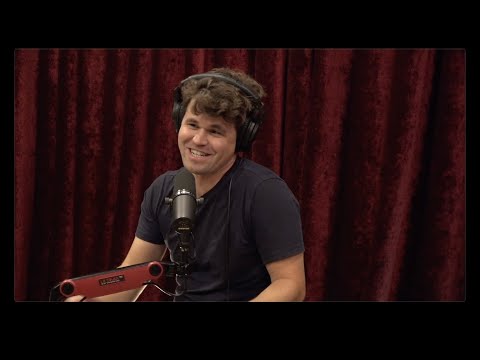
PowerfulJRE's Joe Rogan Experience #2275 - Magnus Carlsen: skim's analysis identifies 18 key moments, with 1 potential conflict of interest flagged. Joe Rogan interviews chess champion Magnus Carlsen, discussing his early interest in chess, cheating controversies, training methods, and the impact of computers on the game.
Category: Entertainment. Format: Interview. YouTube video analyzed by skim.
skim AI Analysis
Credibility assessment: Expert Interview. Magnus Carlsen, a world chess champion, provides firsthand insights. Joe Rogan, while not a chess expert, conducts a respectful interview. The information is experience-based and generally reliable, though personal opinions are present.
Bias assessment: Slightly Laudatory. The interview is largely celebratory of Magnus Carlsen's achievements. While Rogan asks some challenging questions, the overall tone is positive and admiring, potentially overlooking deeper criticisms or alternative perspectives.
Originality: 75% — Personal Anecdotes. The discussion includes personal anecdotes and insights from Magnus Carlsen, offering a unique perspective on his career and the world of chess. While the topics themselves aren't entirely novel, the firsthand account adds originality.
Depth: 65% — Surface Level. The conversation touches on various aspects of chess, from cheating controversies to training methods. However, it remains largely at a surface level, lacking deep dives into strategic complexities or sociological implications. It's more conversational than analytical.
Key Points (18)
1. Carlsen: Sisterly Competition
Timestamp: 00:01:37 to 00:03:21
Magnus Carlsen reveals that his initial interest in chess was sparked by a desire to beat his older sister, who was already playing with their father. This competitive spark ignited his passion for the game, leading him to dedicate himself to chess and eventually surpass his sister's skill level. Ultimately, a competitive spark with his sister ignited his passion for chess.
Significance (Low): Highlights the role of sibling rivalry in fostering talent. A common and relatable origin story.
Sources in support: Joe Rogan (Host), Magnus Carlsen (Guest)
2. Carlsen on Niemann's Cheating
Timestamp: 00:06:05 to 00:08:56
Magnus Carlsen expresses his suspicion that Hans Niemann cheated during their game, citing a combination of factors including Niemann's chess level and stories circulating at the time. He alludes to a Netflix documentary where he will share his side of the story in more detail, but maintains that something felt "off" about Niemann's play. Thus, Carlsen remains suspicious of Niemann's play, hinting at more details to come in a Netflix documentary.
Significance (High): Fuels the ongoing debate about cheating in chess. Raises questions about fair play and integrity.
Sources in support: Joe Rogan (Host), Magnus Carlsen (Guest)
3. Rogan: Chess and Trust
Timestamp: 00:09:55 to 00:11:46
Joe Rogan and Magnus Carlsen discuss the importance of trust in chess, especially at the top level, and how cheating undermines this trust. Rogan points out that once a player admits to cheating, it's difficult to trust them again, leading to a constant suspicion about their current games. Therefore, cheating erodes the foundation of trust in chess, creating lasting doubts about a player's integrity.
Significance (Medium): Highlights the psychological impact of cheating. Underscores the importance of ethical behavior in competitive settings.
Sources in support: Joe Rogan (Host), Magnus Carlsen (Guest)
4. Carlsen on Enthusiasm vs. Discipline
Timestamp: 00:19:18 to 00:21:07
Magnus Carlsen contrasts discipline with enthusiasm, arguing that enthusiasm leads to obsession and enjoyment, which in turn results in better information retention. He suggests that while discipline is important, it's the passion for the game that truly drives excellence. In conclusion, Carlsen believes enthusiasm and obsession are more effective than pure discipline for achieving greatness in chess.
Significance (Medium): Offers a counterintuitive perspective on success. Suggests passion trumps rigid training.
Sources in support: Joe Rogan (Host), Magnus Carlsen (Guest)
5. Carlsen: Genetics and Environment
Timestamp: 00:21:30 to 00:23:24
Magnus Carlsen attributes his success to a combination of natural talent, a supportive environment, and a willingness to forge his own path. He acknowledges the role of genetics, noting his father's aptitude for numbers and his mother's intelligence, but emphasizes the importance of enjoyment and independent thinking. Thus, Carlsen believes success is a blend of innate ability, nurturing surroundings, and personal autonomy.
Significance (Medium): Provides a holistic view of talent development. Acknowledges both nature and nurture.
Sources in support: Joe Rogan (Host), Magnus Carlsen (Guest)
6. Rogan on Chess's Mainstream Appeal
Timestamp: 00:26:47 to 00:28:13
Joe Rogan observes that the cheating controversy, despite its negative aspects, elevated the profile of chess by making it mainstream news. He notes that chess is now showing up more frequently in people's algorithms on various social media platforms, indicating a growing public interest in the game. Therefore, the cheating scandal inadvertently boosted chess's visibility and cultural relevance.
Significance (Low): Analyzes the paradoxical effect of scandal. Highlights the power of media attention.
Sources in support: Joe Rogan (Host), Magnus Carlsen (Guest)
7. Carlsen on Blindfold Chess
Timestamp: 00:32:17 to 00:34:15
Magnus Carlsen discusses his experience with blindfold chess, explaining that it becomes easier when playing against decent players because he can recognize patterns more readily. He recounts a challenging blindfold simultaneous exhibition where he had to jump between boards, making it difficult to keep track of the moves. In conclusion, Carlsen views blindfold chess as a "party trick" that is less challenging for top players.
Significance (Low): Demystifies a seemingly impossible feat. Reveals the cognitive strategies of elite players.
Sources in support: Joe Rogan (Host), Magnus Carlsen (Guest)
8. Carlsen: Physical vs. Online Chess
Timestamp: 00:40:41 to 00:42:09
Magnus Carlsen emphasizes the importance of learning chess on a physical board and limiting computer use in early training. He believes that this approach fosters a deeper understanding of the game and develops essential skills that are often missing in children who primarily learn online. Thus, Carlsen advocates for a balanced approach to chess education, combining physical and digital methods.
Significance (Medium): Offers advice for aspiring chess players. Highlights the value of traditional learning methods.
Sources in support: Joe Rogan (Host), Magnus Carlsen (Guest)
9. Carlsen on Randomizing Openings
Timestamp: 01:03:09 to 01:04:49
Magnus Carlsen reveals his strategy of randomizing opening choices, explaining that it makes him more unpredictable and harder to prepare against. He uses an app on his phone to roll the dice, accepting the outcome and avoiding the mental energy spent agonizing over minute decisions. In conclusion, Carlsen embraces randomness to reduce pressure and maintain a strategic advantage.
Significance (Low): Offers a unique approach to strategic decision-making. Highlights the value of unpredictability.
Sources in support: Joe Rogan (Host), Magnus Carlsen (Guest)
10. Carlsen on Nutritional Habits
Timestamp: 01:05:23 to 01:06:47
Magnus Carlsen describes his nutritional habits before a game, emphasizing the importance of eating clean and avoiding sweets to maintain stable blood sugar levels. He learned this lesson early in his career when consuming sweets during tournaments led to energy crashes and mistakes. Therefore, Carlsen prioritizes a balanced and healthy diet to optimize his cognitive performance during chess matches.
Significance (Low): Highlights the connection between diet and cognitive function. Offers practical advice for performance optimization.
Sources in support: Joe Rogan (Host), Magnus Carlsen (Guest)
11. Carlsen on the Flow State
Timestamp: 01:11:58 to 01:13:40
Magnus Carlsen describes his mindset during a world championship game, emphasizing the importance of being laser-focused, calm, and present in the moment. He recounts a specific game where he maintained this state for hours, grinding out a win due to his unwavering concentration. In conclusion, Carlsen values the ability to stay completely in the moment as crucial for success in high-stakes chess.
Significance (High): Provides insight into the mental fortitude of champions. Highlights the power of mindfulness.
Sources in support: Joe Rogan (Host), Magnus Carlsen (Guest)
12. Carlsen on Lowering Expectations
Timestamp: 01:13:40 to 01:15:11
Magnus Carlsen discusses how his standards for himself have lowered as he's gotten older, acknowledging that his brain is not as fast as it used to be. He accepts that there will be occasional letdowns and focuses on preventing the worst days rather than striving for perfection. Thus, Carlsen embraces a more realistic and healthy approach to chess, prioritizing consistency over unattainable ideals.
Significance (Medium): Offers a realistic perspective on aging in competitive fields. Emphasizes self-acceptance and adaptability.
Sources in support: Joe Rogan (Host), Magnus Carlsen (Guest)
13. Carlsen on Mental Coaches
Timestamp: 01:16:21 to 01:17:52
Magnus Carlsen explains why he has never consulted a mental coach, expressing concern that someone might disrupt his natural state of mind. He prefers to accept the fluctuations in his performance, recognizing that some days will be better than others. Therefore, Carlsen trusts his own instincts and avoids external interventions that could lead to "paralysis by analysis."
Significance (Low): Presents a contrarian view on mental coaching. Highlights the importance of self-trust.
Sources in support: Joe Rogan (Host), Magnus Carlsen (Guest)
14. Carlsen on Mental Preparation
Timestamp: 01:17:51 to 01:19:31
Magnus Carlsen reveals his approach to mental preparation before a game, emphasizing the importance of getting good sleep, reading a book instead of using electronic devices, and minimizing focus on chess. He aims to have only a few ideas in mind, avoiding excessive mental energy expenditure before the game. Therefore, Carlsen prioritizes a fresh and relaxed mind over intense pre-game study.
Significance (Medium): Challenges conventional wisdom about preparation. Suggests a more intuitive approach.
Sources in support: Joe Rogan (Host), Magnus Carlsen (Guest)
15. Carlsen on Computer Chess
Timestamp: 01:35:57 to 01:37:38
Magnus Carlsen discusses the impact of computers on chess, noting that they have revolutionized the game and made it easier for players to improve. He acknowledges that computers are now superior to humans in chess, but emphasizes that they also offer valuable tools for analysis and training. Thus, Carlsen embraces computers as essential resources for modern chess players.
Significance (Medium): Acknowledges the dominance of AI in chess. Highlights the symbiotic relationship between humans and computers.
Sources in support: Joe Rogan (Host), Magnus Carlsen (Guest)
16. Carlsen on Neural Networks
Timestamp: 01:37:38 to 01:39:21
Magnus Carlsen explains that neural networks, like AlphaZero, have improved our understanding of chess by approaching the game differently than traditional engines. He notes that neural networks emphasize positional play and long-term thinking, leading to new strategies and insights. Therefore, Carlsen believes that neural networks have expanded the possibilities of chess and challenged conventional wisdom.
Significance (Medium): Highlights the innovative potential of AI. Suggests a shift in chess strategy.
Sources in support: Joe Rogan (Host), Magnus Carlsen (Guest)
17. Carlsen on Intimidation
Timestamp: 02:07:55 to 02:09:25
Magnus Carlsen denies intentionally using psychological tactics to intimidate his opponents, attributing his occasional lateness to poor planning and a desire to escape unpleasant environments. He emphasizes that his primary focus is on making good moves, not playing mind games. Therefore, Carlsen rejects the notion that he deliberately tries to unnerve his rivals.
Significance (Low): Debunks a common perception about competitive strategy. Highlights the importance of authenticity.
Sources in support: Joe Rogan (Host), Magnus Carlsen (Guest)
18. Carlsen on Cheating
Timestamp: 02:09:57 to 02:11:27
Magnus Carlsen expresses concern about the ease with which players can cheat in chess, noting that even small amounts of assistance can significantly impact the outcome of a game. He emphasizes the difficulty of detecting subtle forms of cheating and advocates for harsher penalties to deter unethical behavior. Therefore, Carlsen believes that stricter measures are needed to protect the integrity of chess.
Significance (High): Raises awareness about the challenges of preventing cheating. Calls for stronger enforcement mechanisms.
Sources in support: Joe Rogan (Host), Magnus Carlsen (Guest)
This analysis was generated by skim (skim.plus), an AI-powered content analysis platform by Credible AI. Scores and classifications represent the platform's AI-generated assessment and should be considered alongside other sources.