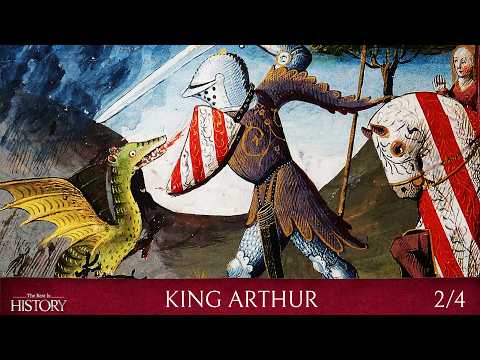
King Arthur Trusted Sir Lancelot With Everything... Except His Wife
The Rest Is History
Summary
Historians a co-host and a co-host explore the genesis of Sir Lancelot, courtly love, and Camelot. They reveal that Lancelot was created in the late twelfth century by French poet Chrétien de Troyes under the patronage of Marie of Champagne, grafting southern troubadour ideas of erotic submission onto older Welsh myths. The rise of chivalric literature coincided with tactical revolutions in heavy cavalry warfare, including the couched lance and stirrups, which elevated mounted retainers into an upwardly mobile military caste that embraced the Round Table as an egalitarian ideal.
The discussion contrasts these noble literary ideals with the harsh realities of the medieval world. Thomas Malory compiled the definitive English epic Le Morte d'Arthur while facing extensive court accusations of armed extortion and violent crime. This duality between spiritual longing and human sin mirrored the internal tragedy of Lancelot himself, whose adulterous love destroyed Arthur's kingdom.
How time-sensitive the topic is: Evergreen
By the numbers
100,000 times as much love: Lancelot's described emotional passion compared to Guinevere in Chrétien de Troyes's romance (Mentioned at 0:58)
1180 year: Approximate date when Chrétien de Troyes wrote his romance introducing Lancelot and Guinevere (Mentioned at 5:21)
1152 year: Year Eleanor of Aquitaine left the King of France to marry Henry Plantagenet (Mentioned at 7:42)
1154 year: Year Henry Plantagenet became King Henry II of England (Mentioned at 8:08)
1096 year: Arrival of the first crusader cavalry armies outside the walls of Constantinople (Mentioned at 28:50)
1066 year: Battle of Hastings fought forty years before crusader cavalry innovations took hold (Mentioned at 29:20)
1220s decade: Decade in which Sir Galahad was first introduced into Arthurian romance (Mentioned at 43:21)
24 days: Duration of Lancelot's comatose trance after being repelled by the Grail fire (Mentioned at 44:54)
7 wounds: Number of festering wounds sustained by Sir Urry that only the best knight could heal (Mentioned at 57:46)
Questions this video answers
What military innovation caused the rise of medieval knights?
The mastery of couched lance warfare, supported by stirrups, high-backed saddles, and larger destrier horses, turned cavalry into human shock projectiles. Ambitious monarchs quickly realized they needed disciplined heavy cavalry charges to dominate the battlefield.
28:43 to 31:40
From this keypoint: Couched Lances Revolutionize Medieval Warfare
Why was the Round Table invented in Arthurian literature?
Anglo-Norman poet Wace invented the Round Table in the 1150s to depict an egalitarian brotherhood among Arthur's knights. It served as a cultural model for kings to unify socially divided and competitive heavy cavalry retainers.
35:48 to 39:10
From this keypoint: Wace Invents the Round Table
Who was the historical author Sir Thomas Malory?
Sir Thomas Malory was a fifteenth-century English knight and author of Le Morte d'Arthur who spent years in prison. Contemporary legal records accuse him of multiple violent crimes, including cattle theft, extortion, ambush, and rape.
53:21 to 56:45
From this keypoint: Thomas Malory's Dark Criminal Record
Why did Cistercian monks introduce Sir Galahad into Arthurian legend?
Cistercian monks objected to the celebration of adulterous romance between Lancelot and Guinevere. They sponsored romances introducing Galahad as Lancelot's chaste son, ensuring only a spiritually pure knight achieved the Holy Grail.
42:36 to 45:30
From this keypoint: Cistercian Monks Promote Galahad
Credible AI™ signals
Confidence: Rigorous Historiography. The presenters are established historians who meticulously parse medieval literary texts, distinguish between authentic twelfth-century court records and folklore, and cite primary chroniclers such as Chrétien de Troyes, Wace, and Geoffrey of Monmouth alongside scholarly authorities.
Bias: Scholarly Literary Critique. The analysis maintains an academic, analytical stance toward medieval romance. It contextualizes the literature within twelfth-century political rivalries and military changes without adopting ideological bias or uncritical romanticism.
Originality (82%): Insightful Synthesis. The discussion connects literary tropes of Arthurian legend directly to technological evolutions in heavy cavalry warfare and the socio-economic insecurities of the rising knightly class in Anglo-Norman Europe.
Depth (89%): Deep Textual History. The narrative explores theological disputes, patron dynamics under Marie of Champagne, manuscript traditions, and the psychological contrasts between Sir Gawain and Sir Lancelot across multiple centuries of revision.
Key points (12)
Short (19 min): key points 1, 2, 7, 8, 10 and 11
Medium (31 min): key points 1, 2, 5, 6, 7, 8, 9, 10, 11 and 12
Relaxed (39 min): all 12 key points
1. Chrétien de Troyes Defines Courtly Love
Timestamp: 00:02:19 to 00:05:00 (3 min)
Chrétien de Troyes established the archetype of courtly love by depicting Sir Lancelot as entirely submissive to Queen Guinevere. This romantic ideology framed a warrior's true excellence as deriving from romantic and spiritual obedience to a lady rather than mere thirst for conquest. The romance established a lasting paradigm where erotic passion inspired supreme martial chivalry.
Impact: High. Why it matters: Reframed the ethos of Western chivalric literature by presenting romantic submission as the primary moral inspiration for martial greatness.
“It comes from submission to a beloved to a beloved lady.”
In the video, at 4:53
For: YouTube: The Rest Is History
2. Marie of Champagne Shapes Medieval Romance
Timestamp: 00:05:27 to 00:08:28 (3 min)
Marie of Champagne acted as the most consequential literary patron in twelfth-century Europe by commissioning Arthurian poems that merged troubadour themes with Celtic myth. Her court synthesized the passionate heritage of Aquitaine with tales of British kings. This patronage created the chivalric romance as a dominant pan-European literary genre.
Impact: High. Why it matters: Demonstrates how royal patronage directly engineered Western literary conventions and blended divergent cultural traditions.
“she ranks probably as the single most consequential literary patron in the whole of medieval Europe.”
In the video, at 6:12
For: YouTube: The Rest Is History
Neutral: YouTube: The Rest Is History
3. Lancelot Endures Public Disgrace in the Tumbril
Timestamp: 00:11:13 to 00:15:39 (4 min)
When Queen Guinevere is abducted by Meleagant, Lancelot pursues her relentlessly and agrees to ride in a convict's cart to obtain vital directions. Despite hesitation that later angers the queen, he willingly endures intense public humiliation for her sake. The episode demonstrates that a courtly lover must sacrifice personal pride and knightly prestige at his lady's bidding.
Impact: Medium. Why it matters: Established the radical standard of romantic humiliation as proof of unwavering devotion in chivalric storytelling.
“And he does climb into the cart and he does willingly suffer all the mockery that this brings him”
In the video, at 15:19
For: YouTube: The Rest Is History
4. Welsh Folklore Furnishes the Narrative Core
Timestamp: 00:17:20 to 00:20:10 (3 min)
The narrative of Guinevere's abduction originates in ancient Welsh folklore and ecclesiastical texts such as Caradoc of Llancarfan's life of Saint Gildas. In early versions, King Melwas of Somerset abducts Guinevere to Glastonbury before Saint Gildas negotiates her release. Chrétien de Troyes adapted these Celtic mythic elements while infusing them with contemporary French chivalric sensibilities.
Impact: Medium. Why it matters: Traces the genuine folklore origins of Arthurian romance back to pre-Norman Celtic hagiography and local geography.
“lots of the characters who feature in this story they have a Welsh background.”
In the video, at 17:23
For: YouTube: The Rest Is History
5. Lancelot Exemplifies Twelfth-Century Modernity
Timestamp: 00:20:27 to 00:23:40 (3 min)
Unlike archaic Celtic figures such as Arthur or Gawain, Sir Lancelot was conceived as a thoroughly modern figure embodying twelfth-century French aristocratic ideals. He reflects cutting-edge fashions of chivalry, obedience, and the edgy allure of secret adulterous romance. His creation provided European audiences with an aspirational contemporary hero.
Impact: Medium. Why it matters: Clarifies why Lancelot rapidly eclipsed older folkloric champions to become the dominant hero of continental romance.
“he so plainly embodies everything that is kind of cutting edge about nightly fashion in the mid12th century.”
In the video, at 21:15
For: YouTube: The Rest Is History
6. Camelot Emerges as a Tournament Spectacle
Timestamp: 00:24:13 to 00:27:00 (3 min)
Chrétien de Troyes invented Camelot as Arthur's capital, deliberately moving away from Geoffrey of Monmouth's Romanized Welsh fortress of Caerleon. Camelot was depicted as an idealized French court populated by spectators, ladies bestowing favors, and knights competing in colorful tournaments. This romantic vision blurred the boundary between chivalric fiction and real-world aristocratic pageantry.
Impact: High. Why it matters: Established the enduring popular image of Camelot as a permanent tournament ground and center of courtly pageantry.
For: YouTube: The Rest Is History
7. Couched Lances Revolutionize Medieval Warfare
Timestamp: 00:28:43 to 00:31:40 (3 min)
In the late eleventh and twelfth centuries, the battlefield was transformed by horsemen tucking couched lances under armpits to deliver high-momentum shocks. Supported by high-cantle saddles, stirrups, and heavy warhorses, these mounted warriors functioned as devastating human projectiles. This technological shift made heavy shock cavalry the indispensable core of every European monarch's military force.
Impact: High. Why it matters: Explains the technological and tactical revolution that provided the material basis for the rise of the knightly class.
“horsemen have basically mastered a new and devastating way to handle a lance.”
In the video, at 29:44
For: YouTube: The Rest Is History
8. Wace Invents the Round Table
Timestamp: 00:35:48 to 00:39:10 (3 min)
Norman chronicler Wace introduced the Round Table in the 1150s, attributing an egalitarian council to Arthur's court in his translation of Geoffrey of Monmouth. In reality, monarchs used this romantic fiction to forge solidarity among socially disparate, volatile heavy cavalry retainers. The round table served as an imaginative ideal rather than a functioning political mechanism.
Impact: High. Why it matters: Uncovers the political utility of chivalric myth as an ideological tool to build cohesion among competitive military retainers.
“the round table seems to have been waist's invention even though obviously he has to state otherwise”
In the video, at 36:53
For: YouTube: The Rest Is History
9. Cistercian Monks Promote Galahad
Timestamp: 00:42:36 to 00:45:30 (3 min)
Disturbed by the romantic glorification of adultery in Arthurian stories, thirteenth-century Cistercian monks sponsored the literary invention of Sir Galahad. Galahad was presented as Lancelot's sinless, celibate son who alone proved pure enough to achieve the Holy Grail. Although morally upright, Galahad's ascetic perfection proved far less compelling to medieval audiences than Lancelot's tragic humanity.
Impact: Medium. Why it matters: Highlights how church authorities attempted to co-opt and sanitize popular secular literature with ascetic theological heroes.
“they sponsor the invention of a new knight and this is Sir Galahad who emerges into Arththeran romance in the 1220s”
In the video, at 43:14
For: YouTube: The Rest Is History
10. Gawain's Vengeance Shatters the Kingdom
Timestamp: 00:48:36 to 00:52:05 (3 min)
In Thomas Malory's Le Morte d'Arthur, the downfall of Camelot occurs when Mordred exposes Lancelot and Guinevere's adultery. During his violent rescue of Guinevere from the stake, Lancelot accidentally slays Gawain's brothers, Gareth and Gaheris. Overcome by grief, Gawain pursues an unrelenting blood feud that forces Arthur to war and leaves England open to Mordred's rebellion.
Impact: High. Why it matters: Exposes the tragic structural flaw within chivalric loyalty, where personal grief and blood vengeance dismantle civic order.
“from this point on, it's Gane who pushes for vengeance against Lancelot.”
In the video, at 50:05
For: YouTube: The Rest Is History
11. Thomas Malory's Dark Criminal Record
Timestamp: 00:53:21 to 00:56:45 (3 min)
Historical court records reveal that Sir Thomas Malory, who crafted the noble chivalric world of Le Morte d'Arthur, was accused of serious crimes. His charges included cattle rustling, extortion, ambushing the Duke of Buckingham, and violent burglary accompanied by rape. This stark contrast between high chivalric rhetoric and brutal behavior reflects the real violence of fifteenth-century knightly life.
Impact: High. Why it matters: Shatters romantic Victorian misconceptions of medieval chivalry by demonstrating the criminal violence common among fifteenth-century knights.
For: YouTube: The Rest Is History
12. Ector Delivers the Supreme Chivalric Eulogy
Timestamp: 00:57:34 to 01:01:10 (4 min)
Despite his sins, Lancelot heals the wounded Sir Urry by divine grace and dies as a penitent hermit after the kingdom falls. At his tomb in Joyous Guard, Sir Ector delivers an iconic eulogy hailing Lancelot as simultaneously the fiercest warrior in battle and the gentlest man among ladies. This speech captures the paradoxical, noble ideal of chivalry at its peak.
Impact: High. Why it matters: Provides the definitive literary expression of the dual ideals of martial fierceness and courtly courtesy in Western culture.
“thou were the truest lover of a sinful man that ever loved woman. And thou were the kindest man that ever struck with sword.”
In the video, at 1:01:06
For: YouTube: The Rest Is History
Key sources
YouTube: The Rest Is History
Who's in this
Chrétien de Troyes
Marie of France, Countess of Champagne
Sir Thomas Malory
Wace
Sir Lancelot
Queen Guinevere
King Arthur
Camelot
Also mentioned
Marie of France (First mentioned at 5:27)
Sir Gawain (First mentioned at 13:45)
Le Morte d'Arthur (First mentioned at 39:35)
Eleanor of Aquitaine (First mentioned at 6:28)
Geoffrey of Monmouth (First mentioned at 9:50)
Meleagant (First mentioned at 11:33)
Sir Gareth (First mentioned at 39:38)
Sir Galahad (First mentioned at 43:18)
Mordred (First mentioned at 48:32)
Sir Ector (First mentioned at 1:00:17)
Louis VII of France (First mentioned at 6:23)
Henry II of England (First mentioned at 8:10)
Caradoc of Llancarfan (First mentioned at 17:59)
Glastonbury (First mentioned at 18:18)
Saint Gildas (First mentioned at 18:39)
Caerleon (First mentioned at 24:23)
Anna Komnene (First mentioned at 28:36)
Duke of Buckingham (First mentioned at 54:15)
Sir Urry (First mentioned at 57:35)
This analysis was generated by skim (skim.plus), an AI-powered content analysis platform by Credible AI. Scores and classifications represent the platform's AI-generated assessment and should be considered alongside other sources.