The Voyage That Drove Captain Cook to Madness
Priests Invest Captain Cook as Orono at Kealakekua
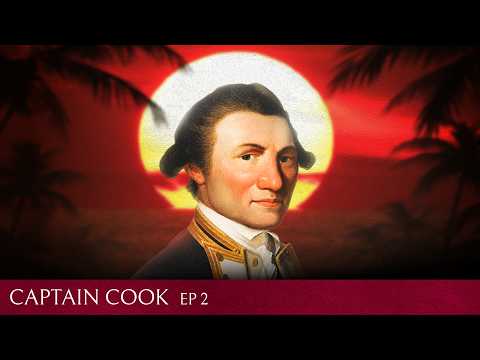
Anchoring at Kealakekua Bay on January 16, 1779, to repair leaks, Captain James Cook's ships were swarmed by hundreds of canoes before local chiefs and a priest restored order and wrapped Cook in a red cloak while chanting Orono. Led ashore to a skull-lined temple and later paraded before thousands of prostrating islanders, Cook passively accepted ceremonies that surgeon David Samwell said invested him with a rank partaking something of divinity.
Sahlins and Obeyesekere Debate by Dominic and Tom
Dominic and Tom examine the fierce academic debate between anthropologist Marshall Sahlins, who argued that Captain James Cook's white-sailed ship and clockwise circuit around Hawaii accidentally mirrored the 23-day Makahiki festival of the god Lono, and Princeton professor Gananath Obeyesekere, who denounced that view as colonialist projection and argued Hawaiians merely treated Cook as a chief. Both hosts conclude that 18th-century Hawaiian categories of the natural and supernatural are too remote from modern Western assumptions to reconstruct with certainty.
King Kalaniʻōpuʻu Bids Captain Cook Farewell
On January 26, 1779, King Kalaniʻōpuʻu, whom the British called Terreeoboo, arrived in state and gifted Captain James Cook magnificent feathered cloaks and abundant pigs, but within days the king and his chiefs eagerly asked when the British were leaving and requested that Second Lieutenant James King stay behind as the son of Orono. After departing on February 4, the expedition hit a severe storm on February 8 that split the Resolution's foremast, prompting Cook to turn back to Kealakekua Bay for repairs.
A Stolen Cutter Prompts a Hostage Attempt
At dawn on February 14, 1779, the Discovery's large cutter was found stolen, prompting Captain James Cook to blockade the bay, send Master William Bligh off in a boat that fired on a canoe, and land with Lieutenant Molesworth Phillips and nine other Marines to take King Kalaniʻōpuʻu hostage. Although the king initially agreed to board the Resolution, one of his wives and several chiefs stopped him on the pebble beach as an armed crowd of hundreds or thousands of Hawaiians closed in.
Captain Cook Is Killed on the Beach
Drawing on surgeon David Samwell's account, Dominic describes how stone-throwing islanders overwhelmed the 10 Marines after a single musket volley left them unable to reload within 20 seconds, while Lieutenant John Williamson misinterpreted Captain James Cook's hand wave and rowed the launch away instead of rescuing them. Four Marines were killed in the rout, Lieutenant Molesworth Phillips heroically pulled the wounded Private Jackson into the pinnace, and Cook, left standing alone at the water's edge, was clubbed from behind, stabbed in the neck with a traded iron dagger, and beaten to death in the shallows.