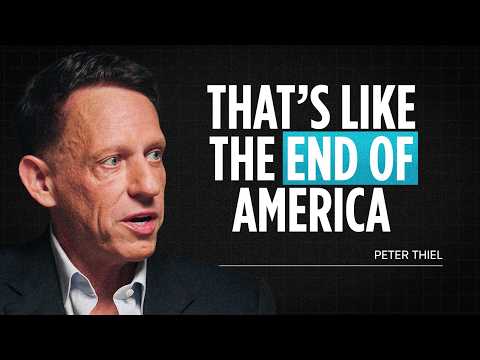
MDMEETS - Essential Talks with Mathias Döpfner's Peter Thiel: The AI Crisis, Europe’s Decline & the Battle for America: skim's analysis identifies 18 key moments, with 4 potential conflicts of interest flagged. Peter Thiel discusses the AI revolution, contrasting it with past technological stagnation.
Category: Politics. Format: Interview. YouTube video analyzed by skim.
skim AI Analysis
Credibility assessment: Generally Credible. Peter Thiel, a prominent investor and public figure, offers insightful, albeit sometimes controversial, perspectives. His arguments are generally well-reasoned, drawing on his experience, but can be influenced by his specific ideological viewpoints. The discussion covers complex topics with a degree of depth, though a critical listener should remain aware of potential biases.
Bias assessment: Ideological Leanings. Thiel's perspectives are strongly shaped by his libertarian and conservative viewpoints, particularly evident in his critiques of democracy, regulation, and his views on technological progress. While he attempts to frame arguments objectively, his underlying ideology significantly influences his analysis and conclusions.
Originality: 83% — Unique Perspectives. Thiel consistently offers unconventional and thought-provoking viewpoints, challenging mainstream narratives on technology, politics, and society. His willingness to explore contrarian ideas, such as the stagnation thesis and critiques of democratic processes, sets his analysis apart.
Depth: 82% — Deep Analysis. The discussion delves into complex issues like AI's societal impact, the future of democracy, and geopolitical rivalries with considerable depth. Thiel connects technological trends to broader societal and political consequences, demonstrating a sophisticated understanding of interconnected systems.
Key Points (18)
1. Thiel: From Stagnation to AI Acceleration
Timestamp: 00:00:59 to 00:03:58
Peter Thiel argues that while the West experienced technological stagnation in 'atoms' since the 1970s, focusing progress only on 'bits' like the internet, Artificial Intelligence represents a new frontier with the potential to re-accelerate growth across all sectors. He believes AI is a more significant driver than the internet and that its emergence retrospectively validates his earlier stagnation thesis. The challenge now is managing this acceleration responsibly, acknowledging both its benefits and potential downsides. This marks a significant shift from a period of perceived decline to one of rapid, potentially disruptive, advancement.
Significance (High): This reframing of technological progress is crucial for understanding future economic and societal trajectories. Thiel's perspective suggests a potential end to the era of slow growth and the dawn of a new, albeit uncertain, technological age.
Sources in support: Peter Thiel (Investor, Co-founder of PayPal and Palantir)
Neutral sources: Mathias Döpfner (CEO of Axel Springer SE)
2. AI's Existential Risk Debate
Timestamp: 00:03:58 to 00:07:05
The current discourse around AI is polarized between euphoria and dystopia, with significant debate on whether AI poses an existential risk. Thiel acknowledges the possibility of AI escaping human control, citing LLM predictions of a 1-10% extinction risk, but questions the precautionary principle as a sole guiding strategy. He posits that a world without progress could be equally detrimental, leading to societal derangement and breakdown, suggesting that the alternative to AI-driven progress might not be a peaceful utopia. Therefore, a balanced approach is needed, recognizing that inaction also carries risks. This highlights the complex trade-offs inherent in managing advanced technology.
Significance (High): This perspective challenges the prevailing fear-driven narrative around AI, suggesting that the risks of stagnation and societal decay are equally, if not more, pressing. It forces a re-evaluation of the cost-benefit analysis of technological advancement.
Sources in support: Peter Thiel (Investor, Co-founder of PayPal and Palantir)
Neutral sources: Mathias Döpfner (CEO of Axel Springer SE)
3. Geopolitical AI Race: West vs. China
Timestamp: 00:10:55 to 00:14:00
Thiel asserts that Europe is falling dramatically behind in the AI race, with the US leading and China as a fast follower. He criticizes the lack of urgency in Europe regarding AI adoption, contrasting it with the proactive approach in the US. He also suggests that anti-AI sentiment in the West, potentially amplified by foreign actors like China, could inadvertently benefit China by slowing down Western technological development. This geopolitical dimension underscores the high stakes of the AI revolution, framing it as a critical competition for global technological and economic dominance. The narrative suggests a strategic imperative for the West to accelerate its AI efforts.
Significance (High): This framing of AI as a geopolitical race highlights the potential for a significant power shift if Western nations fail to keep pace, particularly with China. It suggests that current debates about AI ethics and safety might be secondary to the immediate need for competitive advancement.
Sources in support: Peter Thiel (Investor, Co-founder of PayPal and Palantir)
Neutral sources: Mathias Döpfner (CEO of Axel Springer SE)
4. Thiel: Moralizing Technology is Counterproductive
Timestamp: 00:13:13 to 00:17:00
Thiel argues that society moralizes new technologies excessively, likening it to criticizing a knife rather than the murderer. He believes technologies are neutral tools, and the focus should be on human actions, not the technology itself. He contends that many societal problems stem from incompetence ('badness') rather than outright evil, and that focusing on 'good vs. evil' debates distracts from addressing fundamental issues of capability and execution. This perspective suggests that a pragmatic approach, prioritizing competence and progress over moralistic judgments, is more effective for societal advancement. He advocates for a shift from debating abstract morality to fostering effective action.
Significance (High): This viewpoint challenges conventional ethical frameworks applied to technology, suggesting that an overemphasis on morality can stifle innovation and progress. It calls for a more pragmatic, results-oriented approach to technological development and societal challenges.
Sources in support: Peter Thiel (Investor, Co-founder of PayPal and Palantir)
Neutral sources: Mathias Döpfner (CEO of Axel Springer SE)
5. Democracy's Fragile State and Extremist Rise
Timestamp: 00:18:17 to 00:22:54
Thiel expresses concern over the current state of democracies, noting a trend towards polarization and the rise of extremist parties on both the left and right, citing Germany as an example. He believes centrist parties underestimate the severity of these issues and the breakdown of the intergenerational compact, which fuels societal discontent. While not advocating for autocracy, he suggests that the failures of democratic systems to deliver progress and economic opportunity create fertile ground for anti-democratic movements. He emphasizes the need to take the concerns driving these movements seriously, even if their proposed solutions are flawed, to prevent further erosion of democratic stability. This highlights the critical need for democratic systems to demonstrate tangible benefits to their citizens.
Significance (High): This analysis points to a systemic crisis within democratic societies, suggesting that current political leadership is failing to address the root causes of public dissatisfaction. The rise of extremism is presented not just as a political phenomenon but as a symptom of deeper societal and economic failures.
Sources in support: Peter Thiel (Investor, Co-founder of PayPal and Palantir)
Neutral sources: Mathias Döpfner (CEO of Axel Springer SE)
6. Thiel's Stance on Trump and Political Establishment
Timestamp: 00:25:07 to 00:25:57
Reflecting on his support for Donald Trump in 2016, Thiel suggests that Trump's rise reflected a failure of the political establishment to address long-term problems like economic stagnation and the challenges of globalization. He defers a definitive judgment on Trump's achievements and failures, stating that a clearer assessment will only be possible in a decade. This indicates a belief that Trump's presidency was a symptom of deeper systemic issues rather than a standalone political event. His cautious approach to evaluating Trump suggests a focus on the underlying societal dynamics that propelled his candidacy, rather than a simple endorsement or condemnation.
Significance (Medium): Thiel's perspective positions Trump not as an anomaly but as a consequence of systemic failures within the American political and economic establishment. This framing suggests that addressing the conditions that led to Trump's rise is more critical than evaluating his presidency in isolation.
Sources in support: Peter Thiel (Investor, Co-founder of PayPal and Palantir)
Neutral sources: Mathias Döpfner (CEO of Axel Springer SE)
7. Mathias Döpfner: The Two Faces of US Political Failure
Timestamp: 00:26:02 to 00:26:55
Mathias Döpfner suggests that both the Trump and Obama administrations made significant errors in their approaches to governance. The Trump administration suffered from internal disarray due to a lack of consensus among appointees, while the Obama administration, in an attempt to avoid this, overcorrected by implementing loyalty tests, leading to an administration staffed by loyal but less competent individuals. This highlights a systemic issue of flawed leadership selection in US politics.
Significance (Medium): This analysis frames the failures of recent US administrations as stemming from opposite, yet equally detrimental, leadership selection strategies. It suggests a deep-seated problem in how political talent is identified and utilized, impacting governance effectiveness.
Sources in support: Mathias Döpfner (CEO of Axel Springer SE)
Neutral sources: Peter Thiel (Investor, Co-founder of PayPal and Palantir)
8. Peter Thiel: The Looming Disruption of the Democratic Establishment
Timestamp: 00:27:08 to 00:29:20
Peter Thiel expresses concern that the Democratic establishment, much like the Republican establishment before it, has become dysfunctional and is ripe for disruption. He fears that the rise of 'democratic socialists' within the Democratic party could lead to a significant shift to the left, which he views as potentially catastrophic for America. This mirrors his past support for Trump as a disruptive force against a similar establishment inertia.
Significance (High): Thiel's warning about a potential 'end of America' due to a leftward political shift is a stark prediction. It frames the upcoming political battles not just as policy disagreements but as existential threats to the nation's identity and future trajectory.
Sources in support: Peter Thiel (Investor, Co-founder of PayPal and Palantir)
Neutral sources: Mathias Döpfner (CEO of Axel Springer SE)
9. Mathias Döpfner: The Energetic Rise of Democratic Socialism
Timestamp: 00:29:20 to 00:30:34
Mathias Döpfner notes the surprising energy and success of the Democratic Socialists of America (DSA), observing a dramatic increase in membership and a significant decrease in the median age of its members following Bernie Sanders' campaigns. He characterizes this movement as a vibrant, youthful force, contrasting it with the perceived 'lame' and ineffectual nature of establishment Democrats.
Significance (Medium): This observation highlights a significant generational and ideological shift within American politics. The DSA's growth and energy present a challenge to the traditional political order, suggesting a potential realignment of political power and discourse.
Sources in support: Mathias Döpfner (CEO of Axel Springer SE)
Neutral sources: Peter Thiel (Investor, Co-founder of PayPal and Palantir)
10. Peter Thiel: The Economic Stagnation and Argentinian Parallel
Timestamp: 00:34:13 to 00:38:41
Peter Thiel draws a parallel between the current economic trajectory of Western societies and Argentina's century-long subpar growth, warning that Europe and the US could face a similar fate. He critiques the 'accelerationist' idea that worsening conditions lead to revolution, instead observing a drift towards decline fueled by pessimism and a lack of positive change. He suggests that Western societies are stuck in a cycle of borrowing and deficits, facing a stark choice between austerity and socialist levels of taxation.
Significance (High): Thiel's stark comparison to Argentina and his dire economic prognosis serve as a potent warning about the potential long-term consequences of current fiscal and political policies. The framing of choices as extreme austerity or socialist taxation underscores the perceived crisis facing Western economies.
Sources in support: Peter Thiel (Investor, Co-founder of PayPal and Palantir)
Neutral sources: Mathias Döpfner (CEO of Axel Springer SE)
11. Peter Thiel: Europe's AI Lag and the Need for Strategic Alliance
Timestamp: 00:39:59 to 00:43:50
Peter Thiel argues that Europe is falling dramatically behind in the AI race, comparing its current situation to the failed French Minutel program rather than the successful Concord program. He believes Europe's best path forward is to be a reliable ally of America, pushing back against any notion of moral equivalence between the US and China. For Europe to be a functional partner, it must revitalize its economy and industry, potentially through strategic collaboration with the US.
Significance (High): Thiel's assessment of Europe's technological deficit and his call for a strong alliance with the US highlight the geopolitical and economic stakes in the global AI competition. His framing suggests that Europe's future prosperity and security are intrinsically linked to its relationship with America.
Sources in support: Peter Thiel (Investor, Co-founder of PayPal and Palantir)
Neutral sources: Mathias Döpfner (CEO of Axel Springer SE)
12. Peter Thiel: Germany's Fear of Success and Innovation Drought
Timestamp: 00:44:02 to 00:46:22
Peter Thiel identifies a 'fear of success' and a lack of entrepreneurial drive as key reasons for Germany's stagnation in building new, scalable companies. He contrasts this with the US, where many wealthy individuals have built their fortunes from scratch, creating jobs and wealth. In Germany, he observes that the wealthy are largely inheritors, indicating a breakdown in the creation of new business ventures since the mid-1990s.
Significance (High): Thiel's analysis points to a systemic issue within Germany's economic and cultural landscape that stifles innovation and entrepreneurialism. This has significant implications for Germany's future competitiveness and its role in the global economy.
Sources in support: Peter Thiel (Investor, Co-founder of PayPal and Palantir)
Neutral sources: Mathias Döpfner (CEO of Axel Springer SE)
13. Peter Thiel: The Insider-Outsider Dynamic in Tech Founders
Timestamp: 00:49:25 to 00:51:08
Peter Thiel posits that successful tech founders often possess a unique blend of insider and outsider perspectives. He uses himself and Alex Karp as examples of individuals who attended elite institutions (insider) but also carried an outsider sensibility due to their backgrounds or identities. This duality, he suggests, fuels their drive and ability to innovate, enabling them to challenge established norms and create groundbreaking companies.
Significance (Medium): This theory offers a compelling explanation for the innovative spirit of Silicon Valley entrepreneurs, suggesting that a combination of privilege and marginalization can be a powerful catalyst for disruption and success.
Sources in support: Peter Thiel (Investor, Co-founder of PayPal and Palantir)
Neutral sources: Mathias Döpfner (CEO of Axel Springer SE)
14. Peter Thiel: The Power of Thinking for Oneself
Timestamp: 00:51:31 to 00:53:16
Peter Thiel rejects the notion of being contrarian for its own sake, emphasizing instead the importance of thinking for oneself. He believes that true intellectual independence involves critically evaluating consensus and forming one's own conclusions, rather than simply adopting the opposite viewpoint. This intrinsic drive to think independently, fueled by broad interests in history, politics, and science fiction, allows him to navigate complex issues beyond narrow specialization.
Significance (Medium): Thiel's philosophy champions intellectual autonomy as a core value, positioning it as the engine of genuine insight and innovation. It serves as a counterpoint to the pressures of conformity and groupthink prevalent in modern society.
Sources in support: Peter Thiel (Investor, Co-founder of PayPal and Palantir)
Neutral sources: Mathias Döpfner (CEO of Axel Springer SE)
15. Thiel on Europe's AI Decline
Timestamp: 00:53:19 to 00:55:09
Peter Thiel argues that Europe is dramatically falling behind in the artificial intelligence race, a situation he views as a significant threat to its future prosperity and global standing. He suggests this decline is rooted in a broader societal pessimism and a lack of focus on technological advancement, contrasting it with the historical optimism of modernity. The consequence is a potential loss of competitiveness against other global powers. This decline is not merely an economic issue but a fundamental challenge to Europe's future relevance.
Significance (High): This perspective highlights a critical geopolitical and technological challenge, suggesting a potential shift in global power dynamics if Europe fails to address its AI deficit. It frames the issue as an existential threat requiring urgent attention.
Sources in support: Peter Thiel (Investor, Co-founder of PayPal and Palantir)
Neutral sources: Mathias Döpfner (CEO of Axel Springer SE)
16. The Case for Health Longevity
Timestamp: 00:56:39 to 01:02:15
Peter Thiel expresses a strong personal and investment interest in health longevity, viewing it as a uniquely positive area of scientific progress. He pushes back against the notion that extending human lifespan is undesirable or impossible, citing historical figures like Bacon and Franklin who believed in overcoming death. Thiel argues that the current societal pessimism about curing diseases like Alzheimer's is a decline from earlier optimism and that pursuing radical life extension, potentially to 150 years or more, is a worthy and achievable goal. He believes this is a physical process, not just a digital upload, and that it's a more desirable alternative than the current trajectory.
Significance (High): This viewpoint challenges the status quo of aging and mortality, framing longevity as a fundamental human pursuit that science should actively address. It suggests a future where aging is a treatable condition, with profound implications for society, economics, and individual lives.
Sources in support: Peter Thiel (Investor, Co-founder of PayPal and Palantir)
Neutral sources: Mathias Döpfner (CEO of Axel Springer SE)
17. Dementia as a Key Longevity Target
Timestamp: 01:03:02 to 01:03:22
When asked about the most optimistic and visionary investment in longevity, Peter Thiel identifies combating dementia as his primary focus. He states that finding a way to slow or reverse cognitive decline in people's brains is the most critical challenge he wishes to tackle in the coming years. This specific focus highlights a pragmatic approach within the broader pursuit of longevity, targeting a debilitating condition that significantly impacts quality of life and represents a major unmet medical need.
Significance (Medium): This pinpointing of dementia as a key target for longevity research underscores the practical application of extending healthy lifespans. It suggests that significant breakthroughs in this area could dramatically improve the lives of millions and represents a tangible goal within the ambitious field of life extension.
Sources in support: Peter Thiel (Investor, Co-founder of PayPal and Palantir)
Neutral sources: Mathias Döpfner (CEO of Axel Springer SE)
18. The Antichrist and Incipient Totalitarianism
Timestamp: 01:04:24 to 01:05:04
Peter Thiel reveals a contrarian belief that many people secretly agree with his views on the Antichrist and the rise of incipient totalitarianism, even if they publicly dismiss them. He initially thought discussing the Antichrist was highly unconventional but now believes it's less contrarian than he imagined, as most people sense a similar impending threat. This suggests a widespread, underlying anxiety about global political trends and a potential shift towards authoritarianism that is not being openly acknowledged or addressed.
Significance (High): This assertion points to a deep-seated societal unease and a potential disconnect between public discourse and private sentiment regarding political futures. It raises questions about the true state of global freedom and the underlying fears shaping public consciousness.
Sources in support: Peter Thiel (Investor, Co-founder of PayPal and Palantir)
Neutral sources: Mathias Döpfner (CEO of Axel Springer SE)
This analysis was generated by skim (skim.plus), an AI-powered content analysis platform by Credible AI. Scores and classifications represent the platform's AI-generated assessment and should be considered alongside other sources.