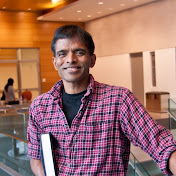
IIT Delhi's Prof Peter Corke (2025 Engelberger Robotics Awardee) interacts with students @IIT Delhi, 28 Oct 2026: skim's analysis identifies 15 key moments, with 2 potential conflicts of interest flagged. Professor Peter Corke traces the 36-year evolution of his Robotics Toolbox from early C and MATLAB implementations to a redesigned, open-source Python ecosystem, followed by an extended Q&A and technical review of student robotics projects at IIT Delhi.
Category: Education. Format: Educational. YouTube video analyzed by skim.
skim AI Analysis
Credibility assessment: Seasoned Robotics Pioneer. Peter Corke speaks from 40 years of direct engineering experience, detailing software he personally authored, books he published, and consulting work at MathWorks. Student presenters ground their claims in live hardware demonstrations, sensor specifications, and simulation results.
Bias assessment: Classical Engineering Pragmatism. Peter Corke favors classical, analytical, and provable robotics models over unverified neural control paradigms, and strongly advocates for open-source Python tooling over bloated frameworks or expensive proprietary licenses.
Originality: 86% — Firsthand Historical & Lab Insights. Combines a rare, personal 36-year oral history of the Robotics Toolbox with live critique of original undergraduate robotics hardware and algorithms built at IIT Delhi.
Depth: 84% — Deep Technical & Systems Focus. Goes beyond high-level trends to examine specific mathematical formulations, sensor fusion filters, contact dynamics simulators, frontier exploration edge cases, and conference peer-review standards.
Key Points (15)
1. Peter Corke's Early C and MATLAB Controllers
Timestamp: 00:00:01 to 00:07:26
Starting his career in 1984, Peter Corke used MATLAB's system identification toolbox to model robot dynamics and wrote a C library for vectors, quaternions, and Jacobians. By 1990, he ported these functions to MATLAB for 50 Hz visual servoing and released the toolbox publicly via FTP in 1996 after encouragement at a symposium in Germany. He later reluctantly added modified Denavit-Hartenberg parameters for John Craig's textbook before refactoring out the vision code in 2003.
Significance (Medium): Demonstrates how foundational robotics software grew out of practical lab needs for system identification and visual servoing long before modern version control existed.
Sources in support: Peter Corke (Distinguished Professor Emeritus at Queensland University of Technology, 2025 Engelberger Robotics Awardee)
2. Writing the Textbook and Consulting at MathWorks
Timestamp: 00:07:34 to 00:17:01
After leaving Australia's CSIRO in 2008, Peter Corke wrote his code-heavy textbook Robotics, Vision and Control in Paris and Oxford, publishing the first edition in 2011 and the second in 2017. Recognizing that his open-source code still required paid MATLAB licenses and could not easily run on Octave, he consulted for MathWorks in Boston, extracted a standalone Spatial Math Toolbox, and co-authored a proprietary third MATLAB edition to retire his 30-year-old codebase.
Significance (Medium): Highlights the tension in academic software between open-source ideals, long-term maintenance burdens, and reliance on proprietary platforms like MATLAB.
Sources in support: Peter Corke (Distinguished Professor Emeritus at Queensland University of Technology, 2025 Engelberger Robotics Awardee)
3. Rebuilding the Robotics Ecosystem in Python
Timestamp: 00:17:02 to 00:28:10
Following two failed attempts to port 50,000 lines of MATLAB code to Python, Peter Corke used 2017 teaching award funds during the 2020 COVID lockdown to hire PhD student Jesse for a ground-up redesign from first principles. Together they built Python versions of the Robotics, Machine Vision, and Spatial Math toolboxes, the browser-based Swift simulator, and the BDSim block diagram package to replace Simulink.
Significance (High): Provides a blueprint for modernizing legacy scientific software by discarding old code and rewriting from specifications rather than translating line by line.
Sources in support: Peter Corke (Distinguished Professor Emeritus at Queensland University of Technology, 2025 Engelberger Robotics Awardee)
4. Why the Toolbox Excludes RL and Foundation Models
Timestamp: 00:29:32 to 00:31:51
Asked whether the Robotics Toolbox will integrate reinforcement learning and foundation models, Peter Corke states he has no plans to do so because external frameworks like PyTorch already exist and can be connected to his classical kinematics and dynamics tools. He argues that current reinforcement learning and vision-language-action models are far from production-ready, and that future robot control will likely blend classical analytical methods with learned policies once the field settles.
Significance (High): Clarifies the enduring role of provable classical kinematics and dynamics as a stable foundation underneath rapidly shifting AI control paradigms.
Sources in support: Peter Corke (Distinguished Professor Emeritus at Queensland University of Technology, 2025 Engelberger Robotics Awardee)
5. High-Value Robotics Opportunities in India
Timestamp: 00:32:01 to 00:38:36
Responding to an MBA student, Peter Corke identifies three major near-term robotics opportunities for India: autonomous cleaning of the Delhi-sized glass area required for India's 200 to 300 gigawatt solar target, indigenous autonomous port quay cranes to replace Chinese imports, and small field robots to boost agricultural productivity where 44% of the workforce produces just over 100% food self-sufficiency.
Significance (High): Pinpoints concrete, high-return sectors where Indian engineers and entrepreneurs can deploy automation to solve severe labor, productivity, and supply-chain bottlenecks.
Sources in support: Peter Corke (Distinguished Professor Emeritus at Queensland University of Technology, 2025 Engelberger Robotics Awardee)
6. Bridging the Sim-to-Real Gap in Quadrotor Drones
Timestamp: 00:38:44 to 00:46:27
When an undergraduate electrical engineering student asks why his nonlinear quaternion-modeled drone works in simulation but fails in real flight, Peter Corke quotes a colleague that simulations are doomed to succeed because unmodeled dynamics destroy real-world performance.
Significance (High): Gives hardware builders a practical debugging checklist for closing the simulation-to-reality gap without destroying physical airframes.
Sources in support: Peter Corke (Distinguished Professor Emeritus at Queensland University of Technology, 2025 Engelberger Robotics Awardee)
7. Exhaustive Testing for Extreme Environments
Timestamp: 00:46:39 to 00:50:18
Addressing how unsupervised robots make decisions in extreme environments like Mars or nuclear reactors, Peter Corke explains that sensor-based robotic systems cannot be mathematically proven to always act correctly. Instead, engineers rely on exhaustive simulation and physical testbeds like JPL's Mars Yard, combined with fault-tolerant redundant computers to handle cosmic ray bit flips and corner-case logic tweaks similar to those used in Tesla's fleet data.
Significance (Medium): Tempers expectations around autonomous AI agents in high-stakes environments, emphasizing physical stress-testing and hardware redundancy over unproven algorithms.
Sources in support: Peter Corke (Distinguished Professor Emeritus at Queensland University of Technology, 2025 Engelberger Robotics Awardee)
8. Corke Evaluates Vision-Language-Action Models
Timestamp: 00:50:35 to 00:55:48
Asked by an M.Tech student about betting on vision-language-action (VLA) models, Peter Corke predicts that robot learning by imitation will be routine within 10 years, but calls current VLA performance slow, unreliable, and cute rather than production-ready.
Significance (High): Frames the central theoretical bottleneck in modern robot learning: whether transformer architectures can capture physical manipulation the way they capture text and pixels.
Sources in support: Peter Corke (Distinguished Professor Emeritus at Queensland University of Technology, 2025 Engelberger Robotics Awardee)
9. Collision Detection, Contact Physics, and Glue Code
Timestamp: 00:56:05 to 01:02:46
Responding to a question on simulating two touching robot arms, Peter Corke explains that his Python toolbox uses the coal package with simplified cylinder and sphere collision meshes from URDF files to compute link-to-link minimum distances kinematically.
Significance (Medium): Distinguishes between kinematic proximity checking and stiff contact physics, guiding developers to the right simulation tools and integration mindset.
Sources in support: Peter Corke (Distinguished Professor Emeritus at Queensland University of Technology, 2025 Engelberger Robotics Awardee)
10. Teaching School Math and Societal Risks of Labor Loss
Timestamp: 01:02:53 to 01:09:35
Advising an educator introducing robotics to grades 9 through 12, Peter Corke recommends letting students struggle with hands-on 2D planar driving problems (X, Y, theta) before introducing formal math, avoiding complex 3D orientation early on. When asked if robots will replace humans, he argues that while complex tasks like under-sink plumbing remain decades away, replacing all physical human labor would leave large populations bored and restless, triggering revolutions and societal collapse.
Significance (Medium): Pairs pedagogical advice for K-12 STEM education with a stark warning against automating away all physical human work simply because it is technically possible.
Sources in support: Peter Corke (Distinguished Professor Emeritus at Queensland University of Technology, 2025 Engelberger Robotics Awardee)
11. IIT Delhi Robotics Club Projects and Facilities
Timestamp: 01:10:24 to 01:16:29
Club member NE and coordinator Luxia introduce the student-run IIT Delhi Robotics Club, showcasing their autonomous chess-playing arm competition (Robo Gambit), a quadruped dog using Waveshare servos and hardware-in-the-loop simulation, a campus bus tracker, and their 2024 Lam Research Challenge national title.
Significance (Low): Illustrates how undergraduate engineering clubs transition from pure hardware tinkering to simulation-first workflows and institute-supported fabrication.
Sources in support: NE (Member, IIT Delhi Robotics Club), Luxia (Overall Coordinator of the Robotics Club, IIT Delhi)
Neutral sources: Peter Corke (Distinguished Professor Emeritus at Queensland University of Technology, 2025 Engelberger Robotics Awardee)
12. Student AMR Architecture with SLAM and VLM Goals
Timestamp: 01:16:30 to 01:26:24
Undergraduate student A presents an in-house autonomous mobile robot (AMR) for GPS-denied indoor warehouses, running on a Raspberry Pi 5 (8GB) with DDSM115 closed-loop wheel motors, a BNO055 IMU fused via an EKF for yaw estimation, and an RPLIDAR S2E using SLAM Toolbox and the Nav2 stack.
Significance (Medium): Demonstrates a complete, low-cost semantic navigation stack combining classical 2D LiDAR SLAM with open-vocabulary object detection and VLM task planning.
Sources in support: YouTube: IIT Delhi (Event Organizer and Host Channel)
Neutral sources: Peter Corke (Distinguished Professor Emeritus at Queensland University of Technology, 2025 Engelberger Robotics Awardee)
13. Critiquing Mecanum Odometry and Frontier Exploration
Timestamp: 01:26:25 to 01:38:21
Reviewing the AMR project, Peter Corke endorses using a VLM to trigger high-level state machine transitions while leaving motor control to Nav2, warns that 4-wheel mecanum drives ruin wheel odometry unless paired with a passive caster wheel or visual odometry, and suggests adding visual human-machine interfaces and social corridor rules.
Significance (High): Offers actionable design fixes for common mobile robotics pitfalls, from mecanum wheel slip and human-robot hallway collisions to trapped frontier exploration loops.
Sources in support: Peter Corke (Distinguished Professor Emeritus at Queensland University of Technology, 2025 Engelberger Robotics Awardee), YouTube: IIT Delhi (Event Organizer and Host Channel)
14. 24-DOF Hexapod Gait Design and Locomotion
Timestamp: 01:39:22 to 01:47:48
Undergraduates Shuan Shuary and Vardhan present their second-iteration hexapod robot featuring 24 degrees of freedom (four per leg) driven by SC15 servos with position and torque feedback. Using inverse kinematics and smooth Bézier curve trajectories, they demonstrate hardcoded tripod, tetrapod, and ripple gaits, body-tilt center-of-mass stabilization, real-time collision-avoiding trajectory selection under 37 seconds, and a research plan for IROS 2027 where the hexapod uses two front legs as.
Significance (Medium): Showcases how undergraduate teams combine classical inverse kinematics and Bézier gait generation with multi-modal locomotion-manipulation research goals.
Sources in support: Shuan Shuary (Third-Year Undergraduate in Computer Science, IIT Delhi Robotics Club), Vardhan (Second-Year Undergraduate in Mechanical Engineering, IIT Delhi Robotics Club)
Neutral sources: Peter Corke (Distinguished Professor Emeritus at Queensland University of Technology, 2025 Engelberger Robotics Awardee)
15. How to Publish at IROS and Excel as an Undergrad
Timestamp: 01:47:51 to 01:58:58
Questioning why the hexapod uses four degrees of freedom per leg when point-contact feet only require X, Y, Z control, Peter Corke hears the students' pitch-stability rationale and probes how they will detect footfall on uneven terrain via joint torque feedback.
Significance (High): Demystifies peer-review standards at top robotics conferences, showing students how to turn a working club prototype into a rigorous scientific contribution.
Sources in support: Peter Corke (Distinguished Professor Emeritus at Queensland University of Technology, 2025 Engelberger Robotics Awardee)
Neutral sources: Shuan Shuary (Third-Year Undergraduate in Computer Science, IIT Delhi Robotics Club), Vardhan (Second-Year Undergraduate in Mechanical Engineering, IIT Delhi Robotics Club), Luxia (Overall Coordinator of the Robotics Club, IIT Delhi)
This analysis was generated by skim (skim.plus), an AI-powered content analysis platform by Credible AI. Scores and classifications represent the platform's AI-generated assessment and should be considered alongside other sources.