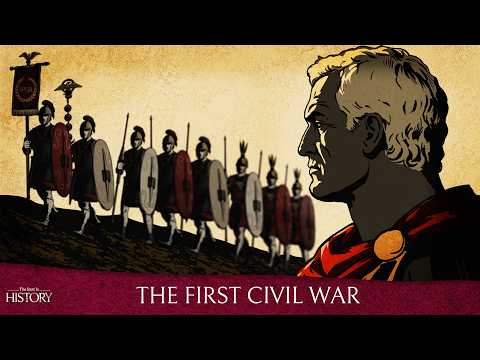
Tom and Dominic examine how Gaius Marius, born in 157 BC in the provincial town of Arpinum, climbed Rome's fiercely snobbish political ladder to become consul. Lacking consular ancestors, Marius built his reputation under Scipio Aemilianus at the siege of Numantia and leveraged patronage from the aristocratic Caecilii Metelli to win election as tribune of the plebs in 119 BC, just two years after senatorial conservatives murdered Gaius Gracchus and 3,000 followers. After governing Spain and marrying Julia, aunt of Julius Caesar, Marius served as deputy to consul Quintus Caecilius Metellus in the war against Numidian king Jugurtha.
In 108 BC, Marius undercut Metellus with a populist campaign in Rome, winning the consulship for 107 BC and taking over the African command. Although Marius paraded Jugurtha in chains during a triumph on January 1, 104 BC, his lieutenant Lucius Cornelius Sulla claimed credit for negotiating Jugurtha's surrender, sparking a rivalry just as the Teutons and Cimbri marched toward Italy.
How time-sensitive the topic is: Retrospective
By the numbers
80 miles: Approximate distance of Marius's hometown of Arpinum outside Rome. (Mentioned at 0:52)
7 consulships: Number of consulships a soothsayer predicted Marius would hold after he caught an eagle's nest with seven chicks. (Mentioned at 3:37)
20,000 men: Size of Scipio Aemilianus's Roman citizen force, roughly four legions, taken to Spain for the siege of Numantia. (Mentioned at 8:02)
40,000 allied and auxiliary troops: Combined number of Italian socii and foreign auxiliaries serving alongside Scipio's legions at Numantia. (Mentioned at 8:21)
12 war elephants: Number of war elephants Prince Jugurtha brought with his Numidian cavalry contingent to aid Scipio at Numantia. (Mentioned at 9:08)
7 consulships: Number of consulships held by members of the Caecilii Metelli family between 123 and 98 BC. (Mentioned at 13:16)
3,000 followers: Number of Gaius Gracchus's followers rounded up and executed without trial by the consuls in 121 BC. (Mentioned at 24:20)
400 years: Approximate period Rome had gone without civil street violence between 509 BC and the murder of Tiberius Gracchus in 133 BC. (Mentioned at 24:53)
Questions this video answers
Why was Gaius Marius considered an outsider (novus homo) in Roman politics?
Gaius Marius was born in 157 BC in the provincial town of Arpinum, which had only gained full Roman voting rights in 188 BC, and no one in his family had ever held high magistracies or a consulship in Rome. Because Roman voters favored famous aristocratic dynasties, a 'new man' without consular ancestors faced steep snobbery when climbing the political ladder.
Tom, 0:40 to 2:50
From this keypoint: Marius's Provincial Roots in Arpinum, Says Tom
What was the prophecy of the seven eagles in Plutarch's life of Gaius Marius?
According to Plutarch, a young Marius caught a falling eagle's nest containing seven baby eagles in his cloak, leading a soothsayer to prophesy that he would hold the Roman consulship seven times. This prediction seemed impossible at the time because Roman custom forbade holding the one-year consulship more than once, and the all-time historical record was six.
Tom, 2:50 to 6:13
From this keypoint: Seven Consuls Omen Defied Republican Custom
How did Gaius Marius first gain the endorsement of Scipio Aemilianus at Numantia?
Serving as a junior officer during the siege of Numantia in 134–133 BC, Marius impressed Scipio Aemilianus with his strict discipline, hardy lifestyle, and bravery in killing a Numantian commander in single combat. When asked at dinner who might succeed him as Rome's great leader, Scipio touched Marius on the shoulder and said, 'Perhaps this is the man.'
Tom, 9:51 to 12:07
From this keypoint: Tom on How Marius Won Scipio's Endorsement
Why did the murders of Tiberius and Gaius Gracchus mark a turning point for the Roman Republic?
After Tiberius and Gaius Gracchus used the tribunate to push land allotments, subsidized grain, and consecutive terms in office, conservative senators clubbed Tiberius to death in 133 BC and killed Gaius and 3,000 supporters in 121 BC. These killings shattered 400 years of non-violent civic politics and set a precedent for using 'national emergency' claims to murder inviolate elected magistrates.
Tom, 19:45 to 25:44
From this keypoint: Tom: The Murders of the Gracchi Broke Rome's Taboo
How was Gaius Marius related to Julius Caesar?
After serving as governor in Spain, Gaius Marius married Julia, the sister of Julius Caesar's father, making Marius the young Julius Caesar's uncle by marriage. This match connected the provincial novus homo to one of Rome's oldest patrician families while giving the politically faded Caesars a rising military star.
Tom, 27:00 to 31:18
From this keypoint: Voting Reform Alienates the Metelli Before Recovery
Why did Rome go to war against King Jugurtha of Numidia?
Although Jugurtha had fought alongside Rome at Numantia and bribed Roman senators heavily, he murdered his two cousins to usurp the Numidian throne and killed a number of Romans when capturing the town of Cirta in 112 BC in defiance of Roman orders. The massacre at Cirta forced the embarrassed Roman Senate to declare war to topple him.
Tom, 31:18 to 37:53
From this keypoint: Jugurtha's Bribes and Metellus's African Campaign
How did Gaius Marius take command of the Jugurthine War from Quintus Caecilius Metellus?
While serving as Metellus's deputy in Africa, Marius had agents in Rome campaign against Metellus's aristocratic arrogance and returned just in time to win the consulship for 107 BC. Once elected, Marius had the African command transferred to himself, robbing a furious Metellus of the final victory after Metellus had done the hardest fighting.
Tom, 37:53 to 41:40
From this keypoint: Marius Undercuts Metellus to Win the 107 BC Consulship
Why did Lucius Cornelius Sulla's signet ring anger Gaius Marius?
Marius sent his lieutenant Lucius Cornelius Sulla to persuade the King of Mauretania to hand over Jugurtha, ending the war. Afterward, Marius's senatorial enemies credited Sulla rather than Marius for the victory, and Sulla provoked his commander by constantly wearing a signet ring engraved with the scene of Jugurtha's surrender to him.
Tom, 41:40 to 46:59
From this keypoint: Tom: Sulla Captures Jugurtha and Sparks Rivalry
Credible AI™ signals
Confidence: Source-Grounded History. Tom and Dominic anchor their narrative in classical histories by Plutarch and Sallust, explicitly noting where Plutarch prioritizes dramatic omens over likely events. They clearly distinguish historical record from their own colorful modern political analogies.
Bias: Sympathetic Institutionalist. The hosts examine both the populist grievances of the plebs and the constitutional fears of the senatorial elite without taking a modern ideological side, though they view the erosion of Republican taboos with clear analytical concern.
Originality (76%): Vivid Modern Parallels. While recounting standard Roman Republican history, the hosts bring fresh perspective through lively British and American political analogies, sports metaphors, and sharp character analysis of Gaius Marius as a calculating populist.
Depth (82%): Structural Political Insight. Rather than merely listing battles, the discussion unpacks the structural mechanics of Roman patronage, the cursus honorum, the constitutional check of dual consuls, and how the murders of the Gracchi fatally weakened political taboos.
Key points (10)
Short (17 min): key points 1, 6, 9 and 10
Medium (30 min): key points 1, 4, 5, 6, 7, 9 and 10
Relaxed (43 min): all 10 key points
1. Marius's Provincial Roots in Arpinum, Says Tom
Timestamp: 00:00:40 to 00:02:50 (2 min)
Speaker: Tom
Born in 157 BC in Arpinum, about 80 miles from Rome, Gaius Marius belonged to the first local aristocratic generation to grow up after the town gained full Roman voting citizenship in 188 BC. Despite Roman voters loving famous aristocratic brands, Marius's provincial roots defined his outsider identity.
Impact: Medium. Why it matters: Establishes the structural barrier Marius faced in a republic where voters resented aristocratic privilege yet consistently elected dynastic names.
“He is born in 157 BC in a town called Arpenum, which is about 80 mi outside Rome.”
In the video: Tom, at 0:49
For: Dominic
2. Seven Consuls Omen Defied Republican Custom
Timestamp: 00:02:50 to 00:06:13 (3 min)
Speaker: Tom
Reading from Plutarch, Tom recounts how a young Marius supposedly caught an eagle's nest holding seven chicks, prompting a soothsayer to predict he would hold the consulship seven times. For a novus homo with no consular ancestors, even one consulship seemed nearly impossible when the record stood at six.
Impact: Medium. Why it matters: Highlights why Marius's eventual career shattered Republican norms designed to prevent any single magistrate from entrenching monarchical power.
“No Roman in history has held seven console ships. The the record is six. Seven just seems impossible.”
In the video: Tom, at 6:04
For: Dominic
3. Scipio's Siege of Numantia Launches Marius
Timestamp: 00:06:42 to 00:09:51 (3 min)
Speaker: Tom
In 134 BC, the Senate granted Scipio Aemilianus an irregular second consulship to end the two-decade war against Numantia in Spain with 20,000 Roman legionaries and 40,000 allies, including Numidian cavalry under Prince Jugurtha. Serving as a junior officer, Marius gained invaluable early war experience.
Impact: Medium. Why it matters: Brings together the key figures of the era in a single Spanish campaign, introducing both Marius's first patron and his future North African adversary.
“And so Scipio travels to Spain in command of a vast army. He has 20,000 men which is roughly four legions.”
In the video: Tom, at 7:59
For: Dominic
4. Tom on How Marius Won Scipio's Endorsement
Timestamp: 00:09:51 to 00:12:07 (2 min)
Speaker: Tom
Marius cultivated a traditional tough soldier persona at Numantia, sleeping on hard ground, enforcing strict discipline, and killing a Numantian commander in hand-to-hand combat in front of Scipio Aemilianus. Asked who might succeed him as Rome's leading general, Scipio tapped Marius and said, "Perhaps this is the man."
Impact: High. Why it matters: Shows how battlefield heroism and a celebrity commander's endorsement gave an unknown provincial the political capital needed for Roman elections.
“And Scipio turns to Marius and he touches him on the shoulder very fondly and he says, "Perhaps this is the man."”
In the video: Tom, at 11:28
For: Dominic
5. Metelli Patronage and the Perilous 119 BC Tribunate
Timestamp: 00:12:09 to 00:18:31 (6 min)
Speaker: Tom
After Scipio Aemilianus died shortly following Numantia's fall in 133 BC, Marius relied on the political patronage of the powerful Caecilii Metelli family to begin climbing the cursus honorum. In 119 BC, he ran for tribune of the plebs just two years after a previous tribune had been murdered by a consular death squad.
Impact: High. Why it matters: Demonstrates how Marius combined aristocratic patronage with a populist office at the exact moment Roman class politics turned lethal.
“Marius has been elected tribune just 2 years after one of his predecessors had been murdered.”
In the video: Tom, at 17:21
For: Dominic
6. Tom: The Murders of the Gracchi Broke Rome's Taboo
Timestamp: 00:19:45 to 00:25:44 (6 min)
Speaker: Tom
Tribunes Tiberius Gracchus in 133 BC and Gaius Gracchus in 123 and 122 BC pushed land redistribution, subsidized grain, and free army kit for the poor, while seeking consecutive terms that senators viewed as tyranny. Senators clubbed Tiberius to death and later killed Gaius along with 3,000 followers without trial in 121 BC, ending 400 years of non-violent civic politics.
Impact: High. Why it matters: Identifies the structural fracture of the Roman Republic: once consuls justified killing inviolate tribunes as a national emergency, constitutional taboos never recovered.
“These are the first eruptions of civil violence on the streets of Rome since the expulsion of the monarchy back in 509 BC.”
In the video: Tom, at 24:42
For: Dominic
7. Voting Reform Alienates the Metelli Before Recovery
Timestamp: 00:27:00 to 00:31:18 (4 min)
Speaker: Tom
As tribune in 119 BC, Marius passed a populist bill restricting noble influence in the voting pens, infuriating his patrons the Metelli and contributing to his loss of two elections on a single day in 116 BC. Yet Marius persisted, secured a Spanish governorship where he suppressed banditry, reconciled with the Metelli, and married Julia of the patrician Caesar family.
Impact: High. Why it matters: Shows Marius's political resilience: he established populist credentials against the Senate while still marrying into patrician prestige and regaining oligarchic backing.
“So he he passes a bill um that restricts the ability of the nolays to influence voters in the voting pens.”
In the video: Tom, at 27:26
For: Dominic
8. Jugurtha's Bribes and Metellus's African Campaign
Timestamp: 00:31:18 to 00:37:53 (7 min)
Speaker: Tom
Appointed consul for 109 BC to fight in Africa, Quintus Caecilius Metellus took Marius as his deputy against Jugurtha, who had murdered his cousins, seized the Numidian throne, bribed Roman senators, and killed Romans at Cirta in 112 BC. Metellus restored discipline to Rome's out-of-shape legions, destroyed Jugurtha's war elephants in pitched battle, and waged a brutal counter-insurgency across Numidia.
Impact: Medium. Why it matters: Demonstrates how Jugurtha exposed deep senatorial corruption before Metellus and Marius turned the military tide through harsh discipline.
“He described this described it as a city for sale and bound for imminent destruction should a buyer be found.”
In the video: Tom, at 34:35
For: Dominic
9. Marius Undercuts Metellus to Win the 107 BC Consulship
Timestamp: 00:37:53 to 00:41:40 (4 min)
Speaker: Tom
In the summer of 108 BC, Marius asked Metellus for leave to run for consul; Metellus mocked his ambition and delayed his departure until the last moment. However, Marius's agents in Rome had already campaigned against the haughty oligarchy, allowing Marius to win the consulship for 107 BC and strip the African command directly from Metellus.
Impact: High. Why it matters: Marks Marius's decisive breakthrough: by weaponizing popular and senatorial resentment against the oligarchic faction, a novus homo seized both the consulship and a major war command.
“so not only is he elected console for 107 BC he gets Matelis's African command”
In the video: Tom, at 40:14
For: Dominic
10. Tom: Sulla Captures Jugurtha and Sparks Rivalry
Timestamp: 00:41:40 to 00:46:59 (5 min)
Speaker: Tom
To end the war, Marius sent his shrewd lieutenant to the King of Mauretania to negotiate Jugurtha's surrender, leading to Marius's New Year's Day triumph on January 1, 104 BC and Jugurtha's death in a Roman dungeon. As the Teutones and Cimbri marched toward Italy, Marius grew irritated that his lieutenant, Lucius Cornelius Sulla, wore a signet ring claiming credit for Jugurtha's capture.
Impact: High. Why it matters: Sets up the defining personal and political rivalry of the first century BC, as Sulla used Jugurtha's capture to upstage Marius just as Rome faced a northern invasion.
“And in fact, he's had a signate ring made for himself, which shows him negotiating the surrender of Jagartha.”
In the video: Tom, at 46:18
For: Dominic
Conflicts of interest (1)
Amazon Sponsorship Read
Commercial conflict, Low severity
Amazon sponsors the episode through a host-read advertisement delivered by Dominic between 00:18:35 and 00:19:36.
Sources: Tom, Dominic, Amazon
Significance: Because the main narrative covers first-century BC Roman politics, the commercial relationship has no bearing on the historical analysis outside the isolated ad break.
Key sources
Tom: Co-host, The Rest Is History (@holland_tom)
Dominic: Co-host, The Rest Is History (@dcsandbrook)
Who's in this
Gaius Marius
Plutarch
Scipio Aemilianus
Jugurtha
Caecilii Metelli
Tiberius Gracchus
Gaius Gracchus
Sallust
Quintus Caecilius Metellus
Lucius Cornelius Sulla
Amazon
Also mentioned
Rome (First mentioned at 0:00)
Roman Senate (First mentioned at 4:41)
Numidia (First mentioned at 8:34)
Italy (First mentioned at 0:18)
Arpinum (First mentioned at 0:49)
Spain (First mentioned at 6:55)
Numantia (First mentioned at 7:04)
North Africa (First mentioned at 8:29)
The Rest Is History (First mentioned at 19:45)
Mauretania (First mentioned at 41:14)
Latium (First mentioned at 0:59)
Carthage (First mentioned at 7:30)
Algeria (First mentioned at 8:33)
Hannibal (First mentioned at 8:41)
Channing Tatum (First mentioned at 9:54)
Julia (First mentioned at 30:44)
Julius Caesar (First mentioned at 30:52)
Colleen McCullough (First mentioned at 31:02)
Cirta (First mentioned at 35:04)
Alps (First mentioned at 44:36)
Bill Clinton (First mentioned at 2:47)
Iberian Peninsula (First mentioned at 6:59)
Scipio Africanus (First mentioned at 9:18)
England (First mentioned at 11:57)
Britain (First mentioned at 14:57)
Circus Maximus (First mentioned at 15:20)
Ford Motor Company (First mentioned at 18:49)
Henry Ford (First mentioned at 18:51)
Europe (First mentioned at 19:14)
Tony Benn (First mentioned at 21:57)
America (First mentioned at 26:42)
Andorra (First mentioned at 36:01)
Iceland (First mentioned at 36:05)
Rupert Lowe (First mentioned at 39:23)
Nigel Farage (First mentioned at 39:23)
Morocco (First mentioned at 41:16)
Hercules (First mentioned at 43:53)
This analysis was generated by skim (skim.plus), an AI-powered content analysis platform by Credible AI. Scores and classifications represent the platform's AI-generated assessment and should be considered alongside other sources.