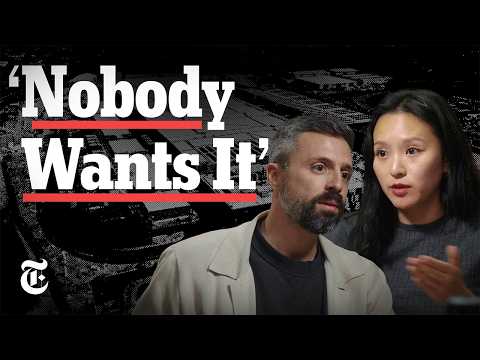
The Ezra Klein Show's The A.I. Revolt Is Here | The Ezra Klein Show: skim's analysis identifies 12 key moments. Bipartisan opposition to AI data centers has surged across the United States, driven less by water consumption than by secretive non-disclosure agreements, electricity demand, and deep skepticism toward Silicon Valley's agenda.
Category: Politics. Format: Interview. YouTube video analyzed by skim.
skim AI Analysis
Credibility assessment: On-the-Ground Reporting. Jasmine Sun anchors her analysis in direct field reporting from Wisconsin, Michigan, and China, combined with interviews inside Silicon Valley AI labs and citation of specific polling data and municipal tax figures.
Bias assessment: Democratic Process Realism. Both speakers share a skepticism toward Silicon Valley's techno-determinism and unchecked corporate power, though Jasmine Sun pushes back against activist myths regarding water use, jobs, and foreign psyops.
Originality: 86% — Fresh Field Synthesis. By connecting rural Midwest zoning battles directly to internal San Francisco AI lab psychology and Chinese regulatory practice, the conversation reframes the data center fight as a broader crisis of democratic consent.
Depth: 89% — Multi-Layered Breakdown. The discussion separates procedural grievances, environmental realities, and economic anxieties, while examining the strategic trade-offs of moratoriums, compute scarcity, and the AGI race metaphor.
Key Points (12)
1. Secretive NDAs Inflame Local Data Center Backlash
Timestamp: 00:02:08 to 00:08:43
Ezra Klein and Jasmine Sun examine how hyperscale data centers have united bipartisan opposition, with voter disapproval jumping from four in ten to seven in ten within nine months. In rural Wisconsin and Michigan, the massive scale and mechanical hum of windowless warehouses shock residents, while developers' insistence on municipal non-disclosure agreements prevents city councils from addressing rumors before social media outrage takes over.
Significance (High): Highlights how Silicon Valley's reflexive culture of corporate secrecy backfires when applied to local municipal governance, turning manageable zoning questions into populist revolts.
Sources in support: Ezra Klein (Host, The Ezra Klein Show (The New York Times)), Jasmine Sun (Journalist and Substack Writer covering AI culture and politics)
2. Jasmine Sun Separates Water Myths From Grid Strain
Timestamp: 00:08:44 to 00:14:14
Jasmine Sun explains that while water scarcity has become a sticky symbol for activists near the Great Lakes, almost all modern data centers use closed-loop cooling systems that consume a fraction of the water used by neighboring golf courses. In contrast, the massive electricity demand required to run low-latency AI clusters is a genuine strain that will likely require new natural gas power plants.
Significance (High): Distinguishes between symbolic activist grievances and hard infrastructure bottlenecks, showing that even substantial tax revenues cannot overcome deep public distrust of corporations and utilities.
Sources in support: Ezra Klein (Host, The Ezra Klein Show (The New York Times)), Jasmine Sun (Journalist and Substack Writer covering AI culture and politics)
3. Past Industrial Betrayals Fuel AI Bubble Fears
Timestamp: 00:14:14 to 00:18:48
Midwest communities view multibillion-dollar data center proposals through the lens of past corporate abandonments and warnings of an AI financial bubble. In Mount Pleasant, Wisconsin, Foxconn promised 13,000 manufacturing jobs in exchange for hundreds of millions in public subsidies before pulling out and leaving about 1,000 jobs, while General Motors left Janesville with 30 million dollars in uncleaned hazardous waste after closing its plant in 2008.
Significance (Medium): Explains why rural communities rationally discount tech industry valuations: historical memory of industrial abandonment makes long-term corporate tax promises look fragile.
Sources in support: Ezra Klein (Host, The Ezra Klein Show (The New York Times)), Jasmine Sun (Journalist and Substack Writer covering AI culture and politics)
4. Why AI Lacks a Grassroots Pro-Build Constituency
Timestamp: 00:18:49 to 00:26:00
Ezra Klein contrasts data centers with housing and renewable energy, noting that the Abundance framework relies on people believing society needs more of what is being built. Jasmine Sun reports that unlike solar farms or auto plants, which have clear environmental or labor constituencies and produce tangible goods people consider essential, AI is widely viewed by ordinary citizens as a minor widget or toy.
Significance (High): Identifies the core political vulnerability of the AI build-out: without a broad public conviction that AI improves daily life, infrastructure opposition transcends local NIMBYism.
Sources in support: Ezra Klein (Host, The Ezra Klein Show (The New York Times)), Jasmine Sun (Journalist and Substack Writer covering AI culture and politics)
5. Developers Sue Small Towns and Warn of Job Losses
Timestamp: 00:26:03 to 00:31:07
When the Saline Township City Council in Michigan voted 4-to-1 against rezoning land for a Stargate data center, the developers sued the small town for exclusionary zoning until it settled for a few million dollars in school and fire funding. Ezra Klein points out the chasm between AI executives pleading for democratic governance in Congress and deploying massive financial power to crush local resistance.
Significance (High): Exposes the contradiction at the heart of the AI industry's public relations: companies cannot credibly claim to respect democracy or fear inequality while suing small towns and automating labor.
Sources in support: Ezra Klein (Host, The Ezra Klein Show (The New York Times)), Jasmine Sun (Journalist and Substack Writer covering AI culture and politics)
6. Silicon Valley Expects a Permanent Underclass
Timestamp: 00:31:07 to 00:34:27
Jasmine Sun reports that not a single tech industry insider she interviewed believes AI will decrease economic inequality, with many anticipating a permanent underclass stripped of labor leverage and reliant on welfare. While both Ezra Klein and Sun doubt AI can easily automate complex, multifaceted human jobs, they warn that the industry's aggressive enterprise sales push leaves society almost no time to adjust.
Significance (High): Shifts the automation debate from whether all jobs will vanish to whether the sheer speed of model upgrades will outpace human retraining, especially for entry-level workers.
Sources in support: Ezra Klein (Host, The Ezra Klein Show (The New York Times)), Jasmine Sun (Journalist and Substack Writer covering AI culture and politics)
7. How AI Builders Justify Extinction-Level Bets
Timestamp: 00:34:27 to 00:42:23
Ezra Klein notes the contradiction of top AI executives privately wishing progress would slow down while racing to build infrastructure as fast as possible and asking how to bribe cities more effectively. Jasmine Sun categorizes the industry's internal justifications into three buckets: techno-determinism that superintelligence is inevitable, a utilitarian gamble that potential utopia and immortality outweigh a 10 to 20 percent extinction risk, and pure technical fascination.
Significance (Medium): Reveals the philosophical gulf between San Francisco's expected-value risk culture and ordinary families who refuse to gamble human survival or their neighborhoods on speculative utopia.
Sources in support: Ezra Klein (Host, The Ezra Klein Show (The New York Times)), Jasmine Sun (Journalist and Substack Writer covering AI culture and politics)
8. Questioning the Finish Line of the AGI Race
Timestamp: 00:42:24 to 00:50:02
Ezra Klein and Jasmine Sun examine whether AI development is truly a winner-take-all race toward recursive self-improvement or a jagged, continuous technology with moving finish lines. Although labs like OpenAI, Google DeepMind, and Anthropic are focused on building AI that can code and train its own successor models exponentially, Sun points out that current models excel at math and coding while failing at physical tasks, and no single lab has pulled decisively ahead of competitors or Chinese.
Significance (High): Shows how dismantling the winner-take-all race narrative opens the door for an unconventional political coalition uniting AI safety researchers with anti-corporate populists.
Sources in support: Ezra Klein (Host, The Ezra Klein Show (The New York Times)), Jasmine Sun (Journalist and Substack Writer covering AI culture and politics)
9. How Data Center Bans Risk Compute Stratification
Timestamp: 00:50:02 to 00:56:34
Jasmine Sun warns that local data center moratoriums will not stop AI progress, as developers simply shift construction to welcoming states like Texas, foreign countries, or potentially even space, while missing opportunities to clean up contaminated brownfields like Janesville's old GM site.
Significance (High): Provides a critical counter-argument to blanket moratoriums: blocking domestic data centers can offshore geopolitical leverage to authoritarian regimes and lock ordinary citizens out of frontier compute.
Sources in support: Ezra Klein (Host, The Ezra Klein Show (The New York Times)), Jasmine Sun (Journalist and Substack Writer covering AI culture and politics)
10. China Regulates AI Labor While US Blames Psyops
Timestamp: 00:56:35 to 01:01:03
Drawing on her reporting trip to Shanghai, Jasmine Sun explains that Chinese citizens express less public terror over AI than Americans, partly due to information suppression and a belief that state-backed technology cannot be resisted, pushing workers to frantically upskill amid fierce white-collar competition.
Significance (Medium): Contrasts Beijing's targeted labor and consumer protections with Washington's laissez-faire approach, while debunking tech executives' attempts to blame domestic grassroots anger on foreign propaganda.
Sources in support: Ezra Klein (Host, The Ezra Klein Show (The New York Times)), Jasmine Sun (Journalist and Substack Writer covering AI culture and politics)
11. Ezra Klein Calls Out AI's Core Product Problem
Timestamp: 01:01:03 to 01:09:09
In 2026, AI executives have begun taking public anger seriously, asking whether better marketing, cutting local electricity rates in half, or mailing checks to nearby households can secure data center approvals. Ezra Klein argues that if AI leaders genuinely believe their technology threatens mass unemployment and human survival, they have a fundamental product problem rather than a marketing problem.
Significance (High): Cuts through Silicon Valley's public relations pivot by arguing that no messaging strategy can sell a technology if its creators' own predictions of economic dislocation come true before tangible public benefits materialize.
Sources in support: Ezra Klein (Host, The Ezra Klein Show (The New York Times)), Jasmine Sun (Journalist and Substack Writer covering AI culture and politics)
12. Real-World Friction Forces Silicon Valley Into Politics
Timestamp: 01:09:10 to 01:15:07
Ezra Klein argues that AI researchers overrate raw intelligence as the main bottleneck to human progress, noting that breakthroughs like drug discovery still face physical friction in animal testing, clinical trials, and organizational bureaucracy. Jasmine Sun observes that engineers accustomed to solving isolated problems inside a codebase treat AI as a deus ex machina for complex physical challenges like climate change and robotics.
Significance (Medium): Concludes the analysis by showing how the physical and political friction of the real world is humbling Silicon Valley, forcing an industry built on code to reckon with democratic pluralism.
Sources in support: Ezra Klein (Host, The Ezra Klein Show (The New York Times)), Jasmine Sun (Journalist and Substack Writer covering AI culture and politics)
This analysis was generated by skim (skim.plus), an AI-powered content analysis platform by Credible AI. Scores and classifications represent the platform's AI-generated assessment and should be considered alongside other sources.