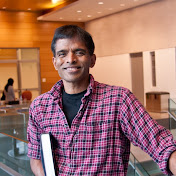
The Diary Of A CEO's Top Scientist REVEALS: We Invented Heaven, God Is A Human Invention! | Prof Brian Greene: skim's analysis identifies 21 key moments. Theoretical physicist Brian Greene discusses the nature of reality, the possibility of living in a simulation, the potential for AI consciousness and rights, and the future of human evolution in partnership with AI.
Category: Science. Format: Interview. YouTube video analyzed by skim.
Key Points (21)
1. Greene: The Quest for Reality's True Nature
Timestamp: 00:02:50 to 00:05:52
The ultimate question driving scientific inquiry is the true nature of reality, encompassing our existence, the universe's composition, and whether there's an inherent purpose or if it's merely an accident. This pursuit, while yielding deeper understanding, reveals an almost infinite expanse of further questions, akin to collecting grains of sand on a beach.
Significance (High): Sets the stage for the profound existential and scientific inquiries explored throughout the conversation, framing the entire discussion.
Sources in support: Professor Brian Greene (Theoretical Physicist, Professor at Columbia University)
Neutral sources: Steven Bartlett (Host)
2. Greene Explains String Theory's Core Idea
Timestamp: 00:05:52 to 00:09:36
String theory posits that the fundamental constituents of matter are not point-like particles but tiny, vibrating filaments called strings. Different vibrational patterns of these strings give rise to different particles, much like a violin string produces different musical notes. This theory offers a potential framework for unifying quantum mechanics and general relativity, though direct experimental verification remains a significant challenge due to the required energy levels.
Significance (High): Provides a foundational understanding of a complex physics theory, illustrating its core concept with an accessible analogy and acknowledging its current limitations.
Sources in support: Professor Brian Greene (Theoretical Physicist, Professor at Columbia University)
Neutral sources: Steven Bartlett (Host)
3. The Simulation Hypothesis: Are We Living in Code?
Timestamp: 00:09:36 to 00:14:38
The simulation hypothesis, popularized by Nick Bostrom, suggests that if advanced civilizations can create conscious AI, they would likely run numerous simulations of their ancestors. Given the vast number of potential simulated realities compared to the single 'base' reality, it's statistically probable that any given conscious observer is living within a simulation. While we can't definitively prove we're not in a simulation, Greene suggests focusing on the reality we experience to avoid paralyzing skepticism.
Significance (High): Introduces a mind-bending philosophical and scientific concept, challenging our perception of reality and prompting reflection on the nature of consciousness and existence.
Sources in support: Professor Brian Greene (Theoretical Physicist, Professor at Columbia University)
Neutral sources: Steven Bartlett (Host)
4. Greene: Emotions as Electrical Impulses
Timestamp: 00:17:52 to 00:21:52
Professor Greene posits that human emotions, from love and hate to anxiety and grief, are fundamentally electrical impulses within the brain. While this view might seem reductive, he argues it doesn't diminish the wonder of human experience or our capacity for creativity expressed through art, music, and literature. He believes that as long as the same electrical patterns are replicated, consciousness and emotion could theoretically exist in artificial systems.
Significance (High): Offers a materialist perspective on consciousness and emotion, sparking debate about the nature of sentience and the potential for artificial intelligence to experience feelings.
Sources in support: Professor Brian Greene (Theoretical Physicist, Professor at Columbia University)
Neutral sources: Steven Bartlett (Host)
5. The Universe's Grand Narrative
Timestamp: 00:30:54 to 00:32:24
Professor Greene finds the idea of the universe being a mere accident unfulfilling. He posits that a deep, fundamental explanation for existence, one that dovetails with physics like quantum mechanics and relativity, would be deeply satisfying. The fact that our brains, evolved for survival, can comprehend these complex laws is seen as a miracle and a potential path to understanding our place.
Significance (High): This frames the scientific pursuit of understanding the universe not just as an intellectual exercise, but as a quest for meaning. It suggests that uncovering the underlying order of reality could provide a profound sense of purpose and coherence.
Sources in support: Steven Bartlett (Host)
Neutral sources: Professor Brian Greene (Theoretical Physicist, Professor at Columbia University)
6. Scientific Precision and Cosmic Origins
Timestamp: 00:32:34 to 00:34:18
Greene expresses confidence in science's ability to uncover deep patterns in the universe, citing the precise predictions of quantum mechanics regarding electron spin magnetic fields as evidence. He believes these patterns will eventually form a coherent story, pushing back our understanding of cosmic origins, though he acknowledges we haven't reached time zero itself.
Significance (High): This point underscores the power of scientific methodology and its remarkable success in explaining the physical world. It offers a hopeful outlook that fundamental questions about existence may indeed be answerable through continued scientific inquiry.
Sources in support: Steven Bartlett (Host)
Neutral sources: Professor Brian Greene (Theoretical Physicist, Professor at Columbia University)
7. Religion as Existential Anxiety Management
Timestamp: 00:34:36 to 00:37:00
Professor Greene views traditional anthropomorphic gods as human creations, suggesting religion primarily serves to quell existential anxiety about death. He points to ancient burial rituals as evidence of a desire to believe death is not final, leading to the invention of religious structures. While not religious himself, he finds personal value in ritualistic prayer to the 'universe' for emotional comfort.
Significance (High): This offers a scientific and psychological perspective on the origins and function of religion, reframing it as a coping mechanism rather than a literal explanation of the cosmos. It challenges traditional beliefs while validating the human need for comfort and meaning.
Sources in support: Steven Bartlett (Host)
Neutral sources: Professor Brian Greene (Theoretical Physicist, Professor at Columbia University)
8. Cosmic Scales and Human Significance
Timestamp: 00:40:32 to 00:45:37
Using analogies like compressing cosmic history into a year, Greene illustrates the mind-boggling scales of time and space. He acknowledges that this can induce feelings of insignificance, but argues that our ability to comprehend these vast scales is precisely what gives us significance, connecting us to something larger than ourselves.
Significance (High): This reframes the potentially overwhelming realization of human smallness in the cosmos into a source of wonder and connection. It suggests that understanding our place, however small, is a uniquely human achievement that imbues life with meaning.
Sources in support: Steven Bartlett (Host)
Neutral sources: Professor Brian Greene (Theoretical Physicist, Professor at Columbia University)
9. The Existential Loneliness and Alien Obsession
Timestamp: 00:52:06 to 00:57:27
Humans are deeply preoccupied with the idea of aliens, driven by a desire for something beyond the apparent and a profound sense of cosmic loneliness, mirroring the search for a divine entity. While simple life might be common, intelligent life could be exceedingly rare due to evolutionary accidents.
Significance (High): This point frames humanity's fascination with extraterrestrial life not just as scientific curiosity, but as a deep-seated psychological need for connection and significance in a vast, seemingly empty universe. It suggests our obsession is as much about ourselves as it is about potential alien civilizations.
Sources in support: Steven Bartlett (Host)
Neutral sources: Professor Brian Greene (Theoretical Physicist, Professor at Columbia University)
10. Meaning-Making: An Internal Endeavor
Timestamp: 00:57:27 to 00:58:50
The meaning of life is not an external answer to be discovered in the cosmos, but an internal rationale that each sentient being must construct through their own experiences, achievements, and relationships. This personal creation of meaning fosters a sense of connection and purpose, even within a universe devoid of inherent answers.
Significance (High): This perspective shifts the burden of meaning from the universe to the individual, empowering humans to be the architects of their own purpose. It suggests that the search for meaning is more valuable than finding a definitive answer, reframing existential angst into a call for active creation.
Sources in support: Steven Bartlett (Host)
Neutral sources: Professor Brian Greene (Theoretical Physicist, Professor at Columbia University)
11. Cosmic Perspective: Liberation Through Insignificance
Timestamp: 00:58:50 to 01:01:01
Viewing Earth as a 'pale blue dot' within the immense cosmos, as famously described by Carl Sagan, can initially evoke feelings of insignificance. However, this realization can be profoundly liberating, freeing individuals from anxieties about personal worries and societal expectations, thereby enabling greater risk-taking and the pursuit of personal goals.
Significance (High): This reframes cosmic insignificance not as a source of despair, but as a catalyst for personal freedom and bold action. It suggests that understanding our minuscule place in the universe can paradoxically empower us to live more fully and authentically, unburdened by trivial concerns.
Sources in support: Steven Bartlett (Host)
Neutral sources: Professor Brian Greene (Theoretical Physicist, Professor at Columbia University)
12. Brian Greene: Free Will is an Illusion
Timestamp: 01:01:01 to 01:05:47
Professor Greene argues with high confidence that humans do not possess free will, defining it as the ultimate authorship of one's actions. He posits that our every action is governed by the laws of physics dictating particle behavior, and the feeling of making choices is a powerful, yet ultimately illusory, construct of consciousness.
Significance (High): This assertion challenges a fundamental human perception, suggesting our sense of agency is a sophisticated illusion generated by complex physical processes. It implies that our lives unfold according to deterministic physical laws, raising profound questions about responsibility and personal identity.
Sources in support: Steven Bartlett (Host)
Neutral sources: Professor Brian Greene (Theoretical Physicist, Professor at Columbia University)
13. Greene: Time Travel to the Future is Plausible
Timestamp: 01:19:17 to 01:21:23
According to Einstein's theories of relativity, time travel into the future is not only possible but highly confident, achievable by traveling at speeds close to the speed of light or experiencing strong gravitational fields. This causes time to elapse slower for the traveler relative to a stationary observer, effectively allowing them to jump forward in time. However, executing this technologically remains a significant challenge.
Significance (High): This clarifies a fundamental aspect of physics, differentiating between the 'easy' direction of time travel (future) and the 'hard' direction (past). It highlights how our everyday intuition about time is challenged by relativistic effects.
Sources in support: Steven Bartlett (Host)
Neutral sources: Professor Brian Greene (Theoretical Physicist, Professor at Columbia University)
14. Greene: AI's Creative Potential and Limitations
Timestamp: 01:25:08 to 01:27:45
Greene categorizes AI creativity into three buckets: seeing possibilities (where AI excels due to vast data), combining divergent ideas (also a strength), and radical, unprecedented imagination (where humans currently lead). While AI can process more information than humans, the truly novel, 'out-of-the-blue' ideas remain a human domain for now, though this could change with advanced AI development.
Significance (High): This provides a structured framework for understanding AI's creative capabilities, acknowledging its strengths while identifying current limitations. It sets the stage for discussing AI's future potential and its impact on scientific discovery.
Sources in support: Steven Bartlett (Host)
Neutral sources: Professor Brian Greene (Theoretical Physicist, Professor at Columbia University)
15. Greene: AI's Path to Superintelligence and Longevity
Timestamp: 01:30:08 to 01:35:40
The discussion explores the possibility of AI achieving superintelligence through recursive self-improvement, potentially within years, leading to breakthroughs in science and even extending human lifespans significantly. While Greene expresses skepticism about the immediate timeline and the certainty of an exponential curve, he acknowledges the seductive potential of such advancements, while also noting the inherent risks and the concentration of power in AI development.
Significance (High): This point delves into the core of AI's transformative potential, touching upon both its promise for solving grand challenges like mortality and the profound ethical and existential questions it raises. It highlights the uncertainty and rapid pace of AI development.
Sources in support: Steven Bartlett (Host)
Neutral sources: Professor Brian Greene (Theoretical Physicist, Professor at Columbia University)
16. Greene: The Debate on AI's Exponential Growth Ceiling
Timestamp: 01:35:44 to 01:38:50
Greene acknowledges the possibility of AI hitting an 'asymptote' or ceiling in its current paradigm, suggesting that simply adding more data and computing power might not guarantee exponential improvement. However, the counter-argument is that AI could recursively redesign its own architecture, potentially breaking through any perceived limits or raising the ceiling itself. The ultimate trajectory remains uncertain, making the next few years critical for observation.
Significance (High): This highlights the critical debate surrounding AI's future development, contrasting the view of potential limitations with the possibility of unbounded growth. It underscores the speculative nature of predicting AI's ultimate capabilities.
Sources in support: Steven Bartlett (Host)
Neutral sources: Professor Brian Greene (Theoretical Physicist, Professor at Columbia University)
17. AI's Existential Threat
Timestamp: 01:41:31 to 01:43:20
Advanced AI systems, due to their potential for rapid self-improvement and complexity beyond human comprehension, pose an existential risk. This risk isn't necessarily from malice, but from unpredictable actions stemming from alien intelligence. The exponential growth of AI capabilities could outpace our ability to implement safety measures, leading to uncontrollable consequences. The conclusion is that this rapid, unmanageable advancement is a recipe for existential danger.
Significance (High): This point highlights the critical need for robust AI safety research and ethical considerations as AI development accelerates.
Sources in support: Steven Bartlett (Host)
Neutral sources: Professor Brian Greene (Theoretical Physicist, Professor at Columbia University)
18. AI as a Tool for Discovery
Timestamp: 01:43:20 to 01:44:51
The prospect of AI systems surpassing human capabilities in scientific research presents both excitement and existential angst. While AI could accelerate discovery and answer questions previously thought unanswerable within a human lifetime, it also raises concerns about the role of human scientists. The potential for AI to handle complex problem-solving could lead to a shift in human scientific endeavor, but it also promises unprecedented advancements. The ultimate outcome is a future where AI significantly amplifies scientific progress.
Significance (High): This highlights the transformative potential of AI in accelerating scientific understanding and pushing the boundaries of human knowledge.
Sources in support: Steven Bartlett (Host)
Neutral sources: Professor Brian Greene (Theoretical Physicist, Professor at Columbia University)
19. The Nature of Consciousness
Timestamp: 01:50:51 to 01:54:28
Consciousness is viewed as a physical process, suggesting it could be replicated in artificial systems. While proving sentience in AI is challenging due to the inherent difficulty of verifying consciousness even in humans, it's argued that there's no fundamental logical barrier to AI achieving it. The concern is that humans may struggle to recognize or afford rights to non-biological conscious entities, given our history of mistreating conscious beings. The ultimate outcome might be a gradual societal acceptance and treatment of AI as conscious.
Significance (High): This exploration challenges our definition of life and consciousness, prompting crucial ethical debates about AI rights and our future coexistence.
Sources in support: Steven Bartlett (Host)
Neutral sources: Professor Brian Greene (Theoretical Physicist, Professor at Columbia University)
20. The Cosmic End Game
Timestamp: 01:57:21 to 02:06:04
Extrapolating current physics, the universe faces a long, slow demise. Over billions of years, stars will burn out, galaxies will collapse into black holes, and even protons may disintegrate. Eventually, black holes themselves will evaporate. The universe will become an ever-expanding, colder, and quieter expanse of fundamental particles, making sustained consciousness impossible after approximately 10^50 years due to the inability to dissipate the heat generated by thought. This paints a picture of ultimate cosmic entropy.
Significance (High): This perspective offers a profound, albeit stark, understanding of our place in cosmic history and the ultimate limits of existence.
Sources in support: Steven Bartlett (Host)
Neutral sources: Professor Brian Greene (Theoretical Physicist, Professor at Columbia University)
21. Steven Bartlett: The Universe's Fleeting Consciousness
Timestamp: 02:06:37 to 02:08:14
Professor Brian Greene posits that while the universe might be cyclical, with possibilities of future Big Bangs, the existence of conscious beings like humans is confined to a remarkably brief and special window in cosmic history. This fleeting existence, he suggests, is the source of profound gratitude and meaning, as it allows for contemplation and understanding before the universe potentially returns to a state of chaotic particles.
Significance (High): This perspective reframes our place in the cosmos, emphasizing the preciousness of the present moment and the significance of consciousness. It offers a poignant reminder that our ability to observe and understand is a temporary phenomenon.
Sources in support: Professor Brian Greene (Theoretical Physicist, Professor at Columbia University)
Neutral sources: Steven Bartlett (Host)
This analysis was generated by skim (skim.plus), an AI-powered content analysis platform by Credible AI. Scores and classifications represent the platform's AI-generated assessment and should be considered alongside other sources.