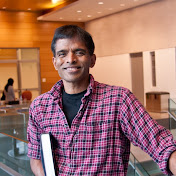
The Diary Of A CEO's Top White House Advisor: The US Empire Is Dying And Socialism Is Coming Next! | David Friedberg: skim's analysis identifies 19 key moments, with 4 potential conflicts of interest flagged. David Friedberg discusses the US's economic decline, the inevitability of socialism, and the transformative power of AI.
Category: Business. Format: Interview. YouTube video analyzed by skim.
Key Points (19)
1. AI: The Great Enabler
Timestamp: 00:06:26 to 00:10:07
AI represents a golden age of human advancement, capable of solving global issues like starvation and disease, and creating unprecedented economic opportunities. The narrative that AI will take jobs is flawed; instead, it will unleash human potential and drive prosperity.
Significance (High): This optimistic outlook on AI contrasts sharply with widespread fears of job displacement. Friedberg positions AI as a critical tool for societal progress and economic growth, urging a focus on its enablement rather than regulation.
Sources in support: David Friedberg (Guest, Scientist, Entrepreneur, Presidential Advisor)
Neutral sources: Steven Bartlett (Host)
2. David Friedberg: The US is in Decline
Timestamp: 00:08:49 to 00:13:58
The United States is experiencing a decline, evidenced by widespread unaffordability and wealth inequality, which is pushing the nation towards socialism. This decline is not inevitable, but requires addressing the systemic issues that prevent widespread opportunity.
Significance (High): This perspective challenges the notion of American exceptionalism and suggests a fundamental shift in the nation's economic and political trajectory. It highlights the urgency of addressing economic disparities to avert a socialist future.
Sources in support: David Friedberg (Guest, Scientist, Entrepreneur, Presidential Advisor)
Neutral sources: Steven Bartlett (Host)
3. Friedberg on Socialism's Inevitability
Timestamp: 00:10:30 to 00:14:56
Socialism is an inevitable outcome of current US policy, driven by the government's increasing intervention in markets like education and healthcare, which inflates costs and creates dependency. The true American dream is the transition from labor to capital, which socialism undermines.
Significance (High): This argument frames socialism not as a choice, but as a consequence of policy failures, directly linking government expansion to economic hardship and loss of individual freedom. It suggests a need for a radical shift in policy to preserve capitalist principles.
Sources in support: David Friedberg (Guest, Scientist, Entrepreneur, Presidential Advisor)
Neutral sources: Steven Bartlett (Host)
4. The Tax Loophole for the Wealthy
Timestamp: 00:21:39 to 00:25:03
Wealthy individuals can borrow against their assets, such as stocks, without incurring immediate taxes, effectively circumventing capital gains taxes. This practice allows them to acquire more assets and accumulate wealth disproportionately, while those reliant on labor struggle to build capital. This loophole should be addressed by treating borrowing against assets as a taxable event.
Significance (High): This creates a significant disparity in wealth accumulation, allowing the rich to grow their fortunes without contributing taxes on those gains, exacerbating economic inequality.
Sources in support: Steven Bartlett (Host)
Neutral sources: David Friedberg (Guest, Scientist, Entrepreneur, Presidential Advisor)
5. The Flawed 'American Dream' of Homeownership
Timestamp: 00:26:37 to 00:30:55
The societal emphasis on homeownership as the primary path to wealth is a 'great lie.' While it has made previous generations wealthy, it has inflated housing prices, making it unaffordable for younger generations. Investing in assets like the S&P 500, which offer consistent returns without the burdens of property ownership, could be a more effective strategy for wealth accumulation.
Significance (High): This challenges a core tenet of the American Dream, suggesting that the current housing market traps younger generations and fuels demand for socialist solutions due to lack of affordable wealth-building opportunities.
Sources in support: Steven Bartlett (Host)
Neutral sources: David Friedberg (Guest, Scientist, Entrepreneur, Presidential Advisor)
6. The Power of Individual Agency vs. Government
Timestamp: 00:30:55 to 00:33:55
Individual agency and entrepreneurship, enabled by free markets, are the true engines of economic success, not government intervention. The internet has created millions of new ways to earn income, demonstrating human capacity to create value. Government often hinders this agency through excessive regulation and by promoting dependency, which can lead to a socialist outcome where citizens rely on government checks.
Significance (High): This perspective suggests that over-reliance on government solutions stifles innovation and personal growth, potentially leading to economic stagnation and a loss of individual freedom.
Sources in support: Steven Bartlett (Host)
Neutral sources: David Friedberg (Guest, Scientist, Entrepreneur, Presidential Advisor)
7. Friedberg: Political Short-Termism Fuels Spending
Timestamp: 00:40:08 to 00:42:27
The four-year election cycle incentivizes politicians to offer 'free stuff' to constituents, leading to unsustainable government spending, short-termism, and a mismanaged economy. This focus on immediate gratification, rather than long-term stability, is a core reason for economic issues.
Significance (High): This critique points to a systemic flaw in democratic governance, suggesting that the electoral process itself inherently drives fiscal irresponsibility. It implies that reforms like term limits are necessary to counteract this inherent bias towards short-term populism.
Sources in support: Steven Bartlett (Host)
Neutral sources: David Friedberg (Guest, Scientist, Entrepreneur, Presidential Advisor)
8. Bartlett: The Allure of the Danish Model
Timestamp: 00:43:27 to 00:45:08
Despite the US's drive for progress, countries like Denmark offer a higher quality of life characterized by greater societal trust, work-life balance, and a higher floor of security, even if it means a lower ceiling for extreme wealth. This model, prioritizing happiness and stability, might be preferred by the majority of people.
Significance (High): This point directly challenges Friedberg's assertion that the US model is universally superior, suggesting that 'happiness' and 'security' are more desirable metrics for the majority than 'progress' and 'risk-taking'. It highlights a fundamental tension in societal goals.
Sources in support: David Friedberg (Guest, Scientist, Entrepreneur, Presidential Advisor)
Neutral sources: Steven Bartlett (Host)
9. Friedberg: The US Incentive Structure Fuels Progress
Timestamp: 00:43:36 to 00:47:59
The United States' emphasis on individual incentives, agency, liberty, and private property rights creates a unique risk-taking environment that drives unprecedented progress and innovation across various fields, from medicine to technology. This contrasts with more stable, equitable systems like Denmark's, which offer comfort but lack the same frontier-pushing dynamism.
Significance (High): This framing suggests that the perceived 'brokenness' of the US system is a necessary byproduct of its success in driving innovation. It challenges the idea that societal happiness should be prioritized over economic progress, arguing that progress, even if asymmetric, ultimately benefits society.
Sources in support: Steven Bartlett (Host)
Neutral sources: David Friedberg (Guest, Scientist, Entrepreneur, Presidential Advisor)
10. Friedberg: AI Fuels Growth, Not Just Cost-Cutting
Timestamp: 01:00:30 to 01:03:40
David Friedberg argues that AI's primary impact on businesses will be on the revenue side, enabling the creation of new products and services that were previously impossible. This, in turn, will lead to increased revenue, business expansion, and ultimately, more hiring, rather than the widespread job losses predicted by some.
Significance (High): This perspective challenges the prevailing fear of AI-driven unemployment by reframing AI as a catalyst for economic expansion and job creation. It suggests a future where technology augments human capabilities, leading to higher productivity and new opportunities.
Sources in support: Steven Bartlett (Host)
Neutral sources: David Friedberg (Guest, Scientist, Entrepreneur, Presidential Advisor)
11. AI CEOs' Shifting Stance: Trust or Hype?
Timestamp: 01:05:40 to 01:08:40
The discussion questions the credibility of AI leaders who previously warned of existential threats from AI but now promote its benefits. This shift is scrutinized for potential commercial bias, as their companies have billions invested in AI development, creating an incentive to downplay risks and emphasize positive outcomes.
Significance (High): This point directly challenges the trustworthiness of key figures in the AI industry, urging listeners to consider their financial incentives. It suggests that pronouncements about AI's future may be influenced by profit motives rather than objective risk assessment.
Sources in support: David Friedberg (Guest, Scientist, Entrepreneur, Presidential Advisor)
Neutral sources: Steven Bartlett (Host)
12. The Unstoppable March of AI Development
Timestamp: 01:13:07 to 01:15:45
Friedberg argues that AI development is a global inevitability that cannot be stopped or significantly slowed by any single nation. Attempts to halt progress in the US would merely shift development to other countries like China, potentially leaving the US behind economically and technologically.
Significance (High): This frames AI development not as a choice but as an unstoppable force, shifting the policy debate from 'if' to 'how' the US should navigate its advancement. It emphasizes the strategic importance of remaining competitive in the global AI race.
Sources in support: Steven Bartlett (Host)
Neutral sources: David Friedberg (Guest, Scientist, Entrepreneur, Presidential Advisor)
13. Open Source: The Engine of Innovation
Timestamp: 01:19:22 to 01:21:08
Open-source software, like early internet technologies such as Firefox and Apache, democratized access by making tools free for use and modification. This principle is now being applied to AI, allowing anyone to use powerful models without paying proprietary companies, thereby fostering widespread innovation and reducing costs to mere computational resources. This mirrors historical technological advancements that became cheaper and more accessible over time.
Significance (High): This democratization of AI through open-source models could accelerate technological progress and create new economic opportunities, challenging the dominance of large AI corporations.
Sources in support: Steven Bartlett (Host)
Neutral sources: David Friedberg (Guest, Scientist, Entrepreneur, Presidential Advisor)
14. The Double-Edged Sword of Open AI
Timestamp: 01:21:08 to 01:22:42
While open-source AI offers immense benefits, it also presents risks. The ability for anyone to download and potentially misuse these models for malicious purposes, such as designing weapons, is a significant concern. However, Friedberg argues that this risk is inherent in many powerful technologies, like DNA sequencing or firearms, and that mitigation should focus on defense systems rather than outright bans. The argument is that the benefits of proliferation outweigh the risks, provided robust defense mechanisms are in place.
Significance (High): This perspective frames the debate around AI safety not as a reason to restrict access, but as a call for enhanced security and defensive capabilities, suggesting a proactive approach to managing technological risks.
Sources in support: Steven Bartlett (Host)
Neutral sources: David Friedberg (Guest, Scientist, Entrepreneur, Presidential Advisor)
15. The Inevitable Rise of Socialism?
Timestamp: 01:29:04 to 01:30:02
Friedberg posits that as AI automates jobs and potentially leads to mass unemployment, society may increasingly turn to socialist solutions like Universal Basic Income (UBI) or government-created jobs to manage the economic fallout. He views this not as an ideal outcome, but as a likely consequence of technological displacement if individuals cannot adapt or find new, higher-paying roles. This transition, he suggests, will be messy and could lead to a more socialistic America, driven by the need to provide financial support and prevent widespread hardship.
Significance (High): This prediction suggests a fundamental shift in economic and political systems, driven by technological advancement, raising questions about individual agency and the role of government in a future economy.
Sources in support: Steven Bartlett (Host)
Neutral sources: David Friedberg (Guest, Scientist, Entrepreneur, Presidential Advisor)
16. Epigenetic Reprogramming: The Fountain of Youth?
Timestamp: 01:40:03 to 01:44:25
A groundbreaking scientific discovery in 2006 by Shinya Yamanaka identified four proteins that can revert cells to a stem-cell-like state. More recently, micro-dosing these 'Yamanaka factors' has shown potential to reverse cellular aging, turning older cells into younger versions without fully reverting them to stem cells. This epigenetic reprogramming is now a burgeoning field with early successes in mice and even human trials for conditions like retinopathy, suggesting a future where aging itself could be treated as a disease. The primary challenge is precise dosing to avoid cancer, but the science is rapidly advancing towards therapeutic applications.
Significance (High): This scientific breakthrough could fundamentally alter human longevity and healthspan, offering potential cures for age-related diseases and conditions. The implications for healthcare and society are profound, shifting the paradigm from managing aging to actively reversing it.
Sources in support: Steven Bartlett (Host)
Neutral sources: David Friedberg (Guest, Scientist, Entrepreneur, Presidential Advisor)
17. AI: The Engine of Biological Discovery and Economic Boom
Timestamp: 01:44:06 to 01:59:26
AI is revolutionizing life sciences by enabling complex modeling and prediction of cellular interactions, drastically accelerating discovery. Instead of slow, trial-and-error lab work, AI can simulate millions of protein interactions, identify promising candidates for epigenetic reprogramming, and significantly increase the probability of success for new therapies. This acceleration extends beyond biology, promising a 'golden age' of human advancement driven by AI's capacity to solve previously intractable problems in material science, energy, and medicine. Contrary to fears of job destruction, Friedberg argues AI will create new companies, opportunities, and economic abundance, necessitating changes like employee ownership models (e.g., 401ks) to distribute wealth.
Significance (High): AI's integration into scientific research and economic systems promises unprecedented progress and abundance. It reframes the narrative from job loss to opportunity, suggesting a future where complex global challenges like starvation and disease are more readily solvable.
Sources in support: Steven Bartlett (Host)
Neutral sources: David Friedberg (Guest, Scientist, Entrepreneur, Presidential Advisor)
18. The Great American Lies: Retirement, Homeownership, and Education
Timestamp: 01:46:13 to 01:48:08
Friedberg identifies several 'great lies' perpetuated in America: 1) A college degree guarantees a good job. 2) Homeownership is the sole marker of the American Dream and the best investment. 3) Social Security is a safe and fair retirement system that will sustain individuals. He argues Social Security is effectively bankrupt due to mismanagement and wasn't properly invested, leaving many reliant on it facing financial insecurity. Similarly, defined benefit pension plans are inherently unstable, leading to the shift towards 401ks, which, while better, still place investment risk on the individual. These systemic issues, he suggests, contribute to widespread economic anxiety.
Significance (Medium): This critique challenges fundamental tenets of the American economic narrative, questioning the security and fairness of established systems. It highlights potential systemic failures in retirement planning and education, urging a re-evaluation of personal financial strategies.
Sources in support: Steven Bartlett (Host)
Neutral sources: David Friedberg (Guest, Scientist, Entrepreneur, Presidential Advisor)
19. Friedberg: End Federal Student Loans
Timestamp: 02:00:53 to 02:03:51
David Friedberg argues that the federal student loan program should be terminated, asserting that it artificially inflates education costs and diminishes quality. He posits that a private market would still provide necessary loans, but lenders would be accountable for the performance of those loans, thereby compelling educational institutions to improve their offerings and reduce prices. This would lead to higher quality education at a lower cost, making it more accessible. He likens the situation to rent control, suggesting its removal can lead to market stabilization and lower prices.
Significance (High): This proposal could fundamentally reshape higher education funding, potentially increasing accessibility for some while limiting options for others. The economic implications for both students and institutions are significant.
Sources in support: Steven Bartlett (Host)
Neutral sources: David Friedberg (Guest, Scientist, Entrepreneur, Presidential Advisor)
This analysis was generated by skim (skim.plus), an AI-powered content analysis platform by Credible AI. Scores and classifications represent the platform's AI-generated assessment and should be considered alongside other sources.