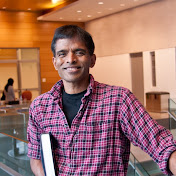
StarTalk's What’s Going On Inside the Sun? With Lika Guhathakurta: skim's analysis identifies 17 key moments. This episode of StarTalk features Neil deGrasse Tyson, Chuck Nice, and heliophysicist Lika Guhathakurta exploring the Sun's interior through helioseismology, its mass loss via fusion and solar wind, and the vast heliosphere that protects our solar system.
Category: Science. Format: Interview. YouTube video analyzed by skim.
skim AI Analysis
Credibility assessment: Highly Credible. The video features a renowned astrophysicist, Neil deGrasse Tyson, and a heliophysicist, Lika Guhathakurta, discussing scientific concepts with clear explanations and referencing established research and spacecraft missions like the Parker Solar Probe and SDO. The information presented is grounded in scientific principles and observational data.
Bias assessment: Slightly Biased. While the content is primarily educational and aims for objectivity, the host's enthusiastic and sometimes humorous framing, along with the inclusion of a comedian, introduces a slight bias towards entertainment and accessibility over pure scientific discourse. The focus is on the wonder of space rather than critical analysis of potential downsides.
Originality: 70% — Moderately Original. The video covers well-established scientific topics like helioseismology, solar wind, and the heliosphere. However, it does so through engaging dialogue, relatable analogies, and by addressing specific audience questions, which adds a layer of originality to the presentation of familiar concepts.
Depth: 78% — Good Depth. The discussion delves into complex topics such as the internal structure of the sun, the physics of solar wind acceleration, and the boundaries of the heliosphere. It moves beyond surface-level explanations by touching upon the methods used to study these phenomena (helioseismology, spacecraft data) and the implications of solar activity.
Key Points (17)
1. Lika Guhathakurta: The Sun as an Accessible Laboratory
Timestamp: 00:03:35 to 00:05:25
Heliophysicist Lika Guhathakurta explains her shift from studying distant stars to focusing on our Sun, viewing it as the most accessible and detailed laboratory in the universe. This proximity allows for unprecedented examination of its surface, interior, atmosphere, and influence extending to Earth and the solar system's edge.
Significance (Medium): This perspective reframes the Sun from a distant celestial body to a tangible, dynamic laboratory, highlighting the unique scientific opportunities it presents for detailed study.
Sources in support: Neil deGrasse Tyson (Host), Lika Guhathakurta (Heliophysicist)
Neutral sources: Chuck Nice (Co-host/Comedian)
2. Neil deGrasse Tyson: Unraveling the Sun's Interior with Helioseismology
Timestamp: 00:04:46 to 00:08:08
Neil deGrasse Tyson introduces helioseismology, drawing parallels to Earth's seismology, to explain how scientists study the Sun's interior. By analyzing vibrations and sound waves traveling through the Sun's plasma, researchers can infer its internal properties, despite its non-solid nature.
Significance (Medium): This analogy demystifies the study of the Sun's interior, making the complex field of helioseismology more understandable and highlighting the indirect methods required for solar research.
Sources in support: Neil deGrasse Tyson (Host), Lika Guhathakurta (Heliophysicist)
Neutral sources: Chuck Nice (Co-host/Comedian)
3. Lika Guhathakurta: The Sun's Dual Mass Loss Mechanisms
Timestamp: 00:09:36 to 00:13:26
Lika Guhathakurta details the two primary ways the Sun loses mass: through nuclear fusion converting hydrogen to helium (losing about 4 million metric tons of mass per second as energy) and via the solar wind, which carries away an additional 1-2 million tons per second. Despite these significant rates, the Sun's total mass loss over its lifetime is a mere fraction of its total mass.
Significance (High): This explanation quantifies the Sun's mass loss, revealing the immense energy output from fusion and the continuous shedding of particles via solar wind, while reassuringly noting the Sun's long-term stability.
Sources in support: Lika Guhathakurta (Heliophysicist)
Neutral sources: Neil deGrasse Tyson (Host), Chuck Nice (Co-host/Comedian)
4. Chuck Nice: The Sun's 'Sound' and the Vacuum of Space
Timestamp: 00:14:38 to 00:17:38
Chuck Nice poses the question about the Sun making noise, prompting Lika Guhathakurta to explain that while the Sun rings like a musical instrument with millions of overlapping pressure waves, space acts as a perfect soundproofing device. If we could hear it, the Sun's 'sound' is imagined to be like a constant, loud roaring lawnmower.
Significance (Medium): This segment uses a vivid analogy to describe the Sun's internal oscillations and humorously illustrates why we cannot hear them directly, emphasizing the unique properties of space as a vacuum.
Sources in support: Chuck Nice (Co-host/Comedian), Lika Guhathakurta (Heliophysicist)
Neutral sources: Neil deGrasse Tyson (Host)
5. Lika Guhathakurta: Defining the Heliosphere's Protective Bubble
Timestamp: 00:20:20 to 00:25:23
Lika Guhathakurta defines the heliosphere as the vast bubble created by the Sun's solar wind and magnetic fields, extending far beyond the planets and pressing against the interstellar medium. This region acts as a crucial shield, protecting Earth and the rest of the solar system from harmful cosmic radiation originating from outside our galaxy.
Significance (High): This explanation clarifies the heliosphere's role as a protective shield, underscoring its importance for life on Earth and defining the boundary between our solar system and the wider galaxy.
Sources in support: Neil deGrasse Tyson (Host), Lika Guhathakurta (Heliophysicist)
Neutral sources: Chuck Nice (Co-host/Comedian)
6. Neil deGrasse Tyson: Voyager's Exit from the Heliosphere
Timestamp: 00:25:42 to 00:27:54
Neil deGrasse Tyson recounts the excitement surrounding the Voyager 1 spacecraft's exit from the heliosphere. He explains how the spacecraft's sensors, which relied on the Sun's directional influence, began to 'go haywire' as the Sun's influence waned and galactic influence rose, signaling its entry into the interstellar medium.
Significance (Medium): This narrative highlights a monumental achievement in space exploration, illustrating the tangible evidence of the heliosphere's boundary and the challenges of navigating the transition into interstellar space.
Sources in support: Neil deGrasse Tyson (Host), Lika Guhathakurta (Heliophysicist)
Neutral sources: Chuck Nice (Co-host/Comedian)
7. The Sun's Infinite Gravity and Orbital Mechanics
Timestamp: 00:27:31 to 00:28:08
The Sun's gravity, like Earth's and the Moon's, extends indefinitely, but its influence is only significant where it dominates over other gravitational forces. This principle is exploited in space missions, where spacecraft are given just enough energy to transition from Earth's gravitational pull to the Moon's, minimizing the need for additional fuel.
Significance (Medium): Explains a fundamental concept of orbital mechanics, crucial for understanding space travel and celestial body interactions.
Sources in support: Neil deGrasse Tyson (Host), Lika Guhathakurta (Heliophysicist)
Neutral sources: Chuck Nice (Co-host/Comedian)
8. The Heliosphere: A Cosmic Shield
Timestamp: 00:29:09 to 00:30:22
The heliosphere, the Sun's magnetic bubble, extends far beyond the planets and acts as a crucial shield, protecting Earth and other planets from high-energy galactic cosmic radiation. Leaving the heliosphere means entering interstellar space, highlighting its role as our solar system's protective boundary.
Significance (High): Underscores the vital, often unseen, protective role of the Sun's magnetic field in making life on Earth possible.
Sources in support: Chuck Nice (Co-host/Comedian)
Neutral sources: Neil deGrasse Tyson (Host), Lika Guhathakurta (Heliophysicist)
9. Parker Solar Probe's Mission and Achievements
Timestamp: 00:31:13 to 00:33:59
The Parker Solar Probe, launched in 2018, has successfully completed numerous orbits, reaching its closest point to the Sun (perihelion) within 10 solar radii. Its mission is to cross the Alvén surface and enter the corona, measuring the pristine solar wind and providing unprecedented data about the Sun's atmosphere and the transition to solar wind.
Significance (High): Details the cutting-edge advancements in solar research and the probe's critical role in understanding solar physics.
Sources in support: Chuck Nice (Co-host/Comedian)
Neutral sources: Neil deGrasse Tyson (Host), Lika Guhathakurta (Heliophysicist)
10. Gravitational 'D-Assist' for Solar Missions
Timestamp: 00:34:08 to 00:35:18
Unlike gravitational assists that boost a spacecraft's speed, missions to the Sun require a 'd-assist' to shed orbital momentum and fall inward. Venus's gravity is strategically used to perform this braking maneuver, allowing probes like the Parker Solar Probe to approach the Sun without overshooting.
Significance (Medium): Clarifies a counter-intuitive aspect of space mission trajectory planning, essential for reaching the Sun.
Sources in support: Neil deGrasse Tyson (Host), Lika Guhathakurta (Heliophysicist)
Neutral sources: Chuck Nice (Co-host/Comedian)
11. The Sun's 11-Year Magnetic Cycle and Sunspots
Timestamp: 00:38:36 to 00:41:11
The Sun operates on an approximately 11-year solar magnetic cycle, characterized by fluctuations in magnetic field strength and the appearance of sunspots. Sunspots, darker areas on the Sun's surface, are regions of intense magnetic activity that inhibit radiation, peaking during solar maximum and diminishing during solar minimum.
Significance (High): Provides a foundational understanding of solar variability and its observable manifestations like sunspots.
Sources in support: Chuck Nice (Co-host/Comedian)
Neutral sources: Neil deGrasse Tyson (Host), Lika Guhathakurta (Heliophysicist)
12. Solar Polarity vs. Coronal Mass Ejections
Timestamp: 00:41:12 to 00:42:08
While the Sun's magnetic field polarity flips every 22 years, space weather effects at Earth are more dependent on the polarity of particles within coronal mass ejections (CMEs) than the Sun's overall polarity. CMEs with specific polarities can cause magnetic reconnection with Earth's magnetosphere, allowing particles to penetrate, while others are deflected.
Significance (High): Distinguishes between solar magnetic cycles and the direct drivers of space weather events impacting Earth.
Sources in support: Neil deGrasse Tyson (Host)
Neutral sources: Chuck Nice (Co-host/Comedian), Lika Guhathakurta (Heliophysicist)
13. Aurora Visibility and Solar Storm Intensity
Timestamp: 00:43:05 to 00:45:40
Increased aurora visibility at lower latitudes, like the G5 storm in May 2024 reaching Florida, indicates exceptionally intense solar activity. While better reporting and technology contribute to awareness, these widespread auroral displays are linked to powerful geomagnetic storms, suggesting a potential increase in impactful solar events.
Significance (High): Connects observed phenomena like widespread auroras to the intensity of solar storms and the potential for technological disruption.
Sources in support: Neil deGrasse Tyson (Host), Lika Guhathakurta (Heliophysicist)
Neutral sources: Chuck Nice (Co-host/Comedian)
14. The Carrington Event and Modern Vulnerability
Timestamp: 00:52:42 to 00:54:14
The 1859 Carrington Event, which disrupted telegraph systems, serves as a benchmark for extreme solar storms. A similar event today could have catastrophic consequences, potentially disabling global satellite networks, power grids, and other critical infrastructure due to our increased reliance on technology.
Significance (High): Highlights the severe risks posed by extreme solar events to modern technological society, emphasizing the need for preparedness.
Sources in support: Neil deGrasse Tyson (Host), Lika Guhathakurta (Heliophysicist)
Neutral sources: Chuck Nice (Co-host/Comedian)
15. Starlink's Solar Storm Setback
Timestamp: 00:54:50 to 00:57:05
A significant number of Starlink satellites were lost due to atmospheric drag caused by a medium-class coronal mass ejection, highlighting the vulnerability of even robust satellite constellations to space weather. The satellites lacked sufficient propulsion to counteract the increased drag, leading to their deorbiting. This event underscores the critical need for accurate space weather prediction and mitigation strategies for low-Earth orbit operations.
Significance (High): This incident demonstrates the tangible, costly impact of space weather on commercial satellite operations. It forces a re-evaluation of launch windows and satellite design to account for solar activity, potentially increasing operational costs and launch risks.
Sources in support: Chuck Nice (Co-host/Comedian)
Neutral sources: Neil deGrasse Tyson (Host), Lika Guhathakurta (Heliophysicist)
16. Neil deGrasse Tyson: Future Solar Missions
Timestamp: 00:57:37 to 00:59:47
Upcoming missions like PUNCH and IMAP are poised to revolutionize our understanding of the solar wind and the heliosphere by imaging solar storms from their origin to Earth and exploring the heliosphere's boundaries. PUNCH will image solar wind propagation, while IMAP will investigate the heliosphere's structure and serve as a space weather monitor, building on discoveries from earlier missions like IBEX. These missions aim to fill critical gaps in our knowledge of how solar storms develop and impact us.
Significance (High): These advanced missions promise unprecedented insights into solar storm dynamics, potentially enhancing our ability to predict and mitigate their effects on Earth and our technological infrastructure. The focus on imaging the entire journey of solar storms is a significant leap forward.
Sources in support: Neil deGrasse Tyson (Host)
Neutral sources: Chuck Nice (Co-host/Comedian), Lika Guhathakurta (Heliophysicist)
17. The Sun's Global Reach and Collaborative Science
Timestamp: 01:00:36 to 01:03:41
The sun's influence, the heliosphere, extends far beyond Earth, and understanding it requires global scientific cooperation. While most space agencies share data openly, China's current participation in this collaborative data-sharing framework is noted as an exception. This international effort is crucial for filling knowledge gaps and advancing our understanding of solar phenomena.
Significance (Medium): The sun's influence is universal, necessitating a global scientific response. Divergent data-sharing policies, particularly concerning China, could create blind spots in our collective understanding of space weather and its potential impacts.
Sources in support: Chuck Nice (Co-host/Comedian)
Neutral sources: Neil deGrasse Tyson (Host), Lika Guhathakurta (Heliophysicist)
This analysis was generated by skim (skim.plus), an AI-powered content analysis platform by Credible AI. Scores and classifications represent the platform's AI-generated assessment and should be considered alongside other sources.