Jennifer Doudna explains that CRISPR-Cas9 is a revolutionary technology derived from natural viral and bacterial processes, enabling precise and easily controlled DNA manipulation in the lab. Unlike previous gene editing tools that were bespoke and expensive, CRISPR is programmable, allowing scientists to target and alter virtually any DNA sequence with relative ease, making it a quick and precise 'text editor' for the instruction manual of life.
Doudna on CRISPR for Sickle Cell Treatment
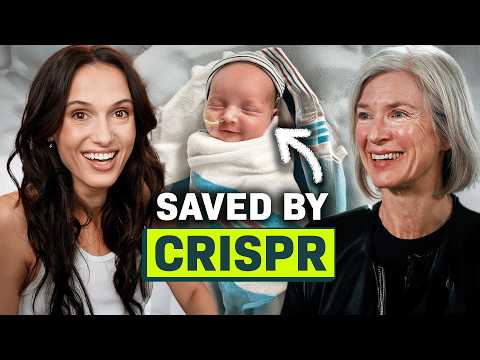
Jennifer Doudna discusses the FDA approval of CRISPR-based therapy for sickle cell disease, highlighting Victoria Gray's transformative experience. This one-time treatment suppresses the effects of the disease-causing mutation by turning on fetal hemoglobin production, offering patients a life free from frequent blood transfusions and painful crises. While acknowledging the current high cost and need for bone marrow transplant, Doudna expresses excitement about future advancements that could make the therapy more accessible and deliverable in an easier format.
Delivery Challenges for CRISPR Therapies
Cleo Abram and Jennifer Doudna discuss the challenges of delivering CRISPR molecules to specific cells within the body, particularly for treating diseases affecting organs like the lungs, liver, or brain. Doudna explains that ideally, genome editors should target only the affected cells, but distinguishing between cell types is tricky due to their close proximity. Scientists are drawing inspiration from viruses, which excel at cell recognition and delivery, to develop mechanisms for delivering CRISPR cargo effectively, highlighting the ongoing efforts to improve delivery methods for broader therapeutic applications.
Doudna on Huntington's Disease
Jennifer Doudna explains that Huntington's disease, a neurodegenerative disorder caused by a single gene mutation, is a potential target for CRISPR. She envisions a future where CRISPR could remove the disease-causing mutation from embryos, preventing the individual from developing the disease and passing it on to future generations. While acknowledging the ethical considerations and the current challenges in controlling DNA repair in embryos, Doudna believes that if CRISPR can be safely and effectively applied, it would be unethical not to use it for this purpose.
Doudna: Risks vs. Benefits in Embryo Editing
Jennifer Doudna emphasizes the importance of weighing the risks against the benefits when using CRISPR, especially in embryos, due to the permanent and heritable nature of any changes made. She cites the case of a scientist who edited human embryos to prevent HIV transmission, arguing that the risks outweighed the benefits because there were already well-tested and safe ways to prevent transmission. Doudna also points out that the genome editing in those embryos was not clean, resulting in a mixture of different genetic makeups in the cells of the children, the long-term effects of which are unknown, underscoring the need for caution and thorough testing before applying CRISPR in embryos.
Cleo: The Moral Imperative to Alleviate Suffering
Cleo Abram references a quote from Charles Sabine, a victim of Huntington's, who argues that there is no moral issue in using technology to alleviate suffering from genetic diseases. Abram reflects on the tension between theoretical ethical considerations and the real-life experiences of those who could benefit from CRISPR, questioning how to balance safety and speed in developing and deploying these technologies. She emphasizes the urgency of helping those whose lives could be transformed by CRISPR, while ensuring the safety of both the individual and society.
Doudna on CRISPR for Disease Prevention
Jennifer Doudna discusses the potential of CRISPR for preventing future diseases, such as Alzheimer's, heart disease, and cancer, by targeting genes like APOE4, PCSK9, and BRCA. She mentions an ongoing clinical trial using CRISPR to prevent cholesterol accumulation in people susceptible to cardiovascular disease, highlighting the possibility of a one-time therapy that eliminates the need for daily medication. Doudna emphasizes the importance of safety in preventative applications, as individuals who are not currently ill would not want to risk becoming ill from the treatment, raising the bar for safety standards.
Cleo: Concerns About a 'Gene Gap'
Cleo Abram raises concerns about the potential for a 'gene gap,' where access to CRISPR technologies is limited by wealth or other factors, creating societal divisions reminiscent of the movie 'Gattaca.' She acknowledges the historical trend of expensive technologies becoming more accessible over time, questioning whether the benefits of developing CRISPR for a few in the short term outweigh the potential for long-term benefits for everyone. Abram challenges the argument that technologies should not be developed if only a few can use them initially, emphasizing the importance of reducing human suffering.
Doudna on Plant and Animal Enhancements
Jennifer Doudna discusses the potential of CRISPR in plant and animal enhancements, highlighting the ability to create plants with increased yields and nutritional value. She explains that traditional plant breeding involves random genetic changes, while CRISPR allows for precise, targeted modifications. Doudna mentions that CRISPR can be used in multiple genes at once in plants, enabling sophisticated alterations to plant traits. She notes that CRISPR-edited crops are already available in Japan and are coming to the US, with the US Department of Agriculture ruling that changes that could be done by traditional breeding are not considered genetically modified.
Doudna: CRISPR to Reduce Methane Emissions
Jennifer Doudna discusses the use of CRISPR to reduce methane emissions from cattle by altering the metabolism of bacteria in their gut. She explains that methane is a significant contributor to global carbon emissions, and that CRISPR can be used to target specific genes in bacteria to reduce methane production and increase the production of nutrients valuable to the animal. Doudna mentions that scientists are working on a pill that could be given to cows at birth to edit their microbiome in a sustainable way, which would be a more cost-effective and easily deployed approach than altering their diet.
Doudna on the Human Microbiome
Jennifer Doudna discusses the potential of CRISPR to manipulate the human microbiome for health benefits, citing research showing a correlation between molecules produced by the microbiome and susceptibility to asthma. She explains that CRISPR could be used to turn down the production of these molecules and potentially prevent asthma in kids. Doudna also mentions the connection between the microbiome and the brain and immune system, suggesting that understanding and manipulating these interactions could lead to new treatments for diseases like Alzheimer's.
Doudna: Science as Human Curiosity
Jennifer Doudna emphasizes that science is a human endeavor driven by curiosity, encouraging students to explore their interests and questions. She highlights that fundamental breakthroughs often come from wondering how something works and digging in to figure it out. Doudna encourages supporting curiosity-driven science for the next generation, emphasizing the value of exploring the unknown and the importance of fundamental research in making breakthroughs, noting that her own work in CRISPR stemmed from such curiosity.