The Odyssey's Ancient Roots vs. Modern Interpretation
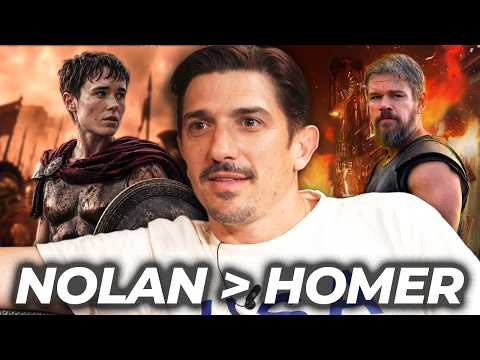
The discussion begins by questioning the 'original' version of The Odyssey, highlighting that it was an oral tradition retold over centuries, making any definitive 'original' interpretation elusive. This sets the stage for evaluating modern adaptations like Nolan's, suggesting that a new interpretation could indeed be superior to fragmented ancient accounts.
Nolan's Odyssey: A Cinematic Triumph or Flawed Retelling?
Speakers debate whether Nolan's film is a masterpiece or flawed, with some arguing it's one of the greatest movies ever made and Nolan the greatest filmmaker, while others find its slow build-up and deviations from the source problematic. The film's effectiveness is tied to the theatrical experience, with concerns that it might not hold up as well on streaming due to its pacing.
Thematic Depth: Pride, Ego, and Hospitality in The Odyssey
The conversation delves into the thematic underpinnings of The Odyssey, particularly Odysseus's pride and ego, and the concept of 'Zenia' (hospitality) as a divine law. Speakers analyze whether Odysseus's actions, like taking the long way home or confronting the suitors, stem from a desire to die, a need to understand consequences, or a defiance of divine law, suggesting Nolan's interpretation emphasizes these complex motivations.
France's national football team was rightfully eliminated from the World Cup due to a poor performance, failing to 'show up' in their match against Spain. This contrasts with perceived external assistance for Argentina's team.
Lamine Yamal's Rise and Controversial Rumors
Lamine Yamal, a young Spanish player, is a rising star, but rumors about his personal life and alleged health issues have circulated, particularly within Spain. This discussion also touches on broader themes of immigration and national identity in European football.
Erling Haaland's Superstar Status
Erling Haaland is presented as the emerging superstar of this era, comparable to Kylian Mbappé's rise, due to his exceptional skill set and beloved personality. His recent actions, like bringing a taxidermied raccoon back from America, are highlighted as part of his unique appeal.
The discussion begins with accusations that FIFA may be rigging the World Cup for Lionel Messi to enhance viewership and revenue, citing controversial calls and an advantageous bracket in previous tournaments. This theory suggests a pattern of FIFA benefiting from Messi's success.
The World Cup as the 'Greatest Ever' Spectacle
The hosts and guests assert that the current World Cup, particularly with its US presence, is the greatest ever, emphasizing its entertainment value and spectacle. They contrast this with previous World Cups held in restrictive locations, highlighting the importance of an environment where fans can freely enjoy themselves, including drinking.
Cultural Quirks and Fan Behavior
The conversation veers into observations about various cultures and fan behaviors, including the Japanese reputation for cleanliness, Knicks fans' trash can antics, and the perceived 'mid' nature of Norwegian chants. This segment humorously critiques stereotypes and fan traditions, questioning authenticity and cultural impact.
Sheryl Underwood emphasizes that individuals must first look inward to identify their own contributions to relationship frustrations. She posits that if communication fails, the first step is self-reflection to determine if one's own delivery or belief about the other's capability is the issue. This self-awareness is crucial for resolving conflicts, as ignoring one's role only perpetuates problems.
Underwood on Relationships: Transactional Dynamics
Sheryl Underwood views all relationships as fundamentally transactional, where individuals trade love, comfort, security, or emotional fulfillment. She argues that even love for love is a transaction of equal affection. She wishes people would openly acknowledge these transactions, focusing on meeting each other's needs and addressing any unlikable traits through open communication.
Sheryl Underwood: The Man as Head of Household
Sheryl Underwood maintains a traditional view where the man is the 'head of the household' and the primary 'bread winner.' While she may earn more, she sees her income as supplementary, supporting the man's role. This philosophy stems from her upbringing, where her father was the head of the household, and she defers to the male figure in her life.
Levy Rozman reveals he DM'd the Flagrant podcast in 2022 about the Hans Niemann cheating scandal but was ghosted, only learning about it years later when he was invited as a guest. He humorously recounts the embarrassing experience of realizing his messages likely went unread in the Instagram requests folder.
The Hans Niemann Cheating Saga: A Chess World Earthquake
Levy Rozman explains the Hans Niemann cheating scandal, where Niemann rose rapidly, beat Magnus Carlsen, and was subsequently accused of cheating. Rozman notes that while Niemann admitted to cheating online, he denies cheating over the board. The controversy has deeply divided the chess community, with many players distrusting Niemann and impacting his tournament invitations.

Levy Rozman: Chess as Mental Warfare
Chess is a unique mental battle, directly comparable to a one-on-one fight, that exposes an individual's worst habits and demands intense psychological resilience. It's an activity that simultaneously makes one feel intelligent and stupid, offering profound satisfaction upon winning and crushing disappointment upon making a simple error.
The Knicks' championship win after 53 years is a monumental event for New York City, reinforcing basketball as the unifying sport that embodies the city's identity and its inherent hope and dreams. This victory is particularly sweet after decades of disappointment, validating the unwavering belief of its fans.
Ali Siddiq: The Evolution of Hip-Hop and Its Roots
Ali Siddiq argues that while contemporary artists like Drake are popular, their music often emulates earlier eras, making it familiar rather than truly innovative. He emphasizes the importance of recognizing and respecting the original pioneers of hip-hop, like Slick Rick for storytelling and Run DMC for their foundational impact, suggesting that true lyrical greatness lies in these origins.
Siddiq: Vigilantism and Protecting Children
Ali Siddiq expresses a strong desire to act as a vigilante to protect children from harm, stating he would be highly diligent in carrying out such a mission. He draws a parallel to fictional characters like Dexter, who target wrongdoers, suggesting a deep-seated protective instinct and a willingness to take extreme measures against those who harm the innocent.
Akon explains his perspective on having multiple wives, framing it not as a desire for more women, but as a strategic approach to security and household management. He believes multiple wives act as a stronger 'line of defense' and create a more stable, happy environment by fulfilling diverse needs and ensuring no single point of failure. He likens a household to a monarchy with a king and queen, where the man's authority is paramount, and emphasizes that providing a happy environment is key to a woman's contentment. The conclusion is that this structure, while unconventional, is his method for maintaining order and happiness.
The Michael Jackson Connection
Akon reveals his deep connection with Michael Jackson, initiated when Jackson's attorney contacted him about collaborating. He shares that he had already written songs for Jackson, including 'Hold My Hand,' as part of his vision board while in prison, anticipating a future collaboration. Akon eventually co-executive produced the re-release of 'Thriller,' emphasizing that Jackson was a smart businessman who outsmarted many in the industry, leading to a 'coordinated attack' against him. The narrative concludes with Akon's assertion that Jackson's downfall was a consequence of upsetting the established power balance.
Michael Jackson's Musicality and Persona
Akon elaborates on Michael Jackson's musicality, distinguishing between music and rhythm, and emphasizing Jackson's innate sense of rhythm and his openness to experimentation in the studio. He suggests that Jackson's celebrity status and childhood experiences might have shaped his persona, even humorously speculating he could have been a 'pimp' due to his charm and finesse, while also noting Jackson's heterosexual orientation.
Norton details a particularly shocking incident from his early sobriety where he and a friend brought a pregnant prostitute to his deceased grandmother's basement. They engaged in sexual activity while she smoked crack. Norton expresses regret and embarrassment over this event, highlighting the stark contrast with his newfound sobriety and the fear of his parents discovering the situation. He concludes that this memory is one he wishes he could forget.
Honesty and Authenticity in Comedy
Norton discusses the importance of honesty and authenticity in his comedy, noting that his early willingness to share personal, often taboo, experiences resonated with fellow comedians and audiences. He explains that this approach limited his mainstream TV opportunities but felt original and true to himself. He concludes that embracing his authentic, albeit controversial, voice was key to his comedic identity.
The Allure of the Unconventional
Jim Norton finds genuine eroticism in a partner's 'perversion' and the raw honesty of their desires, suggesting that authentic, even unconventional, sexual interests create a deeper connection than performative or generic acts. He believes women often hide their 'freakiness' due to societal constraints, but when they find a safe space, they reveal a depth of desire comparable to men's, though they must be more selective about who they share it with.
The New York Knicks' advancement to the NBA Finals has created an unprecedented level of city-wide celebration and unity, showcasing a passionate sports culture that can be both exhilarating and chaotic. The sheer scale of public reaction, from crowd surfing grandmas to street closures, underscores the deep emotional investment New Yorkers have in their team's success.
Roast's Fallout: Free Speech vs. Offense
The recent comedy roast, hailed as a 'comedy Super Bowl,' has ignited a fierce debate about free speech and the limits of humor, particularly after controversial jokes by comedians like Tony Hinchcliffe and Shane Gillis. While some defend the comedians' right to push boundaries, others, like Chelsea Handler, criticize the content as sexist and bigoted, raising questions about accountability and the impact of such humor.
Comedic Hypocrisy and Allyship
The discussion points out hypocrisy in how certain comedians are perceived and criticized, particularly regarding controversial statements. The argument is made that white comedians often face less backlash or even gain traction by pushing boundaries, while the need for 'allyship' from white individuals is emphasized for driving significant social change, as seen in historical movements.
A friend of the hosts, performing in Las Vegas, gave his penthouse suite to another friend who then reportedly hooked up with a porn star. The story, however, was delivered with excessive emotional detail and a lack of direct answers about the encounter, frustrating the listeners.
Mark: The Human Need to Criticize Success
There's a natural human tendency to want to see successful figures falter, a phenomenon seen with athletes like Michael Jordan and artists like Drake. This 'recency bias' makes it harder to celebrate consistent winners, leading to a desire to 'hate' on them, even when they are objectively performing at a high level.
Drake's Strategic Album Drop
Drake's decision to release a triple album is a strategic masterstroke, designed not only to dominate the charts and flood the market but also to address various facets of his career and the ongoing beef with Kendrick Lamar. It allows him to showcase different sounds, acknowledge past events, and potentially position himself for historical chart success, mirroring Michael Jackson's achievements.
Cocomelon's hyper-stimulating visual and auditory content is akin to a gateway drug for children, making traditional educational programming like Sesame Street seem dull and unengaging by comparison. This rapid immersion into intense stimuli can lead to addiction and desensitization, posing a significant challenge for parents trying to manage screen time.
Scams, Travelers, and the Art of Deception
The discussion delves into the world of scams, particularly those perpetrated by 'travelers' or Roma individuals who use children and fabricated sob stories to elicit money. This contrasts with more 'entrepreneurial' American scams, highlighting a more desperate and manipulative tactic employed by some nomadic groups, raising questions about societal vulnerability and exploitation.
Maternal Body Autonomy vs. Public Perception
Once a woman becomes a mother, her body, particularly her breasts, shifts from being a sexualized object to a functional tool for feeding her child. This transformation often leads to a decreased concern for public modesty during breastfeeding, as the primary focus becomes the infant's needs, challenging societal norms around the female body.
Akash is stepping away from the podcast to fully dedicate himself to his burgeoning stand-up comedy career, a decision met with pride and support from his co-hosts who have witnessed his dream unfold from late-night egg sandwiches to sold-out shows like Radio City.
Spirit Airlines' Woes and Travel Disasters
The conversation begins with a brief mention of Spirit Airlines' operational issues, framing it as a source of travel trauma. This sets a tone of lighthearted complaint and shared experience regarding the frustrations of air travel.
The 'Poopgate' Flight Incident
One host recounts a dramatic and lengthy bathroom experience on a flight, causing a queue and an undeniable odor that even the flight attendant acknowledged, leading to a discussion about IBS and the frequency of bowel movements.
RZA recounts a pivotal moment at age 21-22 where he and Ghostface Killah had $20,000 intended for drug dealing. RZA ultimately chose to walk away from this path, influenced by past violence within their circle and the responsibility of having a child. This decision led him to form Wu-Tang Production, a move that profoundly shaped his career and the future of hip-hop. He emphasizes that negative actions lead to negative consequences, advocating for long walks and introspection to make better choices. This single decision, he believes, is one of the most influential in music history. The final sentence is: This critical juncture set RZA on a path of creation rather than destruction.
RZA's Production Evolution: From SP1200 to EPS
RZA details the technical evolution of his production setup, moving from the SP1200, limited to 2.5-second samples, to the EPS sampler. The EPS offered significantly more sample time and allowed samples to be spread across a keyboard, providing greater flexibility. This transition enabled RZA to create more complex, multi-layered beats, influencing the characteristic two-bar and four-bar phrases in Wu-Tang's music. He contrasts this with the limitations of the SP1200, which necessitated speeding up and slowing down samples. This technological leap was crucial for developing Wu-Tang's distinctive sound. The final sentence is: The shift to the EPS sampler unlocked new creative possibilities, defining the sonic texture of Wu-Tang's early work.
RZA's Philosophical Foundation: The 5% Mathematics
RZA shares how the teachings of the 5% Nation, particularly its 'mathematics,' instilled in him at age 11 a profound sense of self-worth and confidence. The core tenets, defining the 'original man' as the Asiatic black man and questioning historical narratives like Columbus's 'discovery,' provided a framework for understanding identity and power. This foundational belief system fueled his later ambition and conviction, even influencing his early romantic relationships with an almost arrogant foresight. The lesson learned is that internalizing such powerful self-definitions is crucial for achieving one's best potential.
Bert Kreischer's Weight Loss and Marathon Ambitions
The hosts and Tom Segura briefly discuss comedian Bert Kreischer's recent weight loss, attributing it partly to medication like Ozempic and his new dedication to running 5Ks. Segura humorously questions the seriousness of running a 5K as a major athletic feat for some, contrasting it with more ambitious goals.
Weed's Dark Side
While often perceived as benign, weed can trigger profoundly negative and disorienting experiences, leading to existential dread and a feeling of detachment from reality. These episodes can be so intense that they require a caregiver and can leave individuals questioning their perception of self and the world.
Helicopter Thrills and Chills
The speaker describes the intense thrill and inherent danger of helicopter flying, including performing extreme maneuvers. Despite the risks and his mother's initial fear, he took her on a terrifying joyride, which ultimately resulted in her laughter and his realization of his own capacity for extreme behavior.
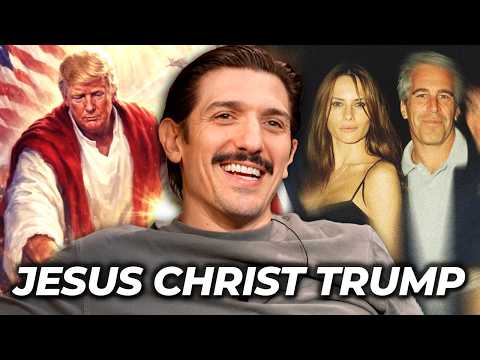
Donald Trump posted an image of himself as Jesus, drawing criticism from Pope Francis who stated that God does not hear the prayers of those who wage war. Trump responded by calling Pope Francis 'weak on crime' and 'terrible for foreign policy,' suggesting Pope Francis is a liberal and that his brother, Louie, would be a better Pope. The hosts debated the implications of Trump's religious imagery and the Pope's critique, questioning whether God hears the prayers of those at war and referencing biblical texts.
Alex Media: The 'Ball' in Trump's AI Image
The AI-generated image Trump posted as Jesus was revealed to have been edited from an original version. The original image, posted in February, depicted Trump with angelic figures. However, the version Trump shared included a figure with horns, leading to speculation about its meaning and whether it was intended to represent the Antichrist. The hosts found the alteration bizarre and unexplained, noting that Trump later deleted the post, possibly due to backlash from Christians.
Miles: The Melania Trump-Epstein Allegations
Melania Trump issued a statement denying any connection to Jeffrey Epstein, calling the allegations 'devoid of ethical standards' and 'mean-spirited.' The hosts discussed the timing of her statement, suggesting it might be a preemptive move ahead of a potential story, possibly linked to a leaked report. They also touched on rumors about her past, with one host recalling a previous podcast guest's claims about her having 'another job' before becoming First Lady.
The hosts discuss the current trend of everyone getting in shape, often attributing it to peptides and a desire to lose weight. They humorously reflect on their own past fitness levels and current struggles with weight gain, contrasting it with their younger selves. The conversation touches on the difficulty of maintaining fitness after having children and the perceived societal pressure to be in shape.
The 'Beluga' Physique and Body Dysmorphia
The hosts compare Mark's past physique to that of a 'beluga whale,' humorously noting how jacked they appear. They discuss body dysmorphia, with Mark suggesting he might have it in reverse, believing he looks better than he does. The conversation also touches on the idea of having a 'narrow lead' in terms of fitness and how one's perception of their body can differ from reality.
Belly Button Hygiene and Personal Habits
The hosts engage in a humorous and somewhat gross discussion about belly button hygiene, questioning whether people clean them and if they have a distinct smell. This leads to personal anecdotes about their own habits and a general exploration of less-than-glamorous aspects of personal care.
The absence of large stone pyramids in North America, unlike in Mexico and South America, might be due to a lack of accessible bedrock for stone construction in some regions, and a different focus on earth and timber structures in others. While some earth mounds exist, the prevalence of stone pyramids is concentrated in Mesoamerica and South America.
Luke Caverns: Maya Architecture and Environmental Adaptation
The dense, hazardous jungle environment of the Maya world, with its floods and venomous wildlife, incentivized building elevated platforms and structures. As these structures needed to be more durable, they transitioned from earth to stone, leading to the development of impressive stone pyramids. This necessity for survival and elevation drove architectural innovation.
Host: Teotihuacan's Hill-Like Appearance Before Excavation
Ancient sites like Teotihuacan, when covered by earth and vegetation, can appear as mere hills. This suggests that many natural elevations in Mesoamerica might actually conceal ancient structures, prompting a re-evaluation of the landscape's hidden history.
Ari Shaffir describes the initial withdrawal symptoms experienced after giving up his phone for eight months, likening it to drug withdrawal. He notes the immediate drop in dopamine and the crankiness that ensues, but also highlights how this silence eventually led to creative breakthroughs and new ideas.
Shaffir: Nicaragua's Border Control Ordeal
Shaffir recounts being denied entry into Nicaragua after a lengthy interrogation, suspecting it was due to his public profile and potential for critical reporting. He was sent back to El Salvador, highlighting the strict and sometimes arbitrary nature of border control in certain regions.
Shaffir: The Gangs' Extreme Atrocities
Shaffir shares a disturbing account from a local captain about the extreme brutality of gangs in El Salvador, including ritualistic violence like playing soccer with fetuses. This horrific detail serves as justification for the government's severe measures to eradicate them.
Jack Harlow's decision to release an R&B-influenced album has sparked controversy, with some critics accusing him of "going blacker" and others defending his artistic choices. The hosts debate whether this genre shift is a genuine artistic expression or a calculated move, highlighting the internet's tendency to create outrage cycles around celebrity actions.
Timothée Chalamet's Acting Prowess Debated
The discussion turns to Timothée Chalamet's acting abilities, with a debate erupting over whether he is a "phenomenal" actor or merely "good." Comparisons are drawn to Leonardo DiCaprio and Denzel Washington, with the hosts questioning if Chalamet has demonstrated the same range, particularly in portraying characters with mental deficiencies. The conversation also touches on the industry's need to crown new superstars.
Actors & Identity
Actors often feel trapped by their most famous roles, leading them to take on drastically different characters to prove their versatility. This can manifest as playing 'ugly' characters or engaging in roles that challenge their public image, sometimes backfiring if the audience doesn't connect with the new persona. The desire to break free from typecasting is a significant driver for many performers.
Patreon supporter Danny has successfully undergone a heart and liver transplant and is recovering, though his first words after surgery have a noticeable, humorous shift in accent, leading to jokes about his new vocal cords and potential 'Asian accent'.
The Middle East Conflict: A 'Simple' Problem?
The hosts and guest Joey Avery express a strong, albeit humorous, conviction that the Middle East conflict is easily solvable, contrasting their certainty with the ongoing global complexities. They joke about insider trading on war and the absurdity of discussing it during personal events like comedy special releases.
The hosts criticize Timothée Chalamet for sharing opinions on ballet, suggesting that successful actors like him should follow Leonardo DiCaprio's example of staying silent to maintain a long career. They argue that once one achieves 'white boy of the month' status, speaking out can be detrimental, and that silence is key to longevity in entertainment.
The early part of the podcast features personal anecdotes about family dynamics, including discussions on parental nudity, the birds and the bees, and Catholic upbringing suppressing conversations about sexuality. They share stories about exchange students and unexpected romantic entanglements, illustrating a pattern of avoiding direct communication on sensitive topics.
Propaganda and AI in Warfare
The hosts discuss the concept of 'when war starts, truth dies,' noting the difficulty in discerning reality from propaganda, especially with the rapid dissemination of information and the rise of AI. They express concern over the realism of AI-generated footage, questioning its use in portraying military actions and potentially manipulating public perception of conflicts.
Andrew Schulz: The Challenge of Selling War to Americans
Andrew Schulz argues that the American public is largely apathetic towards a war with Iran, citing past experiences in Iraq and Afghanistan. He believes there's no single compelling reason or propaganda strategy that could effectively rally widespread support for such a conflict, suggesting the government isn't even bothering to try anymore.
The discussion centers on a BAFTA award winner who allegedly yelled the N-word, prompting a debate about whether this was due to Tourette's syndrome or genuine racism. The hosts question the timing and intent behind the outburst, considering the possibility of involuntary tics versus deliberate racism, and whether the condition excuses the behavior.
Eileen Gu's Nationality Choice & Athlete Loyalty
The discussion centers on Eileen Gu, a Chinese-American freestyle skier who chose to compete for China. The hosts explore the financial incentives, with Gu reportedly earning millions in endorsements, leading to the "get the bag" sentiment. However, they question the ethics of an athlete being raised and trained in one country (the US) and then competing for another, especially if they are highly successful. While acknowledging that athletes often switch nationalities for opportunity, they express a preference for loyalty to the country that fostered their development. The debate touches on whether this is a "sell-out" or a pragmatic career move, with the consensus leaning towards the latter being acceptable if the athlete isn't good enough for their home country's team.
Eileen Gu's Dual Citizenship Debate
The hosts discuss the ambiguity surrounding Eileen Gu's US citizenship, noting that China does not officially allow dual citizenship, which raises questions about her competitive status and potential allegiances. They speculate on whether China made an exception for her or if she renounced her US citizenship.
Saagar highlights Pam Bondi's contradictory statements regarding the release of Epstein's client list. Bondi initially claimed to be reviewing a "truckload" of files, but later suggested that no more files would be released. This discrepancy raises questions about transparency and potential obstruction, suggesting a deliberate effort to downplay the extent of the scandal. The conflicting statements erode public trust in official accounts.
Wexner's Role in Epstein's Rise
The discussion emphasizes Les Wexner's pivotal role in Epstein's ascent, highlighting the power of attorney Wexner granted Epstein and the use of Wexner's planes for potentially illicit activities. Wexner's connections to Iran-Contra and his reluctance to fully explain his relationship with Epstein further fuel speculation about his involvement in Epstein's network. This paints a picture of a deeply intertwined relationship with potentially nefarious implications.
Insider Trading & Global Elite
The hosts discuss Lord Mandelson's role in tipping off Jeffrey Epstein about an upcoming government bailout in the UK for insider trading purposes. This example illustrates how the global elite can exploit privileged information for financial gain, evading accountability while ordinary citizens remain unaware. The rest of society is left to pay the price for the elite's financial crimes.
Schulz argues that Lady Gaga's appearance during the Super Bowl halftime show was unnecessary, suggesting it was a bone thrown to white audiences amidst a predominantly Latino performance. He implies a deliberate attempt to cater to a broader demographic, potentially diluting the cultural impact of Bad Bunny's performance. This highlights the complexities of representation and the pressures to appease diverse audiences in mainstream entertainment.
Alex on Trump's Scheduled Response
Alex suggests that Trump's negative response to the Super Bowl halftime show was pre-scheduled, implying a lack of genuine engagement with the performance. He questions whether Trump objectively watched and reacted to the show, or if his response was predetermined based on political motivations. This raises concerns about the authenticity of political commentary and the potential for manufactured outrage.
Schulz on the Bill Gates Email
Schulz details an email allegedly from Jeffrey Epstein to himself, outlining Bill Gates' request for antibiotics to treat an STD contracted from Russian prostitutes. He interprets this email as a form of blackmail, suggesting Epstein was leveraging his relationship with Gates for future gain. This paints a picture of Epstein as a master manipulator, using compromising information to exert control over powerful figures.