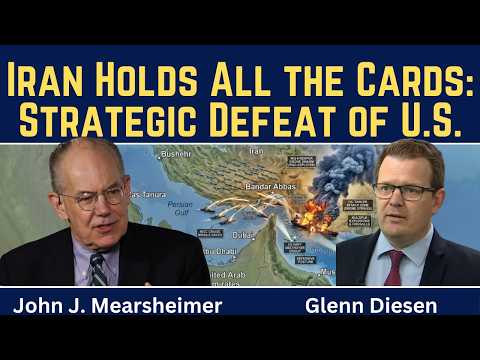
John Mearsheimer: "Iran Holds All the Cards" - The Strategic Defeat of the U.S.
Mearsheimer: Iran holds the strategic cards
In a protracted war, Iran holds nearly all the cards. The U.S. lacks a viable exit strategy, and any escalation attempts are likely to be met with Iranian success. This strategic disadvantage is difficult for many Americans, particularly Trump supporters, to grasp.
Mearsheimer: U.S. economic interests necessitate Iranian oil flow
The U.S. has a critical interest in ensuring ample Iranian oil reaches global markets, even while engaging in conflict. This is why sanctions have been eased on Iranian oil, demonstrating a paradoxical situation where bombing Iran while simultaneously facilitating its oil exports occurs.
Mearsheimer: Iran's leverage grows with prolonged conflict
Iran has a vested interest in prolonging the conflict, as each day increases its leverage over a desperate President Trump. The longer the war continues, the more pressure Trump faces to make concessions, effectively allowing Iran to dictate terms later.
Mearsheimer: Trump faces humiliating defeat or catastrophic economic cliff
President Trump is in a dire situation with no easy exit. He must either make major concessions to Iran, resulting in a humiliating defeat, or risk the U.S. economy going "off a cliff" due to the ongoing conflict and its global repercussions.
Mearsheimer: Iran's existential threat perception drives its strategy
Facing an existential threat from the U.S. and Israel, Iran has a deep-seated interest in prolonging the conflict to force major concessions. Their strategy is driven by a need to survive and expel U.S. influence from the region, making them willing to absorb immense pain.
Mearsheimer: US is in a Strategic Defeat
John Mearsheimer asserts that the United States is currently in a strategic defeat regarding the conflict with Iran. He argues that the current approach is flawed, driven by bad advice and a failure to consult allies, leading to a situation where the war may continue for several more weeks before a point of no return is reached.
Mearsheimer: Danger of Anti-Semitism
Mearsheimer warns of a significant danger of rising anti-Semitism if the war with Iran is perceived as a catastrophe primarily caused by Israel and its lobby. He emphasizes that this perception would be inaccurate, as many Jews oppose the war and the lobby includes non-Jews, but the potential for backlash is real and could even pressure the lobby to seek a deal with Iran to avoid it.
Mearsheimer: European Role and NATO Strain
Mearsheimer criticizes the European response to the Iran crisis, noting their initial exclusion and later reluctance to assist, framing it as a consequence of the US acting unilaterally. He suggests this dynamic, coupled with Trump's existing skepticism towards NATO, could further strain transatlantic relations, especially if the Ukraine war also deteriorates, leading to a blame game between the US and Europe.
Mearsheimer: Ground Invasion of Iran is Unfeasible
Mearsheimer strongly dismisses the idea of a US ground invasion of Iran, contrasting the small number of troops being deployed with the massive forces used in Desert Storm and the Iraq War. He argues that such a force is inadequate for Iran's size and terrain, that US bases are vulnerable, and that any attempt to take islands or invade would be met with fierce Iranian resistance, leading to a protracted and costly conflict with no clear strategic gain.
Mearsheimer: Trump's Disregard for Expertise
Mearsheimer criticizes President Trump's profound distrust of the 'deep state' and established institutions, arguing that this prevents him from utilizing the expertise needed for complex foreign policy decisions. He contrasts Trump's reliance on unqualified advisors with the necessity of experienced professionals for navigating issues of war and peace, suggesting this lack of expertise is a primary reason for the current strategic failures.