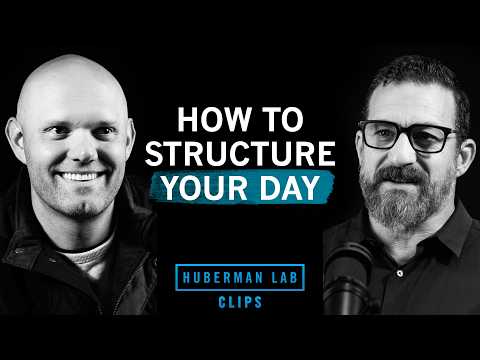
James Clear posits that executing habits earlier in the day significantly increases the likelihood of their completion. This is because the morning hours offer fewer opportunities for external interruptions or competing agendas to derail one's plans. He emphasizes identifying hours that are within an individual's control, rather than simply searching for 'enough time.' The ultimate goal is to establish a routine that maximizes personal agency over the day's schedule. This strategic timing is crucial for consistent habit formation.
Clear: Workout as a Catalyst
James Clear identifies his workout as the 'lynchpin' habit that makes subsequent reading and writing easier. He attributes this to the post-workout clarity and the shift in mental state it provides. This sequence, where physical activity primes the mind, allows for more effective engagement with intellectual tasks. The reading, in turn, acts as a 'gas station' for the mind, providing the necessary input and inspiration for writing, making the creative process flow more naturally. This habit stacking creates a powerful synergistic effect.
Huberman: The Stem of the T
Dr. Andrew Huberman, referencing David Epstein's work on 'range,' argues that while broad exploration (the top of the 'T') is important for creativity, the specialized focus (the stem of the 'T') is equally critical. Having a defined objective or area of expertise provides a framework for the broad inputs to connect to. This focused 'stem' acts like an antenna, allowing diverse information to be synthesized and applied effectively, leading to novel connections and creative breakthroughs. Without this anchor, broad learning can become unfocused.
Training the tibialis anterior with tib raises is crucial for preventing shin splints and improving running performance. It's often neglected, but consistent engagement, even with lighter weights, offers significant benefits.
Selective Hypertrophy and Training Rotation
To achieve selective hypertrophy or address weak points, focus on one muscle group at a time, increasing its volume while maintaining others. Rotating focus monthly (e.g., chest/quads one month, back/hamstrings the next) can optimize growth and prevent overtraining.
Targeting the Rectus Femoris
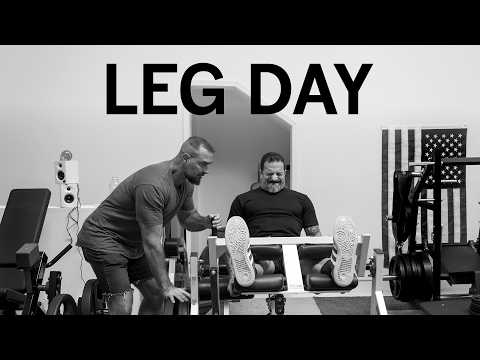
The rectus femoris, a quad muscle that also acts as a hip flexor, is best targeted with leg extensions, particularly when leaning back to emphasize hip flexion. This single-joint movement adds recoverable volume and specifically isolates this muscle.
Adductor Training for Balanced Legs
Adductors are a frequently neglected muscle group that contributes significantly to overall leg development and aesthetics. While deep squats and leg presses can engage them, specific movements like sumo stances or bodyweight adduction exercises are crucial for targeted growth, especially when belt squats are used.