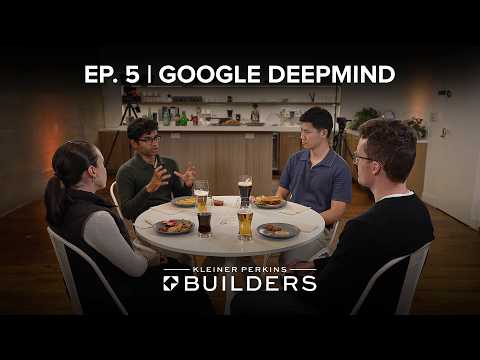
Google DeepMind’s Vision for Agent-First Development | Kevin Hou and Varun Mohan on Antigravity
Scaling with Intelligence: Avoiding Over-Engineering Around LLMs
A key principle in building AI products is to 'scale with intelligence,' meaning avoiding rigid infrastructure that can box in evolving LLMs. The shift from context assembly via file uploads to agents that can self-assemble context exemplifies this, emphasizing that any architecture built around a model is a depreciating asset that must allow the model to 'breathe' and evolve.
Google DeepMind's Culture: Intensity and Focus on Impact
The culture at Google DeepMind is characterized by intense focus and a drive to create technologically masterful products that fundamentally transform how people build. This ethos, fostered by leadership and a belief in achieving AGI, creates an environment where innovation is paramount and excuses are minimal, leading to rapid execution and groundbreaking projects like TPUs and Waymo.
Beyond IDEs: The Rise of Agent-Based Development
The traditional Integrated Development Environment (IDE) is becoming less valuable, with a significant portion of development potentially shifting to agent-based tools and interfaces like agent managers or even CLIs. This evolution suggests that the future of coding will involve less direct manipulation of code within an IDE and more interaction with intelligent agents that can understand and operate on codebases.
Varun: Simpler Interfaces for Agents
Varun Mohan argues that the future of AI agents lies in a simpler, unified interface, akin to Google's original single search box. This approach aims to marshal global resources and personal data through a single point of interaction, reducing complexity for the user. The goal is to make the product layer 'dumber' by hiding underlying complexity, allowing agents to handle intricate tasks seamlessly.
Kevin & Varun: The Symbiotic Research-Product Loop
Kevin Hou and Varun Mohan detail the crucial, two-way interaction between Google's research and product teams, particularly for projects like 'Anti-gravity.' They explain how product feedback informs research priorities, while research advancements enable new product capabilities, creating a cyclic effect. This integration allows them to capitalize on emerging trends like multimodality and address model limitations proactively, ensuring development is aligned with real-world user needs and future AI potential.